
Recognizing the Need for Support
Custom orthotics are one possible option for people with recurring foot or ankle symptoms, but they are not necessary for everyone with pain. These devices are made to fit a person’s feet and may support foot function or ease pressure in specific areas. They manage symptoms rather than cure the condition causing them, as Cleveland Clinic’s guide to orthotics explains.
Pain, swelling, or changes in the way you walk can have several causes. A podiatrist can assess your feet and ankles, consider your symptoms and movement, and determine whether orthotics, footwear changes, or another treatment is appropriate. The American Podiatric Medical Association’s guidance on prescription orthotics likewise emphasizes evaluation before choosing a device.
At advancedfootcareil.com, evaluation by a podiatry clinic led by an experienced surgeon provides a clinical starting point for considering support. The goal is to match care to the underlying problem, rather than assuming that an insert is the answer.
Clues Your Feet May Need Evaluation
 Recurring foot, heel, or ankle pain is worth discussing with a podiatrist, especially if discomfort or swelling occurs during or after ordinary walking and standing. Pain that limits walking, exercise, or daily activities also deserves attention. These symptoms can have several causes, so they do not by themselves show that custom orthotics are needed.
Sharp heel pain with the first steps in the morning may be associated with plantar fasciitis, but that symptom alone cannot confirm a diagnosis. The Cleveland Clinic’s overview of orthotics describes morning heel pain and painful flat feet or high arches as reasons to consider an evaluation. At advancedfootcareil.com, a podiatrist can assess foot and ankle symptoms and determine whether support or another treatment is appropriate.
Other clues include inward rolling of the foot, or overpronation, balance problems or falls associated with collapsed arches, and uneven wear on shoes. A lower-leg injury that changes the way you walk is another reason to seek assessment. These signs are useful context for a clinician, not proof that an orthotic device is the right solution.
Seek professional advice if pain is worsening, severe, persistent, or interfering with everyday movement. People with diabetes should also have foot complications assessed rather than relying on an insert selected without guidance. A podiatrist can examine the feet and ankles, consider walking mechanics and health history, and recommend orthotics or another approach based on the findings.
For more signs that merit a clinical visit, see clues your feet may need evaluation.
What Orthotics Can Address
Orthotics can support or align the feet and ankles, improve function, and cushion or redistribute pressure. They manage symptoms rather than cure the condition causing them, so their usefulness depends on what is driving the pain.
A foot and ankle specialist may consider orthotics for plantar fasciitis, flat or high arches, foot tendonitis, metatarsalgia, bunions, corns and calluses, hammertoes, Morton’s neuroma, ankle sprains, a stiff big toe (hallux rigidus), or runner’s knee. These are conditions for which support may form part of care, not a guarantee that an orthotic will help.
The design and purpose vary: an arch support may support a flat foot, while a heel cushion can absorb impact and reduce stress during walking. Cleveland Clinic’s overview of orthotics describes these devices as one way to support foot and ankle function and manage symptoms.
For plantar fasciitis, symptomatic flat feet, or ankle discomfort, orthotics may help when support or cushioning addresses relevant foot mechanics. They do not resolve every cause of pain, and results vary. At advancedfootcareil.com, a podiatrist can assess symptoms, foot and ankle function, and walking mechanics before deciding whether custom orthotics or another treatment is appropriate. Learn more about what orthotics can address.
Choosing Between Inserts and Custom Devices
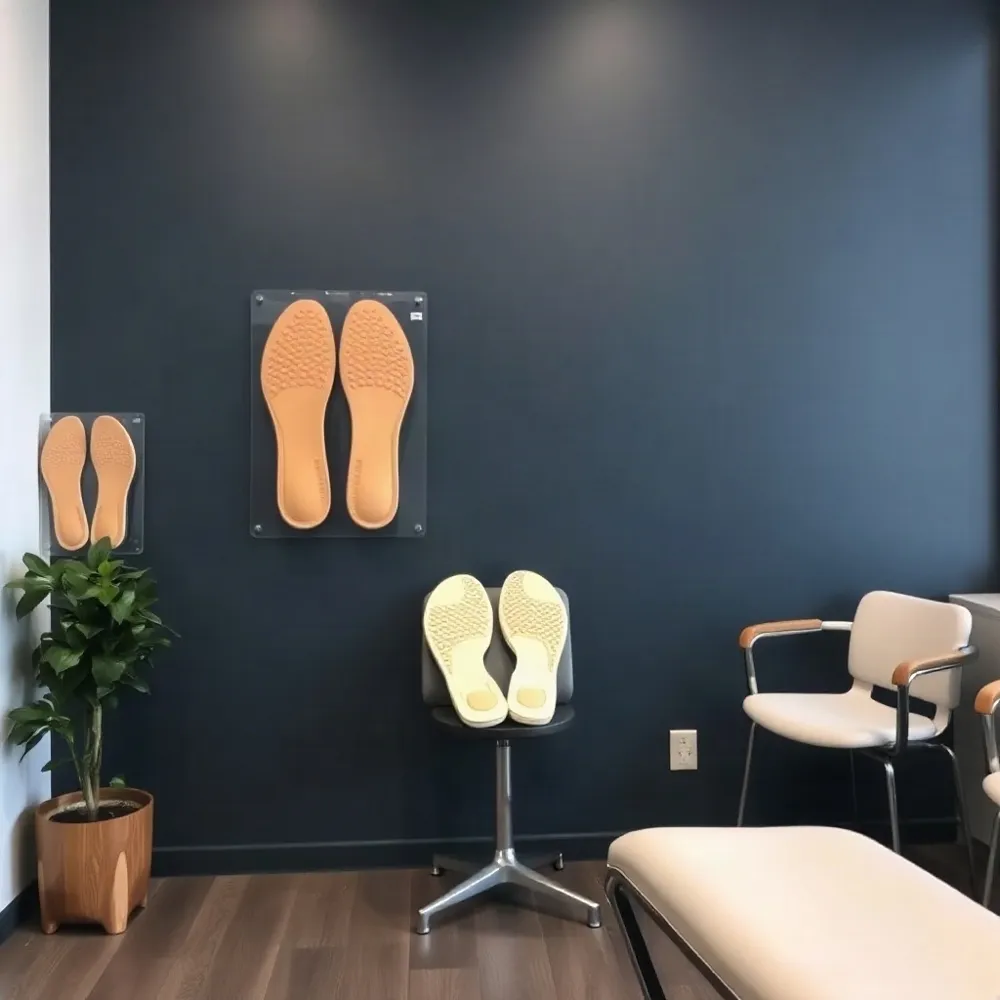 Orthotics are devices worn inside shoes or around the ankle to support the feet, cushion pressure, or help manage symptoms. They include shoe inserts, heel cushions or cups, arch supports, ankle braces, and custom-made devices. The right option depends on what is causing the symptoms and how the feet move.
Over-the-counter inserts are made for general use and may provide basic cushioning or arch support for mild discomfort. When choosing one, a firm arch that does not easily give may be worth considering. These products are not designed around an individual diagnosis or walking pattern, so relief can vary.
Prescription custom orthotics are made after an assessment and shaped to match a person’s foot contours and movement. Functional devices often use semi-rigid materials to help control foot motion; accommodative devices use softer, flexible materials to cushion and support the foot. The American Podiatric Medical Association’s guidance on prescription orthotics explains how a podiatrist evaluates a patient before deciding whether a retail insert or a custom device is appropriate.
People with severe, persistent, worsening, or nagging pain should not rely only on store-bought inserts. Assessment is especially important for people with diabetes or poor circulation, since an unsuitable insert may contribute to foot problems. At advancedfootcareil.com, podiatrists evaluate foot and ankle symptoms and mechanics before recommending treatment, which may include custom orthotics or another approach.
Assessment and Custom Fitting
 A podiatrist starts by discussing symptoms and examining the feet and ankles. This assessment helps identify conditions contributing to discomfort and determine whether orthotics, including custom devices, are appropriate. At advancedfootcareil.com, care is led by an experienced foot and ankle surgeon, with clinics in NW Chicago and South Florida.
If custom orthotics are recommended, they are designed to match the contours of the feet and account for how the feet and ankles move. The clinician uses the assessment to guide the device’s shape and support, rather than assuming that the same design suits everyone. The American Podiatric Medical Association’s guidance on prescription custom orthotics likewise describes evaluation as part of deciding between a retail insert and a prescribed device.
A provider may record foot contours with a plaster mold or foam impression, or use computerized foot analysis to create a 3D image. A physical mold is therefore one option, not a requirement for every patient. The method depends on the clinical assessment and the information needed to design a suitable device, as Cleveland Clinic’s overview of orthotics explains.
Not everyone needs custom orthotics, and assessment does not automatically mean imaging or scanning is necessary. A clinician can recommend another approach when it better fits the cause of symptoms and the person’s needs.
Adjusting to Orthotics Safely
Orthotics change how the feet move and bear pressure, so getting used to them can take time. Adjustment may take up to about a month, but there is no single daily wear schedule that suits everyone. Follow the instructions from the podiatrist who prescribed the device, including any guidance on when and how long to wear it. Cleveland Clinic’s orthotics guidance notes that a provider can advise during this adjustment period.
Some early awareness of a new device may occur as the feet adapt, but ongoing or worsening discomfort should not be ignored. Contact the prescribing podiatrist rather than changing the wear plan on your own. At advancedfootcareil.com, a podiatrist’s assessment of foot mechanics and gait helps determine whether custom corrective support is appropriate, and follow-up can address concerns about fit or symptoms.
Orthotics are intended to manage symptoms, not cure the underlying foot or ankle condition. If a device has been helping, stopping it may allow symptoms to return or worsen. That does not mean every person needs to wear orthotics indefinitely; discuss changes in symptoms or use with the clinician who knows your diagnosis and treatment plan.
The information available does not establish that properly selected orthotics weaken the feet. If you are concerned about discomfort, fit, or how the device affects movement, a podiatrist can reassess the orthotic and consider other causes of symptoms. The appropriate response depends on the individual, so persistent problems merit a clinical review.
Cost, Durability, and Coverage
Custom orthotics generally cost more than store-bought inserts, but Cleveland Clinic notes they may last longer and offer cushioning and support tailored to the wearer. There is no universal price in the available sources. The final cost can depend on the device and provider, so ask what the quote includes, such as evaluation, fabrication, fitting, or follow-up adjustments.
How long orthotics last depends on their materials, activity level, changes in body weight, and care, according to Cleveland Clinic’s orthotics guide. Running and other high-impact activities can wear a device down faster. Regular cleaning and avoiding very hot or cold temperatures may help preserve it. A podiatrist can check whether a device still fits and provides appropriate support.
Insurance coverage varies by plan. The American Podiatric Medical Association’s guidance on prescription orthotics notes that insurance often helps pay for them, but this does not guarantee coverage for an individual patient. Check your plan documents or contact your insurer to ask whether prescription orthotics are covered and what requirements apply.
Before deciding, ask the provider for an itemized explanation of costs and any services included, then confirm coverage directly with your insurer. Patients seen at advancedfootcareil.com can discuss an orthotic recommendation with their podiatrist and ask what to clarify with their plan before proceeding.
What the Evidence Says About Flat Feet
Having flat feet does not automatically mean orthotics will help. Cleveland Clinic reports that the studies it reviewed did not clearly establish that orthoses work for adults with flat feet. The same studies did not indicate that inserts caused harm, but that finding is not proof of benefit for every person.
The evidence should be weighed alongside symptoms and an examination, not foot shape alone. A podiatrist can assess pain, function, and foot mechanics to determine whether orthotics or another approach fits the individual’s needs. At advancedfootcareil.com, podiatric care is led by an experienced surgeon; treatment recommendations should follow an individual assessment. Read more about the evidence on orthotics for flat feet and Cleveland Clinic’s review.
Make the Choice With a Podiatrist
Recurring foot pain, swelling, or a change in how you walk deserves attention, but none of these signs alone proves that custom orthotics are needed. A podiatrist can assess your feet and ankles, review your symptoms, and identify possible causes before recommending treatment.
An individualized evaluation can help determine whether supportive footwear, a general insert, a prescription device, or another form of care is appropriate. The American Podiatric Medical Association’s guidance on custom orthotics describes how a podiatrist evaluates foot structure and function before choosing an option. At advancedfootcareil.com, podiatry care is led by an experienced surgeon, with clinics in NW Chicago and South Florida.