
Understanding Shockwave Therapy
Shockwave therapy is a noninvasive treatment that sends acoustic waves through the skin to targeted tissue. In foot and ankle care, clinicians may consider it for conditions such as plantar fasciitis or tendinopathy, depending on the diagnosis.
This guide answers common questions about potential uses, treatment visits, safety precautions, recovery, results, and cost. It also explains why treatment plans can differ: focused shockwaves and radial pressure waves deliver energy in different ways, and neither approach suits every patient.
At Advanced Footcare, an experienced surgeon leads care focused on advanced, minimally invasive foot and ankle treatments, with locations in NW Chicago and South Florida. A podiatrist can assess your condition, medical history, and prior care to discuss whether shockwave therapy is appropriate and what results may reasonably be expected.
How Shockwave Therapy Works
 A handheld applicator delivers sound or pressure waves through the skin to a selected area. The goal is to encourage tissue-repair processes and ease pain, not to guarantee a particular outcome. Mayo Clinic notes that the therapy may be considered for conditions such as plantar fasciitis, tendinitis, ligament sprains, and some fractures, depending on the diagnosis and clinical circumstances (Mayo Clinic’s overview of shockwave therapy).
Focused shockwave and radial pressure wave treatments deliver energy differently. Focused shockwave concentrates its greatest force at a selected depth, while radial pressure waves are strongest near the applicator and spread outward through tissue. Although both have historically been grouped under the term extracorporeal shockwave therapy, they are distinct wave patterns, and clinicians may choose one or combine them according to the condition being treated.
Researchers think acoustic waves may trigger cellular signaling, affect pain pathways, and support tissue remodeling. The exact biological mechanisms are not fully understood, so proposed effects should not be mistaken for a certain or immediate result. A Mayo Clinic review of shockwave treatment describes these processes as an area of ongoing clinical understanding.
For foot and ankle care, treatment may be considered for persistent plantar fasciitis, Achilles tendinopathy, and certain other tendon, ligament, or bone problems. Research on plantar fasciitis includes a small five-year study of 39 people that reported improved pain and foot-and-ankle scores, but its limited size and reliance on patient reports restrict how widely its findings can be applied (study of long-term ESWT outcomes).
An indication does not mean the therapy is right for every patient. At advancedfootcareil.com, foot and ankle treatment is provided in a podiatry practice led by an experienced surgeon, who can assess the diagnosis and discuss whether shockwave therapy or another minimally invasive option fits the individual case.
Planning a Course of Treatment
A treatment plan starts with confirming the cause of heel pain, reviewing symptoms and medical history, and deciding whether shockwave therapy fits the diagnosis. At Advanced Footcare, podiatry care is led by an experienced surgeon and includes minimally invasive treatment options, with suitability assessed for each patient.
During a session, a clinician moves a handheld device over the treatment area to deliver pulses. The sensation varies, and your clinician can explain what to expect and discuss any discomfort. Mayo Clinic’s overview of shockwave therapy describes treatment as an outpatient procedure, often given in three to six sessions spaced three to seven days apart. That schedule is an example, not a prescription for everyone.
The choice of focused or radial waves, session spacing, and number of visits depends on the condition and clinical assessment. Shockwave therapy may form one part of care alongside stretching, activity adjustments, supportive footwear or insoles, and other prescribed measures. It does not replace an individualized plan.
Progress is reviewed over time because improvement may not be immediate. Your podiatrist can assess your response and adjust the approach if needed. For more on what an assessment and treatment course may involve, see planning a course of shockwave therapy.
Discomfort, Side Effects, and Precautions
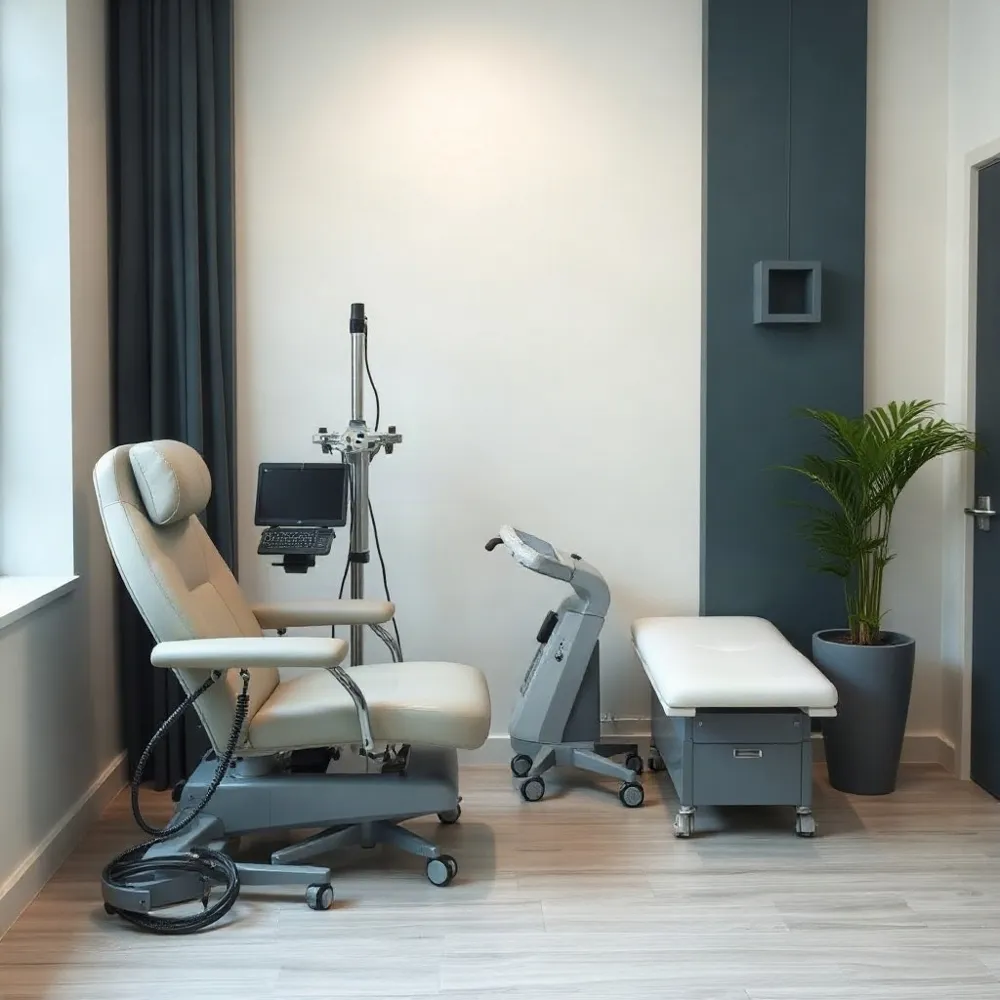 Shockwave therapy can feel uncomfortable or briefly painful while the device is applied. Sensation varies with the treatment area, energy setting, and personal sensitivity, and the clinician may adjust the intensity. Treatment generally does not require anesthesia. At Advanced Footcare (patient care and safety guidance), care is led by an experienced surgeon who can assess symptoms and medical history before treatment.
Temporary soreness or pain, redness, mild bruising, and swelling can occur at the application site. Mayo Clinic describes side effects as generally minimal, while noting that individual responses vary. Less common reported complications include a hematoma, meaning a collection of blood under the skin, and nerve irritation; tendon rupture is considered a theoretical risk, not a routine outcome. Mayo Clinic’s overview of shockwave treatment discusses these effects and the need for appropriate clinical use.
Appropriate patient selection, trained administration, and clinician-chosen device settings help manage risk. Before treatment, tell your podiatrist about medical conditions, impaired sensation or circulation, recent procedures, implanted devices, and every medication you take. Do not stop anti-inflammatory medicines or other prescribed drugs unless your clinician advises you to.
Pregnancy, a fetus in the treatment area, an active infection, an open wound, or a tumor at the site may make treatment unsuitable. Bleeding disorders and blood-thinning medication also call for a clinician’s review. Restrictions can differ depending on whether focused shockwaves or radial pressure waves are used, their energy level, and the treatment area. Discuss your individual circumstances and alternatives with your podiatrist before proceeding.
Recovery and Tracking Progress
 Many patients can walk soon after shockwave therapy and return to ordinary daily activities, but temporary tenderness or soreness may occur. Whether to rest or limit exercise depends on the condition and your response. Follow your podiatrist’s instructions, especially about running, jumping, or other activities that increase pain. At Advanced Footcare, treatment is part of individualized podiatric care, so activity guidance should reflect your diagnosis rather than a standard rule for everyone.
What should patients expect after treatment?
Track changes in pain and function, such as morning stiffness, walking comfort, and how easily you manage daily activities. Mild soreness after a session does not, on its own, show whether treatment is working. If symptoms worsen or progress remains limited, tell your podiatrist so the diagnosis and care plan can be reviewed.
When might improvement begin?
Some people notice an early change, while more lasting improvements in pain and function may take weeks. Mayo Clinic notes that these improvements may take 8 to 12 weeks in some cases, and that the full effects may appear up to 10 to 15 weeks after the final treatment (Mayo Clinic overview; Mayo Clinic Q&A. These are reported timelines, not a guarantee for an individual.
How long can benefits last?
Duration varies with the underlying condition and ongoing demands on the foot. A small study of people with chronic plantar-fasciitis-related pain found improved pain and foot-and-ankle scores at five-year follow-up, but its small sample and limited follow-up assessments do not establish how long gains from treatment itself lasted (study of long-term ESWT outcomes. Supportive footwear, appropriate stretching, and managing aggravating activities may help maintain progress. If pain returns, a podiatrist can reassess its cause and discuss next steps.
For practical guidance on returning to activity after a foot procedure, see recovery and return to activity.
Other Questions About Suitability and Cost
Can shockwave therapy help nerve-related foot pain or neuropathy?
The available foot-and-ankle evidence does not establish shockwave therapy as a proven treatment for neuropathy. Nerve-related symptoms can have different causes, including diabetes or nerve compression, so a clinician should assess them before discussing treatment. Shockwave therapy should not replace care for an underlying condition. At Advanced Footcare, an experienced podiatric surgeon evaluates foot and ankle concerns as part of care at its NW Chicago and South Florida locations.
How much does shockwave therapy for foot pain or plantar fasciitis cost?
As a rough U.S. estimate, a session may cost about $150 to $500, while a course of three to six sessions could total about $450 to $3,000. These are not verified prices or guarantees. Charges vary by clinic, location, device, and treatment plan.
Mayo Clinic reports that focused and radial wave treatments are not covered by most insurance plans, though individual coverage can differ. Before deciding, check with your insurer and request a written estimate that includes the number of sessions and any consultation or imaging fees. Discuss the diagnosis, alternatives, likely benefits, limitations, and out-of-pocket costs with your podiatrist.
Make the Decision With Your Podiatrist
Shockwave therapy is one noninvasive option for selected foot and ankle problems, not a guaranteed fix or a substitute for finding the cause of pain. Evidence and suitability depend on the diagnosis and treatment approach, so a clinician should assess your individual circumstances.
At Advanced Footcare, an experienced foot and ankle surgeon provides advanced, minimally invasive care. Ask your podiatrist about candidacy, device type, precautions, expected timeline, alternatives, and total cost. Mayo Clinic guidance emphasizes matching treatment to the condition and reviewing its limitations; confirm coverage and fees before deciding.