
A Changing Treatment Landscape
Regenerative medicine is an umbrella term for treatments intended to support the body’s response to injury or disease. In foot and ankle care, approaches may involve a patient’s own blood, cells, or other products, but they are not interchangeable or standardized. Their aims and evidence vary by treatment and condition, and none guarantees relief.
Interest is growing as patients seek options that may support healing and function, not only ease symptoms. Yet proposed benefits should be weighed against the strength of the evidence, treatment-specific risks, and regulatory status. The American Academy of Orthopaedic Surgeons’ overview of stem cells notes that evidence for orthopaedic uses remains limited and mixed.
A careful decision starts with identifying the cause of pain. At advancedfootcareil.com, podiatric care focuses on foot and ankle conditions, biomechanics, and minimally invasive treatment options. This article examines injection approaches, what research shows for common conditions, practical risks and recovery, and questions to discuss with a podiatrist before choosing a treatment.
Injection Options and Their Aims
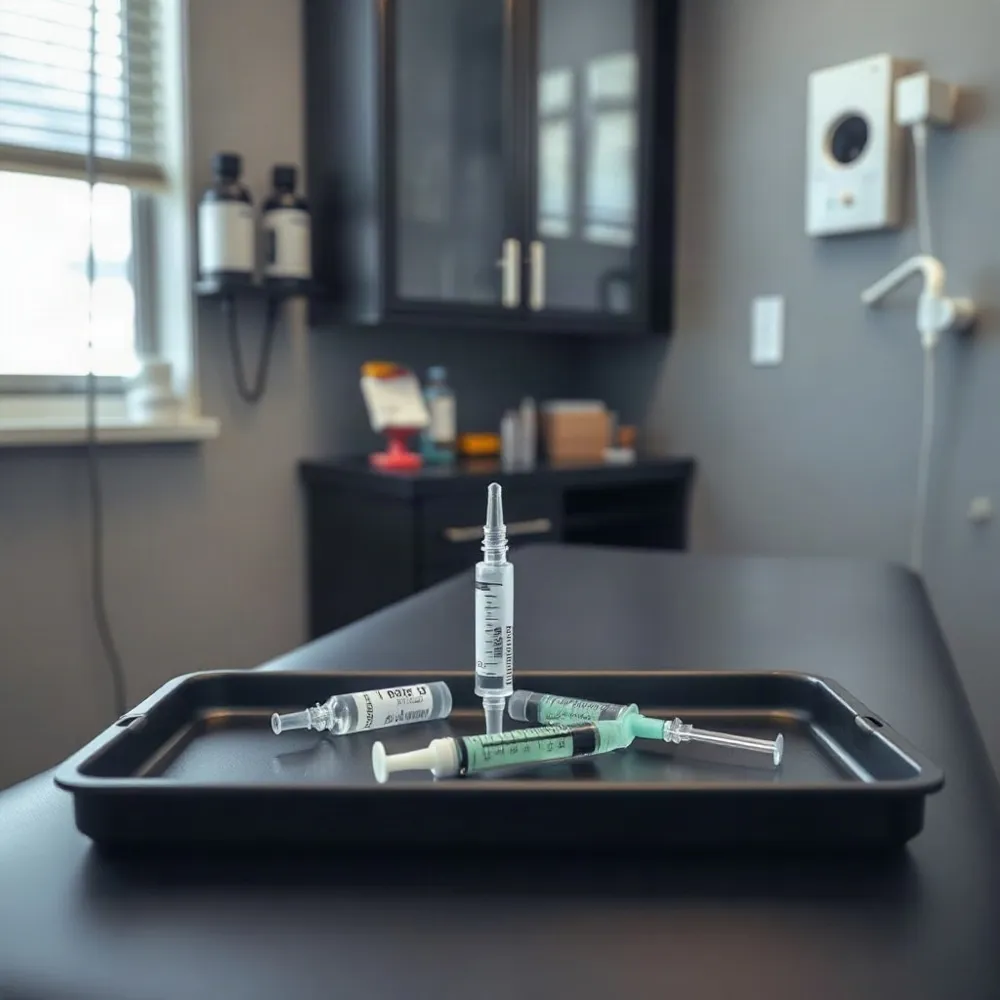 Regenerative injections are not a single treatment category. Platelet-rich plasma (PRP) is prepared from a patient’s blood, which is processed to concentrate platelets and signaling proteins before the material is injected into a targeted area. These components may influence local healing processes, but the procedure does not guarantee tissue repair.
A clinician may discuss PRP for persistent plantar fasciitis or certain tendon and ligament problems when appropriate nonsurgical care has not provided enough relief. Research findings vary by diagnosis: a clinical review describes studies reporting benefit for plantar fasciitis, while evidence for Achilles tendinopathy remains less conclusive (clinical review of regenerative medicine in the foot and ankle). PRP should not be treated as a first-line solution or assumed to work uniformly.
PRP is different from cell-based products marketed as stem cell injections. These products can vary in their source, preparation, intended use, and regulatory status, and the evidence for one approach cannot be transferred to another. The American Academy of Orthopaedic Surgeons notes that evidence for stem cell treatment in orthopaedics is limited and mixed, and that injected cells have not been shown reliably to survive and rebuild damaged tissue (AAOS guidance on stem cells in orthopaedics).
At advancedfootcareil.com, foot and ankle care is led by an experienced surgeon and focuses on advanced, minimally invasive treatment. An injection decision should begin with a clinical evaluation, not a product label or broad promise of regeneration. Examination, imaging when indicated, health history, prior care, and patient goals help determine whether an injection, another nonsurgical option, or a different treatment path is appropriate.
Patients considering an injection should ask what material is being used, how it is prepared, what evidence applies to their diagnosis, and what risks and alternatives are relevant. Clear discussion of these points helps set realistic expectations before treatment.
What the Evidence Shows
 Can PRP injections help treat plantar fasciitis, arthritis, or sprains? The answer depends on the diagnosis. Some studies report favorable findings for chronic plantar fasciitis, but results for Achilles tendinopathy are less conclusive, and evidence for acute sprains is not established. Findings for one condition or body region should not be assumed to apply to another. A clinical review of regenerative treatments in foot and ankle care describes this variation across diagnoses.
A placebo-controlled trial offers a caution for ankle osteoarthritis. Among 100 participants, PRP did not show a statistically significant advantage over saline for ankle function, pain, quality of life, or indirect costs at 52 weeks, according to the American College of Foot and Ankle Surgeons’ review. The study was relatively small and addressed ankle osteoarthritis specifically, so it does not settle PRP’s possible role in other conditions. It does, however, mean PRP should not be presented as a proven standalone treatment for ankle arthritis.
Overall, PRP is not established as a reliable treatment for every foot or ankle problem. Its potential benefit for a chronic tissue condition does not establish effectiveness for an acute sprain, and it should not replace diagnosis or standard care. At advancedfootcareil.com, an experienced surgeon’s assessment of foot and ankle conditions can help patients compare treatment options based on the specific problem, rather than assuming one injection suits all.
Are PRP or stem cell therapies proven treatments for foot and ankle pain? No. Strong clinical evidence supporting routine use of stem cell therapies for these conditions is lacking, and many products remain investigational. The American Academy of Orthopaedic Surgeons’ overview of stem cells notes that evidence for orthopaedic uses is limited and mixed. Patients weighing PRP for heel pain can also review professional treatments for plantar fasciitis, while discussing condition-specific evidence and established alternatives with a clinician.
Risks and Regulatory Questions
 Regenerative injections can cause temporary soreness or irritation at the treatment site. As with any injection, there is also a risk of infection or injury to nearby structures. Platelet-rich plasma (PRP) uses a patient’s own blood, which makes an allergic reaction less likely, but does not make the procedure risk-free. Patients can review general injection safety considerations in this foot-pain treatment guide.
Benefits are not assured, and the evidence varies by product and diagnosis. If treatment helps, improvement may take weeks, may not last, and could require more than one injection. At advancedfootcareil.com, treatment planning is led by an experienced surgeon who specializes in foot and ankle conditions, so discussion can include the diagnosis, alternatives, and appropriate activity restrictions.
No stem cell treatment is FDA-approved specifically for foot or ankle conditions. The American Academy of Orthopaedic Surgeons’ explanation of stem cells notes that regulation of a cell or tissue product does not mean it is approved to treat a particular diagnosis. Using a patient’s own cells also does not, by itself, establish approval or effectiveness. Some treatments may be available only through authorized clinical research.
Before agreeing to a procedure, ask exactly what product or technique is proposed, what condition it is intended to address, and what evidence supports its use. Ask about its regulatory status, potential complications, likely recovery, alternatives, and whether it is part of an FDA-authorized clinical trial. A clinician should also explain how progress will be assessed and when another treatment or approach may be considered.
Pain, Recovery, and Practical Planning
How painful is a PRP injection in the foot or ankle? A brief sting or feeling of pressure is possible, and discomfort varies with the injection site and each person’s sensitivity. Soreness, swelling, or a temporary increase in pain may follow. For general guidance on injection discomfort and recovery planning, see what to expect from treatment.
Follow the treating clinician’s advice about pain relief after an injection. Some clinicians may restrict anti-inflammatory medicines after PRP, so do not start or stop medication without checking. Contact the clinic if pain is severe or worsening, redness spreads, fever develops, or another concerning symptom appears.
How long is recovery after a PRP or cell-based injection in the foot or ankle? It depends on the diagnosis, procedure, and individual response. Some people may resume routine activities within days, but that does not mean every foot is ready for full weight-bearing, exercise, or impact activity.
A podiatric assessment helps connect recovery instructions to the specific foot or ankle problem. At advancedfootcareil.com, care is provided by a professional podiatry clinic led by an experienced surgeon, with locations in NW Chicago and South Florida. Ask the treating clinician whether you need a boot, crutches, footwear changes, or a gradual return to activity.
Improvement, when it occurs, may develop over weeks or months, particularly for tendon or ligament problems. Timelines are not guarantees, and response can differ between patients. Follow the individualized plan rather than relying on another person’s recovery experience or a fixed schedule.
How much do regenerative injections cost, and does insurance cover them? Costs vary by treatment and clinic, including whether services such as imaging guidance or product processing are involved. Many plans do not cover PRP or other regenerative injections for common foot and ankle conditions, and coverage may differ by plan and diagnosis. The American Academy of Orthopaedic Surgeons’ overview of stem cell treatment notes that limited evidence can affect coverage; this does not determine an individual plan’s benefits.
Before proceeding, request an itemized estimate and confirm coverage directly with both the insurer and clinic. Consultation or imaging may be covered differently from the injection itself, so clarify potential out-of-pocket costs in advance.
A Decision Grounded in Diagnosis
Regenerative medicine includes different treatments, and evidence for one approach or diagnosis does not establish that another will work. For example, the American Academy of Orthopaedic Surgeons’ review of stem cells notes that evidence for orthopaedic uses remains limited and mixed. These treatments should not be presented as proven cures or replacements for established care.
A qualified podiatrist can help weigh diagnosis-specific evidence, regulatory status, potential risks, costs, alternatives, and the patient’s goals. At advancedfootcareil.com, evaluation by a podiatry team led by an experienced surgeon focuses on foot and ankle conditions, helping place treatment choices in their clinical context.
The appropriate plan may be continued conservative care, another treatment, or a regenerative injection when it fits the diagnosis and the evidence. A clear discussion of uncertainty and options helps patients make an informed decision without assuming that an injection is necessary.