
What Is a Hammertoe and Why Does It Matter?
A hammertoe is a deformity of the middle joint of the lesser toes (second through fifth), causing the tip to point down while the middle curls up, resembling a hammer. It accounts for up to 20% of all foot and ankle issues. Early recognition is critical, as flexible deformities can often be managed with non-surgical care, while rigid ones typically require surgical correction.
How Hammertoes Progress: From Flexible to Rigid
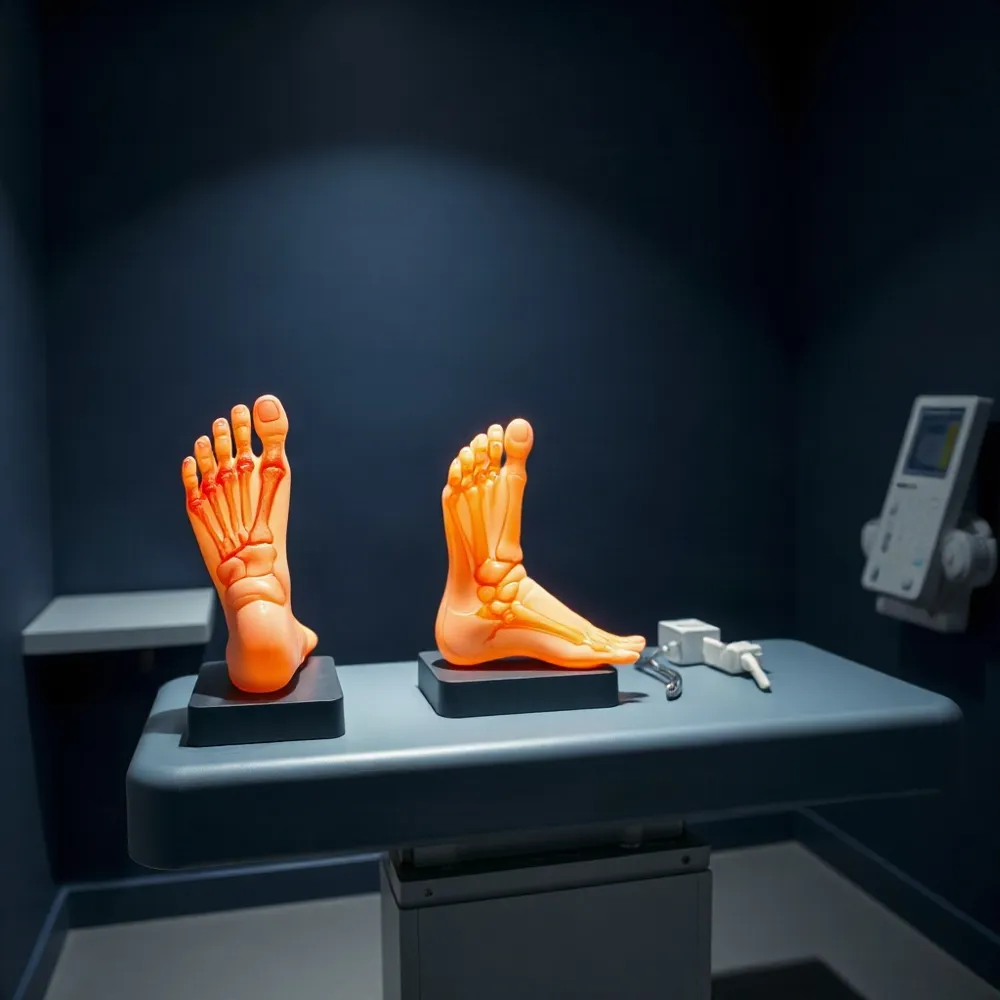 Hammertoes are a progressive condition that typically worsens over time if left untreated. Podiatrists group them into three stages based on severity: flexible, semi-rigid, and rigid. Understanding this progression is important because the stage of the deformity directly determines which treatments will be effective.
According to the Cleveland Clinic, hammertoes make up up to 20% of all foot and ankle issues. The condition begins when prolonged pressure from ill-fitting shoes or an underlying muscle imbalance forces the toe into a bent position. Over time, the muscles and tendons tighten, progressively freezing the joint in its curled shape.
In the flexible stage, the toe is bent but can still be moved and straightened manually. This is the earliest phase, and it is where non-surgical treatments such as changes in footwear, toe exercises, padding, and orthotics are most effective at managing the condition and slowing its progression. Many patients see improvement within weeks of consistent conservative care.
As the deformity advances, it enters the semi-rigid stage. The toe becomes noticeably stiff and remains in a bent position unless pushed back to straighten it. The tendons and ligaments have tightened further, requiring more effort to correct the position. At this point, early-stage measures may still offer symptom relief, but the toe is no longer fully manageable with non-surgical methods alone.
The rigid stage is characterized by a toe that is frozen in its curled position, often forming an inverted V shape that cannot be straightened manually. The American Academy of Orthopaedic Surgeons notes that once a hammertoe reaches this point, surgical correction is usually the only option to restore alignment and relieve pain. The joint may require a procedure such as arthrodesis (fusion) or joint resection.
This progression is driven by continued muscle imbalance and biomechanical stress, with ill-fitting footwear acting as a major accelerator. Shoes with narrow toe boxes or high heels push the toes into a flexed position, and over months, the ligaments and tendons adapt to that bent shape. Mayo Clinic identifies women and older adults as more commonly affected, in part due to footwear choices and age-related changes in muscle strength and joint stiffness.
What Causes a Hammertoe?
 A hammertoe develops when something puts prolonged pressure on the toes, pushing them out of place. Over time, the muscles and tendons in the toe tighten, freezing the joint in a curled, hammer-like position. Wearing ill-fitting shoes — especially those with a narrow toe box or high heels — is the most common cause of this pressure.
Shoes that crowd the toes or pitch the foot forward force the smaller toes into a bent, flexed position. When this position is held for long periods, the ligaments and tendons adapt to the shortened shape, and the joint eventually becomes stiff and stuck. A Cleveland Clinic overview notes that poorly-fitting shoes are the most frequent contributor to the muscle imbalance that triggers a hammertoe.
Underlying Foot Mechanics and Structural Factors
Even with proper footwear, certain foot characteristics can make a person more prone to developing a hammertoe. People with high arches or flat feet experience abnormal weight distribution across the forefoot, which places extra stress on the toe joints. A long second toe — sometimes called Morton's toe — can also increase mechanical strain, as it bears more pressure during walking and is more likely to buckle inside a shoe.
Bunions are a frequent contributor as well. When the big toe shifts outward, it crowds the space for the lesser toes, forcing the second toe to curl upward to compensate. This misalignment creates a cascade: the bent toe rubs against footwear, corns and calluses form, and the deformity becomes more pronounced over time.
Contributing Medical Conditions
A number of systemic health conditions can increase the risk or accelerate the progression of a hammertoe. Arthritis can cause joint inflammation and instability, making the toe more likely to contract. Diabetes, with its potential for nerve damage (neuropathy), can disrupt the fine balance of muscles and tendons in the foot, allowing a flexible deformity to become rigid more quickly. Rheumatoid arthritis, an autoimmune disease that attacks the joints, is a known risk factor for hammertoe formation.
The primary neurological disorder linked to hammer toes is Charcot-Marie-Tooth disease (CMT). CMT is an inherited condition that causes peripheral nerve damage, leading to muscle weakness and atrophy in the feet. As the intrinsic foot muscles weaken, the tendons pull the toes into a pronounced curled position, often accompanied by high arches and difficulty walking.
Hereditary and Sudden Onset Factors
Hammer toe is rarely caused by genetics alone, but certain inherited foot characteristics — such as a long second toe, flat feet, or naturally tight tendons — can increase susceptibility. A family history of the condition does raise risk, but external factors like footwear and foot mechanics play a much larger role in whether a deformity actually develops.
Most hammertoes develop gradually over months or years. However, a patient may notice what feels like a sudden onset if an underlying structural imbalance (such as a previously asymptomatic bunion) becomes symptomatic, or if a toe injury triggers an acute contracture. A podiatrist can help distinguish a rapid-onset hammertoe from a fracture or other acute problem and recommend appropriate early treatment.
| Risk Category | Common Examples | How They Contribute |
|---|---|---|
| Footwear | Narrow toe boxes, high heels, short shoes | Force toes into a flexed position, leading to muscle tightening |
| Foot structure | High arches, flat feet, Morton's toe (long second toe) | Alter weight distribution; increase pressure on lesser toes |
| Pre-existing conditions | Bunions, arthritis, diabetes, rheumatoid arthritis | Disrupt joint alignment, cause inflammation, or impair nerve function |
| Hereditary factors | Family history of flat feet or tight tendons | Predispose foot to biomechanical imbalance, raising overall risk |
Recognizing Symptoms and the Importance of Early Diagnosis
 The first signs of a hammertoe are often subtle, but knowing what to look for can make a significant difference in treatment success. Common symptoms include visible curling of one or more of the lesser toes, pain on the top of the affected toe or in the ball of the foot, and the development of corns or calluses from the toe rubbing against shoes. Swelling, redness, and stiffness in the toe joint are also frequent complaints. The American Academy of Orthopaedic Surgeons notes that in the early stages, the toe remains flexible and can often be straightened manually, but this flexibility diminishes as the condition progresses.
A podiatrist diagnoses a hammertoe through a straightforward physical examination. The doctor will assess the toe's range of motion, check for flexibility or rigidity, and may ask about your typical footwear. In some cases, a foot X-ray is ordered to confirm the diagnosis and evaluate the joint alignment. This exam also helps distinguish a hammertoe from similar conditions like mallet toe and claw toe, which affect different joints of the toe. As Cleveland Clinic explains, a hammertoe bends at the middle joint (PIP joint), a mallet toe bends at the joint closest to the toenail (DIP joint), and a claw toe bends at all three toe joints.
Early diagnosis is critical because a flexible hammertoe can often be managed with conservative measures, whereas a rigid hammertoe typically requires surgery to correct. Without intervention, the toe's muscles and tendons tighten further, eventually freezing the joint in its curled position. Detecting the problem at the first sign of symptoms—such as persistent pain or a toe that no longer lies flat—allows patients to explore non-surgical options and avoid the more involved recovery associated with surgical correction.
Non-Surgical Treatments for Early-Stage Hammertoes
Non-surgical treatments are most effective when a hammertoe is still flexible and the joint can be moved by hand. The goal of these conservative measures is to relieve pressure, reduce symptoms, and slow or stop progression toward a rigid deformity. At advancedfootcareil.com, podiatrists guide patients through a range of options tailored to the severity of the condition and the patient's daily needs.
Footwear Modifications
Changing shoes is the single most important step. Shoes with a wide, deep toe box allow toes to lie flat and spread naturally, reducing the pressure that causes the toe to curl. Low heels shift less weight onto the forefoot, while narrow or pointed styles force toes into a bent position and should be avoided. The Mayo Clinic recommends leaving at least half an inch of space between the longest toe and the tip of the shoe.
Exercises and Stretches
Targeted exercises can strengthen the small intrinsic muscles of the foot and improve flexibility in the toe joint. Common activities include picking up marbles or small objects with the toes, scrunching a towel flat on the floor, and gently stretching the affected toe by hand toward the ankle. When performed daily, these exercises help maintain mobility and counteract the muscle imbalance that drives the deformity.
Padding, Taping, and Orthotic Devices
Over-the-counter cushions, silicone sleeves, and gel pads worn on top of the bent joint reduce friction from shoes and relieve pain from corns. Medical tape or toe splints can hold the toe in a straighter position, though this is a temporary measure. Custom orthotic inserts, prescribed by a podiatrist, rebalance foot mechanics by redistributing weight and supporting the arch; metatarsal pads and toe spacers add further protection by preventing toes from crowding.
Pain Relief and Anti-Inflammatory Care
For short-term symptom relief, non-steroidal anti-inflammatory drugs (NSAIDs) such as ibuprofen can reduce swelling and discomfort, but the Cleveland Clinic advises using them for no more than 10 days without consulting a provider. Applying ice packs to the affected area for 15–20 minutes at a time also helps control inflammation. Consistent avoidance of high heels and tight shoes is essential to keep symptoms from returning.
These non-surgical strategies are most effective when started early. For flexible hammertoes, they can slow progression, relieve pain, and in some cases allow the toe to return to a more normal position. The American Orthopaedic Foot & Ankle Society notes that if the toe remains flexible, simple measures like shoe changes and exercises may be sufficient without the need for surgery.
What Happens If a Hammertoe Is Left Untreated?
Ignoring a hammertoe often leads to a predictable progression from a flexible, manageable condition to a rigid deformity that requires surgical correction. As the muscles and tendons adapt to the abnormal curled position, they tighten and shorten, eventually freezing the joint. At this rigid stage, the toe can no longer be straightened manually, and non-surgical treatments are generally no longer effective.
Chronic Pain, Corns, and Open Sores
The rigid deformity frequently causes persistent pain where the top of the toe rubs against the inside of the shoe. This constant friction leads to the formation of painful corns and calluses, which can become thick and inflamed. In individuals with diabetes or poor circulation, these areas of pressure can break down into open sores, raising the risk of serious infection or a diabetic foot ulcer. A podiatrist can assess these risks and recommend protective measures like those covered in the Comprehensive Guide to Bunions and Hammertoes.
Impact on Gait and Secondary Issues
An untreated hammertoe alters the way you distribute weight across your foot when you walk. Over time, this can cause pain to spread to the ball of the foot and may affect your overall gait, leading to compensations that strain the knees, hips, and lower back. The condition can also interfere with balance. These secondary issues are more likely to develop when the deformity has been present for a long time without intervention.
Why Early Intervention Matters
Addressing a hammertoe at the flexible stage greatly increases the chance of successful treatment with conservative measures alone, such as shoe modifications and exercises. Once the toe becomes rigid, these options lose effectiveness, and surgery is often the only route to straighten the joint. Seeking care early — as described in our guide on Identifying Foot Deformities in Early Stages — helps avoid the more invasive procedures and longer recovery times associated with advanced deformity correction.
Surgical Options: From Traditional to Minimally Invasive
Non-surgical treatments can manage symptoms and slow progression in the early stages of a hammertoe. However, once a hammertoe reaches the rigid phase — where the toe is frozen in its curled position and cannot be straightened manually — surgery is often the only effective route to correct the deformity and relieve pain. Surgery may also be recommended if conservative care has failed and you are experiencing severe pain that limits daily activities or makes wearing shoes difficult.
The type of procedure your podiatrist recommends depends on whether your hammertoe is flexible or rigid and the severity of the deformity. There are three primary types of traditional hammertoe surgery: tendon transfer for flexible joints, where a tendon is rerouted to help the toe lie flat; joint resection (arthroplasty), which involves removing a small portion of bone to create space and reduce pain; and joint fusion (arthrodesis) for rigid deformities, where the joint cartilage is removed and the bones are held together with a pin or small implant until they fuse into a straightened position. These procedures are effective but typically involve larger incisions and a more substantial recovery period.
Minimally Invasive Surgery (MIS) and TenoTac®
A newer and increasingly popular approach is minimally invasive hammertoe correction (MIS). This technique uses small, stab-like incisions (typically 3 mm) and specialized instruments, such as a bone-cutting bur, to reshape the joint and release contracted tendons. Unlike traditional open surgery, MIS does not require screws, pins, or wires for fixation — the desired alignment is maintained with taping that is changed every two weeks over 6 to 8 weeks.
A specific advanced MIS technique is the TenoTac® tendon rebalancing system by Paragon 28®. This procedure addresses the source of the deformity by rebalancing the tendons through two small incisions — one on the bottom and one on the top of the toe — without making bony cuts. Unlike traditional fusion, TenoTac® preserves the original tendon attachment, maintains toe mobility, and results in smaller scars. Patients can typically bear weight immediately and experience less swelling and pain compared to conventional approaches.
Both traditional and minimally invasive surgeries are performed on an outpatient basis under local anesthesia with sedation, meaning you can go home the same day. After surgery, you can bear weight immediately in a specialized post-surgical shoe. Most patients return to regular footwear around 6 to 8 weeks after the procedure and resume low-impact activities such as walking at that point. Higher-impact sports like running or jumping may take 4 to 6 months.
| Approach | Incisions | Fixation | Weight-Bearing | Return to Regular Shoes |
|---|---|---|---|---|
| Traditional (Open) | Large incision | Screws, pins, or wires | Limited initially | 4–8 weeks |
| Minimally Invasive (MIS) | 3-mm stab incisions | Taping only (no hardware) | Immediate, full weight-bearing | 6 weeks |
| TenoTac® Tendon Rebalancing | Two small incisions | Tendon tacking (no hardware) | Immediate, full weight-bearing | 6–8 weeks |
Recovery After Hammertoe Surgery: What to Expect
Recovery from hammertoe surgery is a gradual process. For most patients, the path to regular shoes takes about six to eight weeks, though complete healing can extend to six months. The specific timeline depends on the procedure type, the number of toes corrected, and individual health factors.
Early Post-Op: Rest, Elevation, and Pain Control
The first three days after surgery focus on protecting the repair and controlling swelling. Keep your foot elevated above heart level for most of the day and apply ice packs regularly. Pain medication helps manage discomfort during this initial phase.
Weeks 1-2: Wound Care and First Follow-Up
During the first two weeks, start dressing changes and watch for signs of infection such as redness or drainage. Once cleared by your surgeon, you can begin heel-strike walking in a surgical shoe. The first follow-up appointment typically includes an exam and possibly X-rays to check alignment.
Weeks 3-6: Transitioning to Supportive Shoes
At this stage, many patients transition into supportive sneakers and can return to desk jobs. If a temporary pin was used to hold the toe straight, it is usually removed in the clinic during this period — a quick process that takes less than 30 seconds. After pin removal, the surgical shoe is worn for a few more days.
Weeks 6-12 and Beyond: Return to Normal Activity
By six to eight weeks, most patients return to wearing regular shoes. Low-impact activities like swimming and stationary cycling can resume around week eight to ten. More demanding sports such as running or basketball typically require clearance from your podiatrist and may take up to four to six months.
Factors That Affect Recovery
- Health status: Chronic conditions like diabetes or smoking can slow healing and increase complication risks.
- Number of toes corrected: Multiple toe corrections extend the recovery timeline by several weeks.
- Adherence to instructions: Resting, elevating the foot, and attending follow-up appointments keep the recovery on schedule. Returning to work too early may lead to setbacks.
At Advanced Foot Care IL, the focus is on guiding patients through each stage of recovery with clear instructions and support. While swelling may persist for months, consistent use of supportive shoes and proper wound care help ensure the best outcome.
Take the Next Step Toward Healthy, Pain-Free Feet
Hammertoes are one of the most common foot issues, but they are treatable at every stage of progression. The earlier the diagnosis, the more straightforward the management — yet even rigid deformities can be corrected with modern surgical approaches. At Advanced Foot Care IL, patients start with a thorough evaluation that guides them toward the most appropriate path, whether that means custom orthotics, physical therapy, or a state-of-the-art minimally invasive procedure.
Ignoring a curled toe only allows the tendons and joints to adapt to the abnormal position, making a flexible hammertoe more likely to stiffen into a rigid one. Professional care early gives you the widest range of options and the best chance of avoiding surgery. If you notice any bending, persistent pain, or recurrent corns and calluses, schedule an evaluation with a podiatrist to keep your feet healthy, active, and pain-free.