A Podiatrist's Guide to Foot Deformities: Why They Start and How to Stop Them
Understanding the Foundations: Defining Bunions and Hammertoes
A bunion, medically termed hallux valgus, is not simply a growth or bump. It is a structural deformity where the bone at the base of the big toe shifts out of position. This causes the big toe to angle inward toward the other toes, creating a prominent, often painful, bony protrusion on the side of the foot.
Hammertoe is a deformity of the lesser toes—usually the second, third, or fourth. The toe bends downward at the middle joint, creating a hammer-like appearance. This condition progresses through stages, starting as flexible (still movable) and potentially becoming rigid (frozen in place) if untreated.
While distinct, these conditions are often linked. A prominent bunion can crowd the smaller toes, contributing to the development of hammertoes.
Recognizing the Early Warnings: Key Signs and Risk Factors
Early intervention is crucial. For bunions, initial signs include a slight bump, redness, and soreness around the big toe joint. You might notice your big toe beginning to angle toward the second toe. For hammertoes, the first sign is often a subtle bend or curling of a toe, which may feel stiff.
Common symptoms for both progress to include:
- Persistent pain or tenderness around the affected joint.
- Swelling, inflammation, or burning sensations.
- Development of corns and calluses from friction.
- Difficulty wearing shoes comfortably.
- Visible changes in toe alignment.
Several factors increase your risk. Genetics play a significant role; foot shape and structure are often inherited. Footwear is a major contributor, with tight, narrow, or high-heeled shoes that crowd the toes. Other risk factors include arthritis, muscle imbalances, flat feet, high arches, and occupations requiring prolonged standing.
When It's Not Just a Bunion: Conditions with Similar Symptoms
Accurate diagnosis by a podiatrist is essential because other conditions can mimic these deformities. A physical exam, often with weight-bearing X-rays, helps distinguish between them.
| Condition | Primary Deformity Location | Key Differentiating Feature |
|---|---|---|
| Bunion (Hallux Valgus) | Joint at base of big toe | Big toe angles inward, bony bump on side. |
| Hammertoe | Middle joint of lesser toe | Toe bends downward at the middle joint only. |
| Mallet Toe | Joint closest to toenail | Bend occurs at the joint near the tip of the toe. |
| Claw Toe | All three toe joints | Toe claws downward with bends at both toe joints and hyperextension at the base. |
| Bunionette | Joint at base of little toe | A small bunion that forms on the outside of the foot. |
The Treatment Spectrum: From Conservative Care to Surgical Correction
Treatment is tailored to the severity and impact on your daily life. The goal is always to relieve pain, improve function, and slow progression.
Conservative, Non-Surgical Management This is the first line of defense and includes strategies you can start today:
- Footwear Modifications: Switch to shoes with a wide, deep toe box, good arch support, and a low heel. Avoid pointed styles.
- Padding and Orthotics: Use over-the-counter pads, gel sleeves, or custom orthotic inserts to cushion the area, reduce pressure, and improve foot mechanics.
- Medication & Therapy: Over-the-counter anti-inflammatory drugs (NSAIDs) can manage pain and swelling. Icing the area and specific toe-stretching exercises may provide relief.
- Professional Care: A podiatrist can provide taping, splints, physical therapy, or safely trim painful corns and calluses.
Surgical Correction Surgery is considered when conservative measures fail to relieve pain that limits daily activities. It is the only way to correct the underlying structural deformity.
- Bunionectomy: Procedures remove the bony bump and realign the bones, tendons, and ligaments of the big toe.
- Hammertoe Correction: Surgery may involve releasing tight tendons, removing a piece of bone, or fusing the joint straight, depending on whether the toe is flexible or rigid.
The Minimally Invasive Revolution: A Modern Path to Pain-Free Feet
A significant advance in podiatric surgery is the adoption of minimally invasive techniques, especially for bunions. Unlike traditional open surgery with a large incision, this approach uses specialized instruments through several tiny (2-5mm) incisions.
| Aspect | Traditional Open Surgery | Minimally Invasive Surgery |
|---|---|---|
| Incision Size | One large incision (3-5 inches) | Multiple tiny incisions |
| Tissue Disruption | Significant soft tissue dissection | Minimal trauma to surrounding tissues |
| Post-Op Pain | Typically greater | Often significantly less |
| Initial Recovery | Non-weight-bearing for weeks | Often immediate protected weight-bearing |
| Return to Shoes | 10-12 weeks on average | Approximately 6-8 weeks on average |
| Scarring | Larger, more noticeable scar | Minimal, faint scars |
These techniques, such as the Percutaneous Chevron Akin (PECA) procedure, aim for less post-operative pain, reduced swelling, faster healing, and a quicker return to regular activities. They are particularly suitable for mild to moderate deformities. A board-certified podiatric surgeon can determine if you are a candidate based on a comprehensive evaluation.
| Topic Covered | Core Concepts Discussed | Key Takeaway for Patients |
|---|---|---|
| Definitions | Bunion structural shift, hammertoe bend stages, condition link. | These are structural deformities, not just bumps or curls. |
| Symptoms & Risk | Early warning signs, progressive symptoms, genetic & shoe factors. | Notice changes early; footwear choices significantly impact risk. |
| Differential Diagnosis | Table comparing bunion, hammertoe, mallet toe, claw toe. | Accurate podiatrist diagnosis is needed for proper treatment. |
| Treatment Spectrum | Conservative care first (shoes, pads, meds), surgery for correction. | Many options exist before surgery; surgery addresses the root cause. |
| Minimally Invasive Surgery | Tiny incisions, less pain, faster recovery vs. traditional methods. | Modern surgical options can offer a more comfortable recovery experience. |
Understanding the Foundations: Defining Bunions and Hammertoes

What are bunions and what causes them?
A bunion, clinically termed hallux valgus, is a structural deformity of the forefoot. It is not merely a bony growth but a complex misalignment at the joint where the big toe meets the foot. The primary cause is an inherited foot structure or biomechanical issue, such as flat feet, high arches, or ligament laxity, which affects joint stability. Genetic predisposition is a major factor, with a strong familial link evident in many cases.
External pressures significantly worsen this underlying predisposition. Wearing shoes that are too tight, narrow, or have high heels can force the big toe pushes against next toe causing bunion. Over years, this pressure causes the head of the first metatarsal bone to shift outward, forming the characteristic bump. Other contributing factors include inflammatory joint diseases like rheumatoid arthritis, chronic stress from prolonged standing, or previous foot injuries.
What is hammer toe and what causes it?
Hammertoe is a prevalent deformity affecting the smaller toes, most commonly the second, third, and fourth. It is characterized by an abnormal bend at the middle joint, causing the toe to curl downward, resembling a hammer. The core cause is a muscle and tendon imbalance in the foot. Prolonged external pressure weakens some muscles while tightening others, pulling the toe into a bent position.
The most common aggravating factor is consistently wearing poorly fitting footwear. Shoes with narrow toe boxes, high heels, or insufficient arch support cramp the toes, forcing them into an unnatural position. This constant pressure accelerates the muscle imbalance. Other risk factors include having high arches, flat feet, long toes, or conditions like diabetes or arthritis. The presence of a bunion, which pushes the smaller toes out of alignment, is also a known precursor.
Progression and the Link Between Conditions
The development of both conditions is typically progressive. Bunions develop slowly over many years as the toe alignment gradually shifts. They do not resolve on their own and will worsen without intervention, potentially leading to chronic pain and other complications.
Hammertoes evolve through distinct stages, which are critical for determining treatment options:
- Flexible Hammertoe: The toe is still moveable and can be manually straightened. This early stage often responds well to non-surgical treatments.
- Semi-Rigid Hammertoe: The toe has significant stiffness but may retain some flexibility.
- Rigid Hammertoe: The toe is frozen in its curled position. The joint has become fixed, and the deformity is permanent without surgical correction.
Bunions and hammertoes are frequently interconnected. The primary bunion deformity on the big toe pushes it into the space of the adjacent smaller toes. This crowding effect places direct pressure on the lesser toes, often initiating the muscle imbalance that leads to the development of secondary hammertoes. This is why the two conditions are often seen together.
Differentiating Toe Deformities
While hammertoe is common, it is important to distinguish it from other related forefoot deformities, as the specific joint affected determines the diagnosis and treatment approach.
| Deformity | Primary Joint Affected | Visual Description | Common Causes |
|---|---|---|---|
| Hammertoe | Middle (Proximal Interphalangeal) joint | Toe bent downward at the middle, like a hammer | Muscle imbalance, tight shoes, bunions, arthritis |
| Mallet Toe | Joint nearest the toenail (Distal Interphalangeal) | Tip of the toe bends downward | Trauma, muscle imbalance, ill-fitting shoes |
| Claw Toe | Both middle and end joints, often with hyperextension at the base | Toe claws downward, arching up at the ball of the foot | Neuromuscular disorders, inflammatory arthritis, severe foot imbalance |
An essential structure for toe stability is the plantar plate, a thick ligament on the underside of the toe joints. Injury or stretching of this plate can lead to joint instability, contributing significantly to the development and worsening of these toe deformities, particularly hammertoe.
| Condition | Core Definition | Primary Joint & Mechanism | Key Distinguishing Factor | Common Association |
|---|---|---|---|---|
| Bunion | Structural misalignment of the big toe joint. | Metatarsophalangeal (MTP) joint; bone shifts cause a bump. | Big toe angles inward toward other toes. | Often leads to hammertoe development. |
| Hammertoe | Muscle imbalance causing a middle joint bend. | Proximal Interphalangeal (PIP) joint; tendons tighten. | Toe resembles a downward-pointing hammer. | Frequently caused or worsened by bunions. |
| Mallet Toe | Isolated bend at the end joint of a toe. | Distal Interphalangeal (DIP) joint; imbalance at the tip. | Only the very end of the toe is bent downward. | Less common than hammertoe. |
| Claw Toe | Complex bend involving multiple toe joints. | MTP, PIP, and DIP joints; hyperextension at the base. | Whole toe arches downward in a claw shape. | Often linked to systemic neurological issues. |
Recognizing the Early Warnings: Key Signs and Risk Factors

Understanding Bunion Warnings
A bunion is not always a sudden, dramatic bump. Its development is a gradual process with several early signs of bunions that serve as warnings. The most common initial symptom is pain and tenderness or a persistent burning sensation at the joint where the big toe meets the foot. This discomfort is often related to friction and inflammation from bunions. You may also notice the area becoming red, warm, or swollen, particularly at the end of the day or after wearing restrictive shoes.
Beyond the bony bump at the base of the big toe itself, key early indicators include a gradual decrease in flexibility and stiffness in the big toe. As the big toe pushes against next toe causing bunion alignment changes, the big toe begins to angle inward toward the second toe, which can lead to the formation of corns and calluses from friction on toes. Another subtle but important sign is a widening of the forefoot, making it difficult to fit into shoes that were once comfortable.
Understanding Hammertoe Warnings
Hammertoe typically affects the second, third, or fourth toe. The primary early sign is a visible misalignment of the toes or curling of the toe at the middle joint, sometimes making the toe resemble a hammer. This may start as a flexible hammertoe, meaning the toe can still be manually straightened. The most common symptom is pain on the top of the bent toe or at the tip, caused by friction against footwear. This pressure often leads to the formation of painful corns and calluses.
Other early symptoms include swelling and redness around the affected joint and a feeling of stiffness. You might notice discomfort in the ball of the foot beneath the bent toe, as the toe's abnormal position alters pressure distribution. If the toe becomes stuck in the bent position and cannot be straightened, it has progressed to a rigid hammertoe, which is a more serious stage.
The Role of Heredity and Health Conditions
While poorly fitting shoes are a major contributor, the risk for developing bunions and hammertoes is strongly linked to factors beyond footwear. Genetics and family history play a pivotal role. If a parent or grandparent had bunions, you are significantly more likely to develop them due to an inherited foot structure. For hammertoes, having naturally long toes, high arches, or flat feet are inherited traits that increase susceptibility.
Several health conditions also elevate risk. Inflammatory diseases like rheumatoid arthritis can damage the joints of the foot, contributing to deformity. Diabetes can lead to nerve damage (neuropathy) and poor circulation, complicating foot conditions. Neuromuscular disorders and past foot trauma are additional factors that can disrupt the muscle imbalances necessary for proper toe alignment.
Who is Most Affected?
Bunions and hammertoes are not equally distributed across the population. They are markedly more common in women than in men, with women being up to nine times more likely to develop a bunion. This disparity is largely attributed to footwear choices like high heels and narrow-toed shoes that place excessive pressure on the forefoot. However, hereditary factors also contribute to this gender difference.
Prevalence increases significantly with age. The stress on foot joints accumulates over decades, and the natural aging process, including the development of arthritis, can accelerate deformity. Statistics indicate that approximately one in three people over the age of 65 will experience a bunion. While often associated with adulthood, these conditions can also begin in adolescence, especially in those with a strong family history.
The Progressive Nature of Deformities
It is crucial to understand that bunions and hammertoes are progressive structural deformities. They do not go away on their own, and hammertoes rarely go away on their own. A bunion will not shrink, and a flexible hammertoe will eventually become rigid if the underlying causes are not addressed. Conservative treatments like wider shoes and orthotics are designed to manage symptoms and slow this progression, but they cannot reverse the established bone misalignment.
Risks of Delaying Treatment
Choosing to ignore early signs can lead to significant long-term complications. Chronic, debilitating pain is the most immediate consequence, affecting the ability to walk, exercise, and wear normal shoes. The abnormal alignment puts excessive stress on other parts of the foot, often leading to secondary problems like:
- Metatarsalgia: Pain in the ball of foot from bunions.
- Arthritis: Accelerated wear and tear of the cartilage in the affected toe joints.
- Bursitis: Inflammation from bunions affecting joint cushions.
- Balance and Gait Issues: Severe deformities can alter your walking pattern, potentially leading to instability and an increased risk of falls, especially in older adults.
- Skin Problems: Persistent corns, calluses, and ulcers (particularly in individuals with diabetes) can become infected.
| Condition | Core Early Symptoms | Primary Risk Factors (Beyond Footwear) | Progression If Untreated |
|---|---|---|---|
| Bunion | Pain/burning at big toe joint, redness/swelling, big toe drifting inward, corns between toes, stiffness. | Family history/genetics, rheumatoid arthritis, flat feet or overpronation, past foot injury. | Bump enlarges, pain increases, big toe may cross under/over 2nd toe, arthritis develops. |
| Hammertoe | Visible curling at middle toe joint, pain on top of toe/ball of foot, corns on joint, swelling, stiffness. | Inherited foot shape (long toes, high arches), bunions causing hammertoes, diabetes, rheumatoid arthritis, muscle imbalance. | Toe becomes rigid and fixed, pain worsens, corns thicken, walking becomes difficult. |
| Demographic Trends | Symptoms can appear at any age, from adolescence onward. | More common in women; prevalence rises significantly after age 40-65. | Complications increase with age and duration of deformity. |
When It's Not Just a Bunion: Conditions with Similar Symptoms

Why Professional Diagnosis Matters
It is tempting to self-diagnose a painful bump on the foot as a bunion. However, self-diagnosis can lead to incorrect treatment that fails to address the true problem or even worsens the condition. Bunions do not go away on their own, and several other foot issues can mimic their symptoms. A board-certified podiatric physician diagnosing bunions has the training and tools to perform a comprehensive evaluation. This ensures an accurate diagnosis and the creation of a personalized, effective treatment plan that targets the specific condition.
Conditions That Mimic Bunion Symptoms
While a bunion (hallux valgus) involves a bony prominence from a misaligned joint, other common foot problems can cause similar pain, swelling, and redness in the same area. These conditions require different management strategies.
- Gout: This is a type of inflammatory arthritis caused by uric acid crystal deposits in a joint. A gout flare in the big toe can cause sudden, severe pain, intense redness, swelling, and extreme tenderness, much like a painful bunion flare-up.
- Arthritis: Several arthritic conditions can mimic bunion pain. Rheumatoid arthritis and bunions is a systemic inflammatory disease that often affects the small joints of the feet, causing swelling and pain. Hallux rigidus (osteoarthritis of the big toe joint) leads to stiffness, pain with motion, and may cause bony spurs around the joint that can be mistaken for a bony bump at base of big toe known as bunion or Hallux Valgus.
- Bursitis: This is inflammation of the fluid-filled sac (bursa) that cushions the joint. When this occurs at the base of the big toe, it can cause significant swelling, redness, and pain that closely resembles bunion inflammation.
- Ganglion Cyst: This is a non-cancerous, fluid-filled lump that can develop near a joint or tendon. A cyst near the big toe joint may appear as a visible bump. Unlike the hard, bony bunion, it is typically softer and may change in size.
- Other Conditions: Severe corns or calluses, sesamoiditis (inflammation of the small bones under the big toe joint), and certain tendon injuries can also produce symptoms similar to a bunion.
How Podiatrists Differentiate Between Conditions
Podiatrists use a systematic approach to distinguish a true bunion from other conditions. The process relies on multiple tools beyond a simple visual inspection.
- Physical Examination and Patient History: The podiatrist will ask about your symptoms, their onset, and your medical history. They will observe your foot while standing and walking to assess your gait and foot mechanics. A key part of the exam involves manipulating the joints. For a toe deformity, they check if the bend is flexible or rigid, which guides treatment.
- Diagnostic Imaging: Modern podiatry clinics use advanced imaging technology to see inside the foot.
- Digital X-rays are a standard tool taken while you are standing. They clearly show bone alignment, the angle of the big toe, and the presence of arthritis or bone spurs. This is crucial for confirming a bunion and measuring its severity.
- In-office Ultrasound is excellent for visualizing soft tissues. It can help diagnose bursitis, ganglion cysts, or tendon issues that an X-ray cannot see. It can also be used to guide injections accurately.
- Gait Analysis and 3D scanners for custom orthotic inserts are used in some clinics to evaluate how your foot functions during movement and to create precision orthotic devices.
The Critical Role of Accurate Diagnosis
Determining the exact cause of your foot pain is the most important step in finding relief. Treating a gout flare with bunion padding or trying bunion exercises for a rigid arthritic joint will be ineffective and frustrating. An incorrect diagnosis delays proper care, allowing the true condition to potentially worsen.
- Gout requires medication to lower uric acid levels and manage inflammation.
- Arthritis management may involve different anti-inflammatory medications, specific physical therapy, or joint-sparing injections.
- Bursitis may be treated with rest, anti-inflammatories, and possibly aspiration or injection.
- A true bunion has a unique treatment pathway, starting with conservative options like shoe modifications, custom orthotics to improve foot mechanics, and padding. If surgery is needed, the specific procedure (like a metatarsal osteotomy or a joint fusion for severe arthritis) is selected based on the precise structural deformity and joint health.
A professional diagnosis ensures you receive the right treatment from the start, improving outcomes, relieving pain faster, and helping you return to comfortable activity.
Key Diagnostic Differences at a Glance
| Condition | Primary Nature | Typical Characteristics | Key Diagnostic Clues |
|---|---|---|---|
| Bunion (Hallux Valgus) | Bone/joint deformity | Hard, bony bump; big toe angles inward. | Visible misalignment of the toes on standing X-ray; progressive over years. |
| Gout | Inflammatory arthritis | Sudden, intense pain & redness; joint is exquisitely tender. | Patient history; blood tests for uric acid; often no bony change on early X-ray. |
| Hallux Rigidus | Joint arthritis (osteoarthritis) | Stiffness & pain with toe motion; dorsal bone spur. | X-ray shows joint space narrowing and bone spurs; limited range of motion. |
| Bursitis | Soft tissue inflammation | Swollen, red, fluid-filled sac over joint; may be warm. | Soft to palpation; ultrasound can confirm fluid-filled bursa. |
| Ganglion Cyst | Soft tissue mass | Smooth, rubbery lump near joint/tendon; size may fluctuate. | Transilluminates with light; soft on palpation; confirmed by ultrasound. |
The Treatment Spectrum: From Conservative Care to Surgical Correction

Conservative Care: Managing Symptoms and Slowing Progression
For both bunions and hammertoes, treatment begins with non-surgical strategies aimed at relieving pain and preventing the condition from worsening. The cornerstone of conservative management is footwear modification. Choosing shoes with a wide, flexible toe box and a low heel alleviates pressure on the prominent joint or bent toe. Supportive materials in the shoe's upper can further reduce friction and irritation.
Beyond footwear, several adjunctive methods help manage discomfort. Over-the-counter pads, medical tape, and gel sleeves cushion the affected area. Nonsteroidal anti-inflammatory drugs (NSAIDs), like ibuprofen, can reduce pain and swelling. Applying ice to the joint for 5-10 minutes at a time is also recommended for acute inflammation. For more structured support, custom orthotic inserts, created from a 3D scan of your foot, can redistribute weight and improve overall foot mechanics.
The Limits of Non-Surgical Treatment
It is crucial to understand that these conservative measures, while effective for symptom management, do not reverse the underlying structural deformity. Bunions and hammertoes are progressive conditions caused by bone misalignment and muscle imbalances. Wearing wider shoes or using pads can make the foot more comfortable but will not straighten a crooked toe or reduce a bony bump. These treatments are designed to control pain, slow progression, and potentially delay the need for surgery.
When Surgery Becomes Necessary for Bunions
Surgical correction for a bunion is typically considered when non-surgical options have failed to provide adequate pain relief, and the deformity significantly impacts daily life. Common indications include persistent pain that limits activity or walking, difficulty finding comfortable footwear, chronic inflammation and swelling, and the development of secondary problems like hammertoes or arthritis in the joint. Surgery is not generally performed for cosmetic reasons alone but to restore function and alleviate debilitating symptoms.
When Surgery Becomes Necessary for Hammertoes
Similarly, hammertoe surgery is recommended when conservative care is insufficient. Key indicators include a rigid, fixed deformity where the toe can no longer be straightened manually, pain that is unresponsive to shoe changes and padding, and the development of painful corns or ulcers. Surgery aims to correct the abnormal bend, relieve pain, and allow for normal shoe wear.
Surgical Goals and Advanced Techniques
The overarching goal of surgery for both conditions is to correct the deformity, remove painful bony prominences, realign bones and joints, and restore comfortable function. Modern podiatric surgery offers a range of advanced, tailored procedures.
For bunions, techniques vary based on severity. For mild to moderate cases, a minimally invasive chevron akin (PECA) procedure uses tiny incisions to cut and reposition the bone. For severe deformities or instability, a Lapidus procedure fuses a joint in the midfoot to correct the misalignment at its source. Innovative systems like the Lapiplasty Technique also perform a tri-planar correction to address the root cause of the bunion.
For hammertoes, the surgical approach depends on whether the toe is flexible or rigid. For flexible toes, a soft tissue procedure like a tendon transfer may suffice. For rigid deformities, an arthroplasty (removing a small piece of bone to allow straightening) or an arthrodesis (fusing the joint in a straight position) is performed. To address accompanying instability at the ball of the foot, a surgeon might perform a Weil osteotomy to shorten the metatarsal bone.
| Condition | Primary Conservative Care | Surgical Indications | Example Surgical Techniques |
|---|---|---|---|
| Bunion | Wide shoes, orthotics, pads, NSAIDs | Pain limits activity, failed conservative care | Minimally Invasive Chevron, Lapidus Fusion, Lapiplasty |
| Hammertoe | Roomy toe box, splints, toe exercises | Rigid deformity, unrelenting pain | Tendon Transfer, PIPJ Arthroplasty, Weil Osteotomy |
| Shared Goal | Manage symptoms, slow progression | Correct structural deformity, restore function | Realign bones/joints, remove painful prominence |
The Minimally Invasive Revolution: A Modern Path to Pain-Free Feet
What is Minimally Invasive Bunion Surgery?
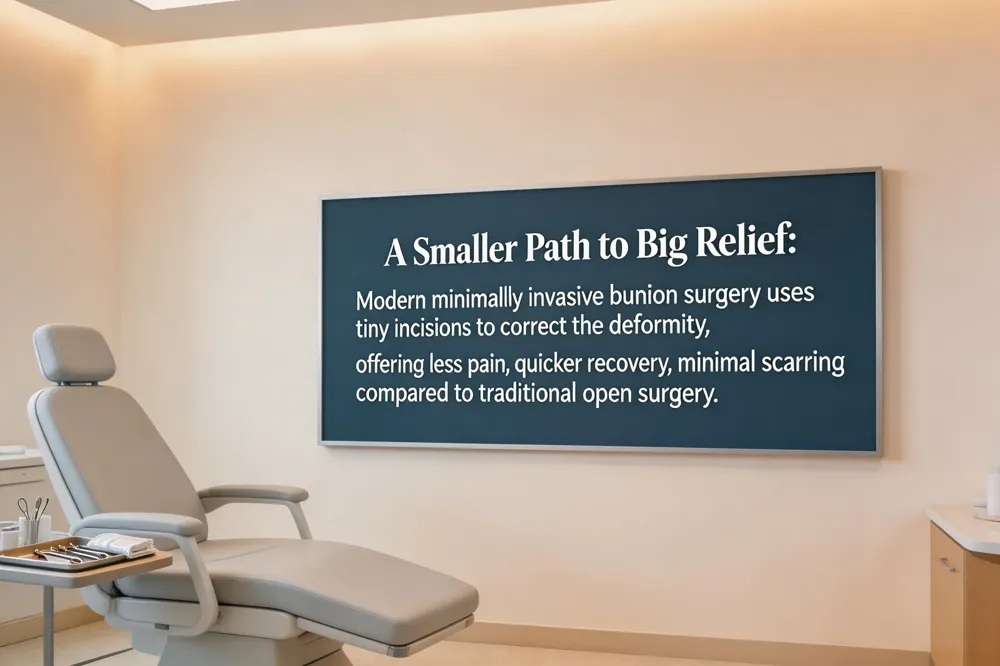
Minimally invasive bunion surgery (MIS) is a modern surgical technique designed to correct the bunion deformity—the bony bump at the base of the big toe—through several tiny, keyhole incisions, often only a few millimeters long. Unlike traditional open surgery, which requires a large 3-5 inch incision along the side of the foot, MIS uses specialized miniature instruments and real-time fluoroscopic (X-ray) guidance to cut and realign the bones. This approach minimizes trauma to the surrounding skin, muscles, and joint capsule, leading to significantly less tissue disruption.
The primary goal is to remove the bony prominence, straighten the misaligned big toe, and restore normal foot mechanics. Common procedures include the Percutaneous Chevron Akin (PECA) for mild to moderate cases and the MIS Percutaneous Lapidus for more severe deformities involving joint instability near the arch. By avoiding large incisions, this method prioritizes preserving the foot's natural anatomy and function.
Key Benefits Compared to Traditional Open Surgery
Patients choosing minimally invasive techniques typically experience a markedly different recovery journey. The most significant advantages stem directly from the reduced surgical footprint.
Reduced Post-Operative Pain and Swelling: With less soft tissue damage, patients report substantially less pain. Many surgical protocols use a long-acting local nerve block during the procedure, which numbs the foot for up to 24 hours post-op. Subsequently, pain is often managed effectively with over-the-counter medications like ibuprofen and acetaminophen, with fewer patients needing strong prescription opioids.
Minimal Scarring and Better Cosmetic Results: The small incisions heal with barely noticeable scars that fade quickly, a stark contrast to the prominent scar left by traditional open surgery.
Faster Recovery and Early Weight-Bearing: A hallmark of MIS is the ability to bear weight on the heel almost immediately after surgery, often walking the same day in a protective surgical shoe. This immediate mobilization helps prevent complications like blood clots and promotes faster healing. In contrast, traditional surgery often requires a prolonged period of non-weight-bearing, using crutches for several weeks.
Lower Risk of Complications: Smaller incisions reduce the exposure of internal tissues, thereby lowering the risks of surgical site infections, excessive bleeding, and nerve injury.
Quicker Return to Normal Activity: Patients can typically transition into supportive sneakers around 4-6 weeks post-surgery and return to most daily activities and sedentary work within two weeks. Full recovery to higher-impact activities like running usually occurs around 10-12 weeks, which is often about half the time required for traditional open bunionectomy.
Who is a Candidate for Minimally Invasive Surgery?
Not every bunion is suitable for a minimally invasive approach. Candidacy is carefully determined through a comprehensive clinical evaluation, including a physical exam and weight-bearing X-rays.
Ideal candidates are generally those with mild to moderate bunion deformities who have not found relief from conservative treatments like wider shoes, orthotics, or padding. Good bone quality and the absence of severe arthritis in the big toe joint are also important factors. The procedure is suitable for active individuals of various ages who require a quicker return to their routines.
Traditional open surgery may be recommended instead for patients with severe, complex deformities, significant arthritis, or poor bone quality (such as from osteoporosis). It is also the preferred method for revision surgeries or cases involving other major foot instabilities. A board-certified podiatric surgeon will assess your specific anatomy, lifestyle, and goals to recommend the most appropriate and safest surgical plan.
The Recovery Process and Milestones
Recovery from minimally invasive bunion surgery is a phased process, with clear milestones that guide patients back to full activity.
Weeks 1-2: Immediate Post-Op & Initial Healing
- Activity: Rest and elevate the foot 80% of the time initially. Walking for short distances in a surgical shoe or boot is encouraged, bearing weight on the heel.
- Care: Keep the surgical dressings clean and dry. Pain is managed with a regimen that often starts with a nerve block, followed by oral medications.
- Milestone: The first follow-up visit usually occurs around 2 weeks for suture removal and a wound check.
Weeks 3-6: Increasing Mobility
- Activity: Gradual increase in walking duration. Gentle toe motion exercises may be introduced to prevent stiffness.
- Footwear: Continue wearing the surgical shoe or a stiff-soled athletic shoe as directed.
- Milestone: Around 4-6 weeks, X-rays confirm initial bone healing, allowing a transition into a supportive, wide sneaker.
Weeks 7-12: Transition to Normal Activity
- Activity: Most patients resume normal daily activities and return to work (if sedentary). Physical therapy may be recommended to restore strength and gait.
- Footwear: Gradual return to a broader range of footwear, though narrow or high-heeled shoes should still be avoided.
- Milestone: By 10-12 weeks, patients are typically cleared for higher-impact activities like jogging or sports.
Long-Term (3-6+ Months): Full bone remodeling and the dissipation of residual swelling can continue for several months. Wearing sensible, well-fitting shoes is crucial long-term to maintain the surgical correction and prevent recurrence.
Emphasizing Personalized, Expert Care
Modern podiatric clinics emphasize an evidence-based, patient-centered approach. This means treatment plans—surgical or conservative—are never one-size-fits-all. They are tailored based on a detailed assessment of your foot structure, the severity of your deformity, your activity level, and your personal health goals.
Surgeon expertise is paramount, especially for advanced techniques like MIS bunion correction. Surgeons specializing in these procedures undergo dedicated fellowship training to master the use of miniature instruments and fluoroscopic navigation. Their deep understanding of foot biomechanics ensures that the correction addresses the root cause of the bunion, not just the visible bump, for a durable, functional result.
| Surgical Aspect | Minimally Invasive Surgery | Traditional Open Surgery |
|---|---|---|
| Incision Size | Several tiny incisions (2-5mm) | One large incision (3-5 inches) |
| Tissue Trauma | Minimal soft tissue disruption | Significant dissection required |
| Typical Pain Level | Significantly less post-op pain | Generally higher, longer-lasting pain |
| Initial Weight-Bearing | Often immediate, in surgical shoe | Typically delayed for weeks |
| Return to Normal Shoes | ~6 weeks | ~10-12 weeks or longer |
| Scarring | Minimal, faint scars | Larger, more noticeable scar |
| Best For | Mild to moderate bunion deformities | Severe, complex, or revision cases |
| Surgeon Skill Set | Requires specialized training in MIS techniques | Based on established open surgical principles |
Beyond the Bump: The Lifecycle of Common Foot Deformities
Understanding the Foundations: Defining Bunions and Hammertoes
Bunions and hammertoes are progressive structural deformities, not merely cosmetic bumps. A bunion, medically known as hallux valgus, is a bony prominence at the joint where the big toe meets the foot. This bump is the result of a misalignment where the first metatarsal bone shifts outward, forcing the big toe to angle inward toward the smaller toes. Importantly, it is a change in bone position, not an extra bone growth.
Hammertoe describes a deformity where one of the smaller toes—usually the second, third, or fourth—becomes bent at the middle joint, resembling a hammer. This occurs due to a muscle and tendon imbalance that pulls the toe into a curled position. It’s distinct from mallet toe (bend at the joint near the nail) and claw toe (bends in all three joints). These conditions often co-exist; a bunion can push the smaller toes out of alignment, contributing to hammertoe development.
Recognizing the Early Warnings: Key Signs and Risk Factors
Early symptoms are often subtle. For bunions, early signs include a slight bump at the big toe's base, redness, swelling, and tenderness. You might notice corns or calluses developing where the first and second toes rub together. For hammertoes, the initial sign is a visible curling or bending of the toe, which may still be flexible. Pain, stiffness, and corns on top of the bent joint are common.
Risk factors are shared and often interrelated:
| Primary Risk Factor | Impact on Bunions | Impact on Hammertoes |
|---|---|---|
| Inherited Foot Structure | Genetics influence foot shape, mechanics, and ligament laxity, accounting for most cases. | Genetic predisposition affects muscle balance and toe length, increasing susceptibility. |
| Footwear Choices | Tight, narrow, or high-heeled shoes crowd toes and exacerbate alignment issues. | Narrow toe boxes and high heels force toes into bent positions, creating pressure. |
| Biomechanical Issues | Flat feet, high arches, or abnormal gait can place uneven stress on the forefoot. | Muscle/tendon imbalances, often from high arches or flat feet, cause toe curling. |
| Medical Conditions | Inflammatory arthritis (e.g., rheumatoid) and neuromuscular disorders affect joint health. | Diabetes, rheumatoid arthritis, and conditions causing poor circulation increase risk. |
| Demographics | More common in women and individuals over 40; prevalence increases with age. | More frequent in women and older adults; heritability is a strong factor. |
When It's Not Just a Bunion: Conditions with Similar Symptoms
Pain in the forefoot can stem from various sources. While bunions and hammertoes are common, other conditions share similar symptoms. Osteoarthritis in the big toe joint (hallux rigidus) causes pain, stiffness, and swelling, mimicking bunion discomfort. Morton’s neuroma, a thickened nerve tissue between the toes, creates a burning pain and numbness in the ball of the foot, which can be confused with pain from hammertoes or advanced bunions.
Gout, an inflammatory arthritis, causes sudden, severe pain, redness, and swelling in a joint, often the big toe, which can be mistaken for an acutely inflamed bunion. A professional evaluation is essential for an accurate diagnosis, which typically includes a physical exam, observation of gait, and imaging like weight-bearing X-rays.
The Treatment Spectrum: From Conservative Care to Surgical Correction
Treatment is tailored to severity, symptoms, and the deformity's flexibility. The goal is to relieve pain, improve function, and slow progression.
Conservative (Non-Surgical) Management
This is always the first line of defense and is often effective for managing symptoms, especially in flexible deformities.
- Footwear Modification: The cornerstone of conservative care. Shoes should have a wide, deep, and flexible toe box, good arch support, and a low heel. Avoid pointed, narrow, or high-heeled styles.
- Padding and Splinting: Gel pads, moleskin, or custom-molded pads cushion painful areas. Toe spacers or splints can help realign toes and are often worn at night.
- Orthotic Devices: Custom orthotics, created from a 3D scan of your foot, correct biomechanical imbalances, redistribute pressure, and provide support.
- Medication and Therapy: Over-the-counter nonsteroidal anti-inflammatory drugs (NSAIDs) reduce pain and swelling. Icing can alleviate acute inflammation. Physical therapy exercises, like picking up marbles with toes or towel scrunches, strengthen foot muscles.
Surgical Correction
Surgery is considered when conservative measures fail to relieve pain that interferes with daily activities. It aims to correct the underlying structural problem.
- Bunion Surgery (Bunionectomy): Procedures vary but generally involve removing the bony bump, cutting and realigning the metatarsal bone (osteotomy), and repairing soft tissues. For severe arthritis, joint fusion (arthrodesis) may be necessary.
- Hammertoe Surgery: For flexible toes, a tendon transfer or release may suffice. For rigid deformities, the bent joint may be straightened by removing a piece of bone (arthroplasty) or fusing the joint (arthrodesis).
The Minimally Invasive Revolution: A Modern Path to Pain-Free Feet
Minimally invasive surgery (MIS) represents a significant advancement for correcting bunions and hammertoes. Instead of a large, open incision, the surgeon makes several tiny (2-5 mm) incisions. Specialized instruments and often a small burr or camera are used to cut and realign bones with minimal disruption to surrounding soft tissues.
| Aspect | Traditional Open Surgery | Minimally Invasive Surgery |
|---|---|---|
| Incision Size | Large, 3-5 inch incision | Several tiny, keyhole incisions |
| Tissue Disruption | Significant | Minimal |
| Post-Op Pain | Generally higher | Typically 50% less reported pain |
| Immediate Weight-Bearing | Often restricted for weeks | Often allowed immediately in a surgical shoe |
| Recovery Timeline | Longer, 10-12 weeks to normal shoes | Faster, ~6 weeks to normal shoes |
| Scarring | More noticeable scar | Minimal, faint scars |
| Ideal Candidates | All deformities, especially severe/complex cases | Mild to moderate bunions; many hammertoes |
Benefits include less postoperative pain, reduced swelling, faster bone healing, and a quicker return to daily activities and shoes. However, it requires specialized training and may not be suitable for the most severe deformities. Recovery still requires diligence—elevation, protective footwear, and adherence to your surgeon's protocol are key to success.
| Topic Covered | Primary Focus | Key Takeaway for Patients |
|---|---|---|
| Definitions | Structural bone/joint misalignment | Not just cosmetic; a progressive biomechanical issue. |
| Early Signs & Risks | Recognizing symptoms and causes | Genetics and footwear are major contributors; early signs are manageable. |
| Similar Conditions | Differential diagnosis | Forefoot pain has multiple causes; professional diagnosis is critical. |
| Treatment Spectrum | Stepwise approach from conservative to surgical | Non-surgical options manage symptoms first; surgery corrects structure. |
| Minimally Invasive Surgery | Advanced surgical technique benefits | Offers less pain, faster recovery for suitable candidates through tiny incisions. |