Why Minimally Invasive Podiatry Matters
Minimally invasive foot surgery (MIS) employs 3‑5 mm incisions and real‑time imaging such as fluoroscopy, allowing surgeons to correct bunions, hammertoes, plantar fasciitis and other deformities through tiny portals. Research consistently shows that MIS reduces soft‑tissue disruption, producing up to 40 % lower postoperative pain scores and a 30‑50 % drop in surgical‑site infection rates compared with traditional open techniques. Patients benefit from faster weight‑bearing—up to 90 % walk in a protective boot the day of surgery—and a shortened recovery window, often returning to normal shoes within 2–4 weeks rather than 6–12 weeks. The smaller wound size also minimizes scarring and opioid use, decreasing reliance on strong analgesics by roughly 25‑35 %. Because most procedures are outpatient, same‑day discharge lowers healthcare costs and eliminates hospital stays. Together, these clinical advantages translate into higher patient satisfaction, quicker return to daily activities, and better long‑term foot function. Overall, MIS empowers patients to regain mobility with confidence and disruption.
1. Faster Healing, Less Pain, and Superior Cosmetic Results
 Reduced tissue trauma and postoperative pain
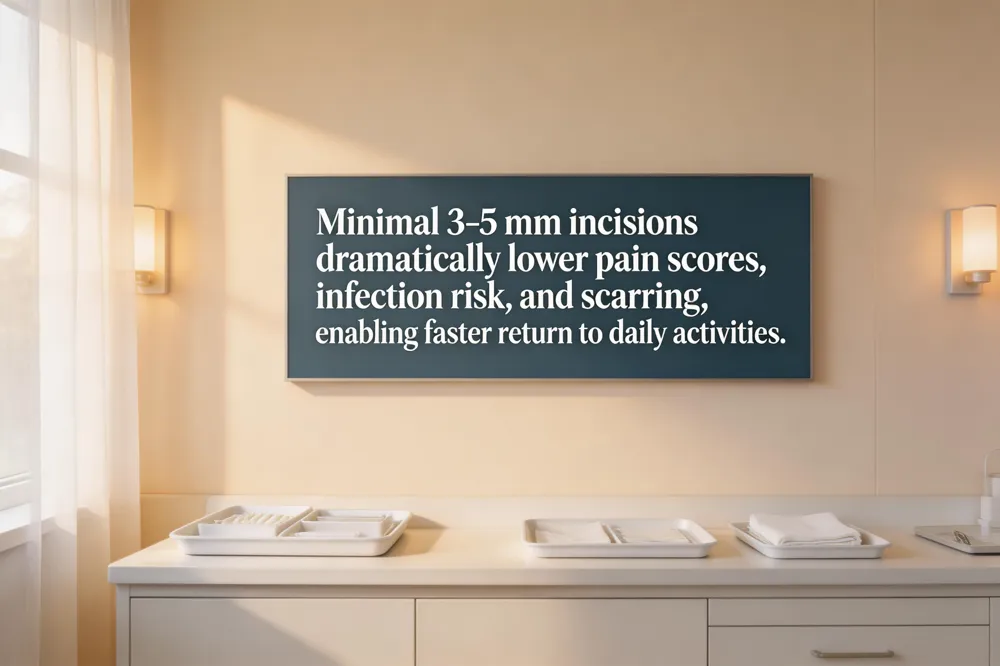
Minimally invasive foot surgery (MIS) uses 3‑5 mm incisions, limiting soft‑tissue disruption. Clinical data show up to 40 % lower pain scores on the Visual Analog Scale and a 25‑35 % reduction in opioid needs compared with open surgery. The smaller wound also cuts infection rates by 30‑50 %.
Reduced tissue trauma and postoperative pain
Minimally invasive foot surgery (MIS) uses 3‑5 mm incisions, limiting soft‑tissue disruption. Clinical data show up to 40 % lower pain scores on the Visual Analog Scale and a 25‑35 % reduction in opioid needs compared with open surgery. The smaller wound also cuts infection rates by 30‑50 %.
Accelerated return to weight‑bearing and daily activities Live fluoroscopic or ultrasound guidance allows precise bone work, enabling patients to walk in a protective boot the same day. Most individuals bear weight within 1‑2 weeks and resume normal shoes in 2‑4 weeks, versus 6‑12 weeks for traditional procedures.
Minimal scarring and improved aesthetics Incisions under 5 mm leave scars that are often invisible, especially when concealed by footwear. Cosmetic satisfaction scores exceed 90 %.
Daily foot care routine Wash feet daily with warm water and mild soap, dry thoroughly, trim nails straight across, change to clean socks, and wear supportive, breathable shoes. Inspect for cuts or redness each evening.
Foot care routine for soft feet Soak 10 min in warm water with Epsom salts, exfoliate gently with a pumice stone, moisturize with a urea‑based cream while skin is damp, and apply a barrier‑repair ointment at night.
List of common foot problems Bunions, hammertoes, plantar fasciitis, heel spurs, flat feet, high arches, athlete’s foot, ingrown nails, and diabetic neuropathy are among the most frequent complaints.
Why foot health matters Healthy feet provide stability, balance, and mobility; they also signal systemic issues such as diabetes or vascular disease. Maintaining foot health supports overall well‑being and independence.
2. Precision Imaging, Long‑Term Alignment, and Evidence‑Based Outcomes
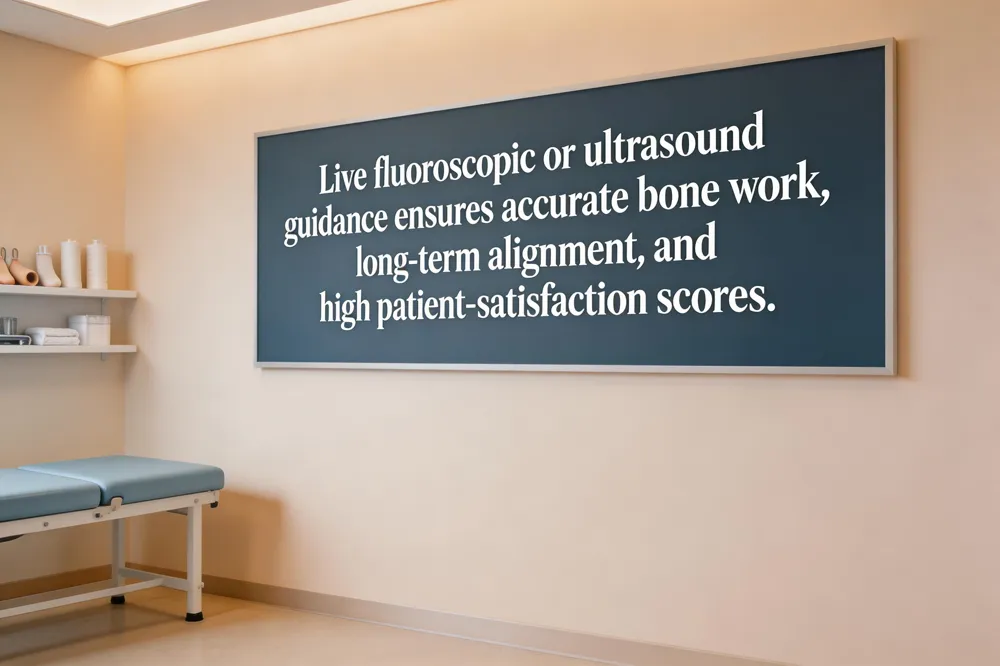 Live intra‑operative imaging—whether fluoroscopic X‑ray or high‑resolution ultrasound—allows the surgeon to see bone and joint structures in real time, guiding burrs and percutaneous instruments through incisions as small as 3–5 mm. This precision minimizes soft‑tissue disruption and enables accurate correction of bunions, hammertoes, plantar fasciitis, and bone spurs, leading to alignment that is maintained long‑term. Clinical studies consistently show that minimally invasive foot (MIS) surgery results in postoperative pain scores 30‑40 % lower and a 25‑35 % reduction in opioid use compared with open techniques, while patients achieve normal footwear and daily activities within 2‑4 weeks. Long‑term functional outcomes and patient satisfaction are high, with success rates up to 92 % for metatarsalgia and average satisfaction scores of 4.8‑5.0/5.
For those searching for advanced foot care near you, Advanced Foot Care offers state‑of‑the‑art imaging and minimally invasive procedures at multiple locations:
- Maspeth, NY – 70‑01 Grand Ave, board‑certified podiatrists, on‑site X‑ray, laser surgery, and shockwave therapy.
- Woodbury, NY – 20 Crossways Park Dr., Suite 304, comprehensive services including diabetic foot care and on‑site medical shoe store.
- Mineola, NY – 155 Mineola Blvd., Suite B, offering laser nail therapy, orthotics, and urgent same‑day appointments.
- Ronkonkoma, NY – 201 Portion Rd., Suite C, full range of foot and ankle care with digital X‑ray and physical‑therapy modalities.
- Manhasset, NY – 2110 Northern Blvd., Suite 208, featuring minimally invasive reconstructive surgery, shockwave therapy, and a patient portal for 24/7 communication.
These clinics provide outpatient, same‑day discharge, and a streamlined rehabilitation protocol that emphasizes early weight‑bearing, reduced infection risk, and superior cosmetic results—making MIS the evidence‑based choice for durable foot health.
3. Economic, Opioid‑Reduction, and Lifestyle Benefits
 Lower postoperative opioid requirements Minimally invasive foot surgery (MIS) consistently reduces opioid use by 25‑35 % compared with open techniques, thanks to less tissue disruption and lower pain scores. Patients often manage discomfort with over‑the‑counter analgesics, decreasing the risk of dependence and medication‑related side effects.
Outpatient basis, reduced hospital stay MIS procedures are performed in an outpatient setting, typically under light sedation or regional anesthesia. The average operative time is under one hour, and patients are discharged the same day, eliminating costly inpatient stays and associated complications.
Cost‑effectiveness and quicker return to work By shortening recovery (2‑4 weeks vs. 6‑12 weeks) and minimizing complications, MIS lowers overall healthcare expenses. Earlier return to normal shoes and daily activities translates into faster resumption of work, reducing lost productivity and indirect costs.
Can a podiatrist repair an Achilles tendon? Yes. A podiatric surgeon can diagnose and treat Achilles tendon injuries, offering minimally invasive or open repair when surgery is indicated, followed by protected weight‑bearing and structured rehabilitation.
Can a podiatrist help with osteoarthritis? Yes. Treatment includes custom orthoses, footwear guidance, targeted exercises, and, when needed, minimally invasive debridement or joint injections to alleviate pain and improve function.
Advanced foot care near me Advanced Foot Care provides comprehensive podiatric services—including MIS, shockwave therapy, and diabetic foot management—at convenient locations in northwest Chicago and South Florida.
Advanced Foot Care patient portal The secure portal offers 24/7 access to health records, appointments, and direct communication with your podiatrist, all complying with HIPAA regulations.
4. Patient‑Centric Care Across the United States
 Advanced Foot Care delivers minimally invasive podiatric services in both the Northwest Chicago region and South Florida, ensuring that patients across two widely separated markets have local access to the same state‑of‑the‑art imaging, live fluoroscopic guidance, and specialized burrs that reduce tissue trauma. Each office follows a standardized clinical protocol—pre‑operative education, intra‑operative imaging, and post‑procedure boot or brace protocols—to guarantee that surgical outcomes, infection rates, and cosmetic results are consistent regardless of geography.
Convenient scheduling is supported by an online patient portal that allows 24/7 secure access to appointment calendars, test results, and treatment plans. New patients can register, upload insurance documents, and request same‑day or future visits without phone calls. The portal also hosts educational videos on foot anatomy, postoperative weight‑bearing guidelines, and custom orthotics, empowering patients to follow evidence‑based rehabilitation pathways.
Advanced foot care near me – Searching for advanced foot care near you? Our clinics in Northwest Chicago and South Florida offer comprehensive podiatric services—including minimally invasive surgery, shockwave therapy, custom orthotics, and diabetic foot management—performed by an experienced surgeon. State‑of‑the‑art imaging and on‑site diagnostics ensure accurate diagnosis and faster treatment planning. Schedule a consultation today and take the first step toward pain‑free mobility.
Advanced foot care patient portal – The Advanced Foot Care patient portal offers 24/7 secure online access to your health information, appointment schedules, and medical records. New patients can register quickly, view test results, communicate directly with your podiatrist, and receive reminders for follow‑up visits. All data is protected with industry‑standard encryption and complies with HIPAA regulations.
5. Summing Up: Why Choose Minimally Invasive Podiatry Today?
 Key take‑aways from clinical data show that minimally invasive foot surgery (MIS) cuts postoperative pain by 30‑50 %, lowers infection risk up to 50 % and shortens return to normal shoes to 2–4 weeks versus 6–12 weeks for open surgery. Long‑term functional benefits include preserved ligament and tendon integrity, better foot biomechanics and durable alignment, while cosmetic outcomes are superior—scars are usually under5 mm and hidden by shoes. To start your treatment journey, schedule a consultation at Advanced Foot Care. Our clinics in Northwest Chicago and South Florida provide same‑day outpatient MIS, live fluoroscopic imaging and personalized rehab.
Advanced foot care near me: Searching for advanced foot care near you? Advanced Foot Care offers comprehensive podiatric services—including minimally invasive surgery, shockwave therapy, custom orthotics and diabetic foot management—performed by an experienced surgeon. Convenient offices in northwest Chicago and South Florida make specialist care easy to access. Our state‑of‑the‑art imaging ensures accurate diagnosis and faster treatment planning. Schedule a consultation today and take the first step toward pain‑free mobility.
Advanced Foot Care patient portal: The portal gives 24/7 secure online access to health information, appointments and medical records. New patients can register quickly, view test results, treatment plans and communicate directly with the podiatrist. You can request same‑day or future appointments, upload insurance documents and receive reminders. All data is protected with industry‑standard encryption and complies with HIPAA regulations.
Take the Next Step Toward Healthier Feet
Minimally invasive foot surgery provides nine key benefits that distinguish it from traditional open techniques. Small 3–5 mm incisions cut tissue trauma, yielding up to 40 % less postoperative pain and swelling. Real‑time imaging (fluoroscopy or ultrasound) guides bone and joint work, reducing malalignment. The tiny wound lowers infection risk by 30‑50 %. Patients can bear weight and walk in a protective boot the same day, often returning to normal shoes within 2–4 weeks. Scarring is minimal, leaving virtually invisible marks. Opioid use drops 25‑35 %, decreasing medication side effects. Outpatient care eliminates hospital stays, cutting overall costs. Preserving ligaments and tendons maintains natural biomechanics and limits stiffness. Satisfaction rates exceed 90 % with faster functional recovery.
If you struggle with bunions, hammertoes, plantar fasciitis or other foot problems, schedule a consultation today. Our podiatrists specialize in expert minimally invasive care that delivers precise correction, quicker healing and excellent cosmetic results for your foot health.