Why Minimally Invasive Foot Surgery Matters
Patients increasingly seek foot and ankle procedures that let them return to work, sport, and daily life within weeks rather than months. Minimally invasive surgery (MIS) meets that demand by using 2‑5 mm incisions, endoscopic cameras, and high‑speed burrs that preserve soft tissue. Clinical studies consistently show MIS reduces postoperative pain scores by 1–2 points on the Visual Analog Scale and lowers infection rates to 0.5‑1 % versus 2‑3 % for open techniques, translating into fewer opioid prescriptions and smoother recoveries. The United States has seen a rapid rise in MIS utilization: a 2020‑2022 insurance analysis reports a 27 % annual increase, the American College of Foot & Ankle Surgeons notes over 60 % of foot surgeries now incorporate at least one minimally invasive method, and the American Orthopaedic Foot & Ankle Society highlights ongoing research and education that fuel this growth. Together, patient expectations, robust evidence, and expanding adoption make minimally invasive foot surgery a cornerstone of modern podiatric care.
Advancements in Surgical Technology
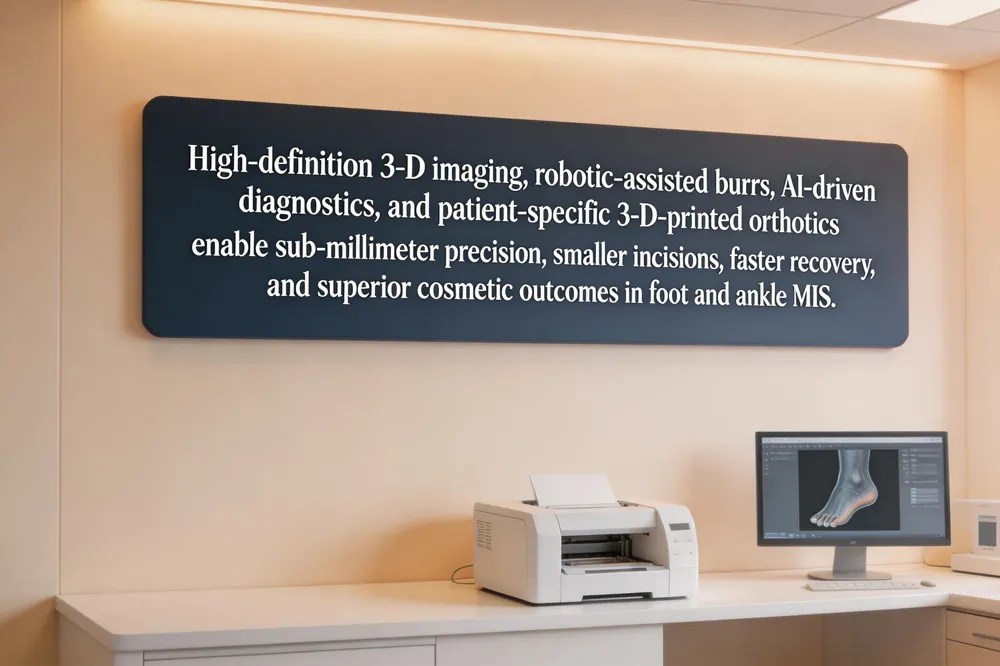 High‑definition 3‑D imaging and real‑time navigation now give surgeons sub‑millimeter view of bone and soft‑tissue structures, allowing precise osteotomies and tendon repairs through incisions smaller than 1 cm. Robotic‑assisted platforms equipped with ultra‑thin, low‑speed, high‑torque burrs execute these cuts with unparalleled accuracy while minimizing tissue trauma. AI‑driven diagnostics work hand‑in‑hand with wearable smart insoles that continuously capture pressure, gait, and temperature data; AI algorithms instantly flag early signs of injury or diabetic ulcer risk, enabling proactive intervention. Meanwhile, 3‑D scanning and rapid printing produce patient‑specific orthotics and bio‑integrative implants that perfectly match each foot’s anatomy, reducing the need for multiple fittings and improving functional outcomes. Together, these technologies—high‑resolution imaging, robotic assistance, AI analytics, and custom 3‑D‑printed solutions—represent the latest minimally invasive surgery (MIS) techniques, delivering faster recovery, less pain, and superior cosmetic results for foot and ankle patients.
Common Conditions Treated with MIS and Patient Benefits
 Minimally invasive surgery (MIS) has become the standard of care for a wide range of foot and ankle problems because it uses incisions of 2‑5 mm, high‑speed burrs, and real‑time fluoroscopic or endoscopic imaging to preserve soft tissue.
Bunions and Bunionette (Tailor’s Bunion) – Percutaneous hallux valgus correction realigns the first metatarsal through a tiny portal, while minimally invasive bunionette surgery reshapes the fifth metatarsal with a high‑speed burr and intra‑operative imaging. Both techniques dramatically lower postoperative swelling, pain, and scar formation, allowing patients to bear weight immediately and return to regular shoes within weeks.
Hammertoes – Tiny percutaneous tenotomies release tight flexor tendons or reposition them through a 2‑3 mm incision, avoiding extensive tendon dissection. The result is rapid toe straightening, minimal stiffness, and a painless return to daily activities.
Plantar Fasciitis and Neuromas – Endoscopic plantar fasciotomy (EPF) or ultrasound‑guided nerve decompression treats chronic heel pain and Morton's neuroma with one‑ or two‑centimeter portals. Patients experience up to a 30‑40 % reduction in postoperative pain scores and can resume weight‑bearing as tolerated.
Achilles Tendon Repair – Percutaneous repair or mini‑open techniques use a small incision and specialized suturing devices to preserve surrounding tissue, leading to faster tendon healing and earlier ambulation (often 3‑4 weeks earlier than open repair).
Patient‑Centric Benefits – Across these conditions, MIS consistently yields less postoperative pain, lower infection rates (0.5‑2 % vs 2‑6 % for open surgery), superior cosmetic outcomes, and a shortened recovery timeline—often allowing patients to walk the same day and return to work within weeks. This combination of precision, safety, and rapid return to function makes MIS the preferred option for eligible patients seeking effective foot and ankle care.
Choosing the Right Specialist
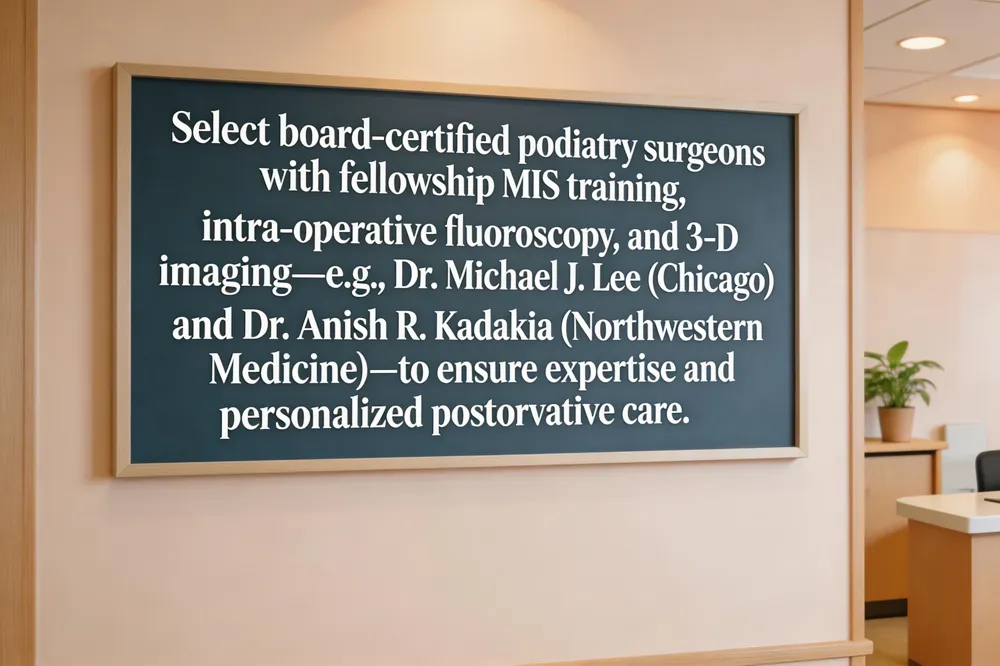 When selecting a surgeon for minimally invasive foot and ankle care, prioritize board‑certified podiatry surgeons who combine advanced training with a patient‑centered philosophy. In Chicago and South Florida, clinics such as Advanced Footcare IL and Northwestern Medicine’s Downtown Chicago team employ surgeons who have completed fellowship training in minimally invasive techniques, use intra‑operative fluoroscopy, and integrate 3‑D imaging for precise deformity correction.
Best podiatrist in Chicago – Dr. Michael J. Lee, MD, is the leading podiatrist at Advanced Footcare IL. He is board‑certified, specializes in Lapiplasty® bunion correction and arthroscopic ankle procedures, and delivers individualized care plans that emphasize rapid recovery and cosmetic outcomes.
Best foot and ankle orthopedic surgeons in Chicago – Dr. Anish R. Kadakia, MD and Dr. Muhammad Y. Mutawakkil, MD lead Northwestern Medicine’s foot and ankle service, offering state‑of‑the‑art minimally invasive surgery and sports‑medicine expertise. High‑volume teams at Midwest Orthopaedics at Rush, Advocate Good Samaritan Hospital, and other regional centers also provide top‑tier orthopedic care with proven functional results.
Choosing a surgeon with formal MIS training, robust imaging support, and a commitment to personalized postoperative protocols ensures the best chance for a swift, pain‑free return to daily activities.
Post‑operative Care, Recovery and When to Seek Help
 Early weight‑bearing protocols are a hallmark of modern minimally invasive foot surgery. Because incisions are only 2‑5 mm, most procedures—bunions, hammertoes, Achilles repair, or endoscopic plantar fascia release—allow patients to stand in a rigid post‑operative shoe within 24‑48 hours and progress to protected weight‑bearing as tolerated. This rapid mobilization minimizes stiffness, reduces swelling, and shortens the overall healing timeline.
Telemedicine follow‑up has become routine in U.S. podiatry clinics, including our Northwestern Chicago and South Florida locations. Virtual visits let surgeons assess incision appearance, review pain scores, and adjust rehabilitation plans without a clinic trip, improving adherence and catching complications early.
Symptom awareness is essential: persistent pain, increasing swelling, redness, drainage, or new numbness should prompt immediate contact with your podiatrist. These signs may indicate infection, nerve irritation, or hardware problems.
Can a podiatrist help with ankles? Yes. Podiatrists diagnose and treat ankle sprains, tendonitis, arthritis, instability, fractures, and deformities, using braces, orthotics, injections, and minimally invasive surgery when needed.
What are 5 foot symptoms you should never ignore? 1. Heel pain that won’t resolve, 2. Painful bunions, 3. Tingling or numbness, 4. Ingrown toenails, 5. Sudden skin or nail changes.
What is the most common problem treated by a podiatrist? Bunions—bony enlargements on the big toe side—are the top complaint, often requiring early conservative care and, when necessary, minimally invasive surgical correction.
Future Directions and Community Impact
 Clinical Research Outcomes – Studies show the superiority of minimally invasive foot surgery (MIS). A 2019 Foot & Ankle International trial reported lower pain scores and faster functional recovery after MIS bunionectomy; a 2023 meta‑analysis found percutaneous Achilles repair returned patients to weight‑bearing 3‑4 weeks earlier than open repair. These data support durable alignment correction and reduced complications.
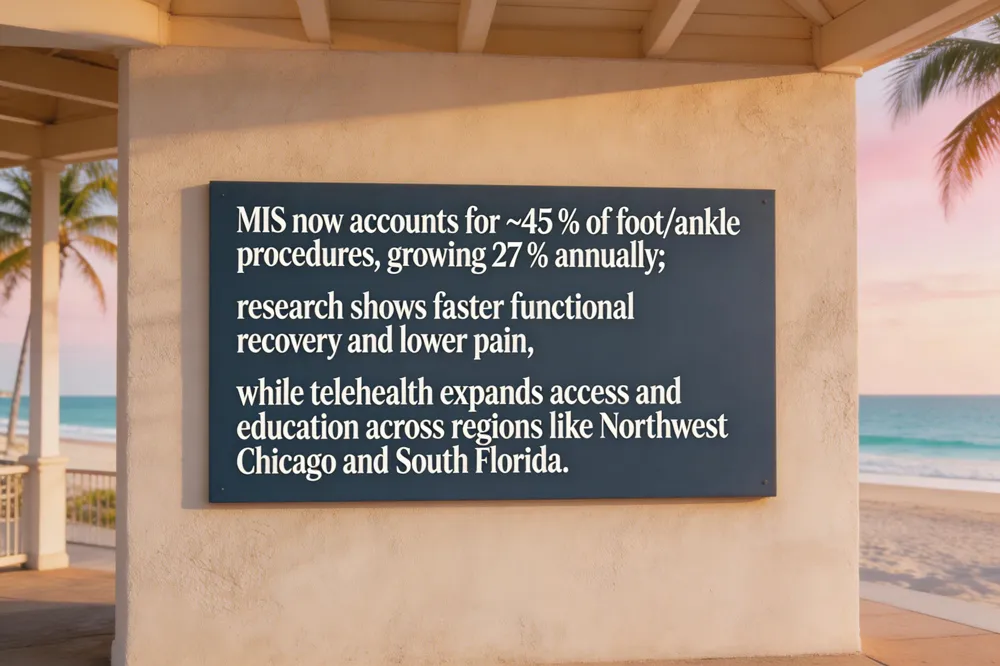
Growth of MIS Utilization – MIS now comprises about 45 % of foot and ankle procedures, with a 27 % annual increase from 2020‑2022. Ambulatory surgical centers with portable fluoroscopy have expanded access, especially in Northwest Chicago and South Florida clinics.
Patient Education and Telehealth – Telemedicine pre‑operative assessments let clinicians triage candidates, discuss imaging‑guided plans, and provide postoperative guidance remotely, improving adherence and satisfaction while lowering travel burdens for a broader patient population nationwide today.
A New Era for Foot Health
Modern podiatry is reshaping foot health by placing patients at the center of every decision. Tailored treatment plans combine minimally invasive bunionectomy, hammertoe release, and percutaneous Achilles repair with rapid, light‑weight stitch and early weight‑bearing protocols, minimizing postoperative swelling. These techniques reduce pain, swelling, and infection risk, allowing patients to resume daily activities within weeks. Continuous innovation drives the field: high‑definition fluoroscopy, 3‑D‑printed orthotics, ultrasonic bone cutters, and AI‑assisted imaging sharpen precision and expand indications. In Chicago’s Northwest clinics and South Florida’s specialty centers, board‑certified surgeons such as Dr. Kadakia, Dr. Mutawakkil, and Dr. Hall bring this cutting‑edge care directly to the community, ensuring that every step toward recovery is guided by expertise and compassion.