Why Heel Pain Matters
Heel pain affects more than 2 million Americans each year, making it one of the most common musculoskeletal complaints in the United States. The discomfort often limits basic activities such as walking, standing for work, or exercising, leading to reduced productivity, weight gain, and even mood disturbances. Plantar fasciitis accounts for the majority of cases, representing the most frequent source of heel pain due to inflammation of the thick plantar fascia band that connects the heel bone to the foot’s arch. Because the condition frequently worsens after periods of rest and improves only temporarily with activity, it can become chronic, altering gait and placing additional stress on knees, hips, and the lower back. Early recognition and effective treatment are essential to preserve functional mobility and overall quality of life.
Understanding Plantar Fasciitis: Causes, Symptoms, and Risk Factors
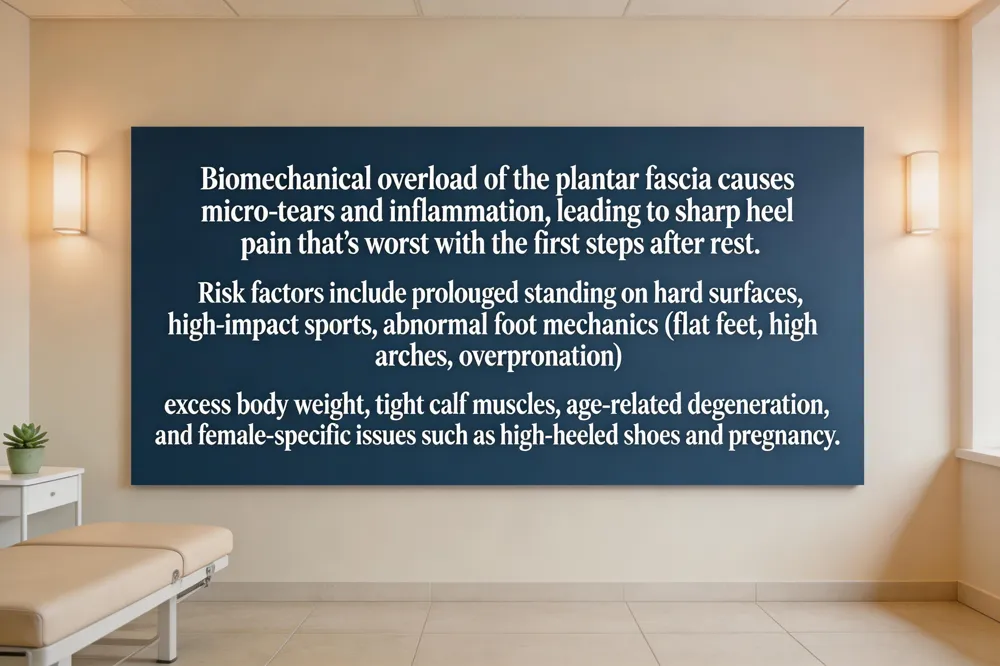 Plantar fasciitis results from biomechanical overload of the thick plantar fascia that runs from the calcaneus to the toes. Repeated tension—caused by prolonged standing on hard surfaces, high‑impact sports (running, ballet, dance), or abnormal foot mechanics such as flat feet, high arches, or overpronation—produces micro‑tears and inflammation. Excess body weight and tight calf muscles further increase tension, while age‑related degeneration of the fascia’s heel attachment makes it more vulnerable.
Clinically, patients describe a sharp, stabbing heel pain that is worst with the first steps after waking or sitting, often easing after a few minutes of walking. Stiffness, swelling, and a tight‑Achilles sensation accompany the pain, which can recur after prolonged activity. Typical diagnostic clues include localized tenderness just anterior to the calcaneal tubercle and limited ankle dorsiflexion on physical exam; imaging is reserved for atypical cases.
Women may be disproportionately affected due to high‑heeled or ill‑fitting footwear, pregnancy‑related weight gain, hormonal changes, and higher rates of osteoporosis, all of which increase stress on the plantar fascia and calcaneus. Red‑flag signs demanding urgent care are sudden severe swelling, warmth, fever, inability to bear weight, or a popping sensation suggesting fracture or tendon rupture. Finally, five foot symptoms that should never be ignored are persistent heel pain, painful bunions, tingling or numbness, ingrown toenails, and unexplained skin or nail changes—each warranting prompt podiatric evaluation.
First‑Line Home Care for Heel Pain
 Managing heel pain at home starts with rest and activity modification—avoid prolonged standing, high‑impact exercise, and walking barefoot on hard surfaces. Apply ice (wrapped in a cloth) to the painful area for 15‑20 minutes 2‑4 times a day to reduce inflammation and numb pain.
Stretching protocols are essential. A calf stretch against a wall (back knee straight, heel on the floor) held 15‑30 seconds, 2‑4 times daily, eases tension in the Achilles tendon and plantar fascia. Seated toe‑pull (towel stretch) and plantar‑fascia stretches (pulling the toes toward the shin) should be performed 2‑3 times a day. Adding a step‑down calf stretch improves ankle dorsiflexion.
Night splints keep the foot in a gentle dorsiflexed position while you sleep, preventing overnight tightening of the fascia and often providing relief within a few days. Boot‑style or dorsal‑style splints can be used; consistent nightly wear is key.
Simple at‑based strengthening includes toe‑curls/towel scrunches and eccentric heel raises on a step (2 sets of 10‑15 reps). These strengthen intrinsic foot muscles and the calf‑Achilles complex, reducing load on the plantar fascia.
Over‑the‑counter tablets such as ibuprofen or naproxen can be taken as directed for short‑term pain control, but they do not address the underlying biomechanics.
Q&A:
- Heel pain treatment at home: Rest, ice, stretching, night splint, supportive shoes, and NSAIDs.
- Heel pain causes and home remedies: Plantar fasciitis, Achilles tendinitis, bursitis; treat with rest, ice, stretching, orthotics, and massage.
- Plantar fasciitis stretches: Wall calf stretch, towel toe‑pull, step calf stretch, and foot‑roll massage.
- Plantar fasciitis exercises: Calf stretch, towel stretch, toe‑curls, frozen‑bottle roll, and eccentric heel raises.
- Heel pain exercises: Calf stretch, plantar‑fascia massage, heel raises, towel scrunches, and intrinsic foot strengthening.
- Plantar fasciitis treatment night splints: Night‑time dorsiflexion splints reduce morning pain; use nightly with stretching and orthotics.
- How to cure heel pain fast at home: Ice, supportive footwear or splint, regular stretching, strengthening heel raises, avoid overuse, and replace worn shoes.
When Conservative Care Isn’t Enough
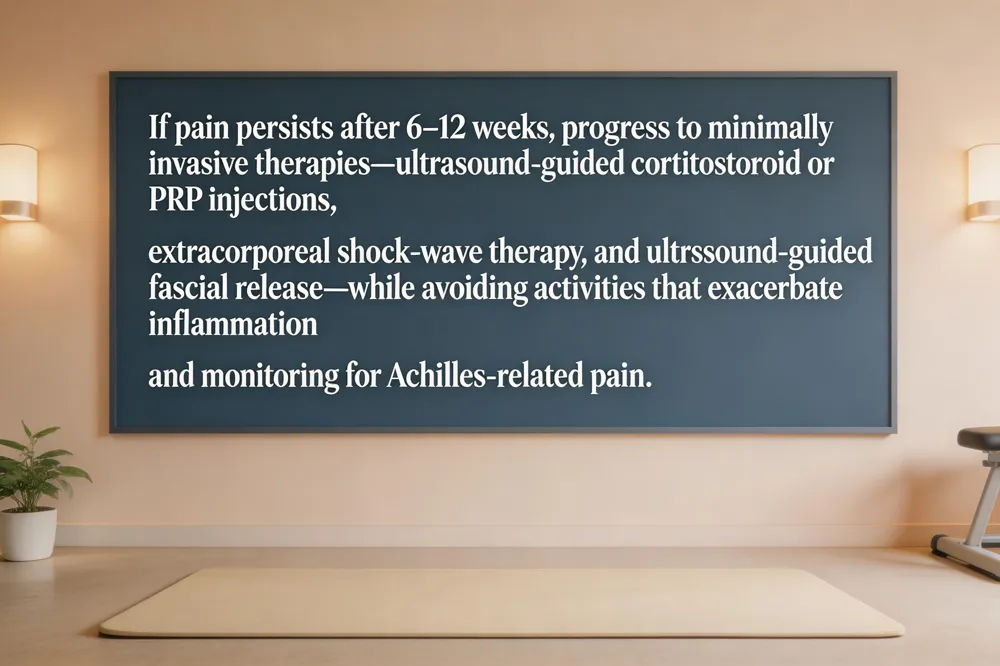 After several weeks of rest, ice, NSAIDs, stretching, orthotics and night‑splints, many patients still experience persistent heel pain. At this point the treatment plan should progress to minimally invasive therapies that target the inflamed plantar fascia while preserving foot mechanics.
Progression to minimally invasive therapies – Ultrasound‑guided corticosteroid or platelet‑rich plasma (PRP) injections, extracorporeal shock‑wave therapy (ESWT) (ESWT), and ultrasound‑guided fascial release are now standard options for recalcitrant plantar fasciitis. These modalities reduce inflammation, stimulate collagen remodeling, and can shorten recovery compared with prolonged conservative care alone.
Risks of ignoring symptoms – Continuing high‑impact activities, wearing flip‑flops, or neglecting daily stretching can turn a self‑limited inflammation into chronic scar tissue, Achilles tendon rupture, or arch collapse. Delayed treatment also raises the likelihood of requiring surgical release, which carries risks of nerve injury and arch destabilization.
Targeted injections and shock‑wave options – Corticosteroid injections give rapid pain relief but must be limited to avoid fascia rupture. PRP delivers the patient’s own growth factors to promote tissue healing, while ESWT delivers acoustic energy that improves vascularity and reduces pain. Both are effective after 6–12 weeks of failed conservative therapy.
Identifying Achilles‑related heel pain – Sharp pain at the back of the heel, especially after running or prolonged standing, often signals Achilles tendinitis or retro‑calcaneal bursitis. Physical exam, dorsiflexion testing, and, when needed, ultrasound differentiate these conditions from plantar fasciitis, guiding appropriate minimally invasive interventions such as tendon‑focused injections or targeted physical‑therapy protocols.
Professional Options and Local Expertise
 When searching for "plantar fasciitis treatment near me," Advanced Foot Care Center offers board‑certified podiatrists in northwest Chicago and South Florida who combine evidence‑based conservative care with minimally invasive options such as ultrasound‑guided corticosteroid or PRP injections, extracorporeal shock‑wave therapy, and custom orthotics. A typical first visit includes a thorough history, physical exam, and imaging only when needed, followed by a personalized plan that emphasizes rest, ice, stretching of the calf and plantar fascia, night splints, and supportive footwear. If pain persists, the clinic can perform percutaneous needle tenotomy or endoscopic plantar‑fascia release, reserving surgery for rare refractory cases. Patients also benefit from the Advanced Podiatry Group’s boutique approach, offering concierge‑style service, quick scheduling, and specialized treatments for burning heel pain, severe fasciitis that limits walking, and other heel‑pain causes such as Achilles tendinitis, bursitis, or heel spurs. Early evaluation, weight‑management guidance, and proper shoe selection are emphasized to prevent chronic disability. Appointments can be booked online or by calling (312) 555‑1234 (Chicago) or (305) 555‑5678 (South Florida) for prompt, expert care.
Long‑Term Management, Medications, and Frequently Asked Questions
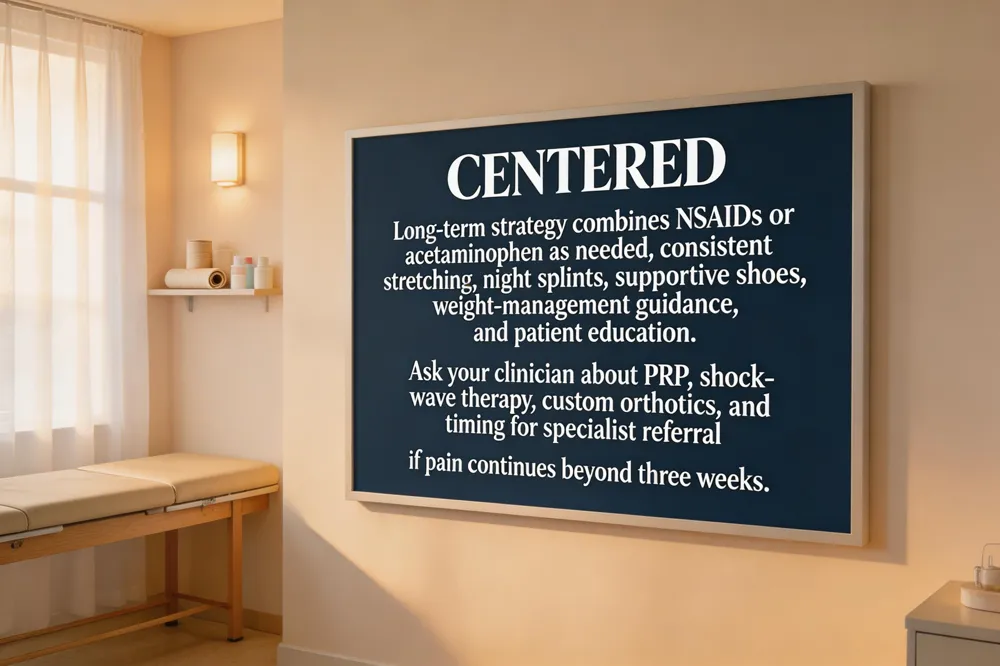 Managing heel pain, especially plantar fasciitis, requires a blend of conservative care, medication, and patient‑education.
Medication options and safety – First‑line therapy is an over‑the‑counter NSAID such as ibuprofen or naproxen, which reduces inflammation and pain. Acetaminophen can be used when NSAIDs are contraindicated, though it lacks anti‑inflammatory effects. Prescription NSAIDs or short courses of oral corticosteroids are reserved for persistent pain under podiatrist supervision. Always disclose medical history and other drugs to avoid adverse interactions.
Quick‑relief strategies – Ice the heel 15‑20 minutes several times daily, elevate the foot, and use a night splint or heel cup to maintain a gentle stretch overnight. Supportive, cushioned shoes or custom orthotics off‑load the plantar fascia.
One‑week stretch plan – Perform calf‑gastrocnemius and Achilles stretches (wall stretch, towel stretch) 3‑4 times daily, holding 20‑30 seconds. Add plantar‑fascia stretches (pulling toes toward the shin) and roll a frozen water bottle under the foot for massage. Consistency can markedly reduce pain within seven days.
Beyond the basics: what to ask your doctor – Inquire about minimally invasive options (PRP injections, extracorporeal shock‑wave therapy) if pain persists beyond three weeks, the need for night splints, and the timing for a possible referral to a podiatrist for custom orthotics or imaging. Early, personalized intervention helps prevent chronic gait changes and secondary joint issues.
Take the First Step Toward Pain‑Free Feet
Plantar fasciitis is the leading cause of heel pain, presenting as sharp “first‑step” discomfort that often worsens after prolonged standing or activity. Early identification of risk factors—tight calves, improper footwear, obesity, and excessive impact—allows prompt, conservative management with rest, ice, NSAIDs, targeted stretches, night splints, and orthotic support. When symptoms persist, advanced minimally invasive options such as corticosteroid, PRP, or shock‑wave therapy can accelerate healing. The Advanced Foot Care team in Houston offers a multidisciplinary approach that combines podiatric expertise, personalized orthotics, and state‑of‑the‑art procedures, ensuring patients receive timely, evidence‑based care to restore function and prevent chronic disability.