Modern Foot Pain Management Overview
Foot pain affects roughly 10 % of U.S. adults, with conditions such as plantar fasciitis, Achilles tendinopathy and heel sp for being the most common sources of chronic discomfort. Traditional first‑line care—rest, ice, orthotics, stretching and short‑term NSAIDs—provides relief for many but often fails when the pathology is entrenched. Evidence‑based early intervention with advanced modalities, especially extracorporeal shockwave therapy (ESWT), can accelerate healing by stimulating neovascularization, collagen synthesis and nitric‑oxide production, reducing pain scores by 40‑70 % within 3‑4 weeks and shortening rehabilitation time by up to 50 %. Integrating ESWT with regenerative options (PRP, stem‑cell injections) and tailored physical‑therapy programs offers a non‑surgical pathway that preserves tissue integrity, minimizes downtime, and improves long‑term functional outcomes.
Shockwave Therapy: How It Works and What It Treats
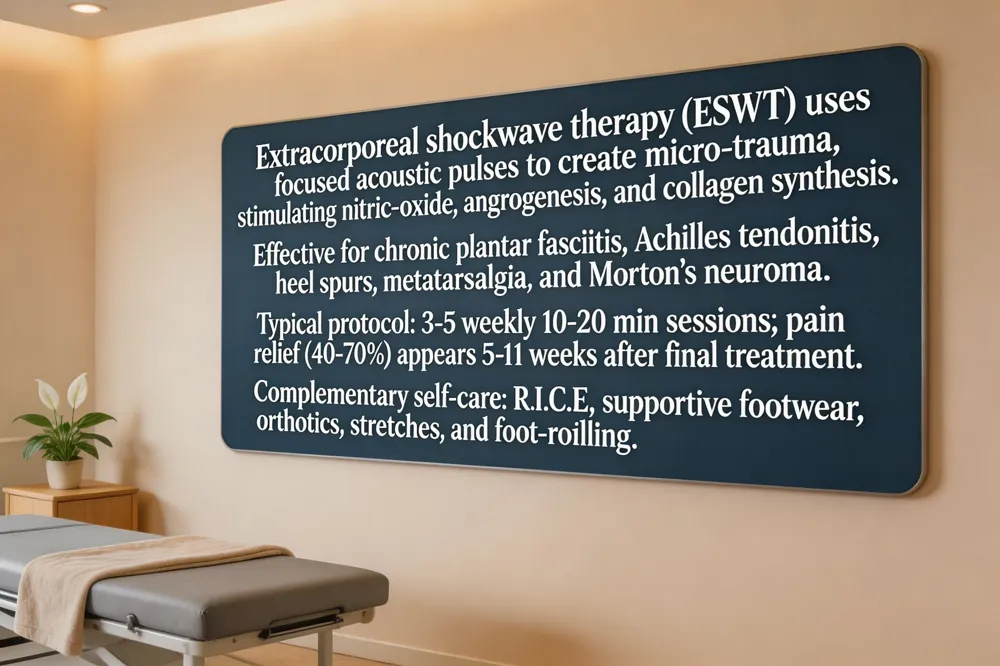 Shockwave therapy (extracorporeal shockwave therapy, ESWT) delivers focused acoustic pulses that create controlled micro‑trauma in damaged tissue. This micro‑injury triggers a cascade of cellular responses: increased nitric‑oxide production, angiogenesis, and up‑regulation of growth factors that promote collagen synthesis and tissue regeneration. Conditions that respond well to ESWT include chronic plantar fasciitis, Achilles tendonitis, heel spurs, metatarsalgia, and Morton’s neuroma. A typical protocol consists of 3‑5 weekly sessions, each 10‑20 minutes long; many patients feel an immediate “numbing” effect, but the most meaningful pain reduction (40‑70 % in 2‑4 weeks) and functional gain appear 5‑11 weeks after the final treatment. Complementary self‑care strategies—R.I.C.E. , supportive footwear, custom orthotics, calf and plantar‑fascia stretches, and gentle foot‑rolling—enhance outcomes and reduce recurrence.
Common foot‑pain types – Heel pain (plantar fasciitis, Achilles tendonitis), ball‑of‑foot pain (Morton’s neuroma, stress fractures, ankle sprains, forefoot bunions or hammertoes, side‑foot peroneal tendonitis, and nerve‑related burning or tingling.
Effective relief strategies – Rest, ice, elevation, NSAIDs, targeted stretching, massage, and progressive strengthening; when conservative care fails, ESWT offers a non‑invasive alternative to corticosteroid injections or surgery.
Pain under the foot (plantar pain) – Usually stems from plantar fascia inflammation, heel spurs, metatarsal overload, or Morton’s neuroma, often exacerbated by inappropriate footwear, high arches, flat feet, or excess weight.
Self‑care for Morton's neuroma – Ice massage with a frozen water bottle, wide‑toe‑box shoes or metatarsal pads, weight‑bearing reduction, NSAIDs, and night splints; persistent symptoms warrant podiatrist evaluation for injections or minimally invasive radio‑frequency treatment.
Minimally Invasive Bunion Surgery: Techniques, Procedure, and Outcomes
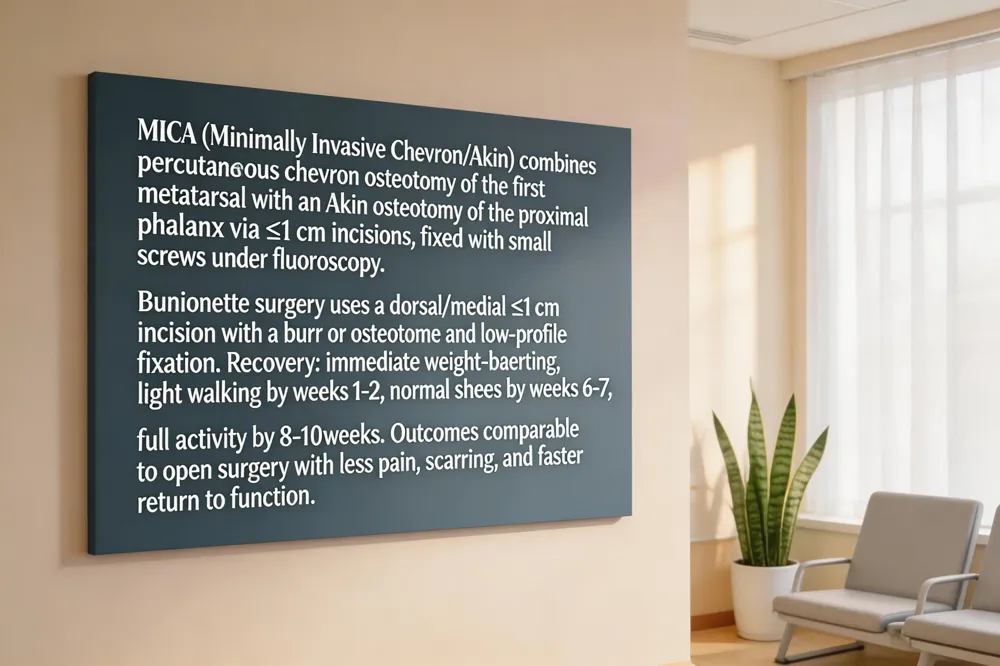 Minimally invasive bunion surgery has become a preferred option for correcting hallux valgus while preserving soft‑tissue integrity. What is the MICA technique? MICA (Minimally Invasive Chevron / Akin) combines a percutaneous chevron osteotomy of the first metatarsal with an Akin osteotomy of the proximal phalanx, using 1‑cm or smaller incisions. Guide wires and specialized burrs under fluoroscopic guidance cut and realign the bones, which are then fixed with small screws. This approach minimizes scarring, reduces postoperative pain, and often allows immediate weight‑bearing, with most patients returning to normal shoes within weeks. How is a minimally invasive bunionette (tailor’s bunion) surgery performed? A dorsal or medial incision under 1 cm is made over the fifth metatarsal head. A percutaneous burr or osteotome creates a precise osteotomy, and the fragment is stabilized with a low‑profile screw or miniature plate inserted through the same incision. The soft‑tissue envelope remains largely intact, decreasing swelling and permitting protected weight‑bearing within days. Typical recovery timeline? Weight‑bearing in a postoperative shoe or within the first 1‑2 days, followed by gentle toe range‑of‑motion exercises. By weeks 1‑2 patients progress to light walking; weeks 3‑6 involve a supportive shoe and increased activity. The orthopedic shoe is usually removed at weeks 6‑7, and most return to normal activities by 8‑10 weeks, with full bone healing up to 3 months. Effectiveness compared with open surgery? Clinical studies show correction rates comparable to traditional open procedures, but with less postoperative pain, smaller scars, and faster functional recovery. Risks such as recurrence, hardware irritation, or infection remain low when performed by experienced surgeons. Finding a qualified surgeon? Advanced Foot Care Clinic offers MICA and other minimally invasive bunion techniques at its Northwest Chicago, Illinois, and South Florida locations, providing board‑certified podiatric surgeons experienced in fluoroscopic‑guided foot surgery.
Recovery Expectations for Minimally Invasive Foot Surgery
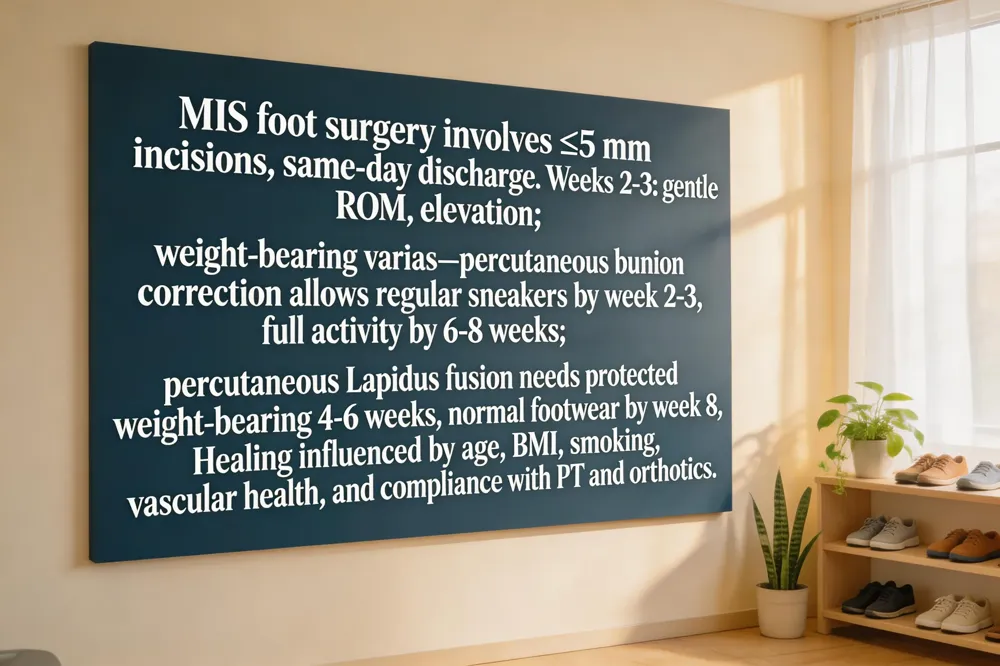 Minimally invasive foot surgery (MIS) typically allows patients to leave the office the same day, with incisions no larger than 5 mm and minimal tissue trauma. In the first 2–3 weeks, gentle range‑of‑motion exercises and elevation are encouraged to control swelling and promote micro‑circulation. Weight‑bearing protocols differ by procedure: after a percutaneous bunion correction such as the PECA technique, most patients can walk in a regular sneaker by week 2–3 and resume light daily activities by six weeks. More extensive MIS procedures, like a percutaneous Lapidus fusion, usually require protected weight‑bearing for 4–6 weeks, with full weight‑bearing and normal footwear by week 8. Factors that influence healing speed include patient age, body‑mass index, smoking status, presence of peripheral vascular disease, and adherence to post‑operative instructions. Physical therapy, custom orthotics, and a graduated return to activity (walking → low‑impact exercise → high‑impact sport) further accelerate recovery. In summary, most patients return to normal daily activities within six to eight weeks, while high‑impact sports may need 10–12 weeks before clearance.
Rapid Self‑Care Relief for Everyday Foot Discomfort
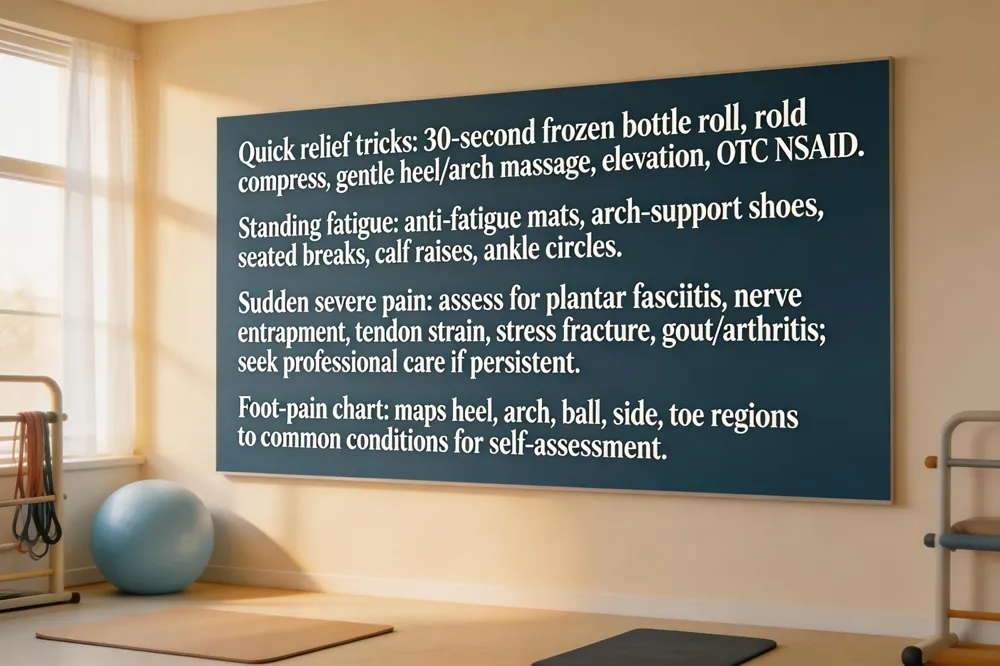 Immediate pain‑relief tricks – Apply a cold compress or roll a frozen water bottle under the painful area for 30 seconds, then gently press the heel and arch with your thumbs. Elevate the foot for a few minutes and, if needed, take an OTC NSAID such as ibuprofen.
Managing pain from prolonged standing – Use cushioned anti‑fatigue mats and shoes with good arch support, a wide toe box, and custom orthotics if required. Take seated breaks every 30‑60 minutes, elevate the feet, and perform calf raises, ankle circles, and wall‑based calf stretches several times a day. Compression socks or a massage ball can further reduce swelling.
Understanding sudden or severe foot pain – Sudden pain without obvious injury may stem from plantar‑fascia inflammation, nerve compression (tarsal tunnel, Morton’s neuroma), tendon strain, stress fractures, or systemic flare‑ups such as gout or arthritis. Persistent, unbearable pain often signals fractures, severe tendon rupture, infection, or vascular disease and warrants prompt medical evaluation.
Using a foot‑pain chart for self‑assessment – A foot‑pain chart divides the foot into regions (heel, arch, ball, side, toe) and links each area to common conditions (e.g., heel = plantar fasciitis, ball = metatarsalgia). Matching your symptoms to the chart can guide you toward appropriate self‑care and help the podiatrist focus the exam.
Quick answers
- Bottom‑foot pain: supportive shoes, ice, rest, calf/plantar‑fascia stretches, OTC pain relievers; consider night splint if persistent.
- 30‑second relief: cold compress/frozen bottle roll, brief tip‑toe activation, gentle massage, brief elevation.
- Pain from all‑day standing: anti‑fatigue mats, arch‑support shoes, regular breaks, stretches, compression, orthotics.
- Why sudden pain?: inflammation, nerve entrapment, tendon strain, stress fracture, gout/arthritis.
- Unbearable pain: fractures, tendon rupture, severe arthritis, infection, neuropathy, vascular disease.
- Foot‑pain chart?: Yes—maps pain locations to likely pathologies; useful for screening but not a substitute for professional diagnosis.
Beyond ESWT: Tendon Lengthening, Massage, and Specialty Procedures
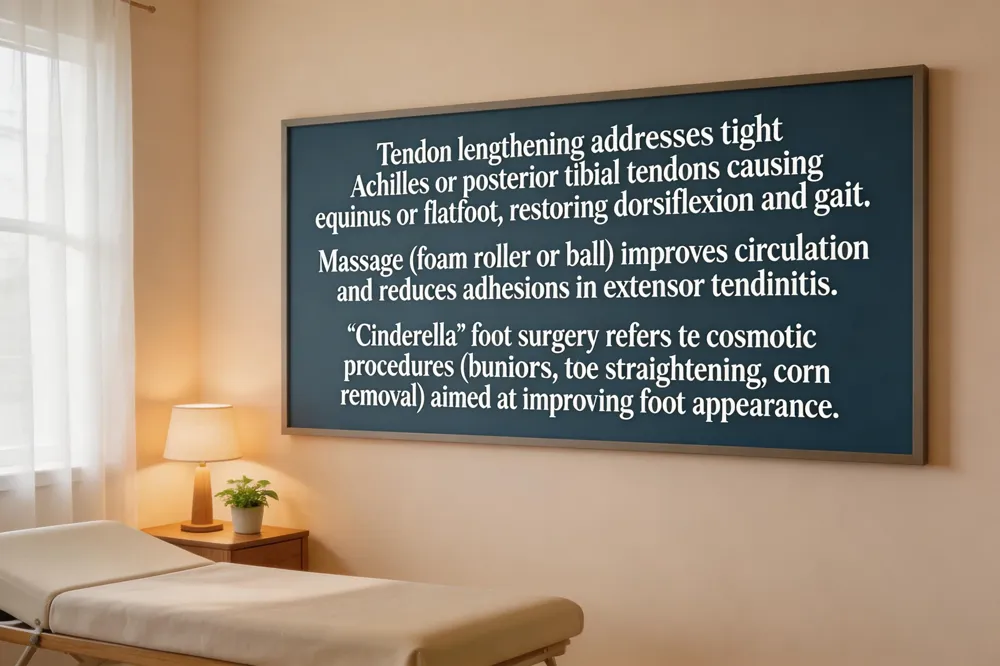 Tendon lengthening is indicated when a tendon is excessively tight, producing deformity, limited dorsiflexion, or abnormal gait. In foot and ankle care this most often involves Achilles contracture (equinus) or a shortened posterior tibial tendon that contributes to flatfoot, as well as neuromuscular spastic contractures that fail to improve with stretching, bracing, or therapy. When pain, poor posture, or functional loss persist, surgical lengthening restores balanced mechanics and pain‑free walking.
Massage can aid extensor tendinitis by improving local circulation, reducing adhesions, and relieving stiffness. Gentle self‑massage with a foam roller or massage ball, combined with calf stretching, ice, and anti‑inflammatory medication, enhances recovery while minimizing tissue irritation.
The “Cinderella” foot surgery is a colloquial term for cosmetic foot procedures—such as bunion correction, toe straightening, or removal of corns and calluses—designed to improve the aesthetic appearance of the foot, much like Cinderella’s perfect glass slippers.
Putting It All Together – Your Path to Pain‑Free Feet
Integrating extracorporeal shockwave therapy (ESWT) with minimally invasive foot surgery creates a synergistic, rapid‑relief pathway. ESWT delivers focused acoustic pulses that trigger neovascularization, collagen remodeling and pain‑modulation, often reducing pain scores by 60‑80 % after 3‑5 weekly sessions. When tissue quality improves, a subsequent percutaneous or endoscopic procedure—such as a bunionectomy, Achilles repair, or plantar fascia release—can be performed through ≤5 mm incisions, preserving surrounding structures and shortening postoperative downtime. Advanced foot‑care clinics personalize this algorithm by first confirming the exact pathology with digital X‑ray, ultrasound or MRI, then tailoring ESWT energy flux, session frequency and, if needed, adjunctive PRP or orthotic therapy to the patient’s biomechanics and goals. For anyone struggling with chronic heel, arch or forefoot pain, the next step is a professional evaluation to map a combined ESWT‑plus‑minimal‑surgery plan that maximizes healing while minimizing pain and recovery time.