Introduction to Shockwave Therapy for Pain Management
Overview of Shockwave Therapy (ESWT)
Shockwave therapy, also known as extracorporeal shockwave therapy (ESWT), is a noninvasive medical treatment that uses high-energy acoustic sound waves to stimulate the body's natural healing processes. Initially developed for kidney stone treatment, ESWT has evolved to address musculoskeletal conditions effectively.
Noninvasive Treatment Using High-Energy Acoustic Waves
This therapy delivers focused or radial sound waves through the skin to injured tissues such as tendons, ligaments, and muscles. The mechanical energy promotes cellular responses including increased blood flow, collagen production, and tissue regeneration without the need for surgery or anesthesia.
Use in Foot and Ankle Conditions
Shockwave therapy is widely used to treat common foot and ankle problems like plantar fasciitis, Achilles tendinopathy, heel spurs, and tendonitis. It accelerates healing, reduces inflammation, and alleviates pain, often providing relief for persistent or chronic conditions unresponsive to conventional treatments.
Stimulates Natural Healing and Tissue Repair
By promoting neovascularization, breaking down scar tissue and calcifications, and releasing growth factors, shockwave therapy activates biological repair mechanisms. This results in improved tissue strength and functionality over time.
Advantages Over Surgery and Medications
As a drug-free, minimally invasive option, ESWT offers rapid recovery with minimal side effects and no downtime. It allows patients to return to normal activities immediately, reducing reliance on medications or invasive procedures often associated with longer healing periods or complications.
Key Facts on Shockwave Therapy for Musculoskeletal Foot and Ankle Conditions
- Shockwave therapy uses high-energy acoustic waves to stimulate the body's natural healing by increasing blood flow and promoting neovascularization.
- It accelerates healing by triggering mechanotransduction, releasing growth factors like VEGF and stimulating collagen synthesis for tissue regeneration.
- Shockwave therapy offers drug-free, non-invasive pain relief by modulating nerve fibers and reducing inflammation without surgery or medication risks.
- The treatment effectively breaks down scar tissue and calcifications, enhancing tissue remodeling and reducing chronic pain sources.
- It is clinically proven to treat chronic foot and ankle disorders such as plantar fasciitis and Achilles tendinopathy with success rates between 72% and 94%.
- Shockwave therapy sessions are outpatient, short (10–20 mins), require no anesthesia, and allow patients to resume activities immediately with minimal side effects.
- Combining shockwave therapy with physical rehabilitation like eccentric loading enhances recovery by strengthening and increasing tissue flexibility.
- The therapy is versatile, effectively treating a broad range of musculoskeletal conditions including hip bursitis, rotator cuff injuries, and nerve entrapments.
- Compared to surgery and corticosteroid injections, shockwave therapy is cost-effective, with typical session costs of $200–$500, and offers sustained functional improvements.
- Qualified providers, such as podiatrists and orthopedic specialists, must administer shockwave therapy to ensure safety and avoid risks, especially considering contraindications like pregnancy and bleeding disorders.
1. Accelerated Healing through Enhanced Blood Flow and Tissue Regeneration
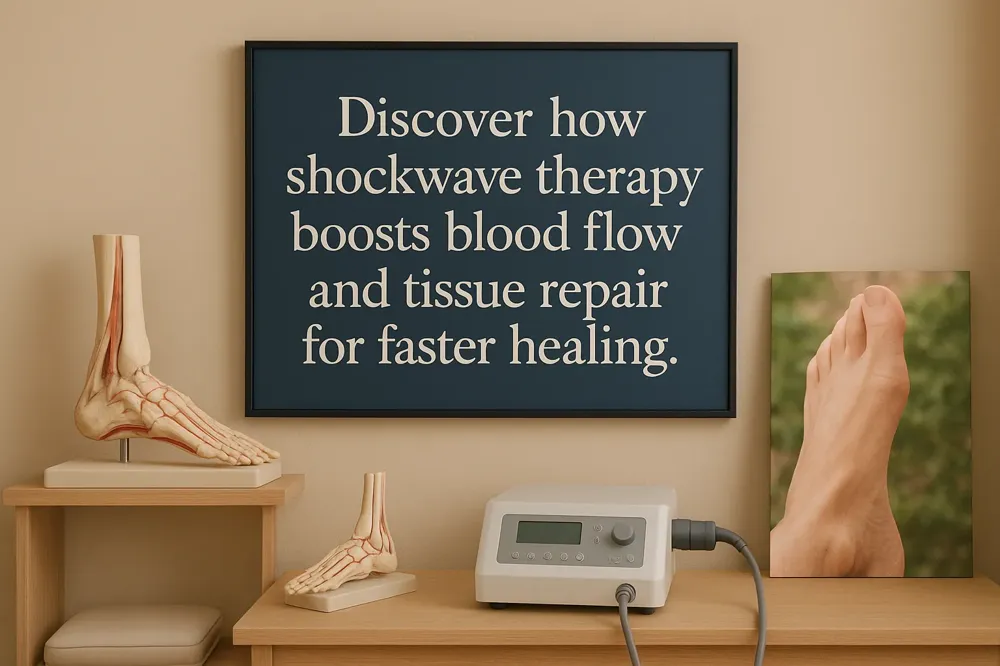
How does shockwave therapy accelerate healing through enhanced blood flow and tissue regeneration?
Shockwave therapy uses high-energy acoustic waves that penetrate injured tissues to stimulate the body's natural healing response. One of the primary effects is the increased blood circulation to the affected area. This enhanced blood flow, driven by new blood vessel formation known as neovascularization, delivers vital oxygen and nutrients required to repair damaged tissues effectively.
At a cellular level, shockwave therapy triggers mechanotransduction in shockwave therapy—the process where mechanical stimuli are converted into biochemical signals. This activation promotes the release of key growth factors such as vascular endothelial growth factor (VEGF) and endothelial nitric oxide synthase (eNOS), which further stimulate cell proliferation and tissue regeneration.
Additionally, shockwaves promote collagen synthesis by fibroblasts, integral for rebuilding connective tissue structure, which strengthens and restores the integrity of tendons, ligaments, and fascia.
The therapy also facilitates the breakdown of scar tissue and calcium deposits that can impede healing and contribute to chronic pain. By disrupting these pathological tissue components, shockwave therapy encourages remodeling of the tissue architecture, leading to improved elasticity and function.
Together, these mechanisms shorten recovery times and help patients regain mobility more quickly compared to conventional treatments, making shockwave therapy an effective option for promoting lasting healing in musculoskeletal foot and ankle conditions.
2. Effective Pain Reduction Without Drugs or Surgery

How Does Shockwave Therapy Provide Pain Relief Without Drugs or Surgery?
Shockwave therapy offers an effective, non-pharmacologic option for relieving foot and ankle pain by using focused acoustic waves to stimulate natural healing. These sound waves create controlled microtrauma, inducing localized inflammation that activates tissue repair and enhances blood flow. This process helps reduce chronic inflammation and breaks down scar tissue and calcifications that often contribute to persistent pain.
What Is the Role of Nerve Modulation in Pain Reduction?
The therapy affects nerve fibers and pain receptors in the treated tissues, leading to nerve bundle degradation that inhibits nociception—the transmission of pain signals. This neuromodulation reduces pain perception by overstimulating nerve endings and triggering the release of natural pain-relieving substances like endorphins.
How Does Shockwave Therapy Avoid the Downsides of Surgery and Medications?
Unlike surgical interventions, shockwave therapy is non-invasive, performed without anesthesia or incisions, resulting in minimal to no downtime. It also eliminates risks associated with medication use, such as side effects or dependency. Patients can often resume normal activities immediately after treatment, making it a safe and convenient alternative.
This approach proves particularly beneficial for chronic foot conditions like plantar fasciitis and Achilles tendinopathy, where conventional treatments may fail. Clinical evidence shows that most patients experience significant pain reduction within a few treatment sessions, with lasting improvements in function and mobility developed over weeks.
3. Targeted Treatment for Chronic Tendon and Ligament Injuries
How does shockwave therapy treat Achilles tendinopathy and plantar fasciitis?
Shockwave therapy employs both focused and radial shockwaves to address injuries in deep and superficial tissues respectively. Focused shockwaves penetrate deeper to target specific tendon or ligament lesions, while radial waves cover broader, more superficial areas. This targeted delivery breaks down calcific deposits often found in chronic tendon conditions and stimulates tendon remodeling.
What are its effects on tendon healing and inflammation?
The therapy promotes neovascularization, which increases blood flow and enhances oxygen and nutrient supply essential for tissue repair. It stimulates collagen synthesis through fibroblast activation and reduces chronic inflammation by modulating inflammatory mediators and breaking down scar tissue. These biological effects of shockwave therapy help restore the tendon's structural integrity and improve function.
Is it clinically effective for Achilles tendinopathy and plantar fasciitis?
Yes, shockwave therapy is clinically proven as an effective non-invasive treatment for Achilles tendinopathy and plantar fasciitis, especially in cases resistant to conventional therapies. Evidence demonstrates significant improvements in pain and functional outcomes, with success rates reaching up to 77% for chronic plantar fasciitis and notable pain relief for Achilles conditions.
How does it integrate with physical therapy?
Combining shockwave therapy with rehabilitation exercises such as eccentric loading and stretching enhances recovery by reinforcing tissue strength and flexibility. This multidisciplinary approach leverages shockwave-induced biological stimulation alongside mechanical loading for optimal healing.
Can shockwave therapy help with Achilles tendinopathy and tendonitis?
Yes, shockwave therapy effectively treats chronic Achilles tendinopathy and tendonitis by stimulating collagen production, enhancing blood vessel formation, and modulating pain pathways. When combined with physical therapy, it significantly improves pain and function, providing a well-tolerated alternative to surgery or medications without anesthesia.
This therapeutic modality represents an innovative, evidence-based option in the management of chronic tendon and ligament injuries within podiatric care.
4. Safe, Minimally Invasive Therapy with Quick Recovery and No Downtime

Outpatient Procedure with Short Sessions
Shockwave therapy is administered as a brief outpatient shockwave therapy procedure, typically lasting between 10 and 20 minutes per session. This allows patients to conveniently fit treatment into their schedules without significant disruption.
No Anesthesia Required
This therapy does not require anesthesia or sedation. Patients remain fully alert during the treatment and can immediately resume their usual activities following the session, making this a highly accessible option for pain relief with shockwave therapy.
Minimal Side Effects and Low Risk
Common side effects are mild and temporary, including minor soreness, tingling, or slight bruising at the treatment site. These effects usually resolve quickly and indicate an active healing process. Serious risks associated with surgery—such as infection, scarring, or prolonged recovery—are absent with shockwave therapy safety profile.
Safe Mobility After Treatment
Patients are typically able to walk safely and perform light daily activities right after each session. Although strenuous exercise and extended walking should be limited for 24 to 48 hours post-treatment to facilitate optimal healing, normal mobility and simple tasks are encouraged to continue, consistent with post-treatment care for shockwave therapy.
Ideal for Drug-Free Pain Management
Shockwave therapy is an excellent alternative for patients seeking a drug-free pain relief alternative. It avoids potential medication side effects and dependency risks while stimulating natural tissue repair and pain relief.
Expert Recommendations
Medical professionals advise avoiding anti-inflammatory medications and ice immediately after treatment, as these could inhibit the beneficial inflammatory response initiated by shockwave therapy. Patients should adhere to their podiatrist’s tailored guidance to maximize recovery and treatment success, following expert guidance on shockwave therapy.
5. Versatility Across a Wide Range of Musculoskeletal Conditions
Is shockwave therapy effective for hip bursitis and tendonitis?
Shockwave Therapy, including technologies like Extracorporeal Pulse Activation Technology (EPAT), is an effective, minimally invasive treatment option for conditions such as hip bursitis and tendonitis. By delivering focused acoustic waves to the affected tissues, this therapy stimulates blood flow, accelerates tissue repair, and reduces inflammation.
Clinical evidence and patient outcomes demonstrate that Shockwave therapy can alleviate pain and improve mobility in hip bursitis and tendonitis more rapidly than some traditional approaches like physical therapy or corticosteroid injections. The treatment usually involves several short sessions, each lasting around 15 minutes, with minimal discomfort and no need for anesthesia.
Besides the hip, Shockwave Therapy is broadly effective for various musculoskeletal disorders including plantar fasciitis, heel spurs, Achilles tendonitis, rotator cuff injuries, bursitis in other joints, nerve entrapments, and chronic soft tissue inflammation. It is a non-surgical alternative suitable for patients who have not benefited from conventional treatments or prefer to avoid surgery.
Additionally, Shockwave Therapy can be combined with complementary interventions such as physical therapy, chiropractic care, acupuncture, or laser treatments to enhance recovery outcomes. Emerging clinical applications also include reducing neurological muscle spasticity, expanding its versatility beyond traditional musculoskeletal use.
Overall, Shockwave Therapy represents a valuable, safe, and effective modality for managing a wide spectrum of chronic pain and injury-related conditions affecting foot, ankle, hip, shoulder, and back regions—all without the downtime or risks associated with surgery.
6. Sustained Results and Cost-Effectiveness Compared to Traditional Treatments
High success rates for chronic foot and ankle disorders
Shockwave therapy for foot pain has demonstrated significant effectiveness in treating chronic foot and ankle conditions such as plantar fasciitis treatment, Achilles tendinopathy therapy, and tendonitis. Clinical studies report success rates between 72% and 94% for pain relief and functional improvement, with many patients achieving lasting benefits after completing a typical course of three to six treatment sessions.
Avoids risks and long recovery times associated with surgery
Unlike surgical interventions, shockwave therapy is non-invasive, requiring no incisions, anesthesia, or hospitalization. Patients can resume normal activities immediately after treatment, with minimal side effects such as mild soreness or transient swelling. This safety profile reduces the risks related to surgery like infections, nerve damage, and prolonged recovery periods.
Often preferred over corticosteroid injections for lasting relief
Shockwave therapy not only alleviates pain but also promotes tissue regeneration by enhancing blood flow, collagen production, and breaking down scar tissue or calcifications. This leads to more durable improvements compared to corticosteroid injections, which often provide only temporary relief and may have associated side effects when used repeatedly. See more on Shockwave Therapy mechanisms.
Costs vary but generally less than surgical interventions
Treatment costs typically range from $200 to $500 per session, with most patients requiring multiple sessions. While the total expense can reach between $600 and $3,000, this is generally lower than the cost of foot or ankle surgery when factoring in hospital fees, anesthesia, and recovery time off work. Learn about cost and insurance coverage for shockwave therapy.
Financial considerations with limited insurance coverage
Insurance coverage for shockwave therapy is inconsistent and frequently limited. Many insurers and Medicare consider it investigational for certain conditions like plantar fasciitis, leading to minimal or no reimbursement. However, some coverage may be available when treatment is medically justified and documented. Patients should consult their providers and insurance plans to understand potential out-of-pocket costs. Clinics may offer financing options to assist with payment.
| Aspect | Detail | Notes |
|---|---|---|
| Success Rates | 72% - 94% effective pain and function improvement | Based on clinical studies |
| Treatment Sessions | Typically 3-6 sessions, 10-20 minutes each | Weekly or biweekly scheduling from shockwave therapy session details |
| Recovery | Immediate return to activity, minimal downtime | Avoids surgical risks and long rehabilitation (Non-invasive pain management) |
| Cost Per Session | $200 - $500 | Depends on provider and geographic location |
| Total Treatment Cost | $600 - $3,000 | Variability due to condition severity and sessions |
| Insurance Coverage | Limited; often considered investigational or not medically necessary | Coverage may vary; Medicare Part B possible in select cases (Insurance coverage for shockwave therapy) |
Patients seeking shockwave therapy for foot and ankle conditions can experience effective, sustained relief without surgery's risks. Clarifying insurance coverage and costs upfront helps ensure informed decisions about integrating this innovative treatment into their care plan.
Understanding Shockwave Therapy and Its Mechanism
What is shockwave therapy for foot pain and how does it work for foot and ankle conditions?
Shockwave therapy, also known as extracorporeal shock wave therapy (ESWT) overview, is a non-invasive injury treatment utilizing high-energy acoustic waves to stimulate natural healing in foot and ankle injuries. Delivered through the skin via a handheld device, these mechanical pressure waves induce controlled microtrauma within damaged tissues.
This controlled stimulation increases blood flow, enhances cellular permeability, and activates biochemical mechanisms that promote tissue repair. The therapy encourages the release of growth factors, collagen production, and stem cell recruitment, facilitating the regeneration of ligaments, tendons, and bone.
Shockwave therapy also helps break down scar tissue and calcifications that often contribute to chronic pain. By targeting nerve fibers, it modulates pain perception, providing relief without medications. The procedure is generally painless or causes only mild discomfort and is performed in short outpatient sessions without anesthesia or downtime.
Conditions commonly treated include:
- Plantar fasciitis: Inflammation of the plantar fascia causing heel pain.
- Achilles tendinopathy: Degeneration and pain of the Achilles tendon.
- Ankle sprains and ligament injuries.
- Morton’s neuroma and soft tissue pathologies.
Because shockwave therapy for chronic injuries is noninvasive, it offers an innovative alternative for patients resistant to traditional treatments, helping restore mobility and reduce pain efficiently. This outpatient approach supports prompt return to daily activities, making it a valuable tool in modern podiatric care for foot and ankle conditions.
Safety Considerations and Qualified Providers for Shockwave Therapy
What Are the Possible Side Effects and Risks of Shockwave therapy?
Shockwave therapy is generally a safe, minimally invasive treatment, but patients may experience some temporary side effects. Common mild reactions include transient pain, mild swelling, bruising, or aching in the area treated. Occasionally, there might be an initial increase in pain following a session, though this typically resolves quickly.
Important contraindications must be considered to avoid serious complications. Shockwave therapy contraindications is not recommended for pregnant women, patients with bleeding disorders or those taking anticoagulant medications, individuals with pacemakers, active infections or tumors at the treatment site, or recent corticosteroid injection recipients. Violation of these contraindications can increase risks, such as tendon rupture, particularly if administered soon after steroid treatments.
Risks Associated with Improper Administration
Improper use of shockwave therapy can lead to adverse effects like prolonged pain, tissue damage, or tendon injury. Treatment without appropriate patient evaluation or use of incorrect energy levels and device types could compromise safety and therapeutic outcomes. Therefore, careful patient selection and device calibration are critical to minimize risks.
Who Is Qualified to Administer Shockwave Therapy?
Shockwave therapy should only be delivered by qualified healthcare professionals trained specifically in its use. These practitioners often include podiatrists, orthopedic surgeons, sports medicine physicians, or other certified specialists skilled in musculoskeletal care.
Qualified providers conduct comprehensive clinical evaluations complemented by imaging and sometimes lab or neurological tests to confirm diagnosis and tailor treatment plans. Expertise in device technology—knowing when to use focused versus radial shockwaves and optimal energy settings—is essential for efficacy and safety.
Precautions for Patient Selection
Before recommending shockwave therapy, clinicians thoroughly assess medical history, current medications, and specific contraindications. This ensures that only suitable patients undergo treatment, maximizing safety and benefits.
Advanced podiatry clinics employ board-certified surgeons and trained staff to meet these standards, providing patients with effective, evidence-based, and safe shockwave therapy.
This careful approach safeguards patients while harnessing shockwave therapy's ability to promote healing and pain relief in various chronic foot and musculoskeletal conditions.
Embracing Shockwave Therapy: A Breakthrough in Minimally Invasive Pain Relief
A Revolutionary Approach to Pain Relief
Shockwave therapy stands out as a powerful, non-invasive treatment that rapidly stimulates natural healing and provides lasting relief for chronic musculoskeletal and foot pain. By delivering high-energy sound waves directly to injured tissues, it enhances blood circulation, promotes tissue regeneration, breaks down scar tissue and calcium deposits, and modulates nerve pain signaling.
Expanding Role in Podiatry and Musculoskeletal Care
Clinically proven effective for conditions like plantar fasciitis, Achilles tendinopathy, and tennis elbow, shockwave therapy is increasingly integrated into advanced podiatry and sports medicine practices. Its safety profile, minimal side effects, and short treatment sessions allow patients to quickly resume daily activities without surgery or medication.
Why Consider Shockwave Therapy?
For individuals suffering from chronic foot and ankle pain unresponsive to traditional treatments, shockwave therapy offers a cutting-edge alternative that addresses the root cause rather than just masking symptoms. Many patients report significant improvement within weeks, enjoying enhanced mobility and reduced discomfort.
Commitment to Advanced Treatments at advancedfootcareil.com
At advancedfootcareil.com, our dedication to adopting innovative, evidence-based therapies ensures patients have access to the latest minimally invasive options. We prioritize personalized care plans that incorporate shockwave therapy as an effective tool for restoring function and improving quality of life.