Why Nail Fungus Is a Growing Concern
Onychomycosis affects up to 14 % of U.S. adults and becomes more common after age 60, especially in patients with diabetes, peripheral vascular disease, or immune compromise. Age‑related nail thickening and reduced peripheral circulation create a favorable environment for dermatophytes, yeasts and molds. Typical clinical signs include yellow‑brown discoloration, thickening, brittleness, subungual debris, and onycholysis; however, similar changes can be seen with psoriasis or bacterial infection, making visual assessment alone insufficient. Accurate diagnosis therefore requires laboratory confirmation—nail clippings, subungual debris cultures, or polymerase‑chain‑reaction (PCR) testing—to identify the causative organism and guide therapy. Confirmed diagnosis is essential because treatment choices (topical agents, oral antifungals, or laser‑based approaches) differ in efficacy, safety, and cost, and because misdiagnosis can lead to unnecessary drug exposure or delayed resolution of the underlying condition.
Understanding Onychomycosis and Its Diagnosis
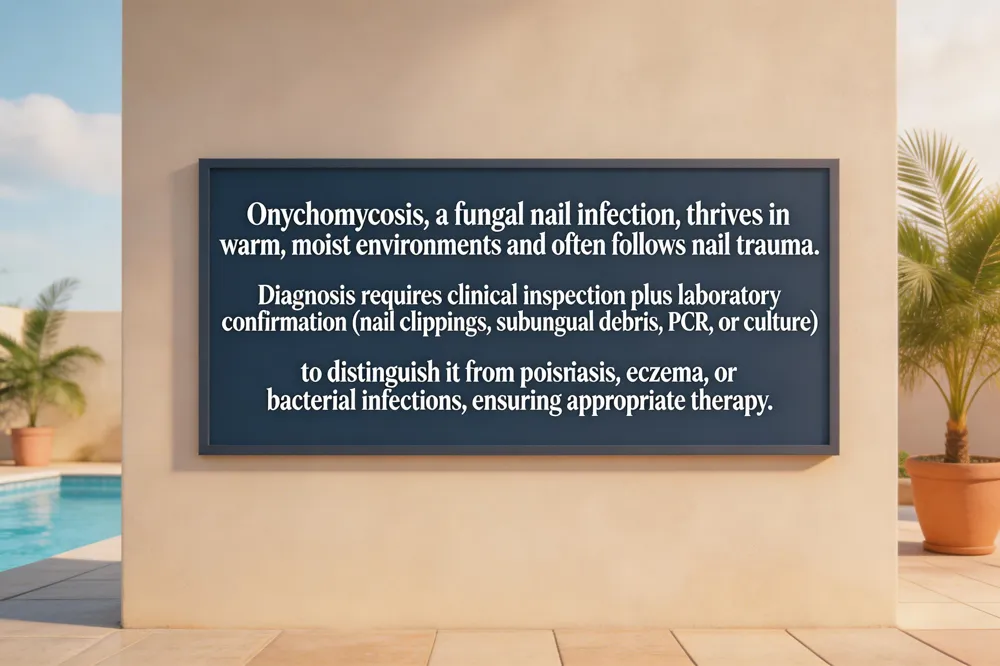 Onychomycosis is a fungal infection of the nail unit caused primarily by dermatophytes, but yeasts and molds can also be involved. Warm, moist environments—such as sweaty shoes, communal showers, or prolonged humidity—create ideal conditions for fungal spores to colonize the nail plate, while nail trauma or repeated micro‑injuries disrupt the protective barrier and allow organisms to penetrate to the nail bed. Accurate diagnosis begins with a thorough clinical examination, noting nail discoloration, thickening, onycholysis, and any associated skin changes. The Mayo Clinic and the American Academy of Dermatology recommend confirming the diagnosis with laboratory testing: nail clippings, subungual debris, or a PCR assay are sent for culture or direct microscopy to differentiate true fungal infection from mimicking conditions such as psoriasis, eczema, or bacterial paronychia. This step prevents unnecessary exposure to systemic antifungals and ensures that the chosen therapy—whether topical, oral, or laser‑based—is appropriately targeted. In practice, podiatric specialists often combine visual assessment with rapid point‑of‑care tests, reserving more extensive culture work‑up for atypical or refractory cases.
Traditional Treatment Options: Oral and Topical Therapies
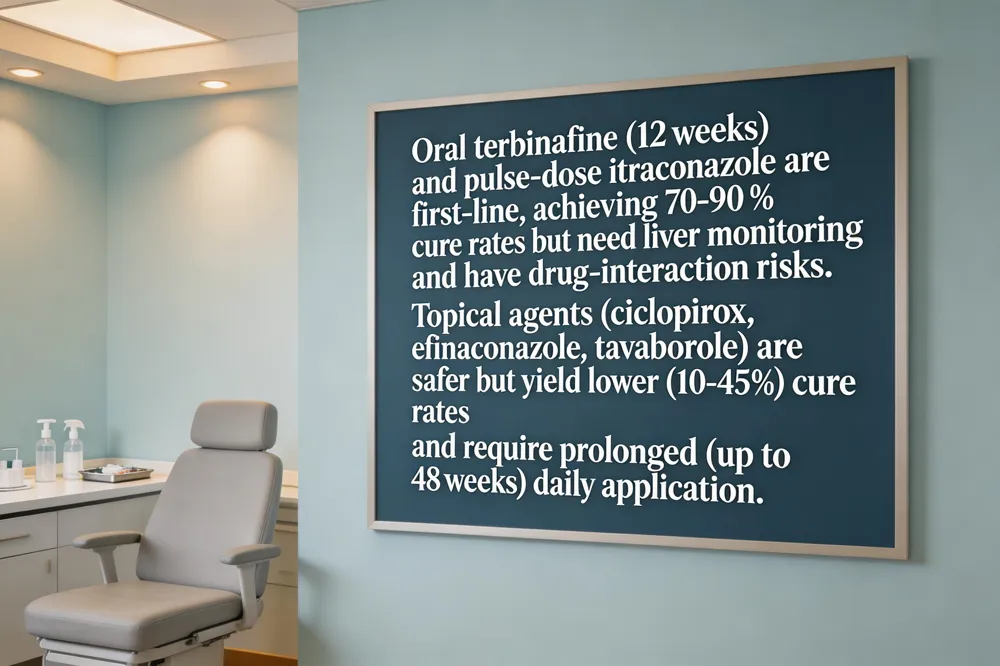 Oral antifungal agents such as terbinafine and itraconazole remain the first‑line prescription for moderate‑to‑severe onychomycosis. Terbinafine (Lamisil) is taken once daily for 12 weeks for toenails (6 weeks for fingernails) and achieves mycological cure rates of 70‑80 % in most trials. Itraconazole (Sporanox) can be given in a pulse regimen (200 mg twice daily for one week per month, repeated 2‑3 months) and is useful when drug interactions or hepatic disease preclude continuous therapy. Both drugs require baseline liver‑function tests and periodic monitoring because of rare but serious hepatotoxicity and potential interactions with warfarin, antiretrovirals, and other cytochrome‑P450 substrates.
Topical agents—ciclopirox lacquer, efinaconazole solution, and tavaborole ointment—are applied daily (or weekly, depending on the product) for up to 48 weeks. Their advantage is the absence of systemic exposure, but cure rates are modest, typically 10‑30 % for ciclopirox and 30‑45 % for newer agents like efinaconazole, especially when the infection is limited to the distal nail plate. Nail debridement or thinning before application improves penetration and outcomes.
Cost and insurance coverage differ markedly. A 12‑week oral terbinafine course costs roughly $150‑$300 and is usually covered under pharmacy benefits, whereas a full year of topical therapy can cost $200‑$500 and is often only partially reimbursed. Laboratory monitoring adds a modest expense for oral agents, but the overall out‑of‑pocket cost of oral therapy is generally lower than that of multiple laser sessions, which range from $500‑$2,000 per foot and are rarely covered.
Side‑effects for oral antifungals include gastrointestinal upset, headache, rash, and the rare but serious Stevens‑Johnson syndrome or liver injury. Drug‑interaction concerns are significant, especially with itraconazole, which inhibits CYP3A4. Topicals are well tolerated, with occasional local irritation or mild erythema. In patients with liver disease, heart failure, polypharmacy, or peripheral vascular disease, podiatrist often prefers topical therapy or laser treatment to avoid systemic risks.
Answer to the question – Best prescription toenail fungus treatment: Oral terbinafine taken daily for 12 weeks is the gold‑standard prescription for onychomycosis, delivering 70‑80 % cure rates in most patients. When liver disease or drug interactions preclude continuous therapy, itraconazole in a pulse‑dosage regimen provides a reliable alternative, though it requires periodic liver‑function testing. Topical agents such as efinaconazole or ciclopirox lacquer may be used for mild or localized disease, but they have lower success rates and typically require up to a year of daily application. Successful outcomes depend on proper nail debridement, patient adherence, and regular monitoring for side‑effects.
Laser Therapy: Mechanism, Devices, and Evidence
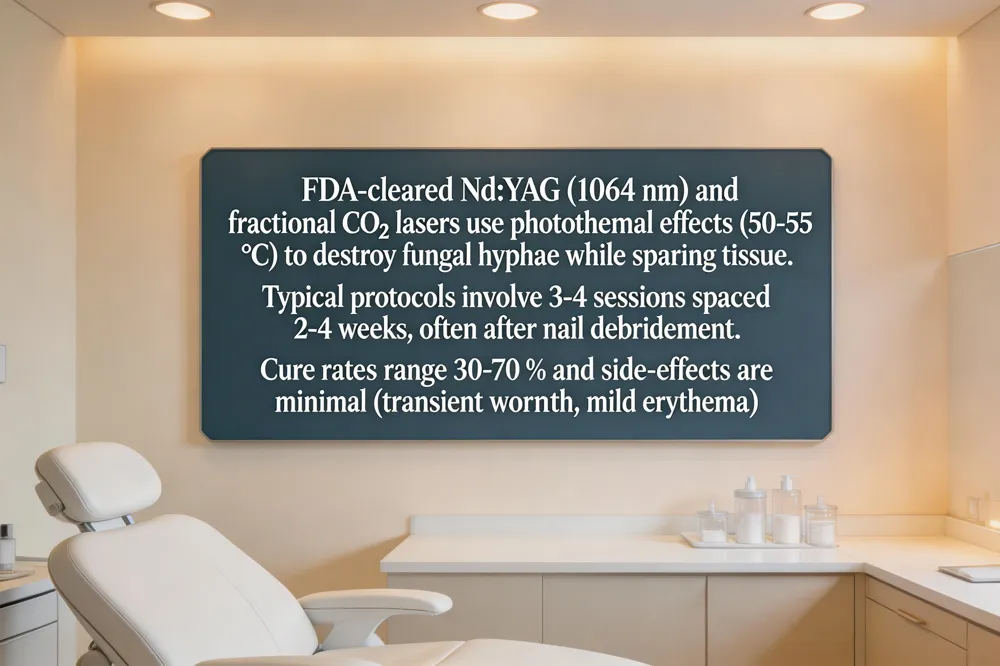 Laser therapy for onychomycosis relies on photothermal and photodynamic effects that heat fungal hyphae to 50‑55 °C, disrupting cell walls and DNA while sparing surrounding tissue. FDA‑cleared devices include Nd:YAG (1064 nm) lasers, which penetrate the nail plate and nail bed, and fractional CO₂ lasers, each delivering controlled energy in 15‑30‑minute sessions. A typical protocol consists of 3‑4 treatments spaced 2‑4 weeks apart, often preceded by nail debridement to improve penetration. Safety is excellent; patients report only transient warmth, mild erythema, or brief pain, with no systemic toxicity.
WellaNail Nail Fungus Treatment – An OTC liquid drop with botanical extracts; limited clinical data and no proven efficacy. Our clinic prefers laser‑ plus prescription antifungal therapy for reliable outcomes.
What kills toenail fungus instantly home remedies – No instant cure exists. Tea‑tree oil, Vicks VapoRub, or ozonized oil may reduce surface fungus over weeks but cannot eradicate deep infection. Prescription oral agents or professional laser are needed for moderate‑to‑severe cases.
EmoniNail toenail fungus treatment – An OTC system containing undecylenic acid and tea‑tree oil; lacks peer‑reviewed evidence. We recommend evidence‑based oral/topical drugs or FDA‑cleared laser treatment.
Do home nail fungus lasers work – At‑home devices are cleared only for cosmetic improvement; they deliver lower energy and show inconsistent cure rates. Professional Nd:YAG lasers provide more reliable results.
Do lasers actually work on nail fungus? – Clinical studies report 30‑70 % improvement after multiple sessions, but monotherapy rarely yields complete, permanent cure. Combining laser with oral or topical antifungals maximizes clearance.
Best laser nail fungus treatment – The 1064 nm Nd:YAG laser remains the gold standard, offering the highest documented clearance and minimal side effects when performed by a licensed podiatrist.
Comparing Laser and Traditional Therapies: Clinical Outcomes & Patient Factors
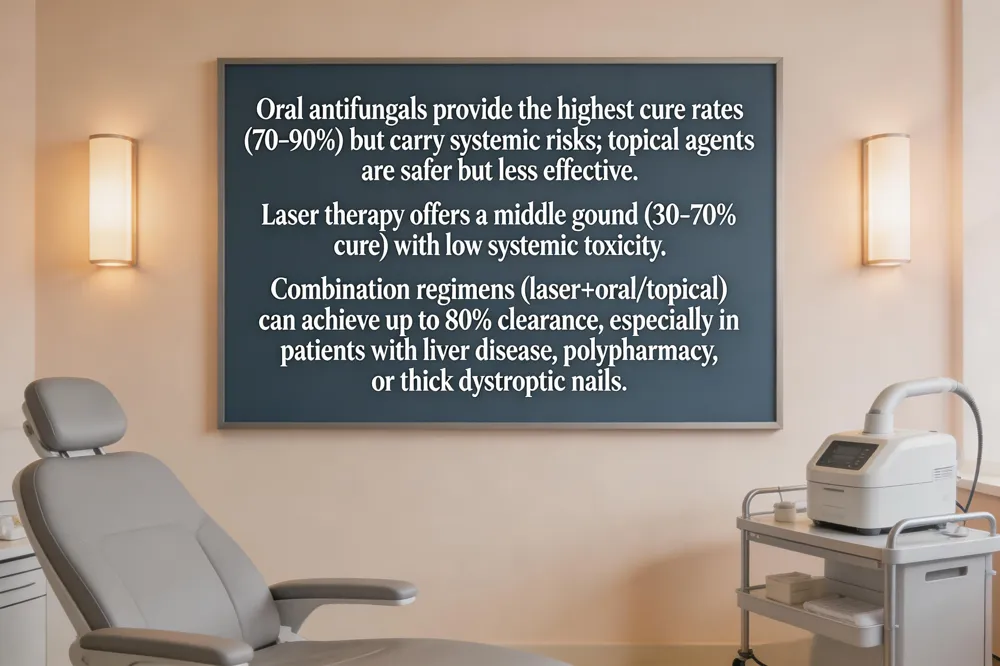 Cure rates for onychomycosis differ by modality. Oral antifungals (terbinafine, itraconazole) achieve 70‑90 % clinical cure after 12 weeks but carry hepatotoxicity, drug‑interaction, and liver‑test monitoring. Topical agents (ciclopirox, efinaconazole) are limited by nail‑plate penetration, yielding 10‑30 % cure over 48‑52 weeks. Laser therapy (Nd:YAG, fractional CO₂) reports 30‑70 % mycological cure after 3‑4 sessions, with minimal systemic side effects.
Combination approaches—laser plus oral or topical agents—show synergistic effects, with some studies documenting up to 70‑80 % clearance when laser reduces fungal load before medication is applied. Nail debridement or urea‑based thinning enhances drug penetration and laser efficacy.
Patient selection hinges on comorbidities and nail characteristics. Liver disease, polypharmacy, or heart failure favor laser or topical routes; thick, dystrophic nails may require debridement before any therapy. Diabetes, peripheral vascular disease, and immunosuppression demand careful evaluation and often a multimodal plan.
Cost and insurance vary. Oral therapy costs $150‑$400 for a 12‑week course and is usually covered; laser sessions range $150‑$500 each, with 3‑4 sessions needed, and most insurers label it experimental, limiting reimbursement. Total laser expense can exceed $1,500‑$2,000 per foot.
Best fungal nail treatment for severe cases – Multimodal therapy: oral terbinafine plus FDA‑cleared laser, with nail debridement and topical efinaconazole for residual disease.
What kills toenail fungus permanently – Eradication requires destroying the organism (laser + oral antifungal) and allowing healthy nail growth; diligent hygiene prevents reinfection.
How to know if toenail fungus is dying – New pinkish nail emerges from the cuticle, discoloration fades, and the nail becomes smoother and less thick.
Is laser or Lamisil better for toenail fungus? – Lamisil offers higher cure rates but systemic risk; laser is safe for contraindicated patients. A combined regimen often yields the best long‑term outcome.
What is the most effective treatment for toenail fungus? – Oral systemic antifungal (terbinafine) remains gold‑standard; adjunctive laser and topical lacquer improve speed and durability.
How to cure fingernail fungus fast – Oral antifungal (6‑12 weeks) plus in‑clinic laser and topical nail lacquer accelerates clearance.
Pros and cons of laser treatment for toenail fungus – Pros: minimally invasive, painless, low systemic risk, quick office visit. Cons: multiple sessions, higher out‑of‑pocket cost, potential recurrence without adjunctive therapy.
Practical Guidance: FAQs and What to Expect at Advanced Podiatry Clinic
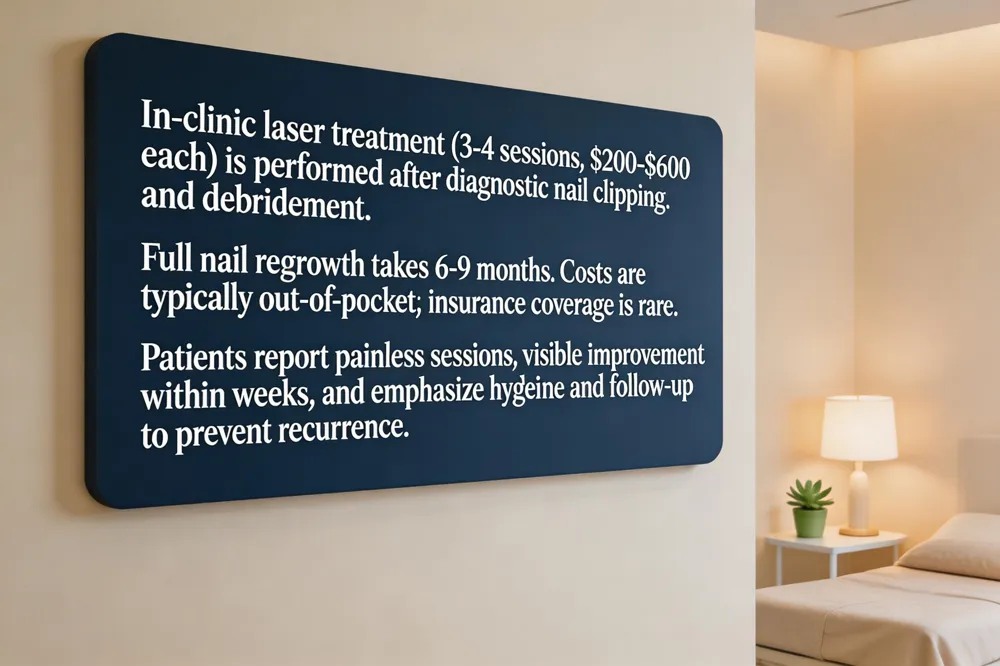 Our North‑West Chicago and South‑Florida offices make it easy to find a convenient location for laser‑treated nail fungus. During a brief, office‑based consultation a podiatrist confirms diagnosis with nail clippings, assesses nail thickness, comorbidities (e.g., diabetes, liver disease) and determines candidacy for FDA‑cleared 1064 nm Nd:YAG laser therapy.
Cost & financing – Each laser session ranges $200‑$600; most patients need three to four sessions, totaling $600‑$2,400. Many clinics offer package pricing ($500‑$1,200) and flexible payment plans, but insurance rarely covers the procedure because it is classified as cosmetic.
Where to get treatment – Visit us at 1234 West Addison Street, Chicago, IL, or 5678 Ocean Drive, Fort Lauderdale, FL. Both sites are staffed by board‑certified foot and ankle surgeons who perform the painless, 15‑30‑minute sessions in‑office.
Before‑and‑after outcomes – Initial nails appear thick, yellowed, and brittle. After 3‑4 laser sessions, the fungus is thermally destroyed, a topical antifungal lacquer may be applied, and new healthy nail growth begins within weeks. Full regrowth (6‑9 months) shows pink, smooth, strong nails.
Patient reviews – Most patients praise the quick, virtually painless visits and visible improvement within weeks, especially when laser is combined with a short course of oral or topical antifungals. Clinical data note that laser alone rarely guarantees a permanent cure and recurrence can occur, underscoring the importance of proper foot hygiene and follow‑up care.
Choosing the Right Path Forward
An effective plan for onychomycosis begins with a thorough, individualized assessment. Our podiatrists evaluate overall health, liver function, vascular status, and the extent of nail involvement to determine whether oral antifungals, topical agents, laser therapy, or a combination is safest and most likely to succeed. Evidence shows that multimodal treatment—pairing laser debridement or Nd:YAG/CO₂ laser sessions with topical efinaconazole or a short course of oral terbinafine—produces higher mycological cure rates and reduces recurrence compared with any single modality. This approach also accommodates patients with contraindications to systemic drugs, such as liver disease or polypharmacy. We invite you to schedule a professional evaluation at any of our Advanced Foot and Ankle Clinics (NW Chicago, South Florida, and other locations). A confirmed laboratory diagnosis, personalized treatment protocol, and diligent follow‑up will give you the best chance for clear, healthy nails and long‑term foot health.