Why Consider Laser Therapy for Toenail Fungus?
Onychomycosis affects roughly 10 % of U.S. adults and up to 50 % of people over 70, making it one of the most common nail disorders. Traditional management relies on topical agents that struggle to penetrate the dense keratin of the nail plate and oral antifungals that require several weeks of systemic exposure, liver function monitoring, and can cause drug‑drug interactions. These limitations often result in modest cure rates (5‑10 % for topical, 40‑70 % for oral) and a high risk of relapse.
Laser therapy addresses these gaps by delivering focused light energy—most commonly the 1064‑nm Nd:YAG or diode wavelengths—directly through the nail to the infected matrix. The heat generated selectively destroys fungal cells while sparing surrounding tissue, eliminating the need for prolonged medication courses. Clinical reports show symptom improvement in 70‑90 % of patients within 3‑6 months, with full nail regrowth typically seen by 9‑12 months. Because the procedure is painless, non‑invasive, and carries minimal systemic risk, it fits seamlessly into modern podiatric practice as a safe alternative for patients who cannot tolerate oral drugs, have contraindications, or seek a quicker, drug‑free route to healthier nails.
Understanding the Procedure and Its Clinical Basis
The most common FDA‑cleared devices include the 1064‑nm Nd:YAG laser, 810‑nm diode laser, carbon‑dioxide (CO₂) laser, and the Q‑Clear™ system, all of which penetrate the nail plate and reach the infected matrix.
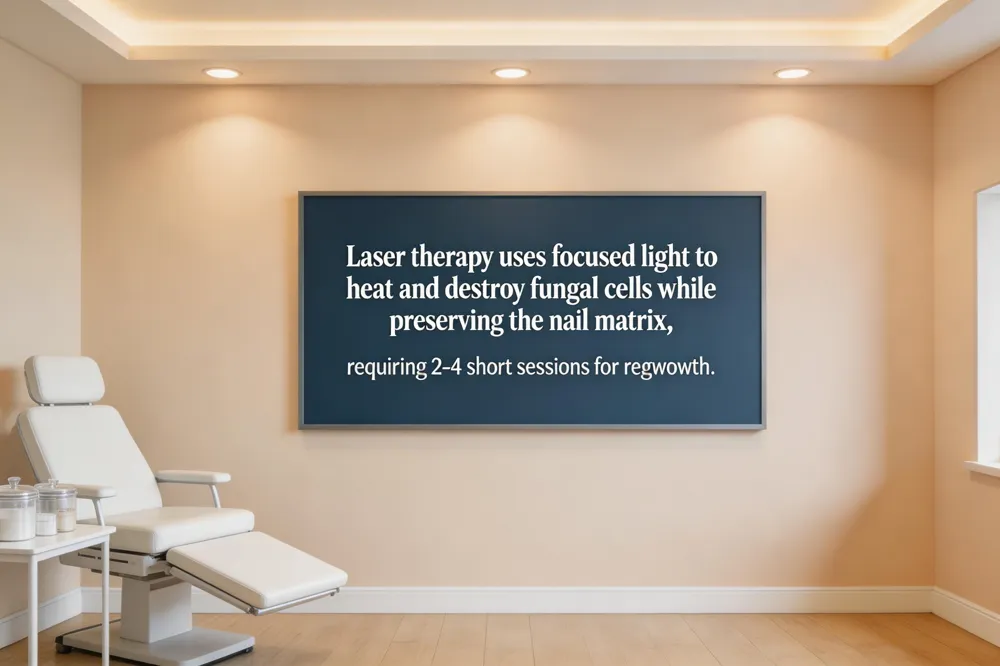
Typical sessions last 10‑30 minutes per foot, and patients usually need two to four treatments spaced 4‑6 weeks apart; visible improvement appears after 2‑3 months, with full regrowth taking 9‑12 months.
Do toenails fall off after laser for fungus? No. The laser does not remove the nail; it remains intact while the fungus is eradicated. New, healthy nail grows from the matrix and gradually replaces the infected portion over several months.
Read more about laser therapy’s effect on nails.
Does laser nail fungus treatment hurt? The procedure is generally painless. Most patients feel a mild warming or tingling sensation, rarely a light pinching, which resolves immediately after the session.
Details on comfort and side‑effects.
Side effects of laser toenail fungus treatment Mild, temporary effects may include brief burning, tingling, redness, or slight swelling for a day or two. Rarely, tiny scabs or minor bleeding under the nail can occur, but these heal without intervention. Overall, the treatment is safe, non‑invasive, and involves no downtime.
Safety profile and post‑treatment care.
Pros, Cons, Costs, and Insurance Realities
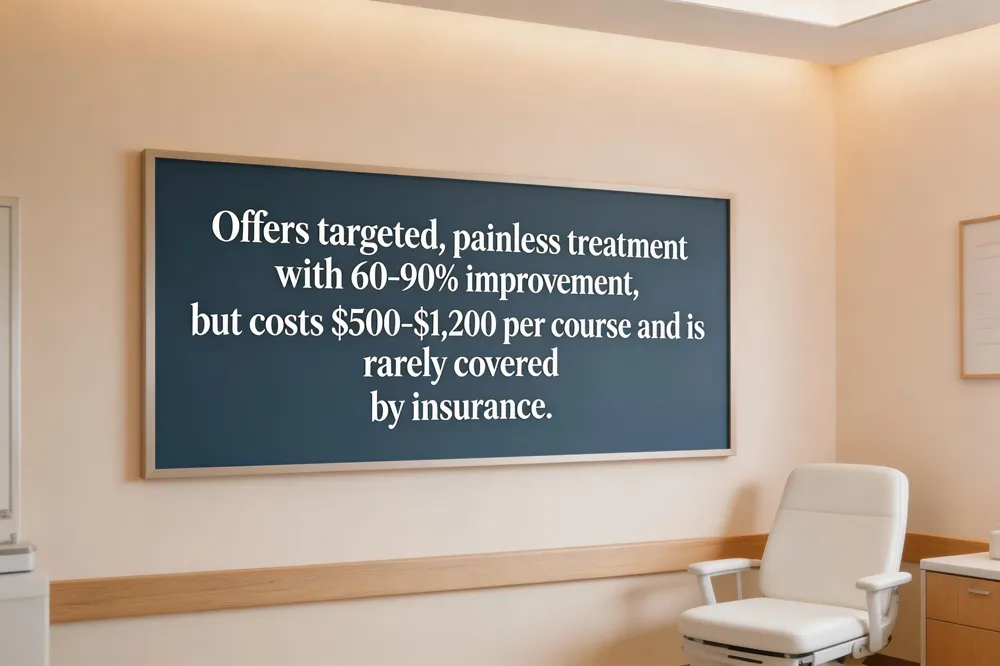 Laser therapy offers a targeted, minimally invasive way to treat onychomycosis. By delivering focused light (often 1064‑nm Nd:YAG or diode wavelengths) the nail plate and killing fungal cells without systemic drug exposure, patients avoid liver toxicity, drug interactions, and the long courses required for oral antifungals. Sessions are quick (10‑30 minutes), painless, and require no downtime, and clinical studies report symptom improvement in 60‑85 % of cases, with some clinics citing up to 90 % clearance after multiple treatments.
The downside is cost and the need for several visits. A full course of 2‑4 sessions typically runs $500‑$1,200 (average $200‑$400 per session), varying by nail number, infection severity, and laser type. Because the FDA cleared lasers for "temporary cosmetic improvement," most insurers label the procedure cosmetic or experimental and do not reimburse it. Medicare Part B and most private plans exclude laser therapy unless a documented medical necessity (e.g., diabetic foot risk) is established, and prior authorization may be required. Many practices mitigate expense with financing, health‑savings accounts, or package pricing.
Patients should discuss realistic expectations, potential recurrence (up to 30 % without diligent foot hygiene), and post‑procedure care with a board‑certified podiatrist before committing to laser treatment.
Effectiveness, Success Rates, and Treatment Frequency
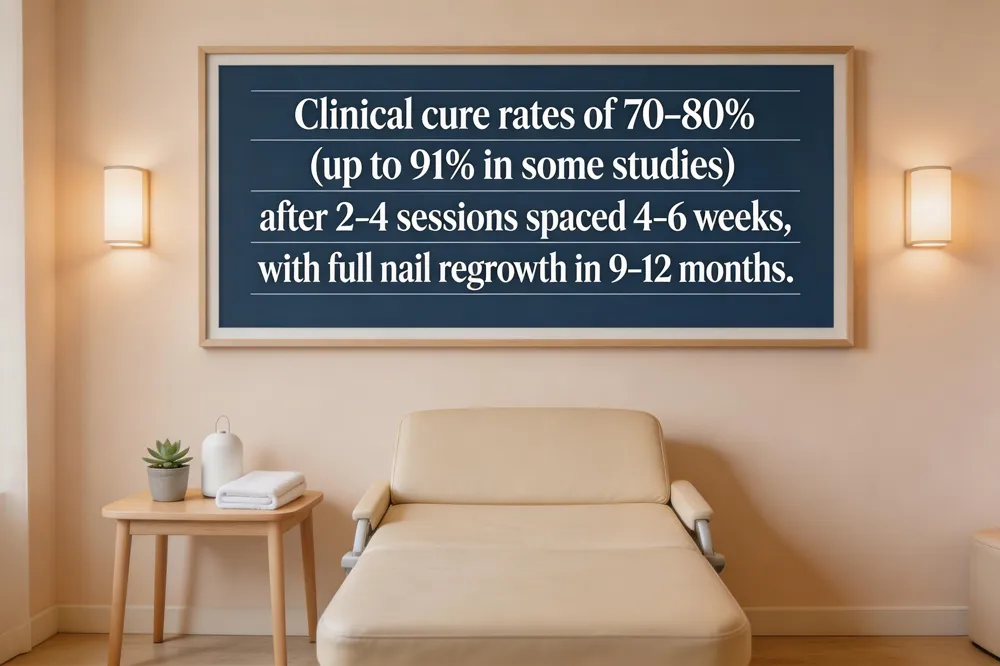 Clinical studies of FDA‑cleared Nd:YAG and 1064‑nm laser devices report cure or significant improvement rates ranging from 70 % to 80 % for onychomycosis, with some trials noting up to 91 % symptom improvement at six months. These outcomes are markedly higher than the 5‑10 % cure rates seen with over‑the‑counter topical agents and approach the 40‑70 % range of oral antifungals, while avoiding systemic side effects.
Most patients require at least two laser sessions; a typical regimen involves 2‑4 treatments spaced 4‑6 weeks apart, each lasting 10‑30 minutes per foot. Visible nail changes generally appear after 2‑3 months as healthy nail tissue grows out, and complete regrowth can take 9‑12 months.
Factors that influence success include the severity and thickness of the infection, nail matrix involvement, patient compliance with post‑procedure foot hygiene, and whether adjunctive debridement or topical antifungals are used. Patients with thick, dystrophic nails or concurrent athlete’s foot may need additional sessions or combined therapy.
What is the success rate of nail fungus lasers? Clinical evidence shows roughly 70‑80 % improvement, with some studies reporting up to 91 % symptom reduction after multiple sessions.
How many laser sessions does it take to get rid of toenail fungus? Most patients achieve noticeable improvement after one or two sessions, but a full course often consists of 2‑4 spaced a to ensure eradication.
Will fungus keep spreading after laser treatment? Laser destroys existing fungal colonies, but without proper foot hygiene—keeping feet dry, treating any skin infection, and avoiding shared footwear—re‑infection can occur. Ongoing preventive care is essential to maintain results.
Practical Guidance: Finding Care, Managing Expectations, and Prevention
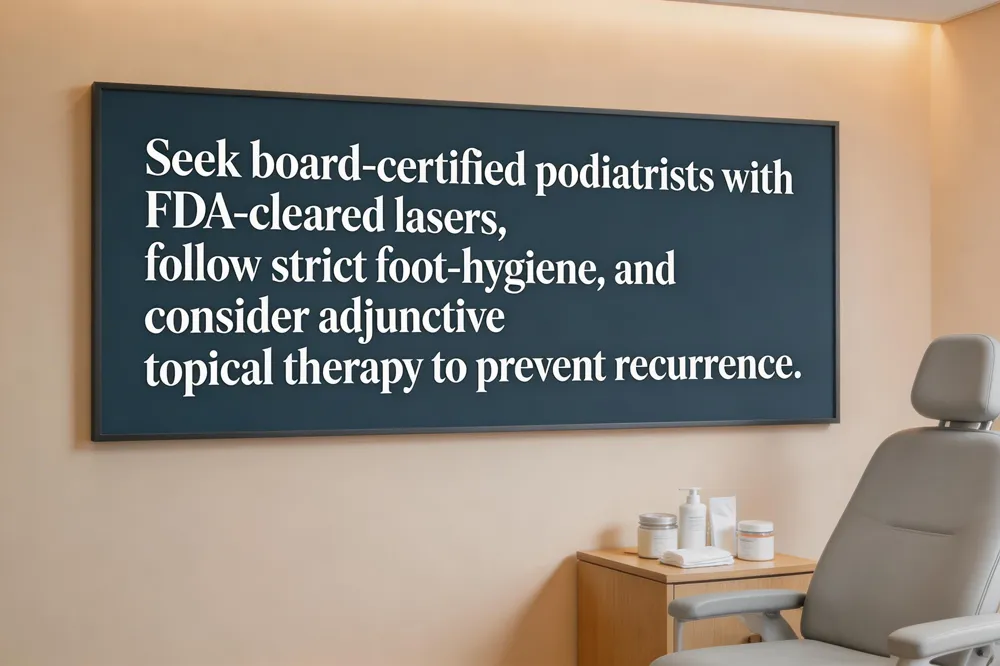 If you are searching for a qualified provider, look for board‑certified podiatrists who offer FDA‑cleared laser devices such as the 1064‑nm Nd:YAG or CO₂ lasers. Clinics like Advanced Foot Care (north‑west Chicago and South Florida), LA Foot Laser (Los Angeles), and the Oklahoma Foot and Ankle Institute all perform in‑office laser sessions that last 10–30 minutes per foot with no downtime.
Pre‑ and post‑treatment care: Before treatment the podiatrist will confirm onychomycosis with a nail clipping or KOH test. After each session keep feet clean and dry, avoid nail polish, and wear breathable shoes. Many clinicians recommend a short course of topical antifungal cream or spray for 4–6 weeks to reduce recurrence, plus regular nail trimming and foot hygiene.
Home devices vs. office lasers: Consumer‑grade laser tools are only cleared for temporary cosmetic improvement and lack the power to reliably reach the nail matrix; studies show inconsistent outcomes. Professional laser systems have stronger clinical data, though they are still considered adjuncts rather than a guaranteed cure.
Mayo Clinic perspective: The Clinic notes laser therapy as an adjunct option for patients who cannot tolerate oral antifungals, emphasizing that multiple sessions are usually needed and that oral or topical medications remain first‑line treatments.
By selecting a reputable podiatry practice, following diligent foot‑care habits, and understanding the realistic timeline for nail regrowth (often 6–12 months), patients can achieve the best possible results.
Take the Next Step Toward Healthy Nails
Laser therapy offers a minimally invasive, drug‑free option for onychomycosis. By delivering focused light energy—often from a 1064‑nm Nd:YAG or Q‑Clear device—the laser penetrates the nail plate, heats the nail matrix, and destroys fungal cells while sparing surrounding tissue. Clinical reports show clear cosmetic improvement in 70‑90 % of patients within three to six months, with full regrowth of a healthy nail taking up to a year. The procedure is quick (10‑30 minutes per foot), painless for most, and requires no anesthesia or systemic medication, making it attractive for individuals with liver disease, drug interactions, or pregnancy. Limitations include the need for multiple sessions (typically two to four), variable cure rates (30‑70 % mycologic clearance), and a recurrence risk of up to 30 % without diligent after‑care. Because outcomes depend on nail growth and personal hygiene, a board‑certified podiatrist must assess eligibility, infection severity, and set realistic expectations. Scheduling a professional evaluation allows the clinician to confirm the diagnosis, discuss laser versus oral or topical alternatives, and design a tailored plan. Long‑term success hinges on consistent foot hygiene: keep feet dry, rotate breathable shoes, avoid communal barefoot areas, and follow post‑treatment instructions such as topical antifungal sprays or regular nail trimming. Taking these steps today can help you achieve clear, healthy nails for years to come.