Why Early Detection Matters
Early detection of athlete’s foot (tinea pedis) and onychomycosis is essential because delayed treatment allows the dermatophyte to spread to surrounding skin, other body sites, and the nails, increasing the risk of secondary bacterial infection and chronic moistur. Prompt intervention—often a simple visual exam by a podiatrist—enables use of over‑the‑counter topical antifungals for mild cases and timely escalation to prescription‑strength creams or oral agents for resistant or extensive disease, shortening therapy from weeks to months. A podiatrist can also confirm the diagnosis with KOH microscopy or culture, rule out mimicking conditions, and implement innovative care such as nail‑thinning, laser‑debridement, or minimally invasive debridement when needed. Early, clinician‑guided management reduces complications, improves outcomes, and lowers recurrence rates, especially in high‑risk patients with diabetes or immune compromise.
Understanding the Spectrum of Foot Fungus
 Athlete’s foot (tinea pedis) commonly begins with itchy, stinging or burning sensations between the toes, often after shoes are removed. The skin becomes scaly, flaky, or cracked, may appear reddish or grayish, and can develop blisters, odor, and unpleasant odor; advanced cases may affect toenails, causing discoloration and brittleness. Tinea pedis typically presents with itching and burning between the toes, red inflamed scaly skin, peeling, and occasional vesicles; the rash can spread to soles, become hyperkeratotic, and spread may lead... fungal can into is. feline types dermat philophytic skin infections (tinea pedis) and onychomycosis (nail fungus). Clinical patterns include toe‑web maceration, moccasin‑type dry scaling, vesicular blisters, and ulcerative lesions that may crack and bleed. The chief dermatophytes are Trichophyton rubrum, T. interdigitale, and Epidermophyton floccosum; Candida and molds can also be involved, especially in immunocompromised patients. Athlete’s foot is caused by these fungi thriving in warm, moist environments—tight, non‑breathable shoes, excessive sweating, communal showers, and shared towels facilitate transmission. The infection rarely resolves without treatment; even mild cases persist and can recur, spreading to nails or other body sites. While usually mild, it can become dangerous for diabetics, immunosuppressed individuals, or those with peripheral vascular disease, leading to secondary bacterial cellulitis, painful cracks, or systemic spread. Prompt antifungal therapy—over‑the‑counter creams, prescription topical or oral agents—combined with diligent foot hygiene and preventive measures, is essential to cure the infection, prevent transmission, and avoid complications.
Early Detection and Self‑Check Strategies
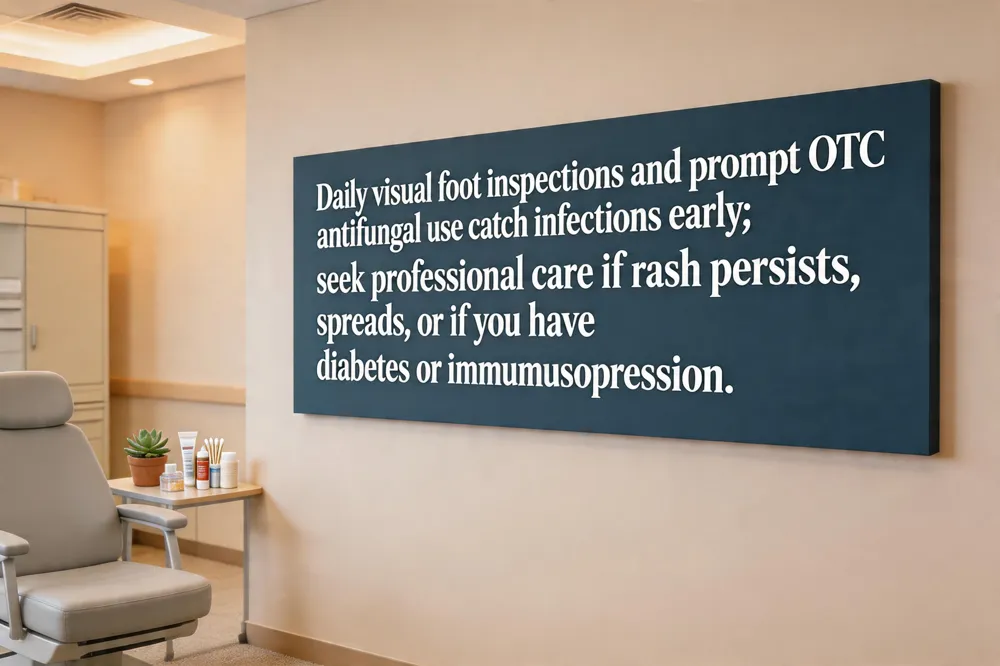 Daily visual inspection of the feet—especially the toe webs and soles—helps catch athlete’s foot early. Look for itching, burning, red scaly patches, cracking or peeling skin, and any blisters. Early nail changes such as a small white or yellow spot, thickening, or brittleness may signal onychomycosis. If you notice these signs, keep the feet clean, wash twice daily, and dry thoroughly between the toes. Apply an OTC antifungal (e.g., terbinafine, clotrimazole, miconazole) twice daily for at least two weeks, continuing a week after symptoms resolve; change socks daily and wear breathable, moisture‑wicking shoes. Protect feet in public showers with flip‑flops. Seek professional care if the rash persists beyond one week, spreads, worsens, or if you have diabetes or a weakened immune system. A podiatrist can confirm the diagnosis with a skin scraping, prescribe stronger topicals or oral antifungals, and offer minimally invasive options such as targeted antifungal injections or laser therapy for stubborn infections.
Effective First‑Line Treatments
 Over‑the‑counter (OTC) topical antifungals are the cornerstone of early athlete’s‑foot care. The most effective OTC cream is terbinafine (Lamisil), which consistently outperforms others; clotrimazole (Lotrimin Ultra) and miconazole are also reliable alternatives. Sprays containing tolnaftate or miconazole penetrate the interdigital space and are useful for hard‑to‑reach areas.
Proper application: Clean the feet with mild soap, dry thoroughly—especially between the toes—and apply a thin, even layer of the chosen cream or spray twice daily for at least 2–4 weeks, continuing one week after symptoms cease.
Foot hygiene and environmental control: Change socks daily, rotate shoes to allow 24‑48 hours of drying, wear breathable or moisture‑wicking socks, and dust shoes with antifungal powder. Use shower shoes in communal lockers, pools, or gyms to minimize exposure.
When to escalate: If the rash persists beyond two weeks of OTC therapy, worsens, recurs, or spreads to nails, a podiatrist should be consulted. Prescription‑strength topicals (e.g., ciclopirox) or oral agents (terbinafine, itraconazole) may be required for extensive disease, immunocompromised patients, or diabetic individuals.
Key Q&A
- Best antifungal cream: Terbinafine 1 % cream.
- Athlete’s foot spray: Miconazole‑based sprays applied twice daily.
- What kills foot fungus instantly: No safe product provides instant eradication; sustained antifungal therapy is needed.
- Natural options: Tea‑tree oil, apple‑cider vinegar, and garlic have modest activity but require consistent use for weeks.
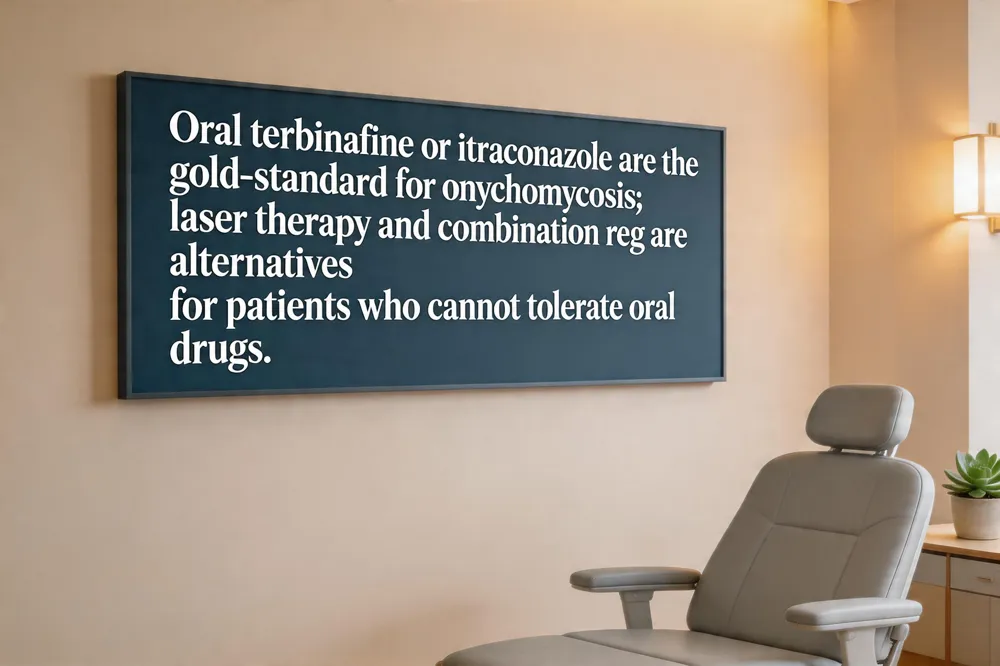
- Toenail fungus: Oral terbinafine or itraconazole for 6–12 weeks are the most effective; home remedies are not instant cures.
Advanced Therapeutic Options
 Advanced Therapeutic Options
What is the #1 absolute best toenail fungus cure?
The most reliable cure for onychomycosis is a prescription oral antifungal such as terbinafine (Lamisil). Clinical studies show 70‑90 % mycological cure rates after 3‑6 months because the drug reaches the nail matrix systemically. Over‑the‑counter options (e.g., undecylenic acid) clear only 40‑60 % of mild cases after 4‑12 months. A podiatrist should confirm the diagnosis and monitor liver function during therapy.
Laser treatment for toenail fungus
Laser therapy uses focused light pulses to heat fungal cells, but current evidence is mixed and often short‑term. Cure rates vary, and recurrence is common. It may be considered for patients who cannot tolerate oral agents, ideally combined with topical or oral antifungals for better outcomes.
Treatment for athlete's foot
Begin with OTC antifungal creams (clotrimazole, terbinafine, miconazole) applied twice daily for 2‑4 weeks, keeping feet clean and dry. If symptoms persist, prescribe stronger topicals (ciclopirox, econazole) or oral terbinafine/itraconazole. Emphasize daily sock changes, breathable footwear, and shower shoes in public areas.
Best athlete's foot treatment
First‑line: topical terbinafine or clotrimazole twice daily for 2‑4 weeks plus an extra week after clearance. For extensive or recurrent disease, use prescription‑strength creams or oral antifungals. Reinforce foot‑drying, rotation of shoes, and antifungal powder in shoes to prevent recurrence.
Best fungal nail treatment for severe cases
Oral antifungal such as terbinafine or itraconazole for 6‑12 weeks is the preferred first‑line. When contraindicated, combine professional nail debridement with prescription topicals (efinaconazole, tavaborole) or consider laser and temporary nail removal. Regular follow‑up with culture and liver‑function tests is essential.
What is the sock trick for toenail fungus?
Soak a clean cotton sock in a 1:2 vinegar‑water solution, wear it on the foot for 10‑15 minutes nightly, then dry and apply a topical antifungal. This low‑cost adjunct can enhance penetration of active agents while the nail grows out over months.
Why does Vicks VapoRub work on nail fungus?
Vicks contains menthol, camphor, and eucalyptus oil, which have mild antimicrobial properties but are insufficient to eradicate deep‑seated nail fungus. It may provide symptomatic relief but should not replace FDA‑approved antifungal therapy.
Special Forms, Complications and Patient‑Centric Care
 Athlete’s foot presents in several clinical variants that require tailored podiatric strategies.
Ulcerative foot fungus – the ulcerative type of tinea pedis creates painful, open sores that may crust, bleed, and emit a foul odor. Because the lesions can become secondarily infected, especially in patients with diabetes or peripheral vascular disease, prompt evaluation and prescription‑strength topical or oral antifungals are essential.
Moccasin‑type athlete’s foot – also called hyperkeratotic tinea pedis, this form spreads across the soles and sides of the foot, producing dry, scaly, thickened skin. The most common pathogen is Trichophyton rubrum. Initial therapy uses topical terbinafine or clotrimazole with a urea‑based moisturizer; refractory cases often need oral terbinafine or itraconazole.
High‑risk populations – individuals with diabetes, immunosuppression, or peripheral neuropathy are prone to rapid progression and complications such as cellulitis. Podiatrists stress meticulous foot hygiene, daily inspection, and early antifungal treatment to prevent ulceration and systemic spread.
Follow‑up and monitoring – after two weeks of self‑care, patients should return for podiatric review. Persistent or worsening symptoms warrant laboratory confirmation (KOH or culture) and possible escalation to prescription agents. Liver function tests are recommended when oral terbinafine or itraconazole are prescribed.
Lifestyle and preventive habits – keep feet clean and thoroughly dry, change socks daily, rotate breathable footwear, and apply antifungal powder in shoes. Protective flip‑flops in communal showers and avoidance of towel or shoe sharing reduce transmission.
Podiatrist recommendations – for mild infections, OTC topical antifungals (e.g., clotrimazole, miconazole, terbinafine) applied twice daily for 2–4 weeks are first‑line. Prescription‑strength creams (econazole, ciclopirox) or oral agents (terbinafine, itraconazole) are reserved for refractory or extensive disease.
Fingernail fungus – home care – keep nails clean and dry, trim thickened portions, and apply tea‑tree oil or Vicks VapoRub 2–3 times daily, supplemented with a vinegar soak and an OTC antifungal lacquer. If no improvement occurs after 4–6 weeks, seek podiatric evaluation for oral therapy or laser treatment.
Fastest cure for onychomycosis – oral terbinafine remains the gold‑standard, achieving 70‑90 % cure rates in 3–6 months, often combined with nail debridement or laser to accelerate recovery. Regular follow‑up ensures complete regrowth and detects recurrence early.
Prevention, Lifestyle and Long‑Term Maintenance
 Daily foot hygiene starts with washing feet each night with mild soap, then drying thoroughly—especially between the toes to eliminate the warm, moist environment that dermatophytes love. Apply an antifungal powder or spray to the feet and inside shoes before putting on clean, dry socks.
Footwear choices matter: select breathable shoes (leather or mesh) that allow ventilation, and rotate at least two pairs so each pair can air‑dry for 24‑48 hours. Moisture‑wicking socks made of synthetic blends, merino wool, or bamboo pull sweat away from the skin and reduce maceration.
Regular podiatrist visits (every 6‑12 months or sooner if symptoms recur) enable early detection of subtle skin or nail changes and allow timely laboratory confirmation when needed.
What is the sock trick for toenail fungus? Soak an old cotton sock in a 1:2 vinegar‑to‑water solution, wear it on clean, dry feet for 10‑15 minutes each night, then dry and apply a topical antifungal.
What kills toenail fungus instantly home remedies? No home remedy works instantly; tea tree oil, apple‑cider‑vinegar soaks, garlic, baking‑soda, and coconut‑oil require weeks of consistent use.
What kills foot fungus instantly? No safe OTC product eradicates the fungus immediately; prescription oral or strong topical antifungals clear the infection over weeks, while surface disinfectants only kill spores on objects.
What do podiatrists recommend for foot fungus? Keep feet clean and dry, change socks daily, wear breathable shoes, start with OTC terbinafine, clotrimazole, or miconazole for 2‑4 weeks, and progress to prescription‑strength creams or oral terbinafine/itraconazole if needed, plus shoe rotation and foot powder for maintenance.
Key Takeaways and Next Steps
Prompt self‑inspection: Examine feet daily, especially between the toes, for redness, scaling, blisters or cracking. Detecting mild itching or peeling after removing socks can catch tinea pedis early.
Early treatment: Start OTC antifungal (clotrimazole, terbinafine, miconazole) twice for 2–4 weeks as soon as symptoms appear. If no improvement after two weeks, use prescription‑strength topical or oral agents such as econazole, ciclopirox, or oral terbinafine/itraconazole.
Professional evaluation and follow‑up: Recurrent rashes, nail involvement, diabetes, or immune compromise warrant podiatric assessment. KOH or culture confirms the organism and guides therapy; follow‑up after 2 weeks checks resolution.
Lifestyle habits that keep fungus at bay: Keep feet clean and dry, change socks, wear breathable shoes, rotate shoes to dry, use antifungal powder in shoes. Wear flip‑flops in showers and avoid sharing towels, socks, or shoes.