Why Integrated Pain Management Matters
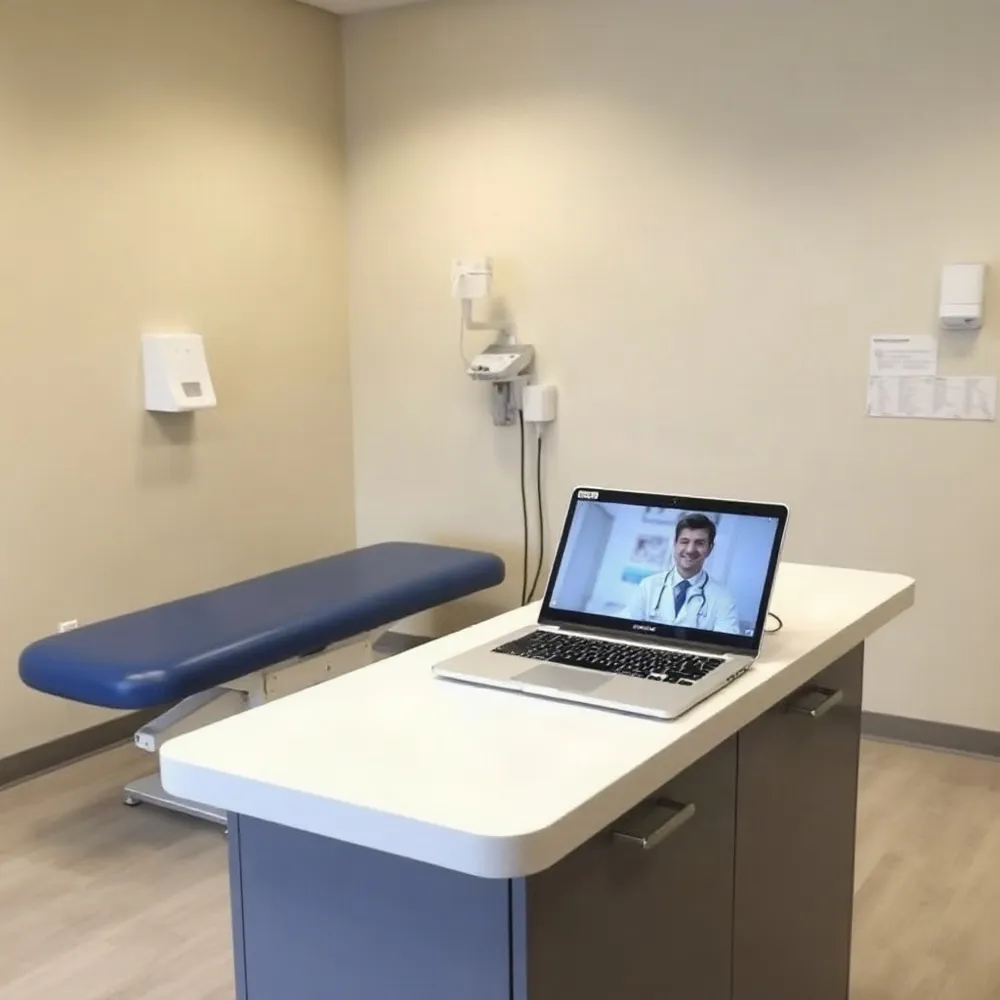
The opioid epidemic across the United States has forced clinicians to move away from single‑drug regimens toward multimodal, integrative pain strategies. Adding occupational therapy to the mix helps patients relearn daily tasks, improve gait, and regain functional independence while reducing reliance on opioids. In North Texas—Lewisville, Fort Worth, Euless—community resources such as support groups, workshops, and tele‑health platforms expand access to these services, especially for those with transportation barriers. The most successful outcomes arise when podiatrists, physical therapists, occupational therapists, and behavioral‑health professionals collaborate, sharing diagnostic data, gait‑analysis findings, and personalized treatment plans. This interdisciplinary approach not only diminishes pain scores but also curbs chronic opioid use, delivering safer, faster recovery for chronic foot and ankle conditions.
The Landscape of Integrative Pain Management
 The opioid epidemic has spurred a nationwide Shift toward multimodal and integrative pain management due to opioid epidemic that combine conventional medicine with complementary therapies. In North Texas—particularly in Lewisville, Fort Worth, and Euless—patients are accessing services that blend podiatric expertise with yoga, mindfulness, acupuncture, and chiropractic care, all of which have been shown to lower pain scores and reduce reliance on opioids. Occupational therapy enhances daily activity adaptation and functional independence teaching individuals how to modify daily activities, choose supportive footwear, and use assistive devices to maintain functional independence while their foot or ankle condition heals. A true team‑based approach brings together podiatrists, physical therapists, occupational therapists, and behavioral‑health specialists to address the physical, emotional, and psychosocial dimensions of chronic foot pain. Community support groups, workshops, and telehealth increase accessibility further enhance accessibility, ensuring that patients receive coordinated, evidence‑based care that targets the root cause of pain rather than merely masking symptoms. This collaborative framework not only improves outcomes but also aligns with CDC recommendations to limit opioid exposure in chronic pain management.
Cutting‑Edge Diagnostics and Digital Tools
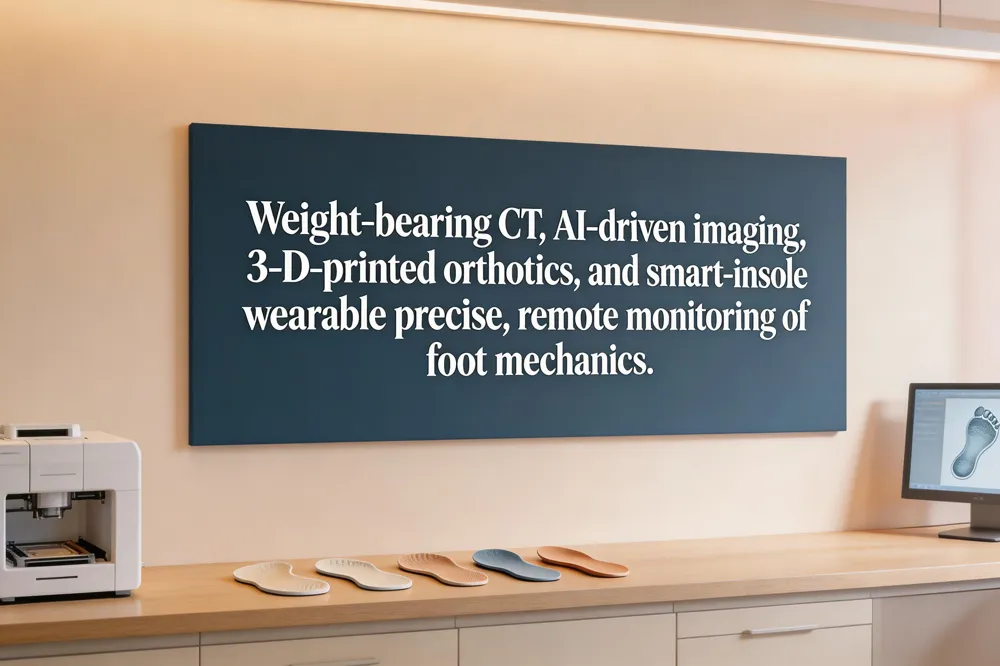 Modern podiatry now leverages high‑resolution imaging such as weight‑bearing CT and MRI to pinpoint subtle fractures, joint malalignment, and soft‑tissue pathology that traditional X‑rays often miss. These scans feed directly into AI‑driven platforms that automatically flag abnormal pressure zones and suggest targeted interventions. Once the biomechanical deficit is defined, clinicians use digital milling and 3‑D printing to fabricate custom orthotics that precisely redistribute load and correct arch deviations. Smart insoles and sensor‑embedded wearables capture real‑time gait metrics—stride length, plantar pressure, and temperature—allowing podiatrists to monitor progress remotely. The data are uploaded to cloud‑based AI analytics, which generate personalized rehab recommendations and alert providers to early signs of overuse. Telemedicine visits now include live gait‑review sessions, where the podiatrist can adjust orthotic prescriptions on the fly, reducing the need for in‑office appointments.
What is the new technology in podiatry? The newest technology combines advanced wearables, AI analytics, and minimally invasive procedures. Smart insoles and sensor‑embedded wearables capture real‑time gait, pressure, and temperature data, feeding it to AI platforms that instantly assess foot mechanics and treatment progress. AI algorithms also enhance diagnostics by rapidly interpreting X‑rays, MRIs, and other imaging to spot subtle fractures or soft‑tissue damage. Endoscopic tools and bio‑integrative implants further reduce tissue trauma, enabling faster recovery and more personalized care.
Minimally Invasive and Regenerative Therapies
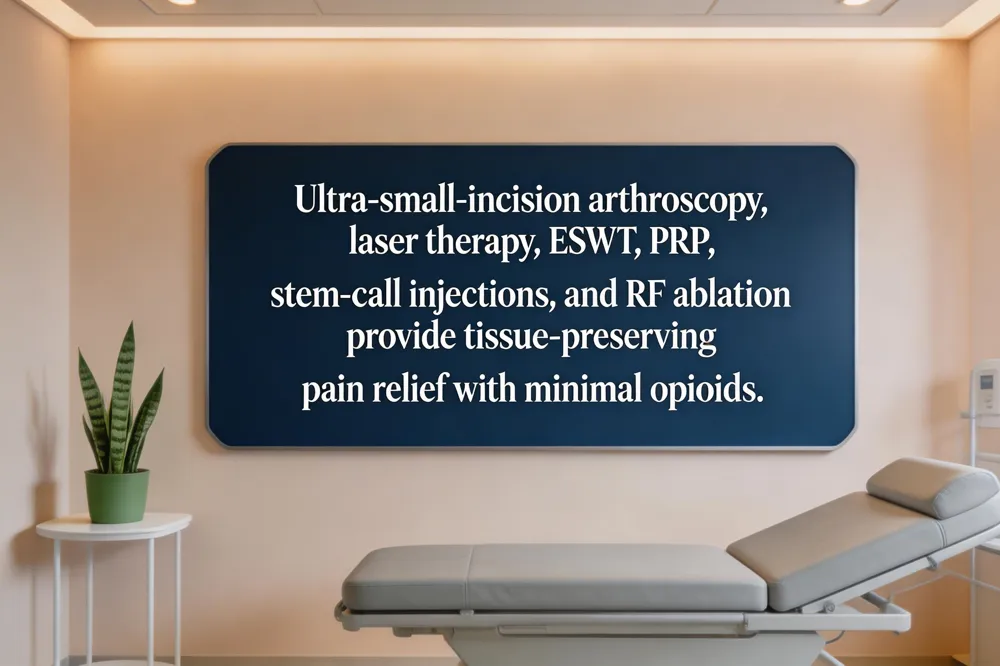 Modern podiatry now blends ultra‑small‑incision arthroscopy and percutaneous repairs with cutting‑edge biologics. Tiny arthroscopic portals allow surgeons to address bunions, flatfoot, and ankle instability while preserving soft tissue, and percutaneous tendon repairs reduce scarring and speed return to weight‑bearing. Laser podiatry—including MLS Laser Therapy—delivers synchronized wavelengths that cut inflammation and promote healing in plantar fasciitis, Achilles tendinitis, and post‑surgical pain. Shockwave therapy (ESWT) provides high‑energy acoustic waves that stimulate neovascularization and tissue repair for chronic tendon disorders.
Platelet‑rich plasma (PRP) and stem‑cell injections supply growth factors and progenitor cells directly to damaged ligaments, tendons, and cartilage, accelerating regeneration and lowering opioid reliance. Radio‑frequency ablation creates controlled thermal lesions that interrupt pain signals in chronic tendonopathy without drug or minimalinjhos localized cryotherapy, performed by podiatrists, offers precise cooling to neuromas, bursitis, and inflammatory tendon sites, reducing edema and nerve irritation.
What are the latest treatments for foot and ankle problems? The newest therapies combine advanced biologics (PRP, stem cells) with minimally invasive delivery (ultra‑small‑incision arthroscopy, percutaneous repairs, ESWT, RF ablation). Computer‑guided navigation and 3‑D‑printed implants enable precise, tissue‑preserving reconstructions, shortening recovery and minimizing opioid use.
Can a podiatrist do cryotherapy? Yes. Localized cryotherapy can be performed by podiatrists to target neuromas, bursitis, and tendonitis with precision, offering a non‑drug, non‑incisional pain‑relief option.
Diabetes, Neuropathy, and Medication Management
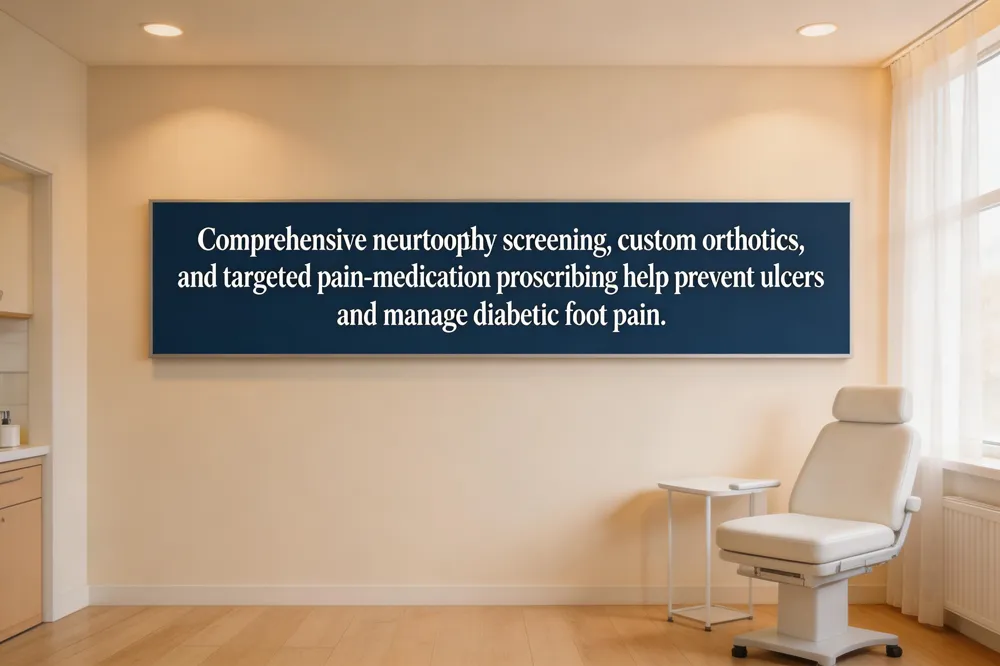 Peripheral neuropathy and vascular assessment are cornerstone components of diabetic foot care. Podiatrists perform detailed sensation testing, monofilament checks, and Doppler studies to identify reduced blood flow and early nerve loss, which can mask injuries and predispose to ulceration (APMA survey; diabetic foot guidelines). Custom orthotics and footwear counseling further protect high‑risk feet; 3‑D‑printed or digitally milled insoles redistribute pressure, while a wide toe box, low heel, and adequate cushioning lower peak plantar stress and prevent metatarsalgia or plantar fasciitis. Preventive foot exams at least once a year—combined with patient‑performed daily inspections—enable early detection of callus formation, skin breakdown, or ulcer development, dramatically reducing amputation risk. Podiatrists are licensed to prescribe NSAIDs, corticosteroids, and, in most states, DEA‑registered controlled‑substance analgesics (e.g., tramadol, hydrocodone) for acute or postoperative pain, allowing timely pain control without referral. Multimodal pain reduction strategies—such as orthotics, physical therapy, low‑level laser, shockwave, and platelet‑rich plasma—are integrated to spare opioids, align with CDC opioid‑sparing recommendations, and promote functional recovery.
Should type 2 diabetics see a podiatrist? Yes—regular podiatric visits allow vascular and neuropathic assessment, early ulcer detection, and preventive interventions (footwear, orthotics, education) that prevent serious complications.
Do podiatrists prescribe pain medication? Yes—DPMs can prescribe NSAIDs, prescription anti‑inflammatories, and, where state law permits, controlled‑substance analgesics for foot‑related pain, ensuring safe, targeted pharmacologic management.
shockwave
Recovery, Rehab, and Practical Patient Guidance
 Effective recovery after foot or ankle injury blends classic protocols with modern therapies. Begin with R.I.C.E. (Rest, Ice, Compression, Elevation) to curb acute inflammation, then transition to P.O.L.I.C.E. (Protection, Optimal Loading, Ice, Compression, Elevation) and activity modification that avoids high‑impact stresses while maintaining gentle range‑of‑motion exercises. Structured physical‑therapy programs focus on strengthening intrinsic foot muscles, calf flexibility, and gait retraining; sensor‑filled treadmills and instrument‑assisted mobilization help correct abnormal loading patterns. Weight management reduces plantar pressure, and footwear modifications—wide toe‑box, low heel, ample cushioning—further off‑load painful structures. For immediate symptom relief, a menthol‑based topical such as Biofreeze can be applied to clean, intact skin; it creates a cooling sensation that numbs pain receptors without penetrating the skin, but should be avoided on open wounds or irritated areas. Post‑fusion protocols typically keep the foot non‑weight‑bearing for 4–6 weeks, followed by partial weight‑bearing in a controlled boot, with serial X‑rays confirming bony union before full loading. Gait normalization progresses as strength returns, often with anti‑gravity treadmill training to protect the healing joint.
Q: Can I put Biofreeze on my ankle? A: Yes—apply a thin layer to clean, intact skin, avoid broken skin or face, and discontinue if irritation occurs; seek professional evaluation for severe or persistent pain.
Q: Can you walk normally after foot fusion surgery? A: Normal walking resumes only after the fusion heals, usually 6–12 weeks; early weight‑bearing is restricted, and a fused joint remains stiff, though gait can normalize with therapy.
Q: What will a podiatrist do for foot pain? A: A podiatrist identifies the cause and may prescribe R.I.C.E./P.O.L.I.C.E., activity modification, custom orthotics, physical‑therapy programs, and, when needed, minimally invasive procedures or regenerative injections.
A Future of Pain‑Free Steps
The next era of podiatric care will be defined by the seamless synergy of cutting‑edge technology, minimally invasive surgery, and holistic therapies. Advanced imaging (weight‑bearing CT, high‑resolution MRI) and 3‑D gait analysis guide precise interventions such as endoscopic plantar fasciotomy, percutaneous bunion correction, and laser‑assisted tendon repairs, dramatically reducing tissue trauma and postoperative pain. When combined with integrative modalities—custom orthotics, shock‑wave therapy, acupuncture, and mindfulness‑based stress reduction—patients experience faster functional recovery and a 25‑35 % drop in opioid prescriptions. Ongoing clinician education, tele‑medicine follow‑up, and community‑based support groups ensure that innovations translate into lasting, patient‑centered relief, empowering individuals to walk pain‑free for life.