Why Chronic Foot Pain Needs a Modern Approach
About one‑fifth of U.S. adults experience chronic foot pain, a condition that can limit walking, work, and even sleep, dramatically lowering quality of life. Traditional reliance on NSAIDs or oral steroids is increasingly viewed as a suboptimal first line because of systemic side effects and limited long‑term benefit. Modern podiatry therefore emphasizes minimally invasive, non‑pharmacologic strategies. Comprehensive exams—often including gait analysis, weight‑bearing imaging, and pressure mapping—identify the exact source of pain. Targeted therapies such as custom 3‑D printed orthotics, extracorporeal shockwave treatment, ultrasound‑guided injections, and low‑level laser therapy address biomechanical stress and promote tissue healing without systemic medication. Early intervention with these tools reduces inflammation, restores function, and can prevent the need for surgery, offering patients a safer, faster‑recovery pathway to regain daily mobility.
Managing Everyday Foot Strain: Home Remedies for Standing and Walking
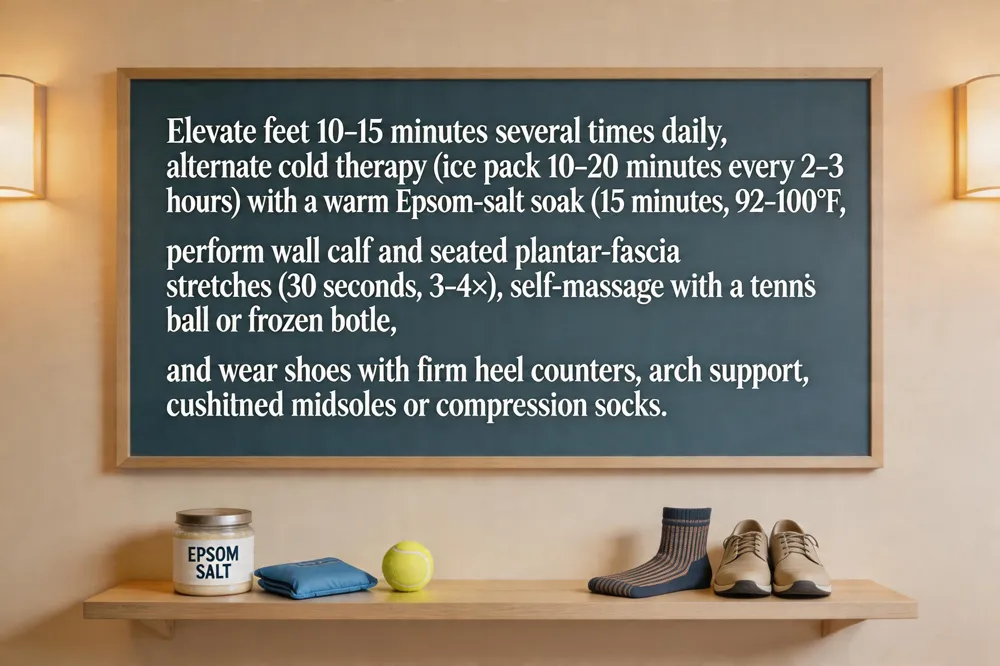 Prolonged standing or long walks often overload the plantar structures, leading to swelling, tightness, and aching. A simple, evidence‑based routine can keep the feet comfortable without medication. First, elevate the feet above heart level for 10‑15 minutes a few times a day; this promotes venous return and reduces fluid buildup. Follow elevation with a cold‑therapy cycle—apply a wrapped ice pack or frozen water bottle for 10‑20 minutes every 2‑3 hours—to dampen acute inflammation. When the foot is no longer inflamed, switch to a warm‑therapy cycle such as a 15‑minute Epsom‑salt soak (92‑100 °F) to relax muscles and improve circulation. Incorporate calf and arch stretches: a wall calf stretch and a seated plantar‑fascia pull‑toward‑knee hold, each 30 seconds, repeated 3‑4 times daily. Self‑massage with a tennis ball, frozen water bottle, or fingertips releases adhesions and boosts blood flow. Finally, wear shoes with firm heel counters, adequate arch support, and cushioned midsoles; light‑compression socks can further stabilize the arch and diminish strain. Consistent daily practice of these measures often lessens pain from standing all day, excessive walking, and bottom‑of‑foot soreness, and it reduces the need for oral anti‑inflammatories or invasive interventions.
Exercise‑Induced Foot Discomfort and Recovery
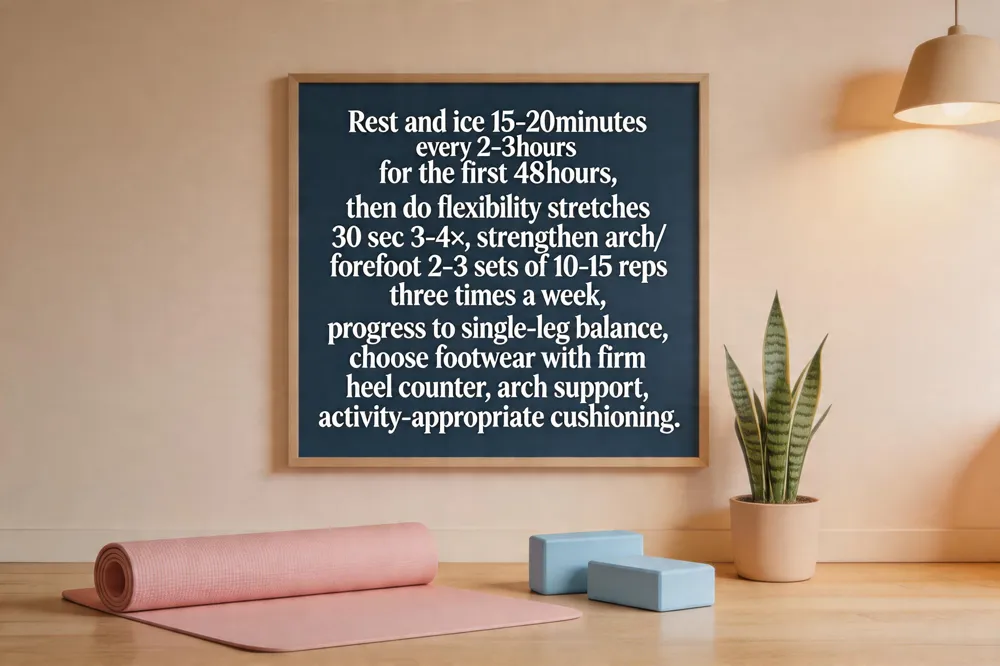 Foot pain after a workout is most often a reaction to mechanical overload or minor soft‑tissue irritation. The first step is to rest the affected limb and apply ice (or a frozen water bottle) for 15‑20 minutes every 2‑3 hours during the first 48 hours; this limits inflammation and numbs the area. Once swelling subsides, begin flexibility stretches: a wall calf stretch (30 seconds, 3‑4 times), a seated Achilles stretch, and a toe‑spread stretch that opens the forefoot. These moves keep the plantar fascia, gastrocnemius, and intrinsic foot muscles supple.
To rebuild resilience, incorporate arch‑ and forefoot‑strengthening exercises such as toe‑curls, arch domes, ankle circles, and “write‑the‑alphabet” with the toes. Perform 2‑3 sets of 10‑15 repetitions three times a week, progressing to single‑leg balance drills as strength improves.
Choosing proper footwear is essential. Shoes should have a firm heel counter, adequate arch support, and cushioning that matches the activity’s impact level. For high arches or flat feet, a custom or over‑the‑counter orthotic can redistribute pressure and prevent recurrence.
How to relieve foot pain from exercise: Rest, ice, targeted stretches, arch‑strengthening, and supportive shoes are the cornerstone of recovery. If pain persists beyond a few days, worsens, or is accompanied by swelling or numbness, schedule a podiatric evaluation to rule out plantar fasciitis, stress fractures, or nerve irritation.
How to relieve foot pain on top of the foot: Protect the area by avoiding aggravating activities, ice the region, and wear loose‑fitting shoes with a wide toe box and arch support. Gentle calf and dorsiflexor stretches, combined with OTC anti‑inflammatory medication if needed, can alleviate soreness. Persistent or worsening symptoms warrant a podiatrist visit for imaging and possible custom orthotics or targeted physical therapy.
Female Foot Health: Common Causes and Targeted Solutions
 Women’s feet are uniquely vulnerable to pain because of the shoes they often wear, the biomechanics of the female foot, and certain systemic conditions that affect them more frequently.
Footwear choices that affect women – High‑heeled, narrow, or poorly cushioned shoes concentrate pressure on the forefoot and toes, leading to metatarsalgia, bunions, and hammertoes. Switching to low‑heeled, wide‑toe‑box shoes with adequate arch support and cushioning can dramatically reduce stress on the foot structures.
Biomechanical conditions prevalent in ladies – Flat arches, overpronation, and hormonal ligament laxity make women prone to plantar fasciitis, posterior tibial tendon dysfunction, and Morton’s neuroma. Targeted calf‑and‑arch stretches, intrinsic foot‑muscle strengthening (toe curls, arch domes, balance drills), and custom 3‑D‑printed orthotics correct abnormal loading and restore normal gait.
Systemic diseases with higher foot‑pain incidence in women – Gout, rheumatoid arthritis, and diabetic peripheral neuropathy often present first in the feet. Early podiatric evaluation, combined with anti‑inflammatory topical agents (menthol, arnica) and supplements such as curcumin, omega‑3s, and magnesium, can control inflammation without relying on NSAIDs.
Reasons for foot pain in ladies – In summary, footwear, biomechanical stress, and systemic illnesses together explain most chronic foot discomfort in women. A comprehensive podiatric exam—using gait analysis, imaging when needed, and a stepwise protocol that starts with conservative measures (rest, ice, stretching, orthotics) before minimally invasive options like shockwave therapy, ultrasound‑guided injections or regenerative PRP—provides personalized, medication‑free relief and restores mobility.
Understanding Chronic Foot Pain: Causes, Diagnosis, and Advanced Treatments

Chronic foot pain causes
Chronic foot pain often stems from overuse injuries, ill‑fitting footwear, or structural abnormalities such as flat feet or high arches. Common chronic conditions include Achilles tendinitis, plantar fasciitis, bunions, bone spurs, and arthritic diseases like osteoarthritis and rheumatoid arthritis. Neuropathic sources such as diabetic peripheral neuropathy and Morton’s neuroma can also produce persistent discomfort. Inflammatory disorders such as gout and complex regional pain syndrome are frequent contributors to long‑standing foot pain. Additionally, tarsal tunnel syndrome, sesamoiditis, and other tendon or nerve compressions are common culprits.
Chronic foot pain disability
When foot pain limits walking, standing, or daily tasks, it becomes disabling. Persistent pain from arthritis, plantar fasciitis, flat‑foot deformities, or post‑traumatic injuries reduces weight‑bearing capacity and may require assistive devices. A thorough clinical evaluation—including imaging, functional testing, and detailed history—determines severity. Minimally invasive procedures, custom orthotics, and targeted rehabilitation can alleviate pain, restore mobility, and prevent disability.
Chronic foot pain diabetes
Diabetes predisposes patients to chronic foot pain through neuropathy and peripheral artery disease, which diminish sensation and circulation. Small wounds can become painful ulcers that linger, increasing infection risk. Early podiatric evaluation is essential; minimally invasive options such as debridement, off‑loading implants, and laser‑guided nerve modulation relieve pain, promote healing, and avert serious complications. Tight glucose control, daily foot inspections, and regular professional care are cornerstone strategies.
Chronic foot pain plantar fasciitis
Plantar fasciitis causes persistent heel and arch pain, especially with the first morning steps. Overuse, prolonged standing, high‑impact activity, poor footwear, and biomechanical issues (flat feet, overpronation) hinder healing. Conservative care—custom orthotics, stretching, night splints, NSAIDs—often helps, but many benefit from extracorporeal shockwave therapy or guided corticosteroid injections. When needed, a tissue‑sparing plantar‑fascia release restores function.
Chronic foot pain treatment
Treatment begins with a podiatric exam and imaging to pinpoint the pain source. Initial management includes activity modification, orthotics, physical therapy, and anti‑inflammatory measures. If insufficient, minimally invasive options such as ultrasonic debridement, PRP injections, and shockwave therapy target tendon, ligament, or nerve pathology. Precision‑guided surgical interventions (endoscopic fasciotomy, nerve decompression) are reserved for refractory cases, offering quicker recovery.
Chronic foot pain relief
Long‑term relief combines proper footwear, targeted stretching, and appropriate ice or heat therapy with advanced interventions. At Advanced Foot Care, board‑certified surgeons employ minimally invasive plantar‑fascia releases, nerve decompression, custom orthotic fitting, regenerative injection therapies, and specialized rehabilitation to restore strength and gait mechanics. Personalized care plans integrate these treatments with lifestyle counseling, helping patients regain pain‑free mobility.
Quick Relief Techniques and Safe Medication Use
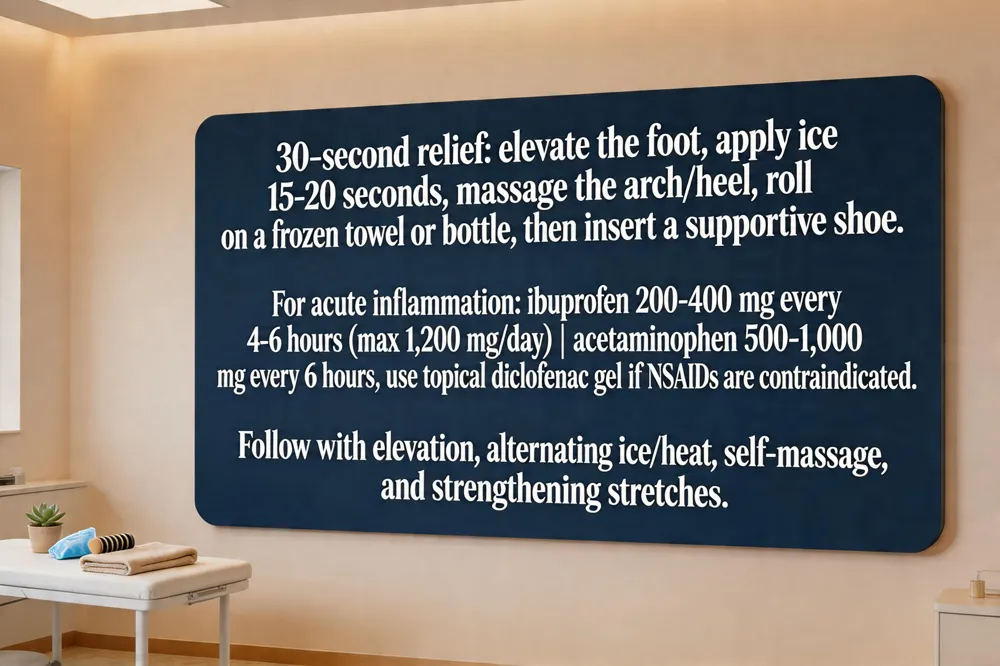 A rapid 30‑second foot‑pain calming method combines rest, elevation, ice, and gentle massage. Sit, lift the foot above heart level, and apply a cold pack or frozen water bottle for 15‑20 seconds. While the area is numb, use your thumbs to massage the arch or heel, then roll the foot over a frozen towel or firm bottle to further reduce swelling. Slip into a supportive shoe or orthotic to maintain the relief.
For acute inflammation, over‑the‑counter NSAIDs such as ibuprofen 200‑400 mg every 4‑6 hours (max 1,200 mg/day without medical supervision) can decrease pain and swelling. If NSAIDs are contraindicated, acetaminophen 500‑1,000 mg every 6 hours or topical diclofenac gel provides analgesia with fewer systemic effects.
A comprehensive home‑care routine for swelling includes:
- Rest and elevation on a pillow.
- Ice packs (15‑20 minutes, 2‑3 times daily) alternating with warm Epsom‑salt foot soaks (20‑30 minutes) to improve circulation.
- Self‑massage using a tennis ball or frozen bottle to release adhesions.
- Daily calf, arch, and toe‑strengthening stretches (30‑second holds, 3‑4 times).
- Proper footwear with arch support or custom orthotics.
If pain persists beyond a few days, worsens, or is accompanied by numbness, bruising, or systemic signs, schedule a podiatrist evaluation for targeted, minimally invasive treatment.
Finding Expert Care: Podiatrists, Advanced Technology, and Local Clinics
 Podiatrist near me – Advanced Footcare provides expert foot and ankle care in northwest Chicago and South Florida. Our board‑certified surgeon offers minimally invasive procedures, sports injury treatment, diabetic foot care, and wound management. Appointments can be booked online or by phone.
Advanced podiatrist – An advanced podiatrist blends extensive training with cutting‑edge, minimally invasive techniques to treat foot and ankle problems while preserving tissue and shortening recovery. Services include custom orthotics, sports‑medicine injuries, and diabetic foot management.
Advanced foot and ankle Chicago – Advanced Foot and Ankle Centers of Illinois use on‑site X‑rays, ultrasound, MRI, and the FootMaxx gait‑analysis system to diagnose and treat heel pain, bunions, sports injuries, and more.
Podiatrist Chicago – Chicago specialists provide personalized care such as Lapiplasty® bunion correction, shockwave therapy, and custom orthotics, supported by advanced imaging and same‑day visits.
Advanced podiatry Crestwood IL – Led by Dr. Mark J. Gagnon, the practice offers heel‑pain relief, diabetic foot care, and sports‑injury rehab with minimally invasive methods.
Podiatrist Wheeling, IL – Dr. Paul Potach and Dr. Anna Petrov deliver custom orthotics, surgical heel‑pain treatment, and pediatric foot health with flexible scheduling.
These clinics combine expertise with imaging and therapeutic technologies to ensure relief for chronic foot pain.
Take the First Step Toward Pain‑Free Living
Medication‑free podiatric care offers lasting relief while avoiding the side‑effects of NSAIDs, opioids, and oral steroids. By focusing on precise diagnosis, targeted stretching, strengthening, custom orthotics, and minimally invasive therapies such as shockwave, ultrasound‑guided injections, and low‑level laser, clinicians restore natural foot mechanics and reduce inflammation at its source. This approach not only diminishes pain but also promotes tissue healing, improves balance, and lowers the risk of future injuries. If foot discomfort persists beyond a few days, escalates, or is accompanied by numbness, swelling, or open wounds, seek evaluation promptly; early assessment by a board‑certified podiatrist prevents chronic progression and guides personalized treatment. Our Advanced Footcare Center locations in Chicago’s North Lincoln Avenue and South Florida provide convenient scheduling, state‑of‑the‑art imaging, and same‑day tele‑medicine follow‑ups, ensuring you receive expert care close to home without unnecessary delays. Schedule your appointment online today and take the first step toward a pain‑free future.