The Importance of Foot Care for Long Travel Days
Importance of Foot Care During Extended Walking or Standing
Long travel days often involve prolonged periods of walking, standing, or sitting, which can lead to foot fatigue and discomfort. Adequate foot care helps prevent swelling, pain, and long-term injuries, ensuring travelers maintain mobility and enjoy their trips.
Common Causes of Foot Fatigue During Travel
Foot fatigue during travel commonly stems from poor circulation due to immobility, improper footwear that lacks arch support or cushioning, and pressure points caused by ill-fitting shoes. Additionally, environmental factors such as heat and humidity can exacerbate discomfort and increase the risk of blisters and infections.
Role of Proper Footwear and Preparation
Choosing well-fitting shoes with good arch support, cushioning, and a wide toe box is essential. Breaking in shoes before travel reduces the risk of blisters and discomfort. Complementary items like moisture-wicking socks and compression stockings help manage moisture and promote circulation. Pre-travel foot care including stretching exercises and packing a foot care kit with blister pads, bandages, and moisturizing cream can further protect and soothe feet throughout the journey.
Choosing the Right Footwear and Accessories for Travel Comfort
How important is proper shoe fit and break-in before travel?
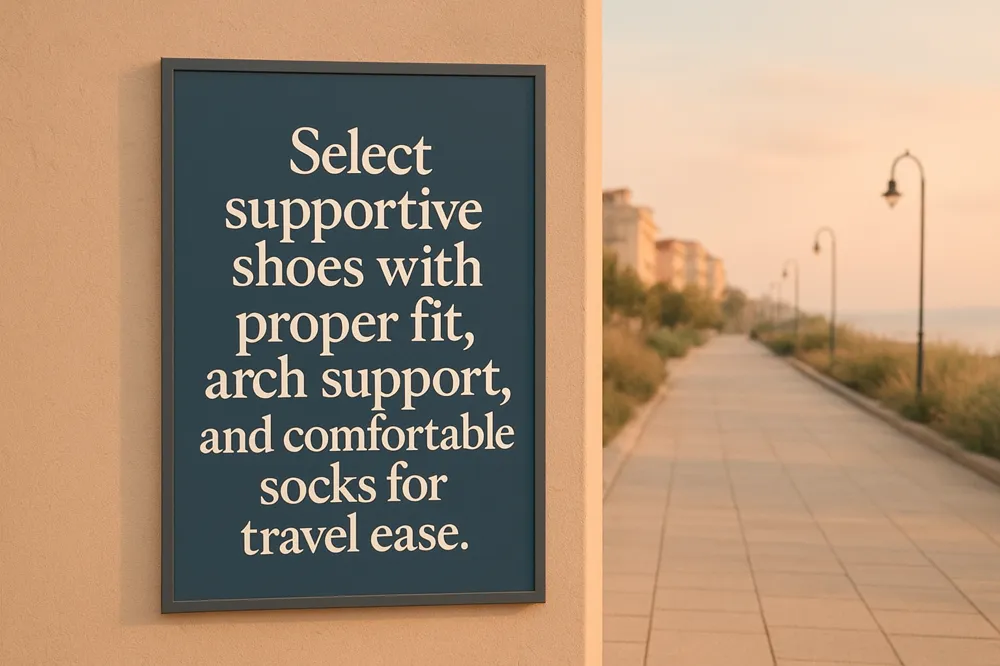
Ensuring a Proper Shoe Fit before traveling is crucial to prevent blisters and foot discomfort. Shoes should allow at least a thumb's length of space from the longest toe to the shoe's end and must not slip at the heel. Breaking In New Shoes Before Vacation weeks prior to travel helps avoid abrasions and foot fatigue during extended walking or sightseeing.
What supportive footwear features should travelers look for?
Choose shoes with Good Arch Support, cushioning, and a wide toe box to accommodate foot swelling and reduce pressure points. Athletic Shoes for Urban Sightseeing designed specifically for walking or hiking are preferable, depending on travel activities. Shoes that bend at the foot’s natural flex point and provide a firm heel counter improve balance and stability.
How can orthotics and compression socks improve comfort during travel?
Custom Orthotics for Travel distribute weight evenly and offload pressure, minimizing foot pain during long walks. Benefits of Compression Socks During Travel help enhance blood circulation, reduce swelling, and lower the risk of deep vein thrombosis (DVT), especially during flights or prolonged sitting. They are particularly beneficial for travelers prone to leg swelling or those with circulatory concerns.
What type of socks helps prevent blisters and infections?
Moisture-wicking Socks made from synthetic fibers, merino wool, or bamboo fibers keep feet dry and reduce friction, preventing blisters and skin irritation. Changing socks regularly during travel, especially if they become damp, helps avoid Preventing Foot Pain During Summer such as athlete's foot and fungal nail infections.
In summary, selecting Supportive Shoes for Foot Health combined with appropriate socks, orthotics, and compression hosiery is essential to maintain foot comfort and health during travel. Travel Foot Care Kit Essentials can significantly reduce foot fatigue, pain, and the risk of injury.
Lacing Techniques and Footwear Adjustments to Alleviate Pain
What Are Some Effective Lacing Hacks for Hiking Boots?
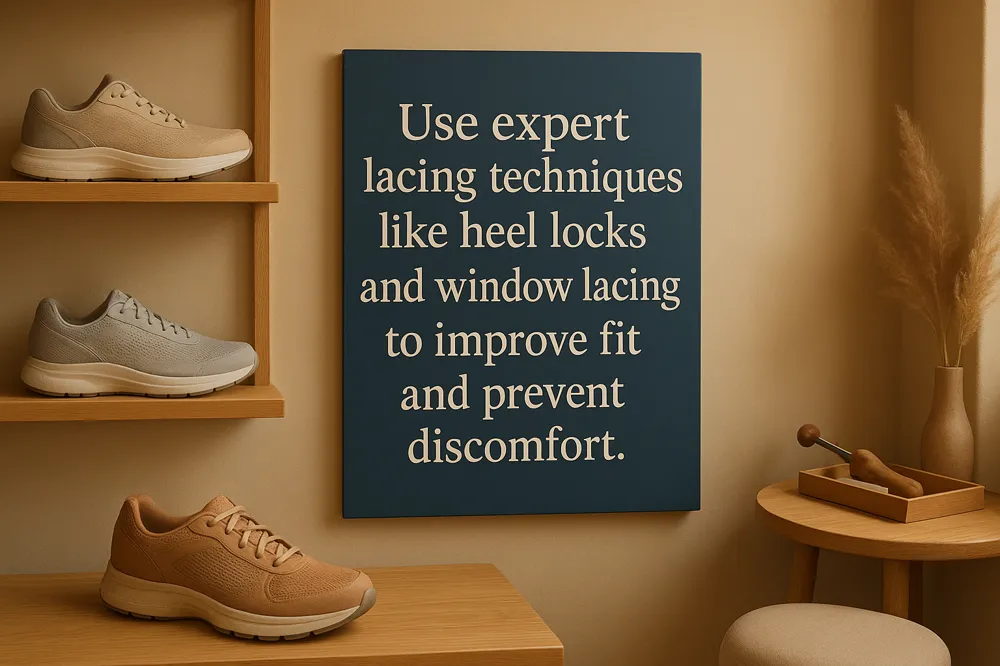
Using Proper lacing techniques for hiking methods can significantly reduce foot pain and injuries while hiking. The Heel lock lace lock method, also known as the lace lock, is a popular technique that secures the heel firmly in place, preventing it from sliding inside the boot. This reduces friction that often causes blisters and discomfort.
Another recommended method is the Surgeon's knot for hiking boots, particularly useful for heavy-duty hiking boots. It provides a firmer grip to keep the foot from moving forward, protecting toes from impact and reducing the risk of bruising and blisters.
How Can Lacing Adjustments Relieve Pressure Points?
Specific lacing patterns can address pressure on sensitive areas of the foot. For example, Window lacing for high arches creates a gap or "window" over the top of the foot, Relieve top-of-foot pressure. This is especially helpful for hikers with elevated foot arches who experience top-of-foot pain.
Skip bottom hooks to reduce ball foot pressure, such as the bottom hooks in boots, helps reduce constriction on the ball of the foot. This adjustment can alleviate symptoms associated with Lacing hacks for Morton’s Neuroma, a painful condition affecting the nerves between the toes.
How Do Lacing Adjustments Help Prevent Blisters and Other Foot Conditions?
Proper lacing minimizes foot slippage, which is a common cause of blisters on long hikes or travel. By securing the foot with techniques like Heel lock lace lock method and Surgeon's knot for hiking boots, friction points are reduced. Additionally, these techniques help maintain optimal foot alignment, preventing pressure-related injuries.
Footwear adjustments combined with lacing offer personalized care to combat specific conditions such as Prevent ingrown toenails and fungal infections. Consulting Podiatrist advice for hikers or using lacing strategies tailored to one’s foot structure can significantly enhance comfort and foot health during outdoor activities.
| Lacing Technique | Purpose | Benefit |
|---|---|---|
| Heel Lock (Lace Lock) | Prevents heel slippage | Reduces blisters and heel discomfort |
| Surgeon’s Knot | Secures foot firmly in boot | Prevents toes from hitting boot front |
| Window Lacing | Relieves top-of-foot pressure | Comfort for high arches and insteps |
| Skipping Bottom Hooks | Reduces ball-of-foot pressure | Helps alleviate Morton’s Neuroma symptoms |
Practical Strategies During Travel to Reduce Swelling and Fatigue
Stretching feet, calves, and ankles during travel
Prolonged immobility, such as during flights or road trips, can cause foot and leg stiffness. Simple stretching exercises like ankle rotations, toe curls, and calf stretches help maintain flexibility, improve circulation, and prevent soreness.
Taking breaks to walk and elevate feet
Regularly standing up and walking short distances during travel promotes blood flow and reduces the risk of swelling. Elevating the feet when seated or resting also aids in minimizing fluid buildup and alleviating heaviness.
Using foot massages and rolling objects to relieve soreness
Massaging the feet gently improves blood circulation and relaxes muscles. Rolling a tennis ball or similar small object under the foot can ease tension and reduce discomfort after long periods of sitting or walking. (Foot massage benefits, rolling tennis ball under feet)
Staying hydrated and avoiding excess salt
Drinking ample water is essential to prevent dehydration, which can exacerbate swelling. Limiting salty foods and carbonated beverages helps reduce water retention in the feet and ankles. (Importance of hydration, Staying hydrated on flights)
Benefits of compression socks for circulation and swelling control
Knee-high compression socks are effective in enhancing blood flow, reducing swelling, and lowering the risk of deep vein thrombosis (DVT) during extended travel. Their use is especially recommended for individuals prone to circulatory challenges. (Benefits of compression socks during travel, Compression socks during air travel
Implementing these strategies can significantly improve foot comfort and health during travel, minimizing fatigue and swelling for a more enjoyable journey.
Preventive Foot Hygiene and On-the-Go Foot Care Essentials
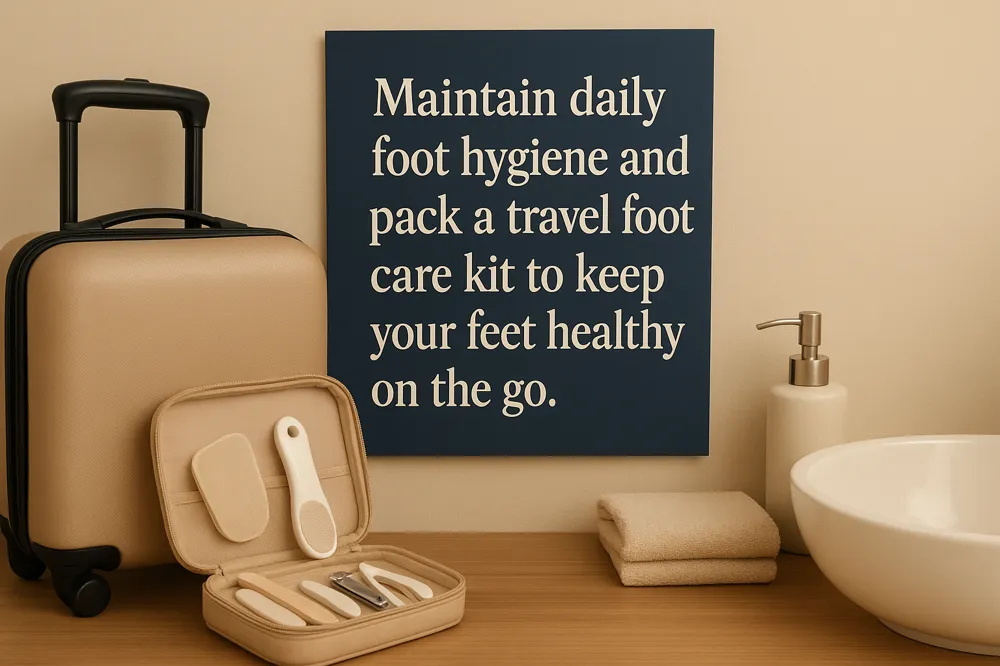
Daily Foot Hygiene Practices to Avoid Infections
Maintaining good foot hygiene is crucial, especially while traveling. Daily washing with mild soap and thorough drying, including between the toes, prevents fungal infections such as athlete's foot. Changing into clean, moisture-wicking socks reduces the risk of skin problems and keeps feet dry. Travelers should avoid walking barefoot in public or communal areas to protect against bacteria and fungi. For more on Foot hygiene tips and prevent foot fungal infections, see expert guidance.
Carrying Foot Care Kits with Blister Pads, Bandages, and Creams
A well-stocked foot care kit is an essential travel companion. Including blister pads, bandages, antibiotic ointments, antifungal powder, and moisturizing foot cream allows prompt treatment of minor injuries and irritations. Quick management of redness or hot spots can prevent infections and minimize discomfort. Refer to travel foot care kit essentials and foot care essentials for travel for comprehensive packing tips.
Wearing Shoes and Socks in Airports and Communal Showers
During air travel, wearing slip-on shoes with socks facilitates security screening and reduces exposure to floor-based infections. In airports and hotel communal showers, sporting waterproof flip-flops or shower shoes protects against fungal infections like athlete's foot and toenail fungus. See Keep feet safe during air travel and Footwear tips for ankle support for more.
Moisturizing and Protecting Feet from Sunburn and Dry Skin
Travelers should regularly moisturize their feet to prevent dry, cracked skin, which can lead to painful fissures or infections. Applying broad-spectrum, water-resistant sunscreen with SPF 15 or higher on feet, especially when wearing sandals or walking barefoot, prevents sunburn and associated skin damage. See Moisturizing feet benefits and Applying sunscreen to feet for detailed advice.
Importance of Nail Care to Prevent Ingrown Toenails and Infections
Proper nail care involves trimming toenails straight across to prevent ingrown toenails. Keeping nails clean and clipped reduces the risk of infections and discomfort caused by nail damage, particularly important during extended walking or hiking. For more information, see Toenail Care for Foot Health and Cutting toenails straight.
| Aspect | Recommended Practices | Benefits |
|---|---|---|
| Daily Hygiene | Wash and dry feet thoroughly daily | Prevents fungal and bacterial infections |
| Foot Care Kit Essentials | Blister pads, bandages, creams | Enables prompt care of minor foot issues |
| Footwear in Public Areas | Wear socks and shoes in airports and communal showers | Protects against infections |
| Moisturizing & Sun Protection | Use foot lotion and sunscreen | Prevents dryness, cracks, and sunburn |
| Nail Care | Trim nails straight across | Avoids ingrown toenails and infection risk |
These preventive measures ensure foot health and comfort throughout travel, minimizing the risk of common foot ailments encountered on the go. For extended tips on Foot health basics and Travel foot care tips, consult trusted resources.
When to Seek Medical Advice and Professional Foot Care Support
Recognizing Persistent Foot Pain and Swelling
Persistent foot pain, swelling, or non-healing wounds should never be ignored. These symptoms can indicate underlying conditions that require professional evaluation. If discomfort continues despite home care measures, such as rest, hydration, and supportive well-fitting shoes, consulting a podiatrist is essential to prevent complications.
Importance of Foot Exams, Especially for Diabetics
Individuals with diabetes face heightened risks of foot infections and circulatory issues due to nerve damage and poor blood flow. Routine foot examinations by a podiatrist are critical to detect early signs of trouble, manage infections promptly, and avoid serious outcomes like ulcers or amputations. Proper foot care for diabetic patients improves outcomes and prevents complications.
Custom Orthotics and Pre-Travel Foot Wellness Checkups
Using custom orthotics for flat feet tailored to one’s foot shape and condition supports proper alignment, reduces pressure points, and helps prevent fatigue and injury during extended travel activities. Scheduling a foot wellness checkup before trips allows podiatrists to assess foot health, recommend suitable footwear modifications, and prepare personalized care plans for optimal comfort.
Role of Podiatrists in Advanced Minimally Invasive Treatments
Podiatrists offer advanced, minimally invasive podiatric treatments that address common travel-related foot conditions, including bunions, plantar fasciitis, and neuromas. These treatments can relieve pain effectively, enabling individuals to maintain active lifestyles without compromising mobility or comfort while traveling. For more on preventing foot injuries in hikers and related conditions, visit Podiatrist advice for hikers.
Stay Ahead of Foot Fatigue: Prioritize Care for Happy Travels
Effective Foot Care Strategies for Travel
Choosing supportive, well-fitting shoes with good arch support and cushioning is essential to prevent foot fatigue during extended travel. Incorporating compression socks and moisture-wicking socks enhances circulation and reduces swelling, while proper foot hygiene and regular stretching maintain skin health and flexibility. Packing a foot care kit with blister pads, bandages, and moisturizing creams addresses minor issues promptly.
Benefits of Proactive Foot Care
Proactive foot care minimizes discomfort, swelling, and injuries, enabling travelers to explore comfortably without interruption. It reduces risks of blisters, infections, and chronic conditions aggravated by travel-related stress on feet.
Embrace These Habits for Comfortable Travel
Adopting these foot care hacks ensures more enjoyable experiences on long days of walking or standing. Attend to your feet’s needs actively to sustain energy and prevent fatigue, making every step of your travel rewarding and pain-free.