Why Minimally Invasive Foot Surgery Matters
Minimally invasive foot surgery (MIS) employs incisions of only a few millimeters, guided by real‑time fluoroscopic or endoscopic imaging and percutaneous burrs. This approach precisely corrects bunions, hammertoes, plantar fasciitis, bone spurs and other common deformities while preserving surrounding ligaments, tendons and blood supply. Patients benefit from markedly less postoperative pain, swelling and stiffness, often needing only over‑the‑counter analgesics and fewer opioid prescriptions. The tiny wounds lower infection risk, reduce scarring and allow same‑day discharge, with many individuals bearing weight in a protective boot on the day of surgery and returning to normal shoes within weeks. Advanced podiatry clinics such as Hall Podiatry and affiliated centers in Northwestern Chicago and South Florida combine MIS with personalized treatment plans, offering outpatient procedures under light sedation, rapid rehabilitation protocols and comprehensive follow‑up care. This network provides convenient access to cutting‑edge, patient‑centered foot and ankle care across two major regions.
Clinical Edge: Faster Healing and Pain Relief
 Reduced postoperative pain and swelling
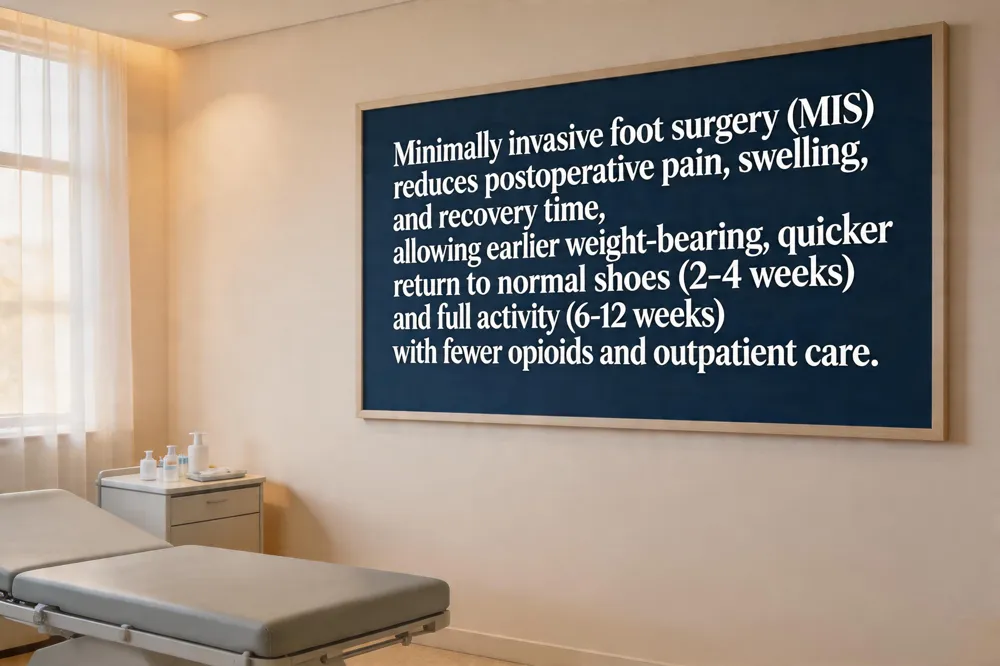
Minimally invasive foot surgery (MIS) uses incisions typically 2–5 mm long with specialized burrs and real‑time fluoroscopic imaging. The limited tissue disruption markedly lowers postoperative pain scores (average 2.3 points less on a 10‑point scale) and reduces swelling, allowing many patients to manage discomfort with over‑the‑counter analgesics rather than opioids.
Earlier weight‑bearing and ambulation
Because MIS preserves ligaments, tendons and neurovascular structures, patients often begin protected weight‑bearing in a surgical boot the same day or within 24 hours, which accelerates circulation, reduces edema, and promotes faster functional recovery. Patients who undergo MIS generally experience less post‑operative pain, swelling, and stiffness, often allowing them to bear weight or walk with a protective boot on the day of surgery.
Shorter overall recovery timelines
Typical MIS protocols enable return to normal shoes within 2–4 weeks and full activity by 6–12 weeks—far quicker than the 6–12 weeks often required for open procedures. Recovery times after MIS are frequently shorter; many individuals return to comfortable shoes and normal daily activities within weeks rather than months. Outpatient surgery, minimal blood loss and reduced infection risk further shorten the healing period. MIS procedures are usually performed on an outpatient basis under light sedation; most surgeries last less than an hour and patients can go home the same day.
After foot surgery how long does it take to walk
Most surgeons keep patients non‑weight‑bearing for 2–6 weeks, then allow partial weight‑bearing for 2–4 weeks before full weight‑bearing. Simple soft‑tissue repairs may permit normal walking by 6–8 weeks; bunion corrections or fusions often need 10–12 weeks or more.
What are the worst days after foot surgery?
The first 48 hours are most challenging—pain, swelling and discomfort peak. Elevation, ice and prescribed pain medication are essential during this period. Pain usually eases by the third week.
Foot surgery recovery must haves
Mobility aid (crutches or knee walker), waterproof cast/shoe cover, elevation pillow, easy‑to‑prepare meals, and a safe, clutter‑free home environment.
Ankle surgery recovery tips
Arrange caregiver help, keep the foot elevated, use ice, wear the prescribed boot, and start therapist‑approved exercises early.
Screw in foot surgery recovery
Maintain non‑weight‑bearing for 1–2 weeks, elevate, ice, follow dietitian‑rich diet, attend follow‑ups for X‑ray monitoring, and progress to full footwear after 6–8 weeks.
Metatarsal foot surgery recovery time
Swelling subsides by 6 weeks, weight‑bearing progresses from heel‑only to full by 3–4 months, with many returning to work within weeks if MIS was used.
Ankle surgery with plates and screws recovery
Non‑weight‑bearing for 1–2 weeks, then protected boot for 4–6 weeks; full weight‑bearing by 8–12 weeks; physical therapy begins early to restore motion and strength.
Cosmetic, Lifestyle, and Patient Experience Advantages
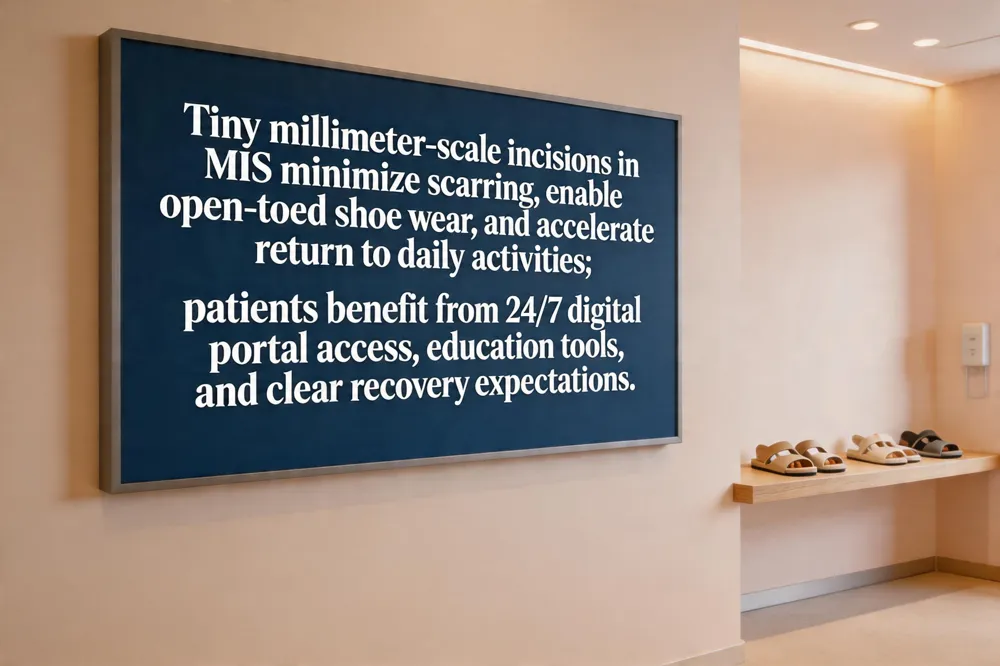 Minimally invasive foot surgery (MIS) uses incisions only a few millimeters long, which dramatically reduces soft‑tissue trauma and results in scar reduction and superior cosmetic outcomes. The tiny wounds heal with minimal visible scarring, allowing patients to wear open‑toed shoes and feel confident about the appearance of their feet. Because tissue disruption is limited, patients can often bear weight and return to normal footwear within weeks rather than months, accelerating the return to daily activities and work.
Patient‑education tools and support resources—such as the Advanced Foot and Ankle patient portal—provide 24‑hour access to health records, test results, appointment scheduling, prescription refills, billing, and secure messaging with the care team. This digital platform empowers patients to stay informed, ask questions, and engage actively in their recovery.
What I wish I knew before foot surgery – I would have set realistic recovery expectations, asked detailed questions about surgical approach and hardware, understood pre‑operative requirements, prepared my home for mobility, and arranged a solid support plan.
What not to do after foot surgery – Do not bear weight without clearance, keep casts or bandages dry, avoid premature activity, refrain from smoking, and never ignore warning signs.
Warning signs after foot surgery – Persistent worsening pain, spreading redness or swelling, foul drainage, fever, new numbness, calf pain, or shortness of breath require immediate medical attention.
Advanced Foot and Ankle patient portal – A secure online system for viewing records, managing appointments, requesting refills, paying bills, and messaging the podiatrist, keeping patients engaged and informed throughout care.
Advanced Imaging, Precision Instruments, and Technology
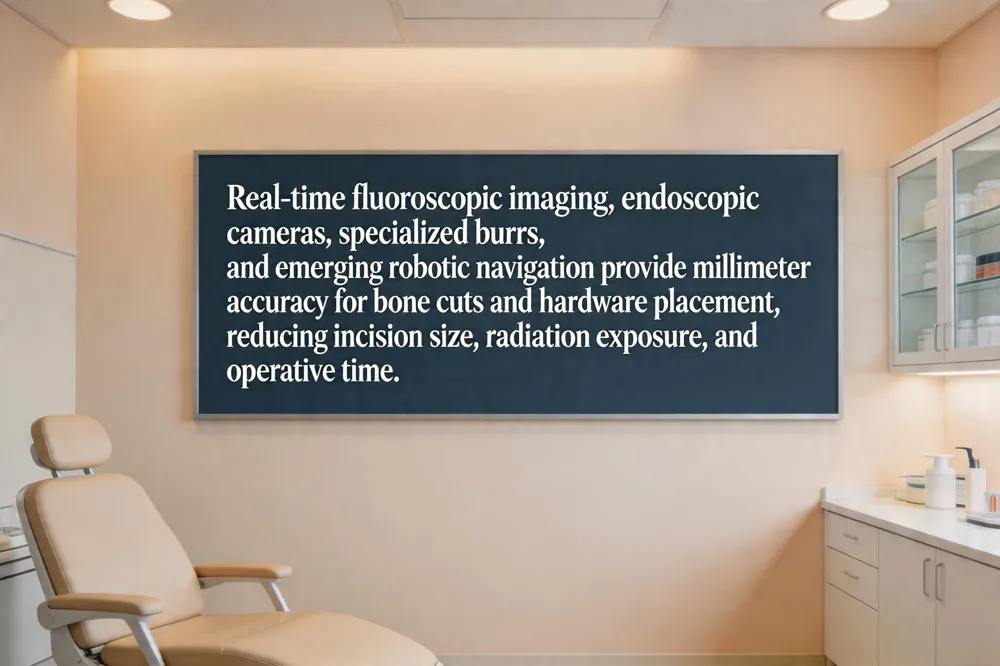 Fluoroscopic and intra‑operative imaging givesuch as live X‑ray) are core to modern minimally invasive foot surgery (MIS). Real‑time visual guidance lets surgeons place percutaneous burrs and tiny fixation devices with millimeter accuracy, reducing the need for large incisions and preserving surrounding ligaments, tendons, and neurovascular structures. Specialized burrs, often used through 2‑5 mm portals, cut bone precisely while endoscopic cameras provide high‑definition views of the joint space, allowing correction of bunions, hammertoes, plantar fasciitis, and bone spurs without extensive soft‑tissue dissection.
Robotic‑assisted platforms and navigation tools are emerging to further enhance precision. By integrating 3‑D imaging with instrument tracking, these systems help the surgeon achieve optimal alignment angles and implant placement while minimizing radiation exposure and operative time.
How does a podiatrist help someone with type 2 diabetes? A podiatrist monitors foot health, treats ulcers early, educates on hygiene and footwear, and coordinates with physicians to control blood sugar, preventing complications such as infection or amputation.
Can a podiatrist prescribe gabapentin? Yes. After confirming neuropathic pain, the podiatrist may prescribe gabapentin, titrating dosage and monitoring response while also recommending orthotics or therapy.
What is higher than a podiatrist? An orthopedic foot‑and‑ankle surgeon, who completes a full orthopedic residency and can perform complex reconstructions and joint replacements beyond the podiatrist’s scope.
Regional Clinics and Personalized Care Networks
 Advanced Foot & Ankle Care Centers provide a coordinated network of podiatric clinics across Tennessee and Ohio, delivering personalized care from conservative treatments to advanced minimally invasive surgery.
Advanced Foot and Ankle Spring Hill, TN – Located at 5073 Columbia Pike, Suite 230, this clinic offers custom orthotics, diabetic foot and wound care, and MIS procedures. Board‑certified podiatrists Dr. Henderson and Dr. Khalil, members of the American College of Foot & Ankle Surgeons, lead a team that provides in‑office X‑ray, vascular testing, and same‑day appointments (call (615) 302‑5400).
Advanced Foot and Ankle Nashville – At 397 Wallace Rd Ste 411 Bldg C, Nashville, TN 37211, Dr. Kelly Brace, DPM and Dr. Cliff Retief, DPM deliver bunion, heel‑pain, diabetic‑ulcer, ankle‑fracture, and sports‑injury care. The office offers advanced imaging, virtual visits, and multilingual support.
Advanced Foot and Ankle Dickson, TN – Situated in the East Pavilion of TriStar Horizon Medical Center (113 US Hwy 70 E Suite 102), board‑certified podiatrists Dr. Brace, Dr. Reva Bork, and Dr. Augusta Dunse provide diabetic wound care, custom orthotics, and MIS surgery.
Advanced Foot and Ankle Hohenwald, TN – Located at 617 West Main Street, this clinic serves Middle Tennessee with Dr. Rhennetta Bork and PA‑C Isabella Balzola offering English/Spanish care, heel‑pain relief, bunion correction, and limb‑salvage surgery.
Advanced Foot and Ankle – Huber Heights, OH – At 6215 Old Troy Pike, board‑certified DPMs Hillarie Amburgey, Kimberly Avramaut, and Nina Kovalenko provide comprehensive services, from orthotics to MIS foot/ankle surgery, supported by gait analysis and patient education (call 937‑233‑3668).
Advanced Foot and Ankle – Columbia, TN – 1503 Hatcher Ln., Suite 100 offers X‑ray, orthotics, diabetic care, vascular testing, and MIS surgery, with podiatrists Dr. Brace, Dr. Rhennetta Bork, Dr. Reva Bork, and Dr. Dreikorn (call (931) 388‑9922).
Advanced Foot and Ankle – Smyrna, TN – 309 Quecreek Cir provides heel‑pain, plantar fasciitis, ankle‑fracture, diabetic wound care, orthotics, and sports‑medicine treatment under board‑certified podiatrists (call (423) 303‑0072).
Putting It All Together: Why MIS Is a Game‑Changer
Minimally invasive foot surgery (MIS) delivers clear clinical advantages: tiny (2‑5 mm) incisions limit soft‑tissue trauma, producing less postoperative pain, swelling, and stiffness, and allowing patients to bear weight or walk in a protective boot on the day of surgery. Cosmetic outcomes are superior, with scars that are barely visible once healed. Economically, MIS shortens operative time, reduces anesthesia exposure, eliminates overnight hospital stays, and lowers infection rates, translating into lower overall costs and fewer postoperative therapy sessions. These benefits, however, hinge on surgeon expertise; experienced podiatric surgeons who have mastered fluoroscopic guidance, percutaneous burrs, and endoscopic visualization can precisely correct deformities while preserving surrounding structures. Prospective patients should seek clinics that combine advanced imaging, personalized treatment plans, and board‑certified specialists—such as those in Northwestern Chicago and South Florida—to ensure optimal safety, rapid recovery, and lasting functional relief.