Welcome to Your First‑48‑Hour Survival Guide
In the first two days after foot or ankle surgery the priorities are protection, comfort, and early warning detection. First, keep the operated foot elevated above heart level (the “toes‑above‑nose” rule) for the majority of the day; this reduces edema and promotes venous return, which helps prevent deep‑vein thrombosis. Second, apply ice for 15‑20 minutes every 2‑3 hours using a barrier to protect the dressing and skin. Third, begin scheduled pain medication as soon as you arrive home—often an opioid such as oxycodone 5 mg or hydrocodone/acetaminophen—rather than waiting for pain to become severe; continue on a regular schedule for the first 24‑48 hours and then switch to as‑needed dosing. Maintain dry, intact dressings, avoid alcohol, heavy machinery, and major decisions for 24 hours, and monitor for red‑flag signs (increasing calf pain, fever > 101.5 °F, profuse bleeding, or discoloration of the toes). These steps together control swelling, manage pain, and keep you safe while the anesthetic wears off.
Creating a Safe Home Environment
 Preparing a single‑level recovery zone: Set up a comfortable recovery area on the ground floor or a bedroom that requires no stairs. Place a sturdy chair or recliner with a footrest, a night‑light, and a small table for water, snacks, and medication. Keep the bathroom within easy reach; a raised toilet seat and a shower chair will allow the patient to sit while washing without bearing weight on the operated foot.
Essential supplies and equipment: Stock the zone with prescribed pain tablets, ice packs (wrapped in a thin towel), compression socks, and at least one quart of fluid per day. Have a supply of light, protein‑rich snacks, a pillow for foot elevation, and a waterproof cast cover for brief showers. Keep crutches, a knee scooter, or a walker nearby, and have adhesive dressings, gauze, and any wound‑care ointments ready for quick changes.
Support system and safety modifications: Arrange for a family member, friend, or professional caregiver to stay for the first 24‑48 hours to assist with meals, medication timing, and light household tasks. Clear all pathways of rugs, cords, and clutter; install grab bars or non‑slip mats in the bathroom and hallways. This support network and environment modifications reduce falls and allow the patient to focus on healing.
Why a Companion Is Essential
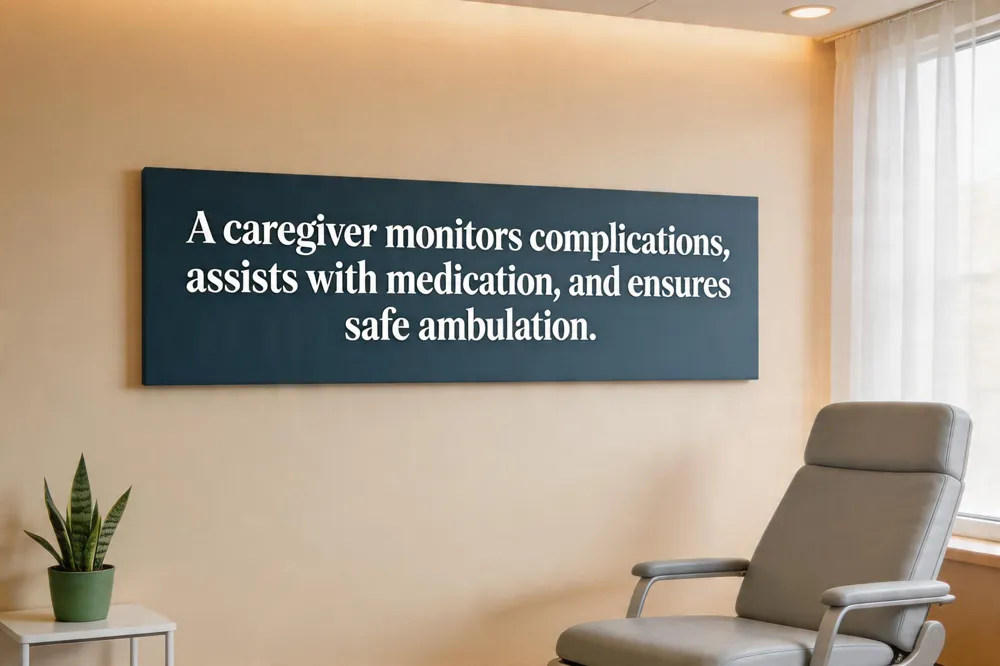 After foot or ankle surgery, residual anesthesia can cause light‑headedness, dry mouth, sore throat, sleep disturbances, and reduced coordination for up to 24 hours. Opioid pain medication further adds drowsiness and impaired judgment, making activities such as driving, operating heavy machinery, or making important decisions unsafe. A responsible adult staying with the patient for the first night watches for red‑flag symptoms—severe calf swelling, profuse bleeding, blue or white toes, fever >101.5 °F, or pain unrelieved by medication—that could signal deep‑vein thrombosis, infection, or vascular compromise. The caregiver also helps with scheduled pain‑medication dosing, ensures the foot remains elevated and iced appropriately, keeps dressings dry, and assists with basic needs like hydration, toileting, and safe ambulation using crutches or a walker. This immediate support reduces the risk of falls, medication errors, and missed early signs of complications, promoting a smoother, safer recovery.
The Hardest Days: Pain and Swelling Timeline
 Patients often ask, What are the worst days after foot surgery? The answer is clear: the first 48 hours are the most challenging. During this period pain, swelling, and the sensation of a rigid dressing, splint, cast, or post‑op boot reach their peak. Light‑headedness, dry mouth, and muscle aches from anesthesia may also be present. To mitigate these symptoms, keep the foot elevated above heart level (waist‑high or higher) as much as possible, apply ice for no more than 30 minutes with a 2‑hour break—and take the prescribed opioid pain medication on schedule—ideally before the anesthetic wears off. By the end of day 2 the intensity usually eases, but the second week can bring moderate discomfort, stiffness, and residual edema as you begin gentle toe‑wiggling and ankle pumps while remaining non‑weight‑bearing. Around weeks 3–4 most patients report a noticeable decline in pain, though occasional mild soreness may linger for several more weeks. Consistent elevation, icing, and medication adherence during the early phase are key to preventing setbacks and promoting a smoother recovery.
Do’s and Don’ts After Foot Surgery
 Following foot or ankle surgery, strict adherence to postoperative guidelines is essential for optimal healing.
Weight‑bearing restrictions – Do not place any weight on the operated foot until your surgeon gives clearance, usually after 2–4 weeks for most procedures. Use crutches, a walker, or a knee scooter as instructed, and keep the foot elevated above heart level whenever possible.
Dressing and wound care – Keep the dressings, casts, or boots dry. Do not change or remove them yourself; follow the surgeon’s schedule for dressing changes. Wet dressings, excessive oozing, or drainage require a call to the clinic.
Smoking and warning signs – Refrain from smoking; nicotine reduces blood flow and delays tissue repair. Watch for red‑flag symptoms such as increasing pain, fever >101.5 °F, calf swelling, blue or white toes, or profuse bleeding, and seek immediate medical attention.
Footwear and activity limitations – Wear the prescribed postoperative shoe or boot at all times when ambulating. Avoid normal shoes, heavy machinery, alcohol, and making important decisions for the first 24 hours while on pain medication. Gradually resume light activities only after clearance.
What not to do after foot surgery? – Do not bear weight, keep dressings wet, smoke, ignore infection or clot signs, wear regular footwear, or engage in vigorous activities until your surgeon confirms healing.
Accelerating Recovery: Evidence‑Based Tips
 Elevation and icing protocols – Keep the foot elevated above heart level (waist‑high) for at least 4–5 days; during the first 48 hours apply ice for 15‑20 minutes every 2‑3 hours with a barrier, then switch to warm compresses after swelling subsides.
Medication adherence – Take the first dose of prescribed analgesics as soon as you arrive home, even if pain is absent, and continue on schedule for the first 24‑48 hours. Avoid NSAIDs after arthrodesis unless cleared, and use stool softeners and hydration to prevent constipation from narcotics.
Nutrition and hydration – Aim for 1 quart of fluid daily, a diet rich in lean protein, vitamin C, zinc, and omega‑3s. Adequate calories support tissue repair and reduce swelling.
Physical therapy and surgeon communication – Begin gentle toe‑wiggling and ankle pumps as approved, then progress to therapist‑guided range‑of‑motion and strengthening once weight‑bearing is allowed. Report any red‑flag symptoms (fever, increasing pain, calf swelling) promptly and keep all follow‑up appointments to allow the surgeon to adjust your plan.
Your Path Forward
During the first 48 hours after foot or ankle surgery, keep the operated foot elevated above heart level—ideally at waist height or higher—to reduce swelling and promote circulation. Apply a cold pack for 15‑20 minutes every 2‑3 hours, using a thin barrier to protect the skin, and keep the dressing dry and intact. Take your prescribed pain medication as soon as you arrive home and continue it on schedule for the first 24‑48 hours, even if pain is minimal. Avoid alcohol, heavy machinery, and important decisions while on pain meds, and refrain from weight‑bearing unless your surgeon has cleared you. Perform gentle toe‑wiggling or ankle pumps each hour to improve blood flow, and monitor for red‑flag signs such as severe calf pain, fever, or excessive bleeding. Stay in close contact with your surgeon’s office—call the provided number for any concerns, and attend all scheduled follow‑up visits. Following these steps faithfully will help minimize complications and set the stage for a smooth, successful recovery.