Getting Ready for a Smooth Recovery
Before surgery, create a recovery kit: freeze meals, stock pantry basics, and gather household essentials such as toiletries, pillows, and a set of clothes on the main floor. Arrange for a trusted caregiver, family member, or professional service to handle transportation, grocery runs, and housekeeping for the first two weeks. Modify the home by clearing clutter, securing rugs, installing night lights, and adding grab bars or non‑slip mats in the bathroom and hallway to eliminate tripping hazards while you’re limited to a walker or crutches. Finally, plan mental activities—books, puzzles, streaming shows, or a hobby—to keep the mind engaged and reduce boredom during immobilization.
Immediate Post‑Op Care: Elevation, Ice, and Medication
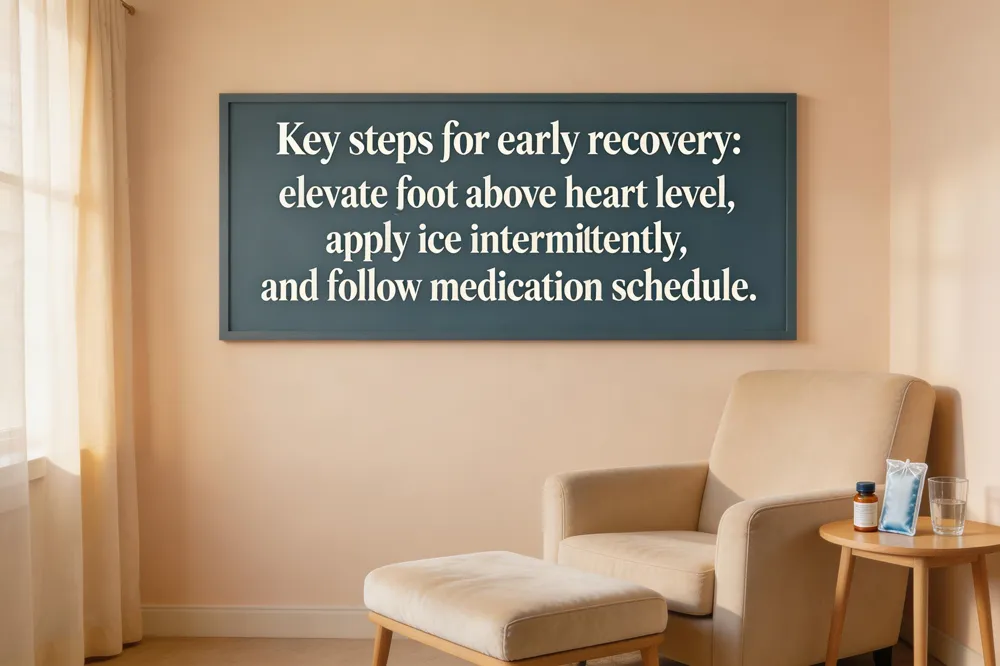 Elevate the foot above heart level for at least 5 days, preferably the first 2 weeks, whenever you sit or rest; continue intermittent elevation after swelling eases. Apply ice in a thin towel for 15‑20 minutes every 2‑3 hours (max 4‑5 times daily) during the first 48‑72 hours, then taper as pain decreases. Take prescribed pain meds on schedule—start before the nerve block wears off and continue for the first 24‑48 hours; avoid NSAIDs if bone was involved. Keep dressings dry, change only as directed, and monitor for redness, drainage, fever, or increasing pain. Wear the post‑op boot continuously as instructed (usually 1‑6 weeks); follow weight‑bearing limits precisely—crutches or walker until cleared.
Q&A
- When can I stop elevating my foot? Keep it elevated for the first 5 days and then whenever swelling persists; most surgeons allow reduction after the 2‑week follow‑up if swelling is down.
- Worst days after surgery? The first 48 hours are most painful; pain and swelling gradually improve by day 7.
- What not to do? Do not let the foot hang, remove dressings, bear weight, take NSAIDs for bone procedures, smoke, or drive until cleared.
- How to speed healing? Elevate, ice, follow weight‑bearing rules, stay hydrated, eat protein‑rich foods, use supplements (vit C, zinc), and start therapist‑approved PT early.
- Boot usage? Wear the boot as prescribed, keep it dry, check skin daily, and follow weight‑bearing instructions.
- General healing tips? Early podiatrist evaluation, moist dressings, off‑loading, proper nutrition, and infection vigilance accelerate recovery.
Weight‑Bearing and Mobility Milestones
 After foot surgery, how long does it take to walk? Most patients remain nonnon‑weight‑bearing for 2‑6 weeks](https://www.sunsheinpodiatry.com/blog/5-things-to-do-when-recovering-from-foot-or-ankle-surgery.cfm), then progress to partial weight‑bearing for 1‑2 weeks before full walking without a boot; simple soft‑tissue repairs may allow independent walking in 3‑4 weeks, whereas bone work often needs 6‑8 weeks.
Ankle surgery with plates and screws recovery: non‑weight‑bearing for 2‑6 weeks, partial weight‑bearing in a boot at 6‑8 weeks, full weight‑bearing by 10‑12 weeks; PT begins after incision healing (≈2 weeks) focusing on ROM and strength.
Metatarsal foot surgery recovery time? Non‑weight‑bearing or heel‑weight‑bearing for 7‑14 days, then cast/boot for up to 6 weeks; gradual weight‑bearing thereafter, with normal activities in 2‑3 months and full sports at 3‑4 months.
Screw in foot surgery recovery? Non‑weight‑bearing for 1‑2 weeks, then gradual light weight as directed; PT starts a few weeks post‑op; regular shoes and normal activities usually resume 6‑12 weeks.
Ankle surgery recovery tips: stock meals and supplies, arrange caregiver help, declutter home and add night‑lights/grab bars, follow surgeon’s instructions (boot, elevation, ice, meds), and begin PT promptly.
Accelerating Bone & Tissue Healing Naturally
 A solid recovery after foot or ankle surgery starts with proper nutrition and targeted adjuncts.
Nutrition for bone and soft‑tissue repair – Aim for a whole‑food diet rich in calcium‑dense dairy, fortified plant milks, leafy greens, and oily fish that supply calcium, phosphorus, and vitamin D for mineralization. Protein (lean meats, beans, Greek yogurt) fuels collagen synthesis, while vitamin C‑rich fruits and zinc‑rich nuts support tissue remodeling.
Key supplements and micronutrients – Vitamin D with calcium, vitamin C, zinc, and a daily protein supplement are the most evidence‑based aids. Creatine (≈5 g) helps preserve muscle mass during immobilization.
Adjunct therapies – Low‑level laser therapy, low‑intensity pulsed ultrasound, and axial micromovement (0.4‑0.5 mm) have been shown to reduce pain, edema, and accelerate fracture union when incorporated into a comprehensive plan.
Signs of healing progress – Decreasing pain, reduced swelling, gradual return of range of motion, and radiographic evidence of callus formation indicate a fracture is consolidating.
Foods that support rapid bone regeneration – Include dairy or fortified alternatives, salmon with bones, kale, broccoli, citrus, berries, almonds, and walnuts. Adequate hydration, sleep, and avoidance of smoking/alcohol further optimize cellular repair.
By combining these nutritional strategies, supplements, and adjunctive modalities, patients can safely speed bone and soft‑tissue healing after foot and ankle surgery.
Nerve and Soft‑Tissue Recovery
 Timeline for nerve regeneration – After foot or ankle surgery the nerves start to recover as soon as the anesthetic wears off. Most patients notice a gradual return of sensation within 3‑6 months, and full regeneration may take up to a year, especially after extensive procedures. Age, circulation, nutrition and compliance with elevation and therapy influence speed.
Drop‑foot rehabilitation strategies – An ankle‑foot orthosis holds the foot in a functional position while therapy is underway. Physical‑therapy focuses on tibialis anterior strengthening, calf stretching, ankle range‑of‑motion, and gait training. Electrical stimulation or minimally invasive nerve‑decompression can accelerate healing when compression is present.
Safe sleeping positions – If cleared by the surgeon, sleep on your side with a firm pillow between the knees and a small pillow under the ankle to keep the foot elevated and neutral. Avoid crossing the operated leg over the other side.
Accelerated wound‑care techniques – Clean with saline, apply a thin layer of antibacterial ointment or medical‑grade honey, and keep a moist, sterile dressing. Elevate the foot, stay hydrated, and consume protein‑rich foods with vitamin C and zinc.
Monitoring for warning signs – Watch for increasing pain, redness, drainage, fever, or calf swelling, which may signal infection or clot. Contact your surgeon promptly if any appear.
Follow‑Up, Warning Signs, and Long‑Term Care
 Three weeks after ankle surgery you are still in your boot or cast, likely using crutches or a knee‑scooter. Swelling and mild pain are normal; continue elevation, ice and anti‑inflammatories. The post‑op visit usually occurs now, sutures are checked or removed, and the surgeon may permit weight‑bearing in boot. Weight‑bearing and a PT program typically begin after four to six weeks.
Red‑flag signs after foot surgery include worsening pain, fever ≥100.4 °F, spreading redness, warmth, pus‑like drainage, foul odor, new numbness or tingling, and calf pain or shortness of breath suggesting a clot. Report these immediately.
In dogs, accelerated bone healing relies on protein, calcium, vitamin D, omega‑3s, rest, and bandaging; follow veterinary medication and check‑ups.
In children, immobilization, a calcium‑rich diet, vitamin D, rest, and adherence to physician’s weight‑bearing plan promote faster remodeling while avoiding smoking, alcohol, or deficiencies.
Consistent sleep, hydration, an anti‑inflammatory regimen reduce swelling.
Sustaining Your Progress for Life‑Long Foot Health
Regular follow‑up visits and imaging let the podiatrist verify bone healing, assess soft‑tissue repairs, and adjust orthotics before problems develop. Continuing a structured physical‑therapy program with progressive strength, balance and gait drills preserves muscle tone and protects repaired structures. Long‑term nutrition that supplies protein, vitamin C, vitamin D, calcium and anti‑inflammatory foods, together with 7–9 hours of sleep each night, supports collagen synthesis and immune function. Maintaining a healthy weight, avoiding smoking, limiting alcohol and staying active with low‑impact activities reduces joint stress. Finally, patients should watch for late complications in the first year after surgery such as persistent swelling, new pain or skin changes and seek prompt care if they arise.