Why Shockwave Therapy Is Gaining Momentum
Extracorporeal shockwave therapy (ESWT) is a truly non‑invasive modality that delivers focused acoustic energy through the skin to stimulate tissue repair, increase micro‑circulation and reduce pain. Because it requires no incisions, anesthesia, or prolonged downtime, patients can resume normal activities immediately after each 10‑20 minute outpatient session.
The United States Food and Drug Administration has cleared ESWT devices for chronic plantar fasciitis, Achilles tendinopathy and related foot‑ankle disorders, providing a regulatory foundation for its safety and efficacy. Robust clinical data support these approvals: randomized controlled trials report 60‑80 % pain‑relief rates, meta‑analyses show up to 88 % long‑term success, and real‑world series from Advanced Foot Care clinics demonstrate rapid functional improvement within 4‑6 weeks of a 3‑5 treatment protocol.
At Advanced Foot Care clinics in Northwest Chicago and South Florida, the patient‑centered approach integrates ESWT with personalized gait analysis, custom orthotics, and guided stretching programs. Clinicians tailor energy levels and session spacing to each individual’s condition, while the supportive staff ensures education, follow‑up, and seamless coordination of care—making ESWT a cornerstone of minimally invasive foot and ankle treatment.
Foot‑Focused Shockwave: Effectiveness and Evidence
 Shockwave therapy works by delivering focused acoustic pressure waves to the targeted foot or ankle tissue. These waves initiate neovascularization, promote collagen remodeling, and release growth factors that accelerate tissue repair. Clinical data consistently show high success rates: 70‑85 % of patients with chronic plantar fasciitis experience meaningful pain reduction after 3‑5 sessions, and 60‑80 % of those with Achilles tendinopathy or calcific tendonitis report functional improvement comparable to surgical outcomes. The technology is FDA‑cleared for plantar fasciitis and other musculoskeletal disorders, and it has a favorable safety profile—most adverse events are mild, transient soreness or bruising, with serious complications being rare.
Is shockwave therapy good for your feet? Yes—shockwave therapy is an effective, non‑invasive option for many foot and ankle problems. By delivering focused acoustic pressure waves, it stimulates new blood vessel growth, releases growth factors, and boosts collagen production, which together jump‑start stalled healing. The treatment has been shown to relieve chronic heel pain, plantar fasciitis, Achilles tendonitis, calcific tendonitis, and even stress fractures, often providing pain relief within a few sessions. Because it is drug‑free and requires no incisions, patients can usually return to normal activities within 24 hours. Overall, shockwave therapy is a safe, evidence‑based way to improve foot health and reduce pain without surgery.
Does shockwave therapy work for foot pain? Extracorporeal shockwave therapy can effectively treat chronic foot conditions like plantar fasciitis, Achilles tendinopathy, and other heel pains. Complications are rare when the procedure is performed by a qualified specialist.
Avoiding the Pitfalls of Plantar Fasciitis Management
 What's the worst thing you can do for plantar fasciitis?
The single worst action is to keep stressing the inflamed fascia without allowing healing. Walking or running long distances barefoot or in unsupportive shoes, high‑impact jogging, hopping, or prolonged standing on hard surfaces all exacerbate inflammation and can cause partial tears. Cheap over‑the‑counter heel cushions that don’t actually protect the tissue give a false sense of security. Delaying a professional podiatric evaluation lets scar‑like tissue develop, often leading to invasive procedures later.
What's the worst thing you can do for plantar fasciitis?
The single worst action is to keep stressing the inflamed fascia without allowing healing. Walking or running long distances barefoot or in unsupportive shoes, high‑impact jogging, hopping, or prolonged standing on hard surfaces all exacerbate inflammation and can cause partial tears. Cheap over‑the‑counter heel cushions that don’t actually protect the tissue give a false sense of security. Delaying a professional podiatric evaluation lets scar‑like tissue develop, often leading to invasive procedures later.
Evidence‑based treatment components that lead to recovery Successful programs combine rest, targeted stretching (calf‑gastrocnemius and plantar fascia), orthotics that provide firm arch support and a slight heel lift, and modality support such as ice, heat, and omega‑3/collagen supplementation. When conservative care fails, extracorporeal shockwave therapy (ESWT) offers a non‑invasive option: 3‑5 sessions of 15‑20 minutes each have shown 60‑80 % pain reduction and functional improvement within 6‑12 weeks (clinical studies and patient registries). Shockwave therapy promotes neovascularization, collagen remodeling, and analgesia, allowing many patients to avoid surgery.
Real‑world patient experiences A 65‑year‑old man with chronic plantar fasciitis achieved complete symptom resolution after four ESWT sessions (3,000 impulses at 10 Hz) following failed chiropractic care. Another patient reported immediate relief after each session and a return to running after eight weeks. These stories illustrate that, when combined with proper footwear, stretching, and orthotics, shockwave therapy can be the turning point toward lasting recovery.
Tracking Progress: How Long Until You Feel Better?
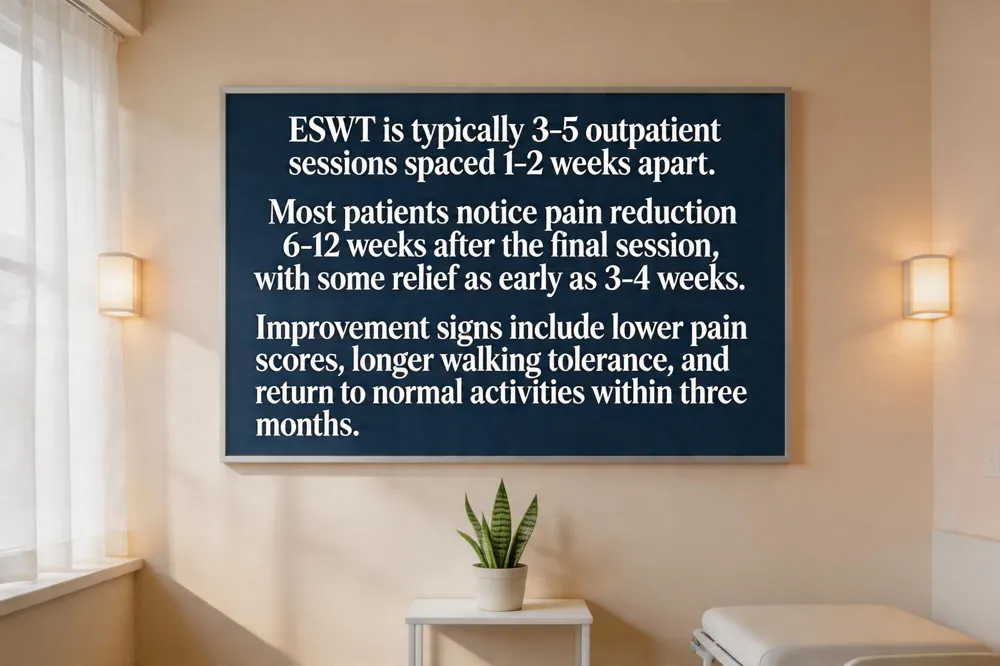 Shockwave therapy (ESWT) is typically delivered in a series of three to five outpatient sessions, each spaced one to two weeks apart. Most patients begin to notice a reduction in foot pain between six and twelve weeks after the final treatment, with some experiencing relief as early as three to four weeks. The timeline can vary by condition—plantar fasciitis, Achilles tendinopathy, or heel spurs—and by individual healing rates, but meaningful improvement is usually evident within three months.
Signs that the therapy is working include a gradual drop in pain scores, increased ability to walk or stand for longer periods, and return of normal activities such as climbing stairs or light jogging. Many patients report an immediate “numb‑out” sensation after a session, yet the full therapeutic effect emerges after 2‑3 appointments, with measurable gains in strength and range of motion by weeks 5‑11.
A brief increase in soreness or mild swelling after treatment is normal. The controlled micro‑trauma triggers inflammation, neovascularisation, and growth‑factor release that drive tissue repair. This post‑treatment soreness usually resolves within a day or two. Persistent or severe pain beyond a few days warrants a follow‑up with your podiatrist.
Patient Voices: From Cardiovascular Relief to Foot Recovery
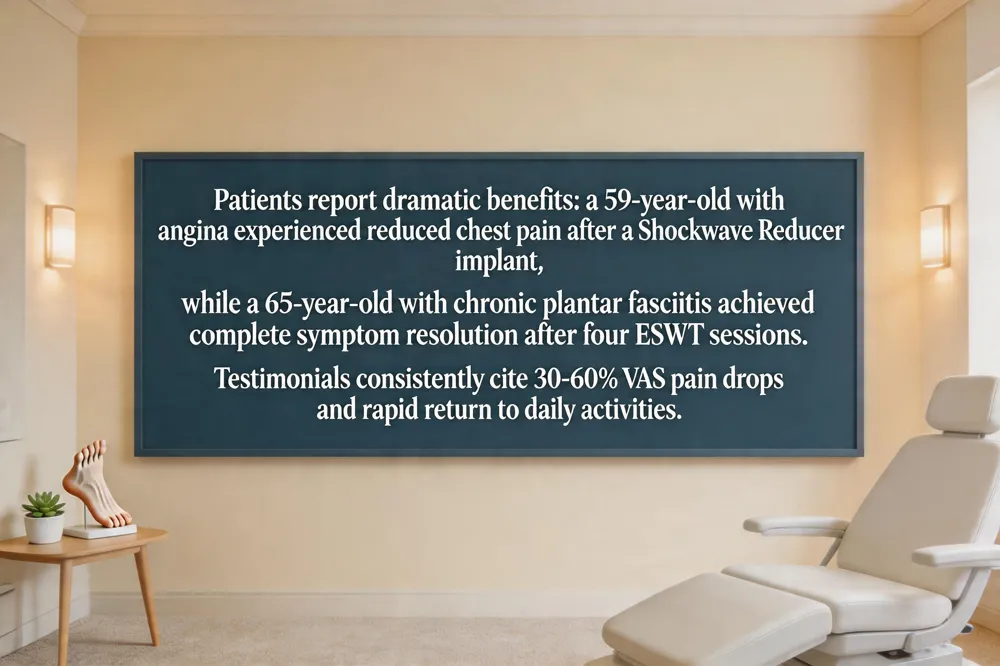 Trevor, a 59‑year‑old who endured 24 hospitalizations for angina since his 30s received a Shockwave Reducer implant in February 2022. Within weeks he reported the “best thing I’ve ever done,” noting reduced chest pain, higher activity levels, and an overall better quality of life. The CE‑marked device, now in over 3,500 patients worldwide, illustrates how extracorporeal shockwave energy can be harnessed for cardiovascular microvascular improvement.
A separate case report details a 65‑year‑old man with chronic plantar fasciitis unresponsive to eleven conservative treatments. After four ESWT sessions (3,000 impulses at 10 Hz and 2,000–3,000 impulses at 7 Hz, 1.0–1.1 bar) he experienced immediate relief and complete symptom resolution. Radiographs had shown calcaneal enthesopathy, confirming the diagnosis.
Real‑world clinics across the United States—such as Advanced Foot Care in Northwest Chicago and South Florida and Henry Ford Health—regularly feature patient testimonials describing rapid pain reduction (30‑60 % VAS drop) after 3–5 ESWT sessions. Patients highlight the non‑invasive nature, short 10‑15‑minute outpatient visits, and the ability to resume daily activities without anesthesia. These narratives underscore the growing acceptance of shockwave‑based therapies for both cardiovascular and foot‑ankle conditions.
Choosing a Trusted Podiatrist for Shockwave Care
 When selecting a podiatrist to guide you through extracorporeal shockwave therapy (ESWT), three key factors should shape your decision: the clinician’s credentials and experience, the quality of patient communication and reviews, and the clinic’s resources and follow‑up support.
Credentials and experience of Advanced Foot Care surgeons
Advanced Foot Care clinics in Northwest Chicago and South Florida are led by board‑certified surgeons such as Dr. Bryan Thompson and Dr. Jeremy Korab, who have extensive training in minimally invasive foot and ankle procedures, including ESWT. Their expertise is reflected in the over 3,500 successful Shockwave Reducer implants worldwide and a strong publication record on shockwave mechanisms and outcomes. Look for a podiatrist who is fellowship‑trained, holds active medical licenses, and participates in clinical trials such as COSIRA‑II, which signals a commitment to evidence‑based practice.
Patient communication and reviews
A good podiatrist communicates clearly, listens attentively, and provides realistic expectations about shockwave therapy. Positive patient testimonials—such as Trevor’s statement, “It is the best thing I’ve ever done,” and numerous reviews on Google, Healthgrades, and Trustpilot—demonstrate satisfaction with both clinical results and bedside manner. Verify that the clinician’s office publishes patient stories, videos, or written testimonials that detail the treatment journey, from initial evaluation to post‑procedure recovery.
Clinic resources and follow‑up support
Modern podiatry practices integrate diagnostic imaging (ultrasound, MRI), custom orthotics, and structured rehabilitation programs with ESWT. Advanced Foot Care offers a dedicated patient portal for appointment scheduling, secure messaging, and tracking of treatment progress. Follow‑up appointments typically include reassessment of pain scores, functional outcomes, and guidance on home exercises, ensuring that the benefits of shockwave therapy are sustained.
How do I know if my podiatrist is good?
A reputable podiatrist communicates clearly, listens to your concerns, and has positive patient reviews. Check credentials, years of experience, and testimonials on trusted platforms such as Google Reviews, Healthgrades, or Trustpilot. Look for board certification, participation in clinical research, and a clinic infrastructure that supports comprehensive pre‑ and post‑treatment care.
By focusing on these three pillars—qualified surgeons, transparent communication, and robust clinic support—you can confidently choose a podiatrist who will deliver safe, effective shockwave therapy and help you regain an active, pain‑free lifestyle.
Your Path to Pain‑Free Steps Starts Here
Shockwave therapy delivers focused acoustic energy to stimulate blood flow, neovascularization, and collagen remodeling in chronic foot and ankle tissues. Clinical evidence shows 60‑80 % pain reduction, faster return to activity, and avoidance of surgery for conditions such as plantar fasciitis, Achilles tendinopathy, and heel spurs. The treatment is non‑invasive, requires no anesthesia, and is performed in an outpatient setting with minimal downtime.
Because success depends on accurate diagnosis, a professional evaluation—including history, physical exam, gait analysis, and imaging—identifies the exact pain generator and screens for contraindications such as pregnancy or anticoagulant use. Tailored protocols and energy settings are then selected by a board‑certified podiatrist.
Advanced Foot Care’s clinics in Northwest Chicago and South Florida offer these personalized shockwave programs, combined with custom orthotics, targeted stretching, and follow‑up education. Schedule a consultation to discover how a minimally invasive, evidence‑based approach can restore your steps and confidence for everyday activities.