Why Footwear Matters
Improper shoes are a major contributor to plantar fasciitis, bunions, flat‑foot strain and chronic fatigue because they alter load distribution and gait mechanics. Podiatrists stress that supportive footwear should include a firm heel counter to stabilize the rearfoot, a roomy toe box to prevent rubbing and deformities, adequate arch support to control pronation or supination, and a cushioned midsole with shock‑absorbing properties. These features together reduce stress on the plantar fascia, joints and lower‑back muscles. Clinicians routinely assess foot type, gait and any existing pathology before recommending brands—such as Brooks, ASICS, Vionic or Orthofeet—that meet these criteria, ensuring each patient receives a shoe that promotes health rather than injury.
Shoes to Avoid – Podiatrists’ Top Picks for Bad Footwear
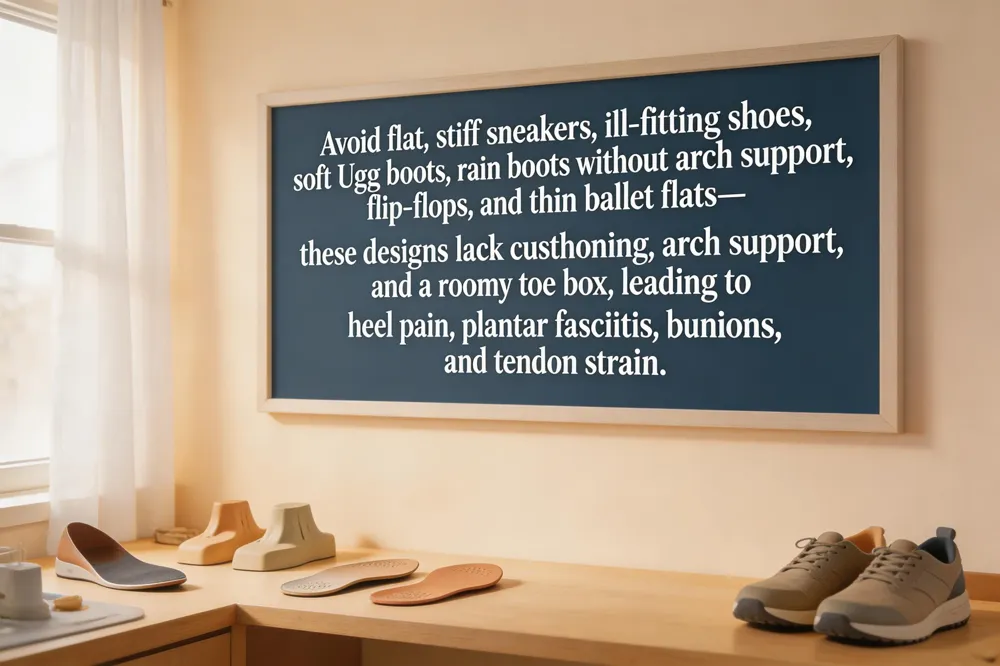 Podiatrists consistently warn that certain shoe styles and design flaws can aggravate or even cause foot problems. Common shoe styles that increase foot pain include flat, stiff sneakers such as Converse, soft Ugg boots, rain boots lacking arch support, Flip‑flops, and overly thin ballet flats. These shoes often provide insufficient cushioning, no arch support, and a narrow toe box, leading to heel pain, plantar fasciitis, bunions, and tendon strain. Specific design flaws that cause injury are rigid soles that do not absorb shock, a lack of a firm heel counter that allows excessive heel motion, and a cramped toe box that crowds the toes. Shoes that are too tight or too loose also create friction, blisters, and misalignment of the foot’s biomechanics.
What shoes do podiatrists wish you would stop wearing?
Six shoes that are terrible for your feet:
- Converse sneakers – flat, stiff soles can cause heel pain, stress fractures and tendinitis.
- Ill‑fitting shoes – tight or too loose shoes lead to blisters, bunions, corns and structural foot problems.
- Uggs – soft, floppy uppers and little support exacerbate foot pain.
- Rain boots – usually lack arch support and have rigid soles.
- Flip‑flops – no arch support, promote overpronation and can cause tendon strain.
- Ballet flats – thin soles and minimal cushioning are unsuitable for most foot conditions.
Foot Care for Diabetics – Essential Daily Practices
 Daily inspection and hygiene
- Examine both feet each evening using a mirror or ask a partner for help; look for cuts, blisters, redness, swelling, or calluses.
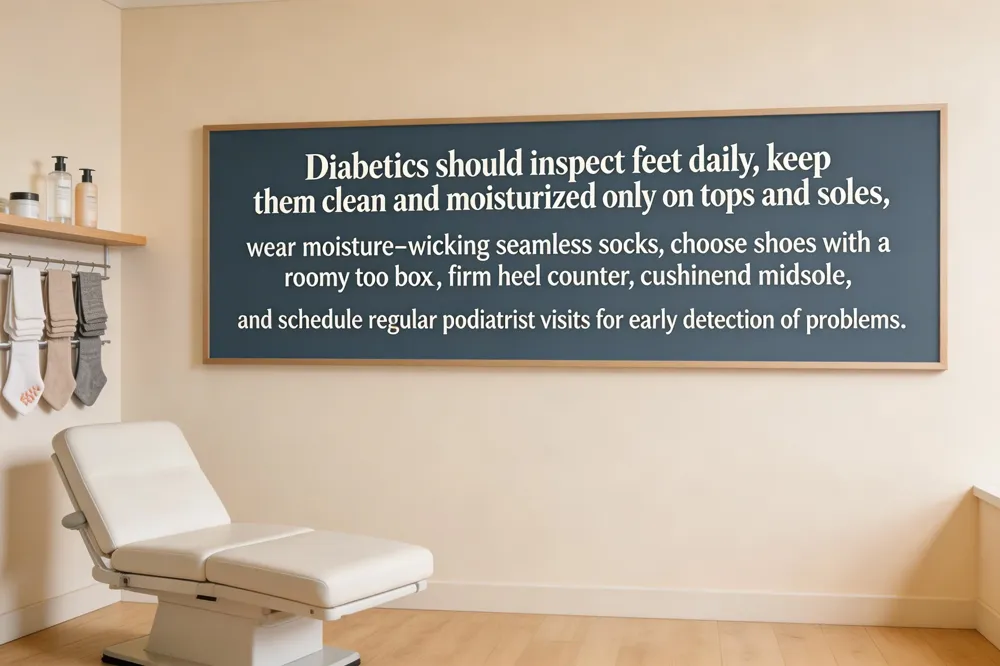
- Wash feet gently with warm water, pat dry thoroughly (especially between the toes), and apply a thin layer of moisturizer only to the tops and soles to prevent dryness without creating excess moisture.
- Wear moisture‑wicking, seamless socks and change them daily to reduce friction and keep the skin dry.
Footwear considerations for diabetes
- Choose shoes with a roomy toe box, firm heel counter, and a cushioned midsole; extra‑depth or orthotic‑friendly models (e.g., Vionic, Orthofeet) are ideal for accommodating swelling.
- Ensure a secure, non‑pinching fit by measuring both feet at the end of the day and selecting the larger foot’s size.
- Avoid high heels, narrow styles, and flip‑flops; opt for shoes with breathable uppers and slip‑resistant outsoles for safety.
Professional monitoring
- Schedule regular podiatrist visits (at least once a year) for foot exams, gait analysis, and custom orthotic assessment.
- Keep blood‑sugar levels under control, as good glycemic management reduces the risk of neuropathy and ulceration.
Answer to the question How should diabetics take care of their feet?
- Inspect feet daily for sores, cuts, cracks, blisters, or redness.
- Wear moisture‑wicking socks and keep feet dry.
- Get professionally fitted for supportive, orthotic‑friendly shoes and wear them indoors and out.
- Never put shoes on without socks.
- Clean feet gently and moisturize only on tops and soles.
- Trim toenails straight across.
- Maintain tight blood‑sugar control.
- Schedule regular podiatrist visits for early detection of problems.
Best Women’s Shoes for Foot Pain
 Top models praised by podiatrists for delivering these benefits include Orthofeet Plantaris, Vionic Walker, Brooks Adrenaline, and New Balance 860. These shoes combine motion‑control or stability constructions with breathable, seamless uppers and lightweight midsoles, making them suitable for all‑day wear. For personalized relief, a gait analysis and custom orthotic insole can be added to any of these models, ensuring optimal alignment and pain reduction.
All‑Day Comfort – Shoes for Walking, Standing, and Concrete Floors
 Top Shoes for Prolonged Walking
- HOKA Bondi SR – praised for maximum cushioning, a supportive 6 mm heel‑to‑toe drop, and a roomy toe box; the thick EVA midsole absorbs impact, and the slip‑resistant outsole meets occupational safety standards.
- Brooks Ghost Max 2 – offers a high shock‑absorption score (SA 138) and excellent breathability, ideal for long walks on hard pavement.
Best Options for Standing on Hard Surfaces
- HOKA Clifton 10 – features a 34.9 mm stack height and a soft midsole that reduces joint stress during continuous standing.
- Brooks Addiction Walker 2 – provides the strongest arch support among walking shoes and a firm heel counter to stabilize the rearfoot.
- HOKA Transport – combines a thick midsole with a rocker‑bottom design that eases forward roll, lessening fatigue on concrete.
Features That Reduce Fatigue
- Cushioned midsoles (EVA or PU) to absorb shock.
- Firm heel counters for rear‑foot stability.
- Roomy toe boxes to prevent crowding and blisters.
- Slip‑resistant outsoles for safety on polished floors.
- Arch support (built‑in or orthotic‑compatible) to maintain proper alignment.
Answering Common Questions
- Most comfortable shoes for walking all day: HOKA Bondi SR, thanks to its plush cushioning and wide toe box.
- Best shoes for foot and ankle pain: Brooks Adrenaline GTS 24, ASICS Gel‑Kayano 32, and HOKA Bondi 9, all featuring firm heel counters, generous arch support, and spacious toe boxes.
- Best shoes for standing all day on concrete: HOKA Transport, HOKA Clifton 10, and Brooks Addiction Walker 2, which deliver thick midsoles, stable heel counters, and slip‑resistant soles to protect joints and reduce fatigue.
General Foot‑Health Guidance – Fit, Rotation, and Specialty Shoes
 Proper fitting techniques begin with measuring both feet at the end of the day, when they are at their largest, and selecting the size that fits the longer foot. A thumb‑width (≈½ in) space between the longest toe and the shoe’s front edge, a snug heel without slipping, and a roomy toe box prevent blisters, bunions and hamm hoes. Shoes should be rotated every 300‑500 mi (or 6‑12 months) to preserve midsole cushioning and heel counter stiffness; wearing a second pair allows each shoe to recover its shape and reduces repetitive stress. Specialty footwear addresses specific conditions: Vionic, Clarks and ECCO provide everyday walking shoes with built‑in orthotic footbeds, firm heel counters, and ample cushioning; orthofeet and Dr. Comfort offer deep‑cushioned, extra‑depth options for diabetic or arthritic feet; rocker‑bottom clogs (Dansko, Alegria) and molded cork‑latex sandals (Birkenstock) lessen fatigue for prolonged standing. Podiatrists recommend everyday shoes that blend support and cushioning—Vionic’s orthotic footbed, Clarks’ stable heel counter, and ECCO’s breathable midsoles meet these criteria. Women’s shoes bearing the APMA Seal of Acceptance, such as Orthofeet, Vionic, and the Devotion X 2 sneaker, provide lightweight, breathable designs with orthotic‑grade insoles, roomy toe boxes, and shock‑absorbing outsoles. For extensor tendonitis, choose models with plush midsoles, supportive midsole structures, and removable insoles—New Balance Fresh Foam X 1080v12 (women), Fresh Foam X 880v13 (men), and Mizuno Wave Inspire 14—allowing custom orthotics while keeping heel height low to moderate.
Putting It All Together for Healthier Feet
Supportive footwear should include firm arch support, a stable heel counter, a roomy toe box, cushioned midsoles and shock‑absorbing outsoles, plus a secure, non‑pinching fit. A podiatrist’s assessment—often using gait analysis and foot‑type measurement—identifies the right level of stability, cushioning and width for each individual and can recommend orthotics or specific brands. Consistently choosing shoes that meet these criteria lowers the incidence of plantar fasciitis, bunions, metatarsalgia and joint strain, improves posture and balance, and reduces the likelihood of falls or chronic pain. Over time, proper footwear supports overall mobility, lowers health‑care costs and enhances quality of life.