Why Nutrition Matters for Foot Recovery
A well‑balanced diet fuels every stage of foot and ankle healing. Adequate protein (1.2–1.8 g/kg body weight) supplies the amino acids oste osteoblasts, fibroblasts, and muscle cells need to rebuild bone, collagen, and soft tissue. Calcium, phosphorus, vitamin D and vitamin K work together to mineralize new bone and curb osteoclast activity, while vitamin C and zinc drive collagen synthesis and DNA repair. Iron and magnesium support oxygen delivery and reduce swelling. Anti‑inflammatory omega‑3s from fatty fish, walnuts or chia seeds lower cytokine storms, speeding recovery. Lifestyle habits such as staying hydrated (≈2.5 L water/day), limiting alcohol, caffeine, sugary sodas, and high‑salt foods, and spreading protein intake (25–30 g/meal) further enhance nutrient absorption and tissue regeneration.
Foundations of Foot Recovery Nutrition
Protein & Caloric Guidance
| Goal | Recommendation |
|---|---|
| Protein for tissue repair | 1.3–1.8 g protein / kg body weight / day (athletes/severely injured: 1.6–2.5 g/kg) |
| Basic maintenance | 0.8–1.0 g protein / kg / day |
| Caloric surplus during immobilization | +250–500 kcal / day (≈10‑20 % higher than normal) |
| Protein distribution | 25‑30 g high‑quality protein at each main meal; 10‑15 g in snacks every 3‑4 h |
| Hydration | ≈3 L water / day |
| Key food groups | Lean meats, poultry, fish, eggs, Greek yogurt, tofu, lentils, beans, nuts, seeds, whole grains, vitamin‑C fruits, zinc‑rich foods, omega‑3 sources |
Quick Q&A
- How to speed up injury recovery? RICE + 1.3‑2.5 g/kg protein + omega‑3 + vitamin C + zinc + 3 L water + PT.
- Does protein help heal muscle injuries? Yes – provides essential amino acids, preserves lean mass, supports immune function.
- What to eat for faster bone healing? Dairy/fortified milks, leafy greens, fatty fish, citrus, beans, nuts (calcium, phosphorus, vitamin D, , C, iron, omega‑3).
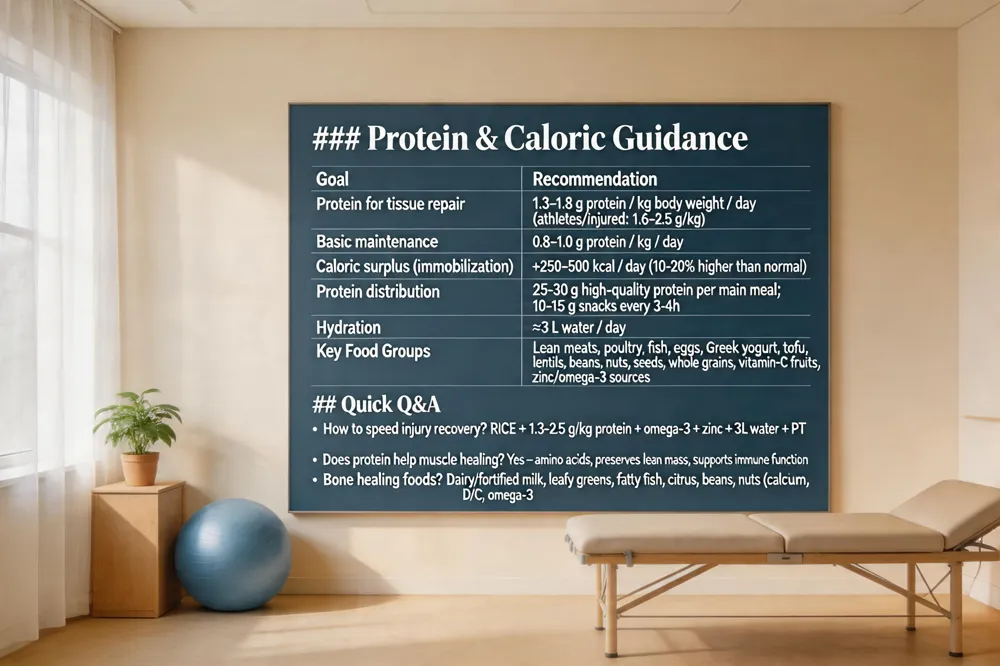 A whole‑food eating pattern that emphasizes lean protein, calcium‑phosphorus foods, and anti‑inflammatory nutrients is the cornerstone of foot and ankle healing.
Protein needs for tissue repair – Protein supplies the amino acids required for osteoblasts, muscle fibers, tendon, and ligament synthesis. Most patients should target 1.3–1.8 g protein / kg body weight / day; athletes or severely injured individuals may need 1.6–2.5 g /kg. Good sources include chicken, turkey, fish, eggs, Greek yogurt, tofu, lentils, beans, nuts, and seeds.
Caloric considerations during immobilization – Reduced mobility raises metabolic demand by 10‑20 %. Adding 250‑500 kcal per day helps meet the energy needed for tissue repair without excessive weight gain.
Timing and distribution of protein meals – Distribute protein evenly: 25‑30 g of high‑quality protein at each main meal and 10‑15 g in snacks every 3‑4 hours. This maintains steady amino‑acid availability and maximizes muscle‑protein synthesis.
Overall protein intake recommendations – Aim for 0.8‑1.0 g protein / kg body weight / day for basic maintenance, increasing to the therapeutic range above during recovery. Pair protein with modest carbohydrates (whole grains, sweet potatoes) for sustained energy and with vitamin‑C‑rich fruits/vegetables, zinc‑rich foods, and omega‑3 sources (salmon, walnuts, chia) to support collagen formation, reduce inflammation, and improve circulation. Adequate hydration (≈3 L water/day) also supports recovery.
Key Q&A
- How to speed up injury recovery? Combine RICE, a protein‑rich diet (1.3‑2.5 g/kg), omega-3 fatty acids, vitamin C, zinc, adequate hydration (≈3 L water/day), and guided physical therapy.
- Does protein help heal muscle injuries? Yes – it provides essential amino acids for muscle fiber repair, preserves lean mass, and supports immune function.
- What to eat for faster bone healing? Prioritize dairy or fortified plant milks, leafy greens, fatty fish, citrus fruits, beans, and nuts to supply calcium, phosphorus, vitamin D, K, C, iron, and omega‑3s.
- What foods increase healing speed? Lean meats, poultry, fish, eggs, dairy, soy, beans, nuts, and seeds.
Bone Healing Essentials
Bone‑Healing Nutrient Matrix
| Nutrient | Primary Role | Top Food Sources |
|---|---|---|
| Calcium | Structural component of bone matrix | Dairy, fortified plant milks, kale, collard greens, bok choy |
| Phosphorus | Works with calcium for mineralization | Meat, fish, poultry, nuts, seeds, dairy |
| Vitamin D | Enhances intestinal calcium absorption | Fatty fish (salmon, sardines), fortified milks, sunlight exposure |
| Vitamin K | Inhibits osteoclasts, promotes bone density | Leafy greens (kale, spinach, collard), broccoli |
| Vitamin C | Collagen synthesis, antioxidant protection | Citrus, berries, bell peppers, broccoli |
| Iron | Oxygen transport to healing tissue | Lean red meat, spinach, lentils, fortified cereals |
| Omega‑3 fatty acids | Anti‑inflammatory, improves circulation | Salmon, sardines, walnuts, flaxseed, chia |
Practical Tips
- Daily calorie increase: +250‑500 kcal to support tissue repair.
- Hydration: Plain water, low‑fat milk, fortified plant milks, vitamin‑C fruit juices.
- Lifestyle: Sunlight for vitamin D, avoid smoking/alcohol, follow immobilization instructions.
- Indian options: Milk, curd, paneer, turmeric‑spiced lentils, spinach, amla, guava, nuts.
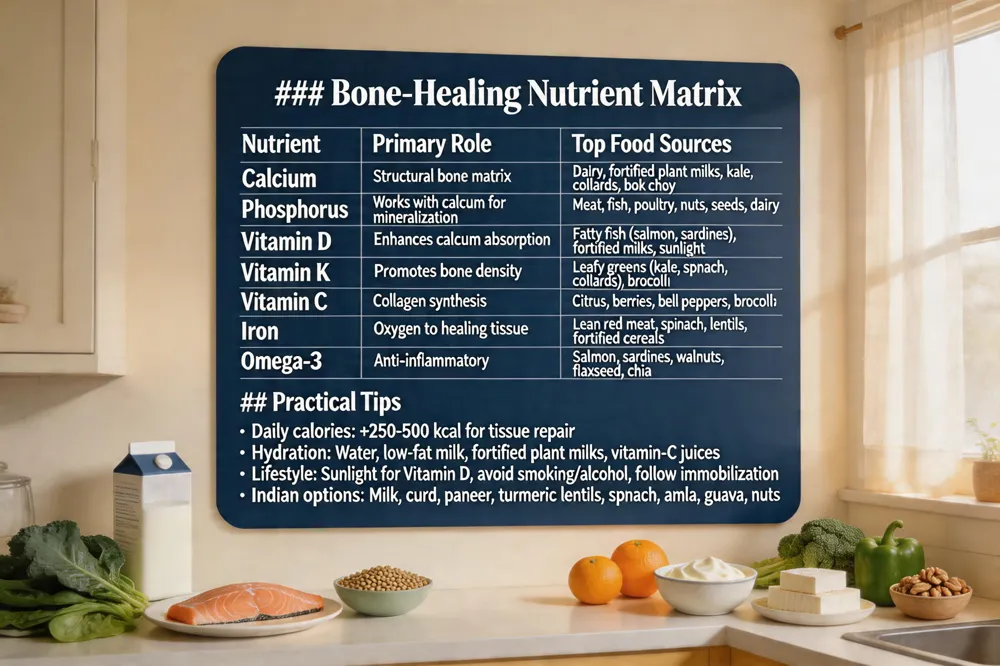 Successful bone repair after a foot fracture depends on a coordinated supply of minerals, vitamins, protein and anti‑inflammatory fats.
Calcium and phosphorus are the structural backbone of new bone; vitamin D boosts intestinal calcium absorption, while vitamin K suppresses osteoclast activity to keep bone density high.
High‑quality protein provides the amino acids for osteoblasts, and iron ensures oxygen‑rich blood flow to the healing site.
Omega‑3 fatty acids from fatty fish, walnuts or flaxseed dampen inflammation and improve circulation, creating a favorable environment for callus formation.
Whole‑food sources that deliver this nutrient package include dairy or fortified plant milks, leafy greens (kale, collard, bok choy), salmon and sardines, and eggs, nuts, seeds, beans, and whole grains.
How to heal bones faster naturally – Emphasize a nutrient‑dense diet rich in calcium, phosphorus, vitamin D, vitamin K, vitamin C, protein and iron; stay hydrated, get adequate sunlight, avoid smoking and excess alcohol, and follow immobilization instructions.
How to heal bones faster in 24 hours – While full healing isn’t possible, protect the fracture, limit movement, consume calcium‑rich protein foods with vitamin D and omega‑3s, stay well‑hydrated, and consider low‑intensity pulsed ultrasound under medical guidance.
What helps broken bones heal faster – Combine the above nutrition with controlled weight‑bearing activity, physical therapy, and, when appropriate, adjunct therapies such as electromagnetic stimulation or orthobiologic grafts.
What drink is good for bone repair? – Plain water, low‑fat milk or fortified plant milks, vitamin‑C‑rich fruit juices, and herbal teas (green/black) provide hydration, calcium, vitamin D, antioxidants and anti‑inflammatory compounds.
Indian food for bone fracture healing – Incorporate dairy (milk, curd, paneer), turmeric‑spiced lentils, calcium‑rich leafy greens (spinach, amaranth), vitamin‑C fruits (amla, guava) and nuts, while staying hydrated and following physician‑directed rehab.
Anti‑Inflammatory Foods & Foot Pain Management
Anti‑Inflammatory Food Checklist
| Food Category | Examples | Anti‑Inflammatory Compounds |
|---|---|---|
| Omega‑3 rich | Salmon, sardines, walnuts, chia, flaxseed oil | EPA/DHA, ALA |
| Vitamin C rich | Berries, citrus, bell peppers, broccoli | Ascorbic acid (antioxidant) |
| B‑vitamin sources | Eggs, cottage cheese, salmon, tuna | B6, B12, folate (nerve health) |
| Calcium & Vitamin D | Dairy, fortified milks, leafy greens, sardines | Bone strength |
| Turmeric & ginger | Fresh root, spice powders | Curcumin, gingerol (anti‑inflammatory) |
| Potassium‑dense | Bananas, sweet potatoes, leafy greens | Fluid balance, reduces edema |
Foods to Limit / Avoid
- Processed snacks, refined carbs, fried foods, high‑fat dairy, red/processed meats, sugary drinks, trans‑fat items, night‑shade vegetables (for sensitive individuals), excess alcohol.
- High‑sodium processed foods, excessive caffeine, oxalate‑rich greens (spinach, rhubarb) during bone healing.
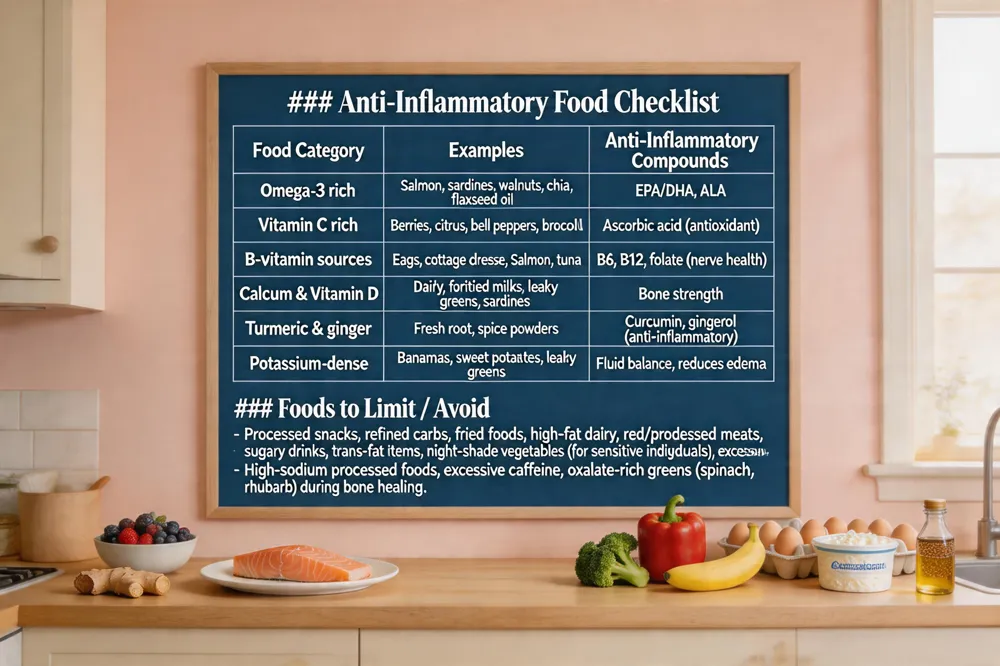 Omega‑3 fatty acids from salmon, sardines, walnuts, chia and flaxseed oil curb the inflammatory cascade that fuels plantar fasciitis and gout, while vitamin C‑rich berries, citrus, bell peppers and broccoli provide antioxidant protection for collagen synthesis and tissue repair. To protect nerve health, include B‑vitamin sources such as eggs, cottage cheese, salmon, sardines and tuna, which support peripheral nerve function and may lessen diabetic neuropathy.
What food is good for your feet? A diet rich in vitamin B (cottage cheese, eggs, salmon, sardines, tuna) supports nerve health; vitamin C foods (kiwi, strawberries, oranges, spinach, kale) fight inflammation; calcium and vitamin D sources (dairy, broccoli, fortified plant milks, sardines) strengthen bone density; omega‑3s from fatty fish, nuts and seeds, plus antioxidant berries, reduce joint pain and improve circulation.
Foods that reduce foot inflammation Water‑rich fruits (watermelon, cucumber, oranges, strawberries) and potassium‑dense options (bananas, sweet potatoes, leafy greens) regulate fluid balance; omega‑3‑rich fish or plant sources target inflammatory pathways; turmeric, ginger, garlic, and anthocyanin‑packed berries further calm swelling.
10 worst foods for plantar fasciitis Processed snacks, refined carbs, fried foods, high‑fat dairy, red/processed meats, sugary drinks, trans‑fat items, night‑shade vegetables (for some), and excess alcohol all promote systemic inflammation and weight gain, worsening heel stress.
Best food for foot pain Anti‑inflammatory omega‑3s (salmon, mackerel, walnuts, chia), vitamin C produce (berries, citrus, bell peppers), B‑vitamins (cottage cheese, eggs, tuna), and calcium‑rich foods paired with vitamin D (dairy, leafy greens, sardines) together reduce swelling, support collagen, and strengthen bone.
Foods to avoid with broken bones High‑sodium processed foods, excessive caffeine, sugary sodas, alcohol, and oxalate‑rich greens (spinach, rhubarb) can impair calcium balance and bone healing.
Foods to avoid during wound healing High‑sugar items, processed/fried foods with trans fats, excess alcohol, salty snacks, and raw/undercooked proteins may increase inflammation, hinder collagen formation, and delay tissue repair.
Micronutrients, Hydration & Special Diets for Tissue Repair
Micronutrient Summary
| Micronutrient | Function in Healing | Food Sources |
|---|---|---|
| Vitamin C | Collagen cross‑linking, antioxidant | Citrus, strawberries, kiwi, bell peppers, broccoli |
| Zinc | DNA synthesis, cell proliferation | Oysters, beef, pumpkin seeds, fortified cereals |
| Iron | Oxygen transport to wound bed | Lean red meat, spinach, lentils, fortified cereals |
| Magnesium | ATP production, reduces inflammation | Avocado, almonds, leafy greens |
| Vitamin D | Calcium absorption, bone remodeling | Fatty fish, fortified milks, sunlight |
| Calcium | Bone matrix formation | Dairy, fortified plant milks, leafy greens |
Hydration & Wound Care
- Water intake: 2–3 L / day to maintain plasma volume and lymphatic drainage.
- Diabetic foot wounds: Low‑glycemic carbs (whole grains, sweet potatoes), fiber‑rich veg, antioxidant foods, omega‑3s.
- Supplement guidance: Prefer whole foods; consider vitamin C ≈ 500 mg, zinc ≈ 15 mg if needed, under supervision.
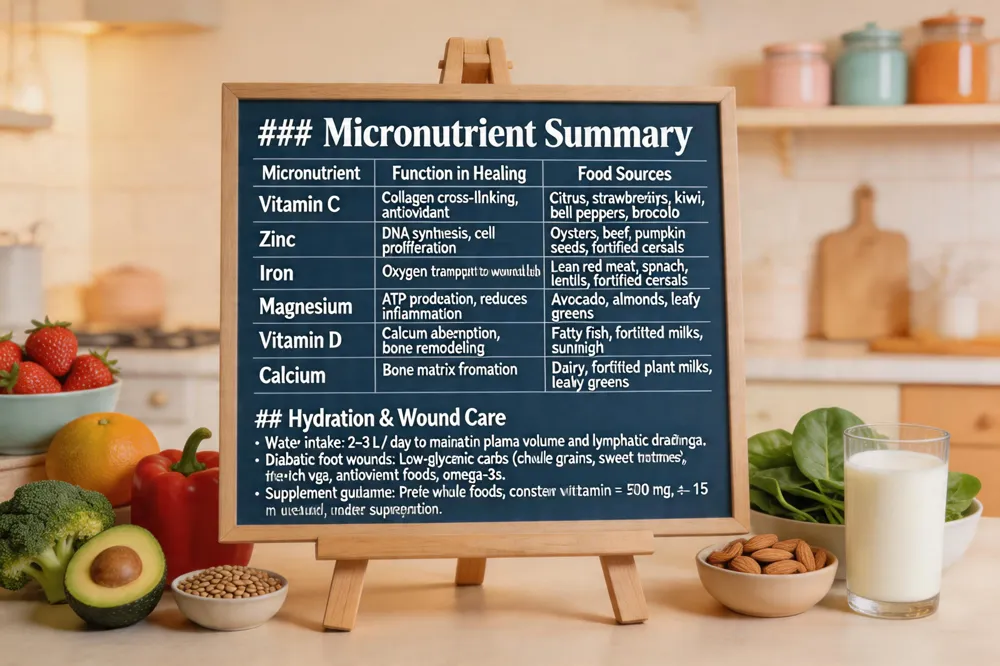 Vitamin C, Zinc, Iron, and Magnesium – Vitamin C is a co‑factor for prolyl‑hydroxylase enzymes that stabilize collagen fibers, making citrus, berries, bell peppers, and broccoli essential for faster connective‑tissue repair. Zinc drives DNA synthesis and cell proliferation; foods such as oysters, beef, pumpkin seeds, and fortified cereals accelerate the proliferative phase of healing. Iron transports oxygen to the wound bed; lean red meat, spinach, lentils, and fortified cereals prevent anemia‑related delays. Magnesium supports ATP production and reduces inflammation; avocados, almonds, and leafy greens help maintain cellular energy during tissue regeneration.
Hydration for Nutrient Transport – Adequate fluid intake (≈2–3 L of water daily) preserves plasma volume, ensuring that oxygen, amino acids, and micronutrients reach the injured foot. Hydration also supports lymphatic drainage, limiting edema and promoting a moist wound environment that favors cell migration.
Diabetic Foot Wound Considerations – Tight glycemic control is critical; high glucose impairs fibroblast function and collagen cross‑linking. Include low‑glycemic carbohydrates (whole grains, sweet potatoes) and fiber‑rich vegetables to stabilize blood sugar. Antioxidant‑dense foods (berries, leafy greens) combat oxidative stress, while omega‑3 sources (salmon, walnuts) reduce inflammatory cytokines that can exacerbate diabetic ulcers.
Supplementation Guidance – Whole‑food sources are preferred. If dietary intake is insufficient, consider a modest vitamin C (500 mg) or zinc (15 mg) supplement under medical supervision; avoid megadoses that may delay healing. Vitamin D and calcium should be optimized through fortified foods or sunshine exposure, especially in winter months.
Best Fruits for Injury Recovery – Oranges, kiwi, guava, and strawberries supply abundant vitamin C for collagen synthesis. Blueberries and strawberries provide antioxidants that dampen inflammation, while pineapple’s bromelain offers natural anti‑inflammatory effects. Avocado contributes vitamin E and healthy fats to protect cell membranes.
How to Heal Wounds Faster Naturally – Keep the wound moist with modern dressings, maintain a nutrient‑dense, high‑protein diet, stay well‑hydrated, quit smoking, and get 7‑9 hours of sleep nightly. Gentle movement or compression can improve local circulation, delivering oxygen and nutrients essential for rapid tissue regeneration.
What to Eat to Heal Wounds Faster – Prioritize lean meats, fish (especially omega‑3‑rich salmon or sardines), eggs, low‑fat dairy, beans, lentils, tofu, and nuts for protein. Add vitamin‑C‑rich citrus, berries, kiwi, bell peppers, broccoli, and tomatoes; zinc‑dense beef, pork, shellfish, pumpkin seeds, and whole‑grain products; healthy fats from avocados, olive oil, and fatty fish; and complex carbs from whole grains, sweet potatoes, fruits, and vegetables. Limit saturated fats, processed sugars, and excessive alcohol.
Nutrition for Injury Recovery PDF – A comprehensive plan includes a 10‑20 % calorie surplus, 1.6‑2.5 g protein/kg body weight, leucine‑rich meals, anti‑inflammatory omega‑3s, vitamin D and calcium for bone remodeling, and ample vitamin C for collagen. The free “Nutrition for Injury Recovery & Rehabilitation” PDF from the National Athletic Trainers’ Association offers evidence‑based guidelines and can be paired with a referral to a sports dietitian for a personalized protocol.
Practical Meal Planning & Lifestyle Tips for Faster Healing
Sample Daily Menu (≈2 500 kcal, 1.5 g/kg protein)
| Time | Meal | Components |
|---|---|---|
| Breakfast | Greek yogurt parfait | Greek yogurt, strawberries, walnuts, fortified oat milk, whole‑grain toast with avocado |
| Mid‑morning snack | Hard‑boiled egg + orange | |
| Lunch | Salmon‑green salad | Grilled salmon, kale, spinach, broccoli, olive oil‑lemon dressing, quinoa |
| Afternoon snack | Cottage cheese + pineapple + pumpkin seeds | |
| Dinner | Chicken & sweet‑potato | Lean chicken breast, sweet‑potato mash, steamed bok choy, calcium‑fortified almond milk |
| Evening snack | Mixed berries + chia‑seed pudding |
Protein Distribution
- 25‑30 g per main meal, 10‑15 g per snack → 1.3–1.8 g/kg/day.
Lifestyle Factors
- Sleep: 7‑9 h/night (supports growth hormone release).
- Stress management: Meditation, deep‑breathing.
- Smoking cessation: Immediate quit to improve blood flow and collagen cross‑linking.
- When to see a dietitian: Diabetes, CKD, major surgery recovery, or individualized micronutrient needs.
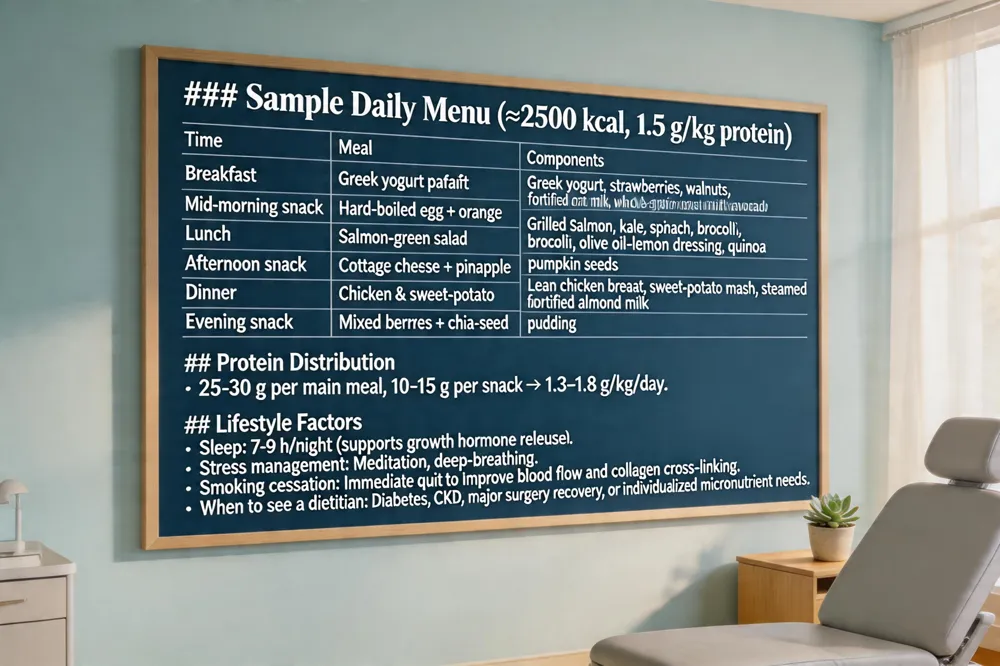
Sample Daily Menu for Foot Recovery
- Breakfast: Greek yogurt with sliced strawberries, a handful of walnuts and fortified oat milk; whole‑grain toast with avocado.
- Mid‑morning snack: A hard‑boiled egg and an orange.
- Lunch: Grilled salmon (rich in omega‑3s and vitamin D) over a mixed‑green salad (kale, spinach, broccoli) tossed with olive oil and lemon; quinoa on the side.
- Afternoon snack: Cottage cheese with pineapple chunks and a few pumpkin seeds.
- Dinner: Lean chicken breast, sweet‑potato mash, and steamed bok choy; a glass of calcium‑fortified almond milk.
- Evening snack: A small bowl of mixed berries and a tablespoon of chia‑seed pudding.
Meal Timing & Protein Distribution
Aim for 25‑30 g of high‑quality protein per main meal and 10‑15 g per snack to reach 1.3–1.8 g/kg body weight daily. Space protein intake every 3‑4 hours to sustain muscle protein synthesis and support osteoblast activity.
Sleep, Stress & Smoking Cessation
Adequate sleep (7‑9 h) enhances growth‑hormone release, crucial for bone remodeling. Chronic stress elevates cortisol, which can blunt collagen formation; consider relaxation techniques (deep‑breathing, meditation). Smoking impairs blood flow and collagen cross‑linking—quit immediately to avoid delayed bone healing.
When to Seek Professional Nutrition Counseling
If you have diabetes, chronic kidney disease, or are recovering from major surgery, a registered dietitian can tailor calorie, protein, and micronutrient targets (e.g., D, calcium, zinc) and monitor for deficiencies.
Key Answers
- Foods for healing a broken foot: Calcium‑rich dairy, fortified plant milks, leafy greens, fatty fish (vitamin D), protein‑dense meats, beans, nuts, vitamin C fruits, vitamin K greens, and anti‑inflammatory omega-3 sources.
- What to eat to heal wounds faster: High‑protein lean meats, fish, eggs, dairy, legumes; vitamin C‑rich fruits/veg; zinc‑dense foods; healthy fats; complex carbs; ample water.
- Best fruits for injury recovery: oranges, kiwi, strawberries; antioxidant‑rich berries; pineapple (bromelain); avocado (vitamin E).
Putting Nutrition Into Action for Faster Foot Healing
Key take‑aways: Bone and tissue repair demand calcium, phosphorus, vitamin D, vitamin K, vitamin C, iron, zinc, and adequate protein (≈1.3‑1.8 g/kg/day). Anti‑inflammatory omega‑3s, antioxidants, and proper hydration further reduce swelling and support collagen synthesis. How to personalize the plan: Assess your dietary habits and boost protein at each meal (25‑30 g) while adding calcium‑rich foods (dairy, fortified milks, leafy greens) and vitamin D sources (fatty fish, sun‑exposed skin). Include vitamin C‑rich fruits/vegetables, zinc‑dense nuts or shellfish, and omega‑3 sources (salmon, walnuts, chia). Adjust calories (+250‑500 kcal/day) if activity is limited. When to seek professional help: Persistent pain, delayed union, wound infection, or underlying conditions (diabetes, osteoporosis) warrant a registered dietitian or podiatrist’s evaluation to tailor micronutrient dosing and rule out deficiencies.