Why Proactive Foot Care Matters
Peripheral neuropathy dulls foot sensation, so even minor cuts or pressure points can go unnoticed, allowing tissue damage to progress silently. In the United States, roughly 15‑25 % of people with diabetes will develop a foot ulcer, and more than 70 % of those ulcers lead to an amputation within five years, accounting for the majority of diabetes‑related lower‑extremity amputations. Early detection through daily self‑inspection and routine podiatric exams catches problems before they worsen, while a multidisciplinary team—endocrinologist, podiatrist, vascular and infectious‑disease specialists—provides coordinated treatment that can cut amputation rates by over 30 % and preserve limb function.
Daily Self‑Inspection and Hygiene Routine
 A thorough foot‑care routine starts each evening with a step‑by‑step inspection: use a mirror or enlist a caregiver to examine the tops, soles, between the toes, and under the nails for cuts, blisters, redness, swelling, calluses or drainage. Feel for warmth or pain, and note any changes in skin texture. Wash the feet in warm (not hot) water with mild soap, then pat them dry—paying special attention to the interdigital spaces to prevent maceration. Apply a thin, fast‑absorbing moisturizer only to the tops and bottoms of the feet; keep the toe web clean and completely dry because moisture there encourages fungal growth. Trim toenails straight across weekly, filing sharp edges, and avoid aggressive cuticle work. Perform the inspection and washing daily; use a soft brush, a pumice stone after soaking for callus smoothing, and a toe‑wiggling exercise to promote circulation. This daily hygiene and self‑inspection routine, combined with regular podiatrist visits, dramatically lowers the risk of ulcers, infection, and amputation in people with diabetes.
Footwear, Socks, and Orthotics
 Advanced Footcare Center delivers foot and ankle care in Chicago and South Florida, using pressure‑mapping and orthotics. Advanced foot and ankle Chicago (Illinois) offers appointments, MRI, and specialists. The top Chicago podiatrist is Dr. Tegan A. Thimesch, DPM, known for compassionate, evidence‑based care. For “podiatrist Chicago near me,” the Lakeview Advanced Footcare Center provides access, orthotics, and diabetic foot services. The Advanced Foot & Ankle Centers of Illinois operate sites with orthotic programs.
Managing Pain and Early Signs
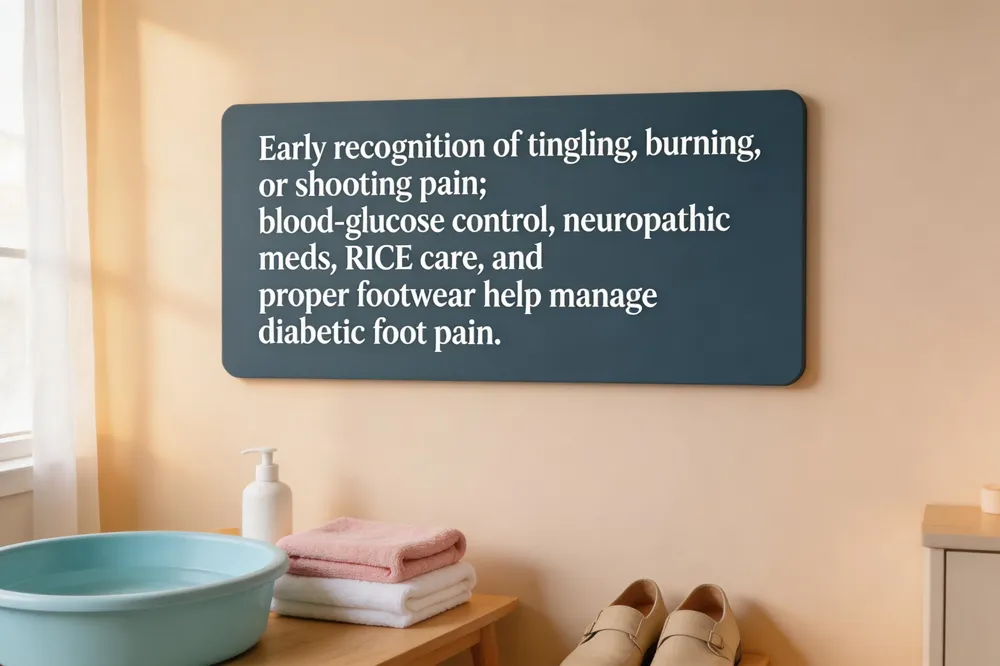 Diabetic foot pain often starts with tingling, burning or "pins‑and‑needles" sensations in the toes, progressing to sharp shooting pains that worsen at night and may be accompanied by numbness or allodynia. Early recognition of these symptoms is crucial because neuropathy can mask injuries. First‑line treatment combines strict blood‑glucose control with neuropathic pain medications such as gabapentin, duloxetine or topical agents like lidocaine patches to reduce localized discomfort. Home‑based care follows the RICE protocol: rest the foot, apply a cold pack for 10‑15 minutes, use a light compression bandage if tolerated, and elevate the leg to limit swelling. Circulation‑boosting techniques include warm (not hot) foot soaks with Epsom salt, gentle foot massages, calf stretches, and daily walking in well‑fitted, moisture‑wicking shoes with orthotic inserts to off‑load pressure points. Regular self‑inspection, proper nail trimming, and moisturization (avoiding the toes) help prevent infections and skin breakdown, while prompt podiatrist evaluation is essential when pain persists or ulcers develop.
Professional Care and Multidisciplinary Approach
 Routine podiatrist examinations should at least annually, include visual inspection, pulse palpation, monofilament testing and risk stratification to identify low, moderate, high or very‑high risk feet. Early detection of neuropathy or peripheral arterial disease allows timely off‑loading, custom orthotics and wound care. A multidisciplinary team—endocrinologist, primary‑care physician, podiatrist, vascular surgeon and diabetes educator—has been shown to cut major amputation rates by over 30% in studies such as the Italian cohort. Team members coordinate glycemic control, blood‑pressure management, smoking cessation and exercise programs while the podiatrist focuses on foot‑specific issues. Patient‑education resources, including the "Diabetic Foot Care Nursing Procedure" PDF, provide step‑by‑step protocols for foot inspection, cleansing, nail trimming, callus debridement and moisturising, with clear referral criteria for specialist care. Regular foot‑care articles reinforce the importance of daily self‑inspection, moisture‑wicking socks, proper footwear and overall diabetes self‑management as the foundation of limb preservation.
Preventing Ulcers and Complications
 Evidence‑based ulcer prevention focuses on daily self‑inspection, meticulous hygiene, and proper footwear. Inspect both feet each evening for cuts, blisters, calluses, redness, or swelling; wash with lukewarm,apy‑ and dry go between toes before applying a thin moisturizer only to tops and soles. Wear seamless, moisture‑wicking socks and well‑fitted shoes that leave a thumb‑width (≈½ inch) toe clearance, avoiding barefoot walking, high heels, and flip‑flops.
Risk stratification includes routine monofilament testing, pulse assessment, and annual podiatric exams—more frequent (every 3–6 months) for high‑risk patients. Early referral to a multidisciplinary team (podiatrist, endocrinologist, vascular specialist) dramatically lowers amputation rates.
Improving circulation involves tight glycemic, blood‑pressure, and lipid control; Smoking cessation; daily aerobic activity (walking, swimming); leg elevation; gentle calf‑stretching, and therapeutic footwear or custom orthotics to off‑load pressure points.
Diabetics should avoid over‑the‑counter corn removal pads because acidic agents can breach compromised skin, leading to infection and ulceration. Prompt professional care for any foot injury or sign of infection is essential.
Staying Ahead of Foot Complications
Daily self‑care remains the first line of defense. Inspect each foot each evening for cuts, blisters, redness, or swelling; wash with lukewarm soap and dry thoroughly, especially between toes. Wear light‑colored, seamless, moisture‑wicking socks and well‑fitted, closed‑toe shoes that leave a thumb‑width of space at the toe tip. Trim nails straight across and keep skin moisturized except between toes. Professional monitoring is essential: podiatric exams at least yearly, more often for high‑risk patients, detect neuropathy, vascular disease, and early ulceration. The Advanced Footcare Center in Northwestern Chicago offers board‑certified podiatrists, custom orthotics, and minimally invasive treatments. Call (312) 555‑0198 to schedule an appointment.