Why Plantar Fasciitis Matters
Plantar fasciitis affects roughly 1 in 10 adults in the United States, making it one of the most common causes of heel pain and a frequent reason for visits to podiatric clinics. The sharp, stabbing discomfort that is worst with the first steps after waking or after periods of inactivity can limit walking, standing, and tasks such as dressing or gardening, thereby reducing quality of life and work productivity. Many patients believe that heel spurs or “bad shoes” are the primary culprits, yet imaging shows spurs are often incidental and the real drivers are tight calf‑Achilles complex, poor arch support, and sudden increases in activity. Because the condition is inflammatory, treatment must be grounded in evidence‑based protocols—regular stretching of the gastrocnemius and soleus, night splints, appropriate orthotics, and, when needed, minimally invasive therapies such as ESWT or PRP—rather than relying on anecdotal remedies or repeated corticosteroid shots that can weaken the fascia.
Hidden Triggers and Root Causes
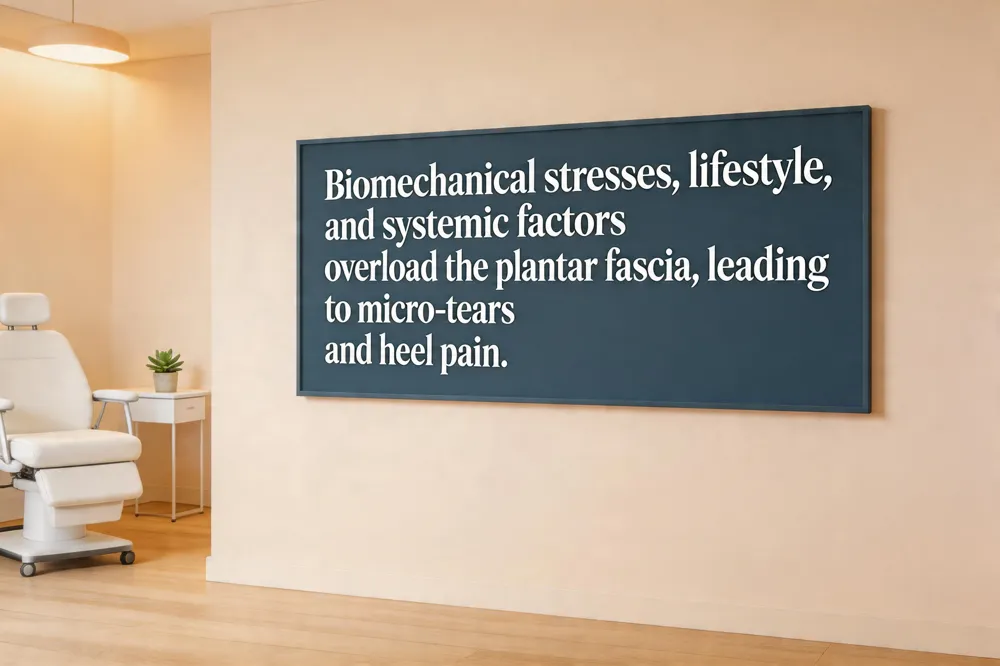 Plantar fasciitis is driven by a mix of biomechanical stresses and lifestyle or systemic contributors.
Biomechanical factors – Tight calf (gastrocnemius and soleus) and Achilles muscles limit ankle dorsiflexion, pulling the plantar fascia upward during each step. Foot arches that are too high or too low (overpronation) shift load to the medial heel, while leg‑length discrepancies or excessive pronation create uneven pressure. These mechanics create repetitive micro‑tears in the fascia.
Lifestyle and systemic contributors – Prolonged standing or high‑impact activities (running, jumping) on hard surfaces overload the tissue. Overweight or obesity adds up to 30 % extra load; rapid weight gain, pregnancy, and age‑related loss of tissue elasticity further reduce tolerance. Occupations that require long hours on concrete floors and sedentary periods followed by sudden activity spikes also raise risk.
Early signs and diagnosis – The classic cue is sharp heel pain with the first steps after rest, often accompanied by stiffness in the arch. Physical examination reveals tenderness at the medial calcaneal tubercle and limited ankle dorsiflexion. Imaging is reserved for ruling out other pathologies; the diagnosis is primarily clinical.
What causes plantar fasciitis – Plantar fasciitis occurs when the plantar fascia – the thick band of tissue that supports the foot’s arch – is repeatedly overloaded or overstretched. Common contributors include excessive running or high‑impact activities, tight calf (Achilles) muscles that pull on the fascia, and wearing shoes that lack proper arch support or cushioning. Foot structures such as high arches or flat feet alter weight distribution and increase strain on the tissue, while excess body weight adds additional stress. Age‑related loss of tissue elasticity and occupations that require prolonged standing on hard surfaces also raise the risk. When these factors cause micro‑tears and inflammation, the result is the characteristic heel and arch pain of plantar fasciitis.
Worst thing to do with plantar fasciitis – The single worst thing you can do with plantar fasciitis is to keep stressing the inflamed tissue with high‑impact activities — such as running, jumping or long‑distance walking — while ignoring any treatment. Continuing these motions without proper care only deepens micro‑tears, increases inflammation, and can lead to chronic heel damage that may eventually require surgery. Delaying professional evaluation compounds the problem, because the longer the fascia stays untreated the more scar‑like tissue forms, making conservative therapies less effective. Wearing unsupportive footwear—flat shoes, flip‑flops or high heels—further overloads the arch and heel, accelerating pain and stiffness. In short, ignoring the injury and persisting with demanding, impact‑heavy exercise while wearing the wrong shoes is the most detrimental course of action.
Fast‑Acting Home and Clinical First‑Line Treatments
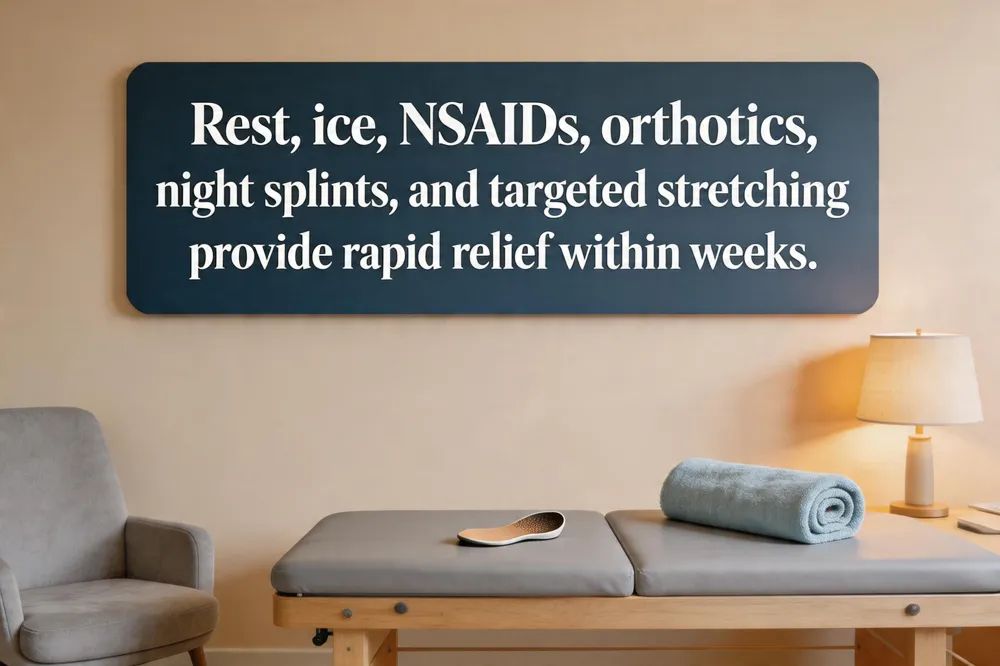 Rest, ice, and NSAIDs form the cornerstone of early plantar fasciitis care. Patients should avoid weight‑bearing activities that aggravate the heel, apply ice for 15‑20 minutes three to four times daily, and take an over‑the‑counter ibuprofen or naproxen as directed to curb inflammation. Orthotic devices and supportive footwear redistribute pressure across the foot; custom‑fit medial arch supports or over‑the‑counter arch inserts can reduce strain by up to 40 % during gait. Night splints or dorsiflexion‑maintaining braces keep the plantar fascia gently stretched while sleeping, preventing the morning stiffness that characterizes the condition, and low‑dye taping can provide similar short‑term relief.
When symptoms persist beyond 6–12 weeks despite these measures, patients should seek professional evaluation. A podiatrist can verify the diagnosis, assess biomechanical contributors (e.g., tight gastrocnemius/soleus, overpronation), and prescribe a structured physical‑therapy program that includes calf and plantar‑fascia stretches, intrinsic foot‑muscle strengthening, and guided taping. If pain remains refractory, minimally invasive options such as ultrasound‑guided corticosteroid or platelet‑rich plasma injections, extracorporeal shock‑wave therapy, or ultrasonic tissue‑repair may be offered before considering surgical release.
Quick‑relief strategies include aggressive ice, Night splints use, and daily 30‑second calf and fascia stretches; most patients notice meaningful improvement within 6–8 weeks. While a true cure in one week is unrealistic, intensive, protocol‑based care can dramatically reduce pain in that timeframe. For severe, immobilizing heel pain, immediate rest, elevation, and prompt referral to a foot‑and‑ankle specialist are essential to prevent chronic degeneration.
Stretching, Strengthening, and Exercise Strategies
 Progressive strengthening of intrinsic foot muscles helps support the arch and reduce strain. Toe‑curl towel scrunches (10‑15 repetitions, 1‑2 times daily), marble‑pickup drills, and balance‑board single‑leg stances improve toe‑flexor endurance and proprioception. Resistance‑band dorsiflexion and inversion exercises (10‑15 reps, 1‑2 times daily) target the anterior tibialis and invertors, promoting balanced foot mechanics. Gradual loading through short, pain‑free walks encourages collagen remodeling.
Exercises to avoid during flare‑ups include high‑impact activities such as running, jumping, plyometrics, and aggressive heel‑to‑toe raises. These motions increase plantar fascitation and can exacerbate micro‑tears. Substitute low‑impact cardio (swimming, cycling) and avoid sudden bursts of activity until pain subsides.
Scar‑tissue mobilization can be achieved with gentle myofascial release—rolling a ball or using a therapist‑guided instrument—to break up adhesions, followed by controlled stretching (30‑60‑seconds, 3‑5 repetitions daily). Ice the foot for 10‑15 minutes after activity to limit inflammation. Persistent tightness may warrant podiatrist‑directed ultrasound, custom orthotics or targeted physical‑therapy modalities to facilitate tissue remodeling.
Minimally Invasive and Surgical Options
 When conservative care for plantar fasciitis fails, podiatrists turn to minimally invasive procedures that target scar tissue while preserving foot mechanics.
Topaz coblation – also called Topaz surgery or micro‑tenotomy, uses a radio‑frequency wand to create tiny perforations in the plantar fascia, breaking up adhesions and stimulating healing. Performed under local anesthesia in 10‑20 minutes, the technique requires only small punctures, resulting in minimal trauma. Patients wear a walking boot for about a week, then transition to supportive shoes with orthotics, and most resume normal activities within four to six weeks.
Endoscopic plantar fasciotomy – an arthroscopic release performed through two 4‑mm portals under direct visualization. It removes a portion of the medial fascia with far less soft‑tissue disruption than open surgery, yielding low postoperative pain and a quick return to weight‑bearing. Success rates of 85‑90 % are reported, with most patients wearing normal footwear after two to four weeks.
Injections and energy‑based therapies – platelet‑rich plasma (PRP) delivers growth factors that promote tissue regeneration, while extracorporeal shockwave therapy (ESWT) uses acoustic waves to stimulate collagen remodeling. Both have demonstrated mid‑ to long‑term pain and functional improvements, especially when combined with orthotics and stretching.
Surgical pain and recovery – procedures are performed under local, regional, or general anesthesia, so patients feel no intra‑operative pain. Post‑operative discomfort is usually mild to moderate, manageable with NSAIDs or prescribed analgesics. Minimally invasive approaches cause less postoperative soreness and allow light activity within days, with full recovery typically achieved within 4‑6 weeks.
Together, these options offer rapid pain relief, preserve foot biomechanics, and accelerate return to daily life for patients with chronic plantar fasciitis.
Long‑Term Management, Prevention, and Outlook
 Effective long‑term control of plantar fasciitis hinges on three pillars.
Weight management and lifestyle – Excess body weight adds up to 30 % more load to the fascia; modest weight loss (5‑10 % of body weight) reduces strain and accelerates healing. Regular low‑impact cardio (swimming, cycling) and gradual progression of activity protect the tissue during recovery.
Custom orthotics and footwear – Proper arch support and heel cushioning redistribute pressure, decreasing plantar‑fascia tension by up to 40 %. Custom orthotics and footwear or high‑quality over‑the‑counter inserts are essential, especially for flat feet, high arches, or overpronation.
Recovery expectations and cure rates – With diligent conservative care, most patients achieve full resolution within 6‑12 months; surgery is rarely needed.
Is plantar fasciitis curable? Yes—overwhelmingly, patients recover completely when they combine stretching, ice, NSAIDs, orthotics, and, if required, minimally invasive options such as PRP or shock‑wave therapy.
Can it heal in 3 days? No. Tissue repair takes weeks to months; short‑term pain relief is possible, but full healing cannot occur in three days.
Worst thing to do? Continuing high‑impact activities (running, jumping) while neglecting treatment and wearing unsupportive shoes worsens micro‑tears and may lead to chronic damage requiring surgery.
Advanced Foot Care: Expertise and Resources
 Clinic locations and leadership Advanced Foot Care operates outpatient podiatry clinics in northwest Chicago and South Florida, led by board‑certified foot surgeon Dr. Jaminelli Banks (and Dr. Fisher in Chicago). Both locations provide state‑of‑the‑art diagnostic and therapeutic services for heel pain.
Services offered for plantar fasciitis Patients receive evidence‑based conservative care—custom orthotics, night splints, targeted calf and plantar‑fascia stretching, and guided physical‑therapy programs. When symptoms persist, the clinic offers minimally invasive options such as extracorporeal shock‑wave therapy (ESWT) and ultrasound‑guided platelet‑rich plasma (PRP) injections, performed by experienced podiatrists.
How to heal plantar fasciitis quickly Combine rest with low‑impact activities, ice the heel 15 minutes two‑to‑three times daily, and take an OTC NSAID (e.g., ibuprofen). Stretch calf, Achilles, and plantar fascia several times daily; use a night splints to maintain gentle lengthening overnight. Wear supportive shoes or custom orthotics to redistribute pressure. If pain continues, see a physical therapist for guided exercises and taping. Consistent adherence usually yields significant relief in 6‑8 weeks.
How to schedule a consultation Call the clinic at (801) 849‑3128 (Salt Lake City) or (321) 499‑4646 (Northwest Chicago), or use the online appointment form on the Advanced Foot Care website. A brief intake will match you with a podiatrist experienced in plantar‑fasciitis management.
Key Takeaways and Next Steps
Early identification of triggers—tight calf muscles, sudden activity spikes, poor arch support, excess weight, and prolonged standing—allows patients to intervene before pain becomes chronic. Commitment to evidence‑based home care—including daily calf and plantar‑fascia stretches, ice for 10‑15 minutes after activity, night splints to keep the foot dorsiflexed, supportive footwear or orthotic inserts, and short‑term NSAIDs—yields symptom relief for the majority within weeks. If pain persists beyond 6‑12 weeks despite these measures, minimally invasive options such as extracorporeal shock‑wave therapy, platelet‑rich plasma injections, or prolotherapy should be discussed; surgical release is reserved for refractory cases after exhaustive conservative therapy. Finally, choose a qualified podiatric team—ideally a board‑certified specialist in a clinic offering custom orthotics, gait analysis, and the latest minimally invasive technologies—to ensure personalized, safe, and effective care.