Understanding Heel Pain
Heel pain can stem from many sources, not just fashionable footwear. The most frequent cause is plantar fasciitis, an inflammation or micro‑tear of the plantar fascia that produces sharp pain with the first steps after rest. Other common etiologies include Achilles tendinitis, calf‑muscle tightness, heel spurs, stress fractures, tarsal tunnel syndrome, arthritis, and neuropathy. Popular myths—such as “heel spurs always cause pain,” “high‑heeled shoes are the sole culprit,” or “rest alone will cure the problem”—are misleading; imaging shows spurs are present in 10 % of people but cause pain in only about 5 %. Accurate diagnosis matters because each condition responds to distinct therapies: stretching and supportive shoes for fasciitis, night splints for chronic cases, orthotics for biomechanical imbalance, and targeted injections or surgery only when conservative care fails. Early, precise assessment by a podiatrist maximizes recovery and prevents chronic disability. Patients who receive tailored treatment plans experience faster pain relief and better long‑term foot function.
Myth #1: Heel Spurs Are the Main Culprit
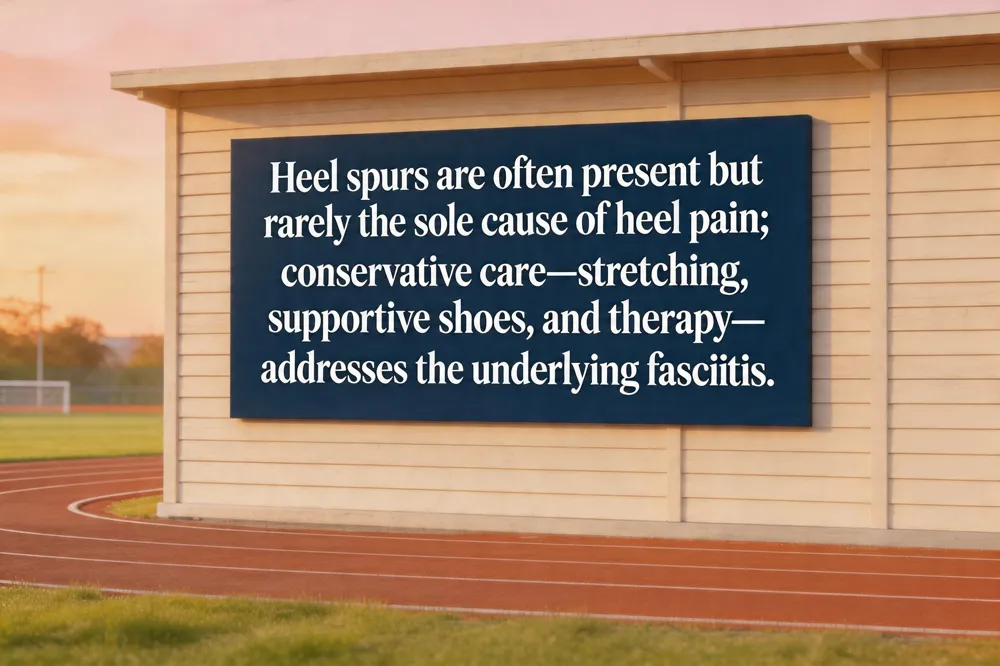 Heel spur – Heel spurs are bony outgrowths on the calcaneus that develop as a response to repetitive stress on the plantar fascia or Achilles tendon, often secondary to plantar fasciitis, tight calf muscles, improper footwear, or gait abnormalities. While many are painless, symptomatic spurs cause sharp, stabbing pain with the first steps in the morning or after prolonged standing, and the pain may improve with activity but return after rest. Diagnosis involves a physical exam and confirmation with an X‑ray showing the calcaneal spur. Treatment is typically non‑surgical, including activity modification, daily calf and plantar‑fascia stretching, supportive shoes or custom orthotics, ice, anti‑inflammatory medication, and physical therapy; corticosteroid injections or shockwave therapy may be considered if pain persists. Surgery is rarely needed and is reserved for cases that fail to improve after an extensive course of conservative care.
Myth #2: Rest Alone Cures Plantar Fasciitis
 Plantar fasciitis is fundamentally an inflammatory condition. Repetitive stress overloads the plantar fascia, causing irritation, swelling, and the classic first‑step heel pain. While inflammation dominates early stages, chronic micro‑tears can lead to degenerative changes, so treatment must address both tissue irritation and biomechanical stress.
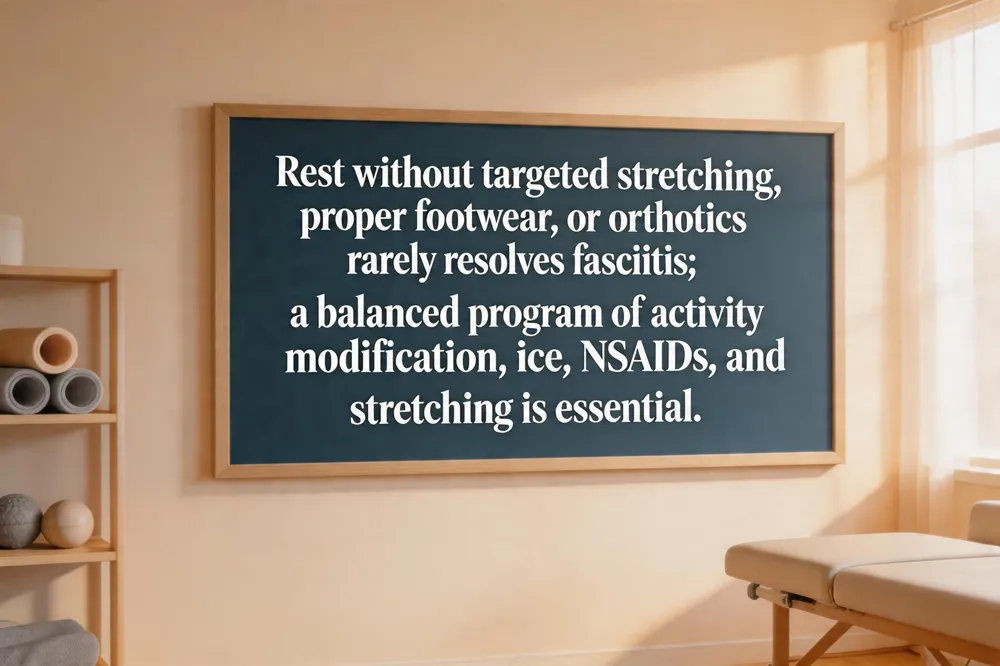
Evidence‑based conservative care begins with activity modification—avoid high‑impact running or prolonged standing—but does not mean complete immobilization. Ice therapy (15‑20 minutes, 3‑4 times daily) reduces swelling, while NSAIDs control pain and inflammation. Stretching the calf (wall stretch) and plantar fascia (toes‑to‑shin stretch) 2‑3 times a day restores length and relieves tension. Night splints hold the ankle in slight dorsiflexion during sleep, keeping the fascia gently stretched and often diminishing morning stiffness within days.
When these measures are applied consistently, most patients experience meaningful relief within weeks to months. Persistent pain warrants evaluation by a podiatrist for custom orthotics, physical‑therapy guided strengthening, or targeted injections. Rest alone, without structured stretching, supportive footwear, and activity modification, rarely resolves plantar fasciitis.
Myth #3: Flat Feet Guarantee Heel Pain
 Flat feet (fallen arches) are often blamed for heel pain, but the relationship is nuanced. A collapsed arch leads to overpronation, reducing shock absorption and increasing strain on the plantar fascia, which can make a person more susceptible to plantar fasciitis. However, many people with normal arches develop the condition from overuse, tight calf muscles, or inappropriate footwear, so flat feet are a risk factor, not a guarantee.
Biomechanically, the lack of arch support forces the plantar fascia to bear additional tensile load during each step, especially on hard surfaces. Orthotics—either over‑the‑counter or custom‑made—restore arch height, redistribute pressure, and limit excessive pronation. Pairing orthotics with targeted strengthening (toe‑curls, towel‑scrunches) and regular stretching of the calf and plantar fascia is essential for long‑term relief.
Is plantar fasciitis flat feet? No. Plantar fasciitis is inflammation of the plantar fascia; flat feet increase the risk but are not synonymous with the disease.
Plantar fasciitis exercises? Begin each day with a towel‑stretch and a standing calf‑stretch (15‑45 seconds, 2‑4 repetitions). Follow with toe‑curls or towel‑scrunches (10‑15 reps, once‑to‑three times daily) and roll a frozen water bottle under the arch for 3‑5 minutes, twice daily. Consistent stretching, strengthening, and ice massage often reduce pain within weeks.
Effective Home Strategies for Fast Relief
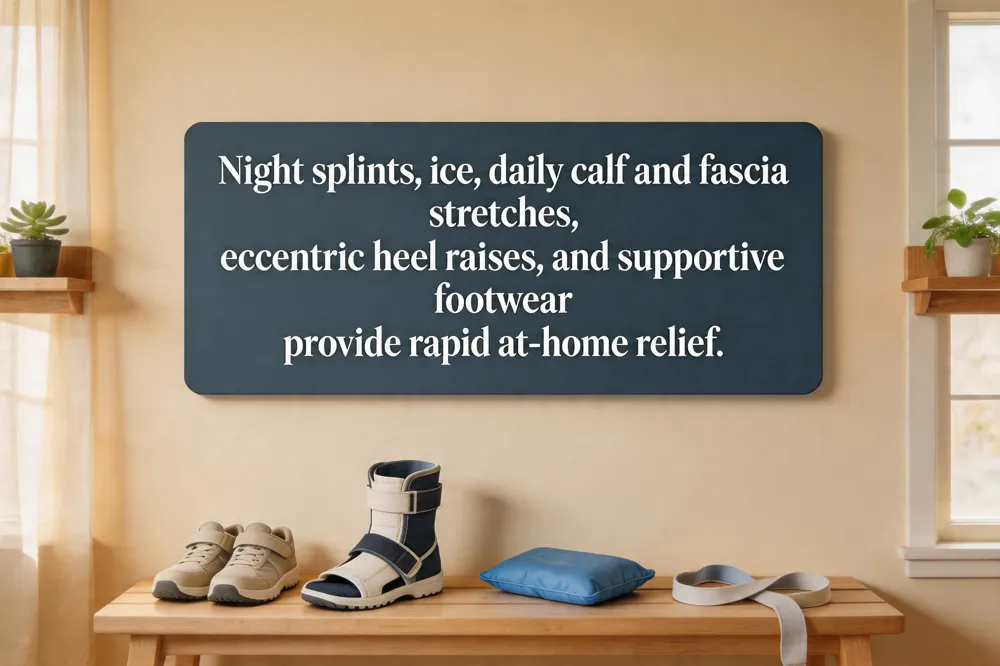 Night splints keep the foot in a gentle dorsiflexed position while you sleep, maintaining a stretch on the plantar fascia and Achilles tendon and often easing the first‑step sting within days. Ice therapy—15‑20 minutes of a cloth‑covered ice pack or rolling a frozen water bottle under the foot after activity—reduces inflammation and pain. Daily stretching protocols are essential: calf‑wall stretches (15‑30 seconds each leg), seated towel pulls to lengthen the plantar fascia, and eccentric heel raises on a step (2 sets of 10 reps) strengthen the calf‑Achilles complex. Massage the arch with a tennis ball or foam roller for one minute per foot to promote circulation. Choose footwear with firm arch support, cushioned heel, and a snug heel counter; over‑the‑counter orthotic inserts or custom orthotics can redistribute pressure and off‑load the fascia.
How to cure heel pain fast at home? Use a night splint, apply ice, stretch the calf and fascia, perform eccentric heel raises, wear supportive shoes or orthotics, and avoid high‑impact activities until symptoms improve.
Plantar fasciitis treatment at home? Rest the foot, ice regularly, take NSAIDs as needed, stretch daily, wear arch‑supporting footwear or orthotics, consider a night splint, and massage the arch with a frozen bottle.
Heel pain exercises? Perform wall calf stretches, plantar‑fascia rolls, toe‑towel scrunches (10‑15 reps, 2 sets), and heel raises on a step to lengthen tight tissues, improve mechanics, and reduce pain.
When to Seek Professional Care
 Red‑flag symptoms such as sudden, severe heel pain that does not improve with ice, rest, or NSAIDs; swelling, bruising, numbness, or a visible deformity should prompt an immediate podiatrist evaluation. A thorough history and physical exam, sometimes supplemented by X‑ray, ultrasound or MRI, help rule out stress fractures, tarsal tunnel syndrome, or tumors. When conservative measures fail, advanced non‑surgical options—custom orthotics, night splints, physical‑therapy‑guided stretching, platelet‑rich plasma, or extracorporeal shock‑wave therapy—can accelerate healing. For truly refractory cases, minimally invasive surgery such as endoscopic plantar‑fascia release or ultrasonic tissue repair offers relief with a short recovery.
Advanced Foot Care Pasadena offers minimally invasive podiatric services, including laser therapy and custom orthotics, at 301 S Fair Oaks Ave Ste 207, Pasadena, CA 91105 (‑626) 405‑1031).
Advanced Foot Care and Clinical Research Center in Fresno (7210 N Milburn Ave, Suite 101) provides comprehensive foot and ankle care, including endoscopic fascia release, and participates in clinical trials ((‑559) 224‑5101).
Sudden heel pain without injury often signals over‑use conditions like plantar fasciitis or Achilles tendinitis; persistent pain warrants a podiatrist’s assessment and tailored treatment.
Yes—plantar fasciitis is curable for most patients with consistent conservative care, and, when needed, advanced biologic or minimally invasive interventions.
Putting It All Together
Key takeaways: heel pain is usually plantar fasciitis, not a bone spur or high‑heeled shoes; tight calves, poor arch support and sudden activity spikes are culprits. Stretching, supportive footwear, night splints and gradual activity modification resolve 90 % of cases without surgery. Practical next steps: start calf‑and‑plantar‑fascia stretch routine, ice heel 15 minutes after activity, switch to shoes with heel counters and arch support, and use orthotics while tracking pain. If pain persists beyond two weeks of self‑care, see a podiatrist for diagnosis, orthotics, physical therapy or advanced options like shock‑wave therapy. Reliable resources include the American Podiatric Medical Association, Mayo Clinic and local foot‑care clinics.