Why Heel Pain Happens and What It Means
Heel pain most often stems from plantar fasciitis, an inflammation or micro‑tear of the plantar fascia that supports the foot arch. Other frequent culprits include Achilles tendinitis, bursitis, Haglund’s deformity, and stress fractures, especially in runners or people who stand on hard surfaces. Risk factors are tight calf muscles or Achilles tendon, flat feet or high arches, obesity, rapid weight gain, and prolonged high‑impact activity. Typical symptoms are sharp or dull pain at the medial heel that is worst with the first steps after rest and may improve after a few minutes of walking, sometimes accompanied by stiffness or swelling. Professional evaluation is recommended if pain persists beyond two weeks, worsens with activity, is associated with significant swelling, or if you notice numbness, deformity, or difficulty bearing weight, as these may indicate a more serious condition requiring imaging or advanced podiatric care.
Understanding Causes, Diagnosis, and Red Flags
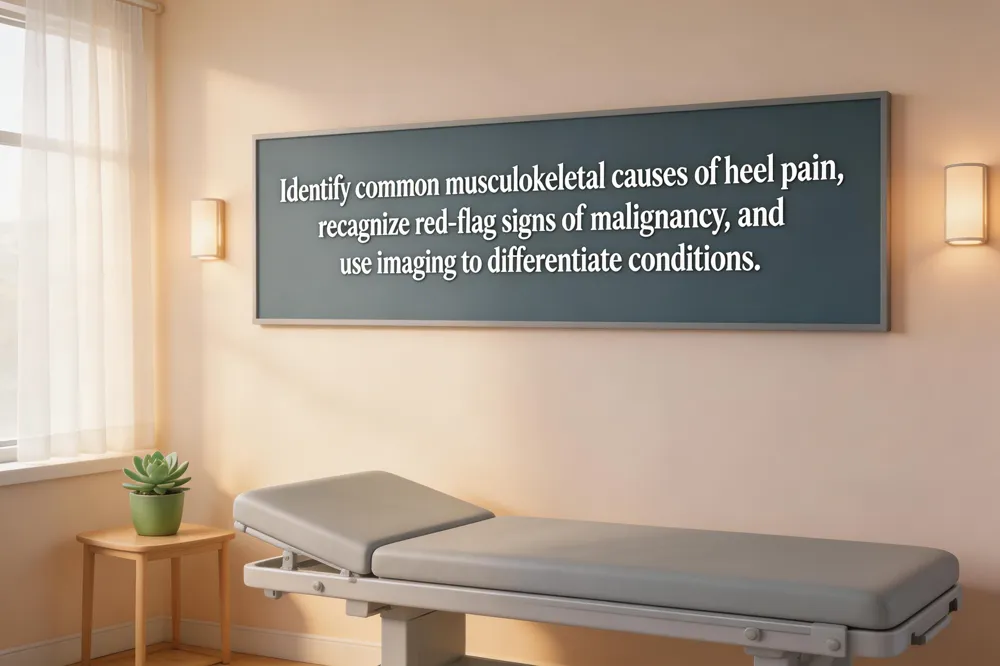 Heel pain is almost always caused by musculoskeletal conditions such as plantar fasciitis, Achilles tendinitis, heel spurs, stress fractures, or nerve irritation. Cancer involving the heel is exceedingly rare, typically metastatic to the calcaneus, and should be suspected only when pain persists despite orthotics and is accompanied by systemic signs (weight loss, fatigue). Imaging (X‑ray, MRI, bone scan) and possibly biopsy confirm malignancy.
Sudden heel pain without injury usually reflects overuse inflammation—plantar fasciitis, retrocalcaneal bursitis, Achilles tendinitis, or stress fracture—often driven by poor footwear or rapid activity spikes. A thorough exam and, if needed, imaging differentiate these causes; early rest, ice, NSAIDs, stretching, and orthotics are first‑line.
Causes: overstretching of the plantar fascia, tight calf/Achilles, abnormal foot mechanics (flat or high arches), excess weight, and high‑impact activities that produce micro‑tears.
Quick Home Remedies & First‑Line Care
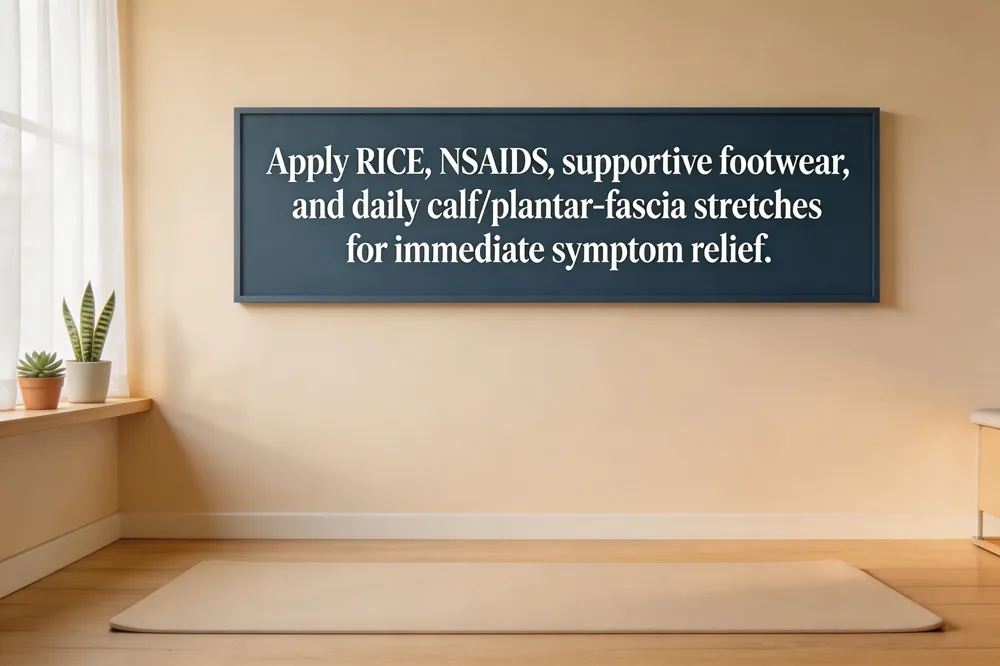 Rest, ice, and NSAIDs form the cornerstone of early heel‑pain management. Apply a cold pack for 15‑20 minutes 2‑4 times daily, keep the foot elevated, and use a gentle compression wrap to limit swelling (the RICE protocol). Over‑the‑counter ibuprofen or naproxen reduces inflammation while you begin daily calf‑wall and plantar‑fascia stretches. Night splints or a rolled towel keep the foot in a neutral, dorsiflexed position overnight, preventing morning stiffness. Activity modification—avoiding high‑impact sports and walking barefoot on hard surfaces—protects the plantar fascia while you heal.
How to cure heel pain fast: Begin RICE, take NSAIDs, and add night splints; if no improvement after two weeks, a corticosteroid injection may be considered.
How to cure heel pain fast at home: Ice, elevate, NSAIDs, calf and fascia stretches, eccentric heel raises, supportive shoes, and night splint or towel roll.
Plantar fasciitis quick relief: Ice, NSAIDs, supportive orthotics, calf‑wall and toe‑pull stretches, and nightly night splint.
Heel pain relief tablets: Ibuprofen, naproxen, or acetaminophen for pain; use the lowest effective dose, short term, and combine with stretching and orthotics for lasting benefit.
Targeted Stretching & Strengthening Protocols
 A comprehensive home program for plantar fasciitis should address calf tightness, plantar‑fascia flexibility, and intrinsic foot strength. Calf (gastrocnemius) wall stretch – stand facing a wall, place the affected foot back with a straight knee, keep the heel grounded, and lean forward 30‑45 seconds; repeat 2‑3 times. Soleus stretch – same stance but bend the back knee slightly to target the deeper calf muscle, holding for the same duration. Plantar‑fascia seated stretch – sit, cross the ankle of the painful foot over the opposite knee, pull the toes toward the shin while massaging the arch, and hold 30‑45 seconds, 2‑3 times daily. Intrinsic‑foot activators – towel curls (toe scrunches) and marble pickups (10‑15 reps, 1‑2 sets) strengthen the arch, while the ankle‑alphabet drill improves ankle mobility. Eccentric heel drops and raises – stand on a step, raise both heels, then lower each heel slowly below the edge (10‑15 reps, 2‑3 sets) and perform calf raises for additional strength. These five core routines, performed 2‑3 times per day, provide the “plantar fasciitis stretches” and “exercises” needed to reduce morning pain, improve flexibility, and support the foot during daily activities. Consistent use of night splints , supportive footwear , and low‑impact cross‑training (e.g., swimming) enhances recovery and minimizes recurrence.
Footwear, Orthotics & Supportive Devices
 Can I walk with heel pain?
Yes, light walking is usually safe, but avoid high‑impact steps that aggravate inflammation. Wear shoes with firm arch support and cushioned heels, and consider OTC or custom orthotic inserts to distribute pressure. Gentle calf‑plantar stretches and low‑impact activities (e.g., swimming) improve blood flow and reduce stiffness. Ice the heel after activity and limit prolonged standing on hard surfaces.
Can I walk with heel pain?
Yes, light walking is usually safe, but avoid high‑impact steps that aggravate inflammation. Wear shoes with firm arch support and cushioned heels, and consider OTC or custom orthotic inserts to distribute pressure. Gentle calf‑plantar stretches and low‑impact activities (e.g., swimming) improve blood flow and reduce stiffness. Ice the heel after activity and limit prolonged standing on hard surfaces.
How to stop heels hurting on a night out? Choose a lower, stable heel (kitten or block) with a cushioned footbed and built‑in arch support. Add a thin gel or custom insole to protect the ball of the foot. Break the shoes in at home, stretch any tight spots, and alternate standing with brief seated rests. If pain persists, swap to a more supportive shoe and seek a podiatrist evaluation.
How to wear high heels without pain in toes? Select heels with a roomy toe box and a heel set back to shift pressure. Keep heel height ≤2–3 inches, use silicone toe pads or orthotic inserts, and stretch calves before/after wear. Rotate with lower‑heeled shoes throughout the day.
How to wear high heels without pain in the ball of the foot? Pick heels with a low forefoot drop, cushioned insole, and a metatarsal pad. Ensure a proper fit (shop in the afternoon) and consider a thicker, broader heel. Use orthotic inserts for arch and forefoot support, and perform regular stretching and ice if swelling occurs.
High heel pain Relief Spray OTC menthol or lidocaine sprays give temporary numbness but do not correct mechanics. Use sparingly on intact skin; combine with proper footwear, orthotics, and stretching for lasting relief.
Heel Pain Relief Cream Topical analgesics (menthol, lidocaine, capsaicin) provide short‑term comfort but do not treat underlying causes. Apply as directed and pair with daily stretches, calf‑strengthening, and supportive shoes.
How to make heels more comfortable for high arches? Choose heels with a block or platform base and add a full‑length high‑arch insert to fill the arch gap. Use a metatarsal pad and keep heel height moderate (2–3 inches). Ensure a roomy toe box to avoid excessive supination.
Slippery heels hack Apply double‑sided shoe‑grip pads or a thin line of clear silicone caulking to the heel edge for instant traction. For a DIY fix, tuck a soft wool “toe bumper” into the heel cup. If the shoe is too large, consider a heel liner or custom orthotic.
Professional Interventions & Advanced Options
 Modern podiatry treats plantar fasciitis with a tiered approach that moves from evidence‑based conservative care to minimally invasive procedures when needed. Custom orthotics—whether prefabricated or custom‑molded—provide arch support and redistribute heel pressure, while night splints keep the ankle dorsiflexed overnight, gently stretching the plantar fascia and Achilles tendon to lessen heel pain. If inflammation persists, targeted corticosteroid injections can offer rapid, short‑term relief, whereas platelet‑rich plasma (PRP) delivers growth factors that promote tissue healing over several weeks. Extracorporeal shock‑wave therapy (ESWT) uses focused acoustic waves to stimulate collagen remodeling and is effective for chronic cases that fail traditional measures. For the small subset of patients with refractory pain after 6–12 months of diligent stretching, orthotic use, and night‑splint therapy, minimally invasive plantar‑fascia release or percutaneous tenotomy performed by an experienced foot‑and‑ankle surgeon can restore function with a small incision and local anesthesia. Patients should seek specialist evaluation promptly when heel pain is sharp, worsening, or accompanied by swelling, stiffness, or inability to bear weight—signs that may require imaging, injections, or surgical consultation. Early intervention, combined with activity modification, low‑impact cross‑training (e.g., swimming), and weight management, typically resolves symptoms within three to six months, reserving surgery for the rare chronic case.
Prevention, Lifestyle & Long‑Term Success
 Effective heel‑pain prevention hinges on four pillars. First, weight management and activity moderation lower the load on the plantar fascia; even modest weight loss can reduce heel strain dramatically. Second, replace high‑impact workouts with low‑impact cross‑training such as swimming, cycling, or elliptical work to maintain fitness while sparing the heel. Third, a consistent stretching routine—wall calf stretches, towel‑based plantar‑fascia pulls, and eccentric heel‑raises —performed 2‑3 sets three times daily keeps the gastrocnemius, soleus, and fascia supple and reduces morning stiffness. Fourth, adopt a footwear replacement schedule: swap shoes every 300‑500 miles or every 6‑9 months, choosing models with firm arch support, a cushioned heel counter, and a modest heel height (2‑3 inches).
How to make heels more comfortable for high arches – Opt for block or platform heels with a wider base, add a ¾‑length high‑arch orthotic, and use metatarsal pads or heel‑counter grips. Keep the heel height modest and the toe box roomy.
How to stop heels hurting on a night out – Choose a lower, stable heel with built‑in arch support, insert a thin gel insole, break the shoes in at home, and take brief sitting breaks.
How to cure plantar fasciitis in one week – Begin each day with calf and fascia stretches, wear a night splint, ice the heel 15‑20 min 3‑4× daily, avoid high‑impact activity, and use supportive shoes or orthotics.
How to cure heel pain fast – Ice and elevate the heel, take OTC NSAIDs, perform daily stretches and eccentric heel‑raises, wear supportive shoes with orthotics, and consider a night splint or rolled towel at night.
Take the First Step Toward Pain‑Free Feet
A few simple home measures can often break the pain cycle of plantar fasciitis: rest the foot, apply ice for 15‑20 minutes two to three times daily, perform calf‑wall and seated plantar‑fascia stretches (15‑30 seconds, 2‑3 sets, three times a day), wear shoes with firm arch support and a cushioned heel, and consider an over‑the‑counter night splint to keep the foot dorsiflexed while you sleep. If pain persists beyond two weeks, worsens, or is accompanied by swelling, a professional evaluation is essential to rule out stress fractures, heel spurs, or tendon injuries and to obtain personalized orthotics or targeted therapy. Contact Advanced Footcare Clinic at (555) 123‑4567, 1234 Health Ave., Suite 200, Anytown, State XYZ, or visit www.advancedfootcareclinic.com to schedule your comprehensive foot assessment.