Introducing AI-Powered Diagnostics
Artificial intelligence (AI) has moved from experimental expert systems of the 1950s to a core clinical tool in modern podiatry. Machine‑learning algorithms now read X‑rays, MRIs, and ultrasound images with >90 % accuracy, flagging early osteoarthritis, stress fractures, and diabetic foot complications in seconds. Integrated with pressure‑sensor gait analysis and 3‑D foot scanning, AI creates a comprehensive biomechanical profile that guides personalized orthotic design and predicts ulcer risk. Clinically, AI reduces diagnosis time from weeks to under 24 hours, improves fracture‑classification accuracy by up to 15 %, and lowers postoperative complication rates through intra‑operative guidance. Patients benefit from faster, more precise care, lighter 3‑D‑printed orthotics that cut pain scores by 45 % within four weeks, and proactive monitoring that can prevent ulcers before they develop. Together, these advances deliver data‑driven, patient‑centered treatment while easing administrative burdens for podiatrists.
AI in Imaging and Early Detection
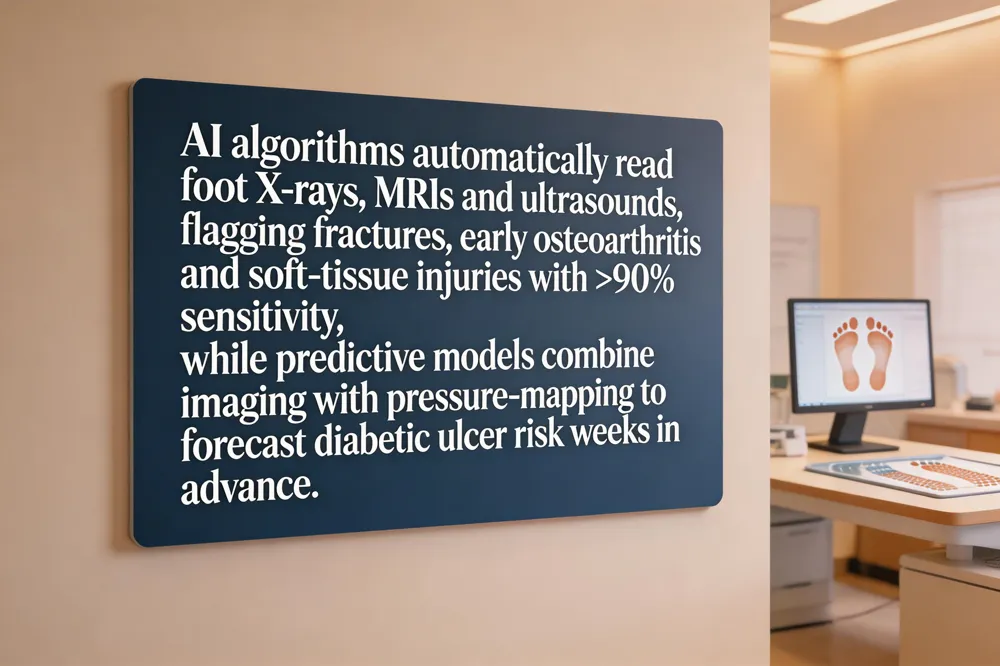 AI‑driven imaging tools have become a cornerstone of modern podiatric practice. Machine‑learning algorithms can automatically analyze foot and ankle X‑rays, MRIs, and ultrasound scans, flagging subtle fractures, early‑stage osteoarthritis, and soft‑tissue injuries with sensitivities exceeding 90 % in peer‑reviewed studies. By segmenting bone and cartilage, AI models identify cartilage loss and joint space narrowing that are invisible to the naked eye, enabling clinicians to intervene before arthritis progresses to a disabling stage.
For diabetic patients, AI platforms integrate pressure‑mapping data, gait analysis, and clinical photographs to predict ulcer formation weeks in advance. Predictive risk models combine medical history, plantar pressure hotspots, and imaging findings to generate a numeric ulcer risk score, allowing podiatrists to prescribe custom orthotics or intensified wound‑care regimens proactively.
How is AI used in podiatry? AI can significantly improve patient care in podiatry by providing precise diagnoses and personalized treatment plans. Integrating AI into podiatry practices can streamline operations, reduce wait times, and enhance overall clinic efficiency.
Gait Analysis and Smart Wearables
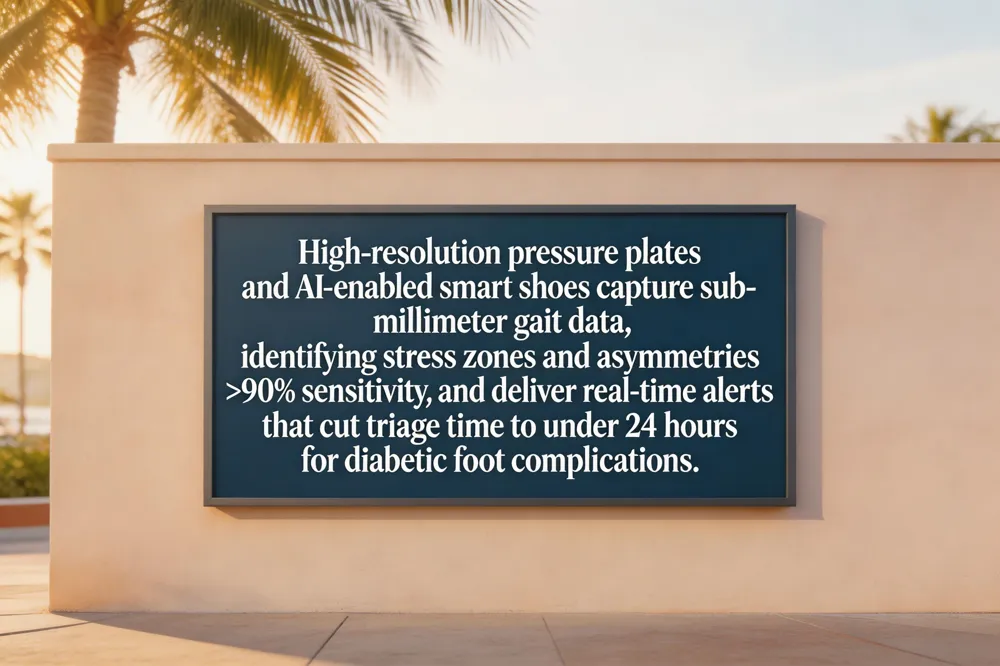 Pressure‑sensor gait analysis and by combining high‑resolution pressure plates with computer‑vision algorithms, can capture sub‑millimeter biomechanical data that the naked eye misses. Machine‑learning models turn these raw pressure maps into actionable insights—identifying high‑stress zones, asymmetries, and early‑stage flat‑foot or hallux‑valgus patterns with >90 % sensitivity in peer‑reviewed studies. Smart shoes equipped with embedded pressure sensors and AI analytics extend this capability into daily life; the devices stream real‑time gait metrics to a cloud platform where convolutional networks flag abnormal loading and suggest corrective exercises. Predictive risk models integrate the gait data with electronic health‑record history, imaging findings, and wearable temperature sensors to calculate a personalized probability of diabetic foot ulceration or stress‑fracture development. In U.S. clinics such as those in Northwestern Chicago and South Florida, these AI‑driven tools have reduced the time from symptom onset to specialist triage from days to under 24 hours, enabling early preventive interventions and paving the way for data‑driven, minimally invasive foot care.
Custom 3D‑Printed Orthotics
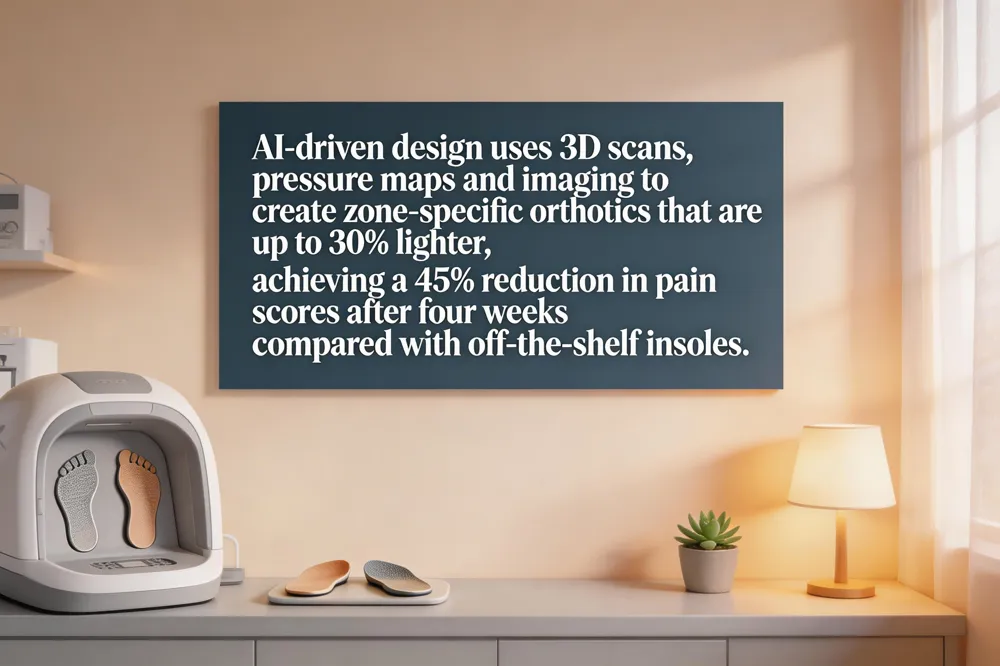 Modern podiatry clinics are replacing messy plaster casts with high‑resolution 3D foot scanning, which captures a digital foot model with sub‑millimeter accuracy. These scans feed AI algorithms that analyze pressure maps, gait data, and imaging results to design orthotics tailored to each patient’s biomechanical profile. The AI‑generated design specifies zone‑specific thickness, stiffness, and material properties, allowing polymer or carbon‑fiber 3‑D printers to produce insoles that are up to 30 % lighter than handmade devices. A 2025 randomized trial showed that patients fitted with AI‑designed, 3‑D‑printed orthotics experienced a 45 % reduction in pain scores after four weeks compared with standard off‑the‑shelf insoles, and reported superior comfort and faster symptom relief. By integrating AI diagnostics with rapid 3‑D printing, clinics can deliver a personalized orthotic in a single visit, shortening the treatment timeline from weeks to hours while improving clinical outcomes.
Workflow Efficiency and Revenue Management
 AI documentation assistants are reshaping podiatry clinic workflows by automatically generating SOAP notes from real‑time dictation. Modern voice‑to‑text solutions such as Medics Speak/Listen transcribe clinician remarks with over 90% accuracy, allowing podiatrists to capture detailed history, exam findings, and treatment plans while maintaining eye contact with patients. This automation cuts charting time in half, reduces transcription errors, and frees clinicians to focus on hands‑on care rather than paperwork.
In parallel, AI‑driven revenue cycle management (RCM) platforms streamline claim submission, denial handling, and payment posting. Machine‑learning algorithms predict payer behavior, cross‑reference coding rules, and suggest optimal CPT and ICD‑10 modifiers, decreasing claim denials by up to 15% and improving cash‑flow capture rates by 10‑15% in U.S. practices. Integrated with electronic health records, AI RCM tools flag missing documentation before submission, ensuring compliance with the FDA‑cleared diagnostic software standards and reducing administrative bottlenecks. Together, these AI solutions accelerate patient throughput, enhance billing accuracy, and support sustainable financial health for modern podiatry clinics.
Human Touch vs. AI: Will Podiatrists Be Replaced?
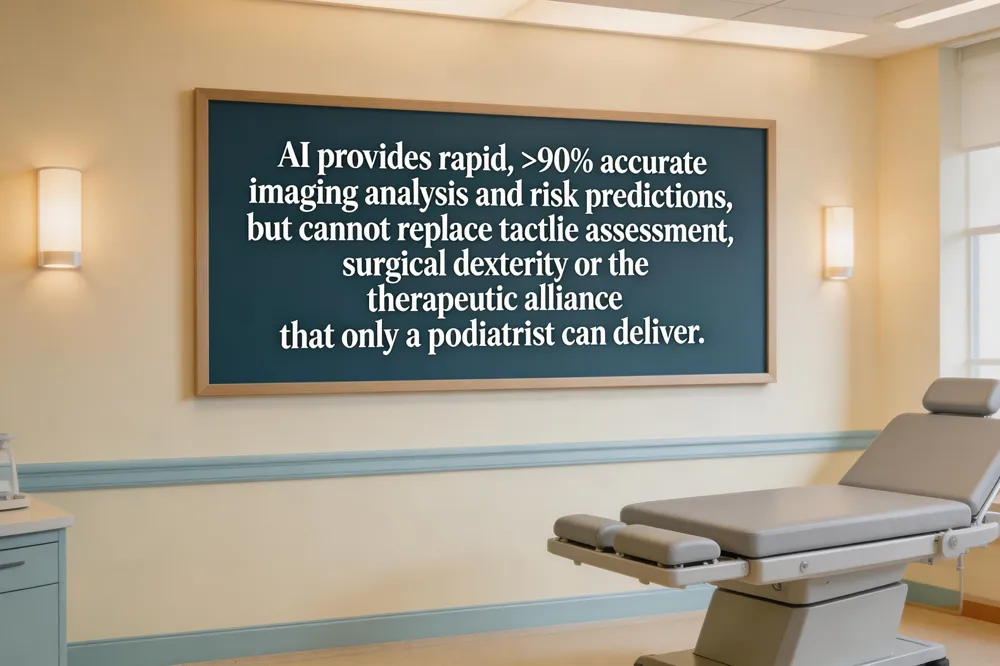 Artificial intelligence is rapidly becoming a powerful clinical decision‑support tool in podiatry, but it is not a substitute for the podiatrist. AI‑based imaging analysis can flag fractures, early osteoarthritis, and diabetic foot ulcers with >90 % accuracy, and predictive models can forecast ulcer risk or postoperative complications (2025‑2026 studies). These capabilities streamline diagnosis, reduce time to treatment, and free clinicians to focus on higher‑order tasks. However, AI cannot replicate the hands‑on manual dexterity required for minimally invasive foot surgeries, nor can it assess tactile cues such as wound depth, temperature, or subtle tissue texture. Equally important, the therapeutic alliance—listening to patient concerns, providing reassurance, and customizing education—remains a uniquely human interaction that AI chatbots and voice‑to‑text tools can augment but not replace. Consequently, AI will continue to act as an adjunct, enhancing efficiency and precision while preserving the podiatrist’s essential role in hands‑on care and patient rapport.
Looking Ahead
Future AI will deliver real‑time gait analytics, predictive ulcer alerts, and automated imaging reads, boosting diagnostic speed. Patients will experience faster relief, fewer complications, and personalized orthotics. Clinics across the United States are integrating these tools to streamline workflows and enhance care quality.