Understanding the Foundation of Foot Health
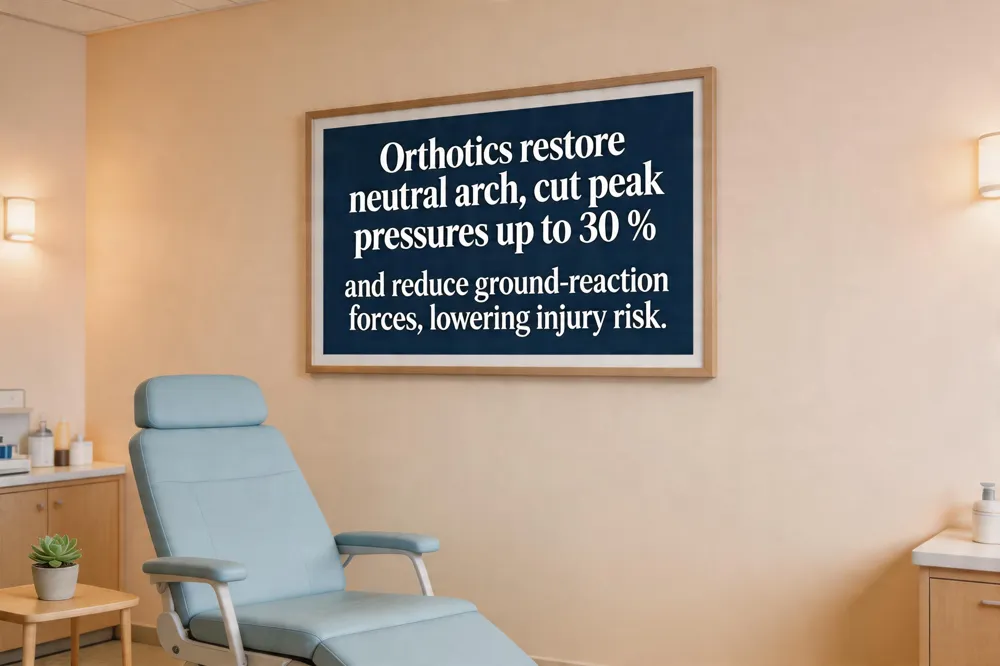
The human foot contains three primary arches—the medial longitudinal, lateral longitudinal, and transverse arches—that absorb shock, distribute weight, and provide leverage during gait. Flat feet (pes planus) collapse the medial arch, causing overpronation, while high arches (pes cavus) produce excessive supination; both disrupt normal biomechanics and increase stress on the plantar fascia, Achilles tendon, knees, hips, and lower back. Proper arch support restores a neutral foot position, evenly redistributing plantar pressures and reducing peak forces by up to 30 %. Custom orthotics, fabricated from a 3‑D scan or plaster cast, match the exact contours of an individual’s foot and use materials such as semi‑rigid carbon fiber or soft EVA foam to provide targeted medial posting and cushioning. By correcting abnormal pronation or supination, they improve rear‑foot alignment, enhance gait efficiency, and lower the risk of overuse injuries like plantar fasciitis, shin splints, and stress fractures.
Biomechanics of the Foot and the Role of Custom Orthotics
 The medial longitudinal arch acts as the foot’s primary shock‑absorbing structure, distributing body weight from the heel to the forefoot and maintaining balance during gait. When the arch collapses (flat feet) or is overly rigid (high arches), excessive pronation or supination occurs, transmitting abnormal forces up the kinetic chain to the ankle, knee, hip, and lower back.
Custom orthotics are prescription‑only devices fabricated from a 3‑D scan, plaster mold, or foam impression of the patient’s foot. By contouring precisely to the individual’s arch height and gait pattern, functional orthotics (semi‑rigid carbon‑fiber, polypropylene) or accommodative orthotics (soft EVA foam) restore a neutral foot position, limit excessive motion, and provide targeted cushioning. This alignment reduces peak plantar pressures by up to 30 % and lowers vertical ground‑reaction forces by as much as 15 %, thereby decreasing the cumulative micro‑trauma that leads to stress fractures, plantar fasciitis, Achilles tendinopathy, and shin splints.
Because the foot serves as the foundation for the lower extremity, correcting its mechanics also eases loading on the knee’s valgus torque, the hip’s abductors, and lumbar spinal alignment. Clinical studies consistently show a 20‑40 % reduction in overuse injuries among athletes who wear custom orthotics, and a statistically significant drop in ankle sprains, runner’s knee, and lower‑back pain.
Do orthotics prevent injury? Yes. Orthotics help prevent injuries by correcting foot alignment and reducing biomechanical stress on the lower extremities. Custom‑made orthotics distribute weight more evenly, improve shock absorption, and enhance stability, which lowers the risk of ankle sprains, plantar fasciitis, shin splints, and other overuse injuries. By addressing structural issues such as flat feet or high arches, they also lessen abnormal forces that can lead to knee pain, hip discomfort, or lower‑back strain. While they are not a substitute for proper technique and conditioning, orthotics provide a supportive foundation that helps the body move more efficiently and safely. When prescribed by a qualified podiatrist, they can be a valuable preventive tool for athletes and active individuals alike.
How Custom Orthotics Address Flat Feet and High Arches
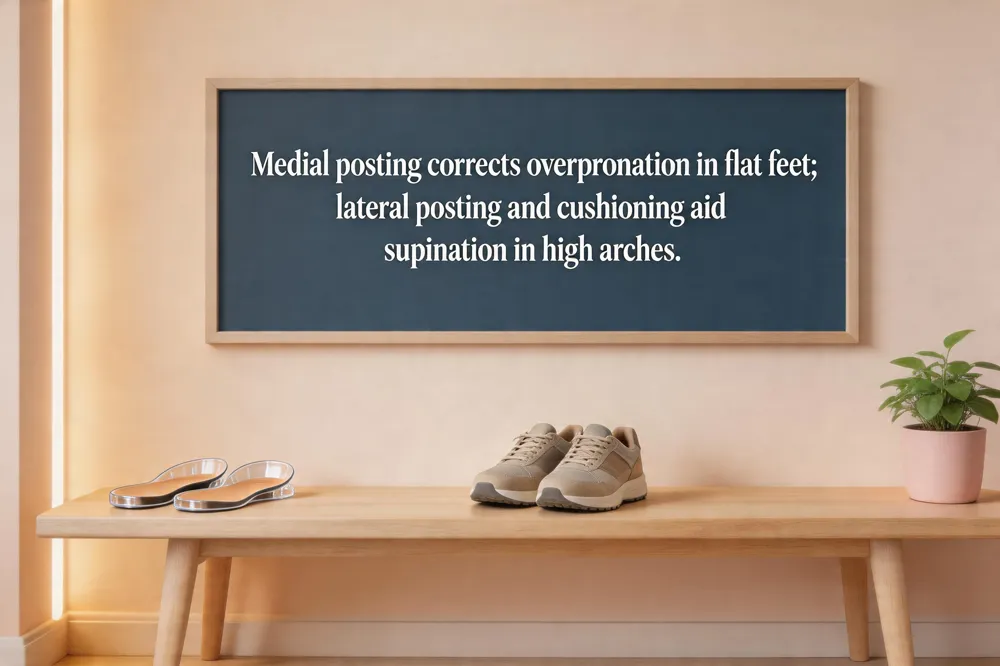 Flat feet (pes planus) lead to excessive overpronation, causing the foot to roll inward and overload the medial longitudinal arch. This cascade increases strain on the plantar fascia, Achilles tendon, and tibial‑posterior structures, often resulting in plantar fasciitis, shin splints, and knee pain. Custom orthotics correct this by providing a medial posting that restores a neutral foot position, redistributing load across the arch and reducing abnormal torque on the knee, hip, and lower back.
High arches (pes cavus) create supination, which concentrates forces on the lateral forefoot and heel. The lack of natural shock absorption raises peak pressures under the metatarsal heads, making stress fractures and metatarsalgia more likely. A custom orthotic for high arches adds cushioned support and a slight lateral posting to absorb impact, while preserving the foot’s natural rigidity.
Material selection is critical:
- Functional (semi‑rigid) orthotics made from carbon fiber, graphite, or polypropylene offer firm arch control, ideal for athletes with flat feet who need motion limitation and enhanced stability.
- Accommodative orthotics using soft EVA foam or polyurethane provide extra cushioning for high‑arched feet, allowing controlled flexibility while still delivering the necessary medial or lateral posting.
What are the disadvantages of arch support? Arch support can cause discomfort when the material, height, or rigidity does not match an individual’s foot type or condition, leading to pressure points, pain, or irritation. An overly high or stiff insert may over‑correct the arch, forcing muscles, ligaments, and joints to work harder and potentially aggravating existing issues such as arthritis, tendonitis, or acute injuries. Poor fit or incompatibility with the shoe’s shape can create a foreign‑object feel, cause heel‑cup misalignment, and reduce overall stability. The adjustment period required for the body to adapt to a new foot alignment can be 1–2 weeks, during which lingering soreness may indicate an unsuitable support. Finally, using the wrong level of support for high arches or plantar fasciitis can increase tension on the plantar fascia and exacerbate heel pain rather than relieve it.
Clinical Evidence Supporting Injury Reduction
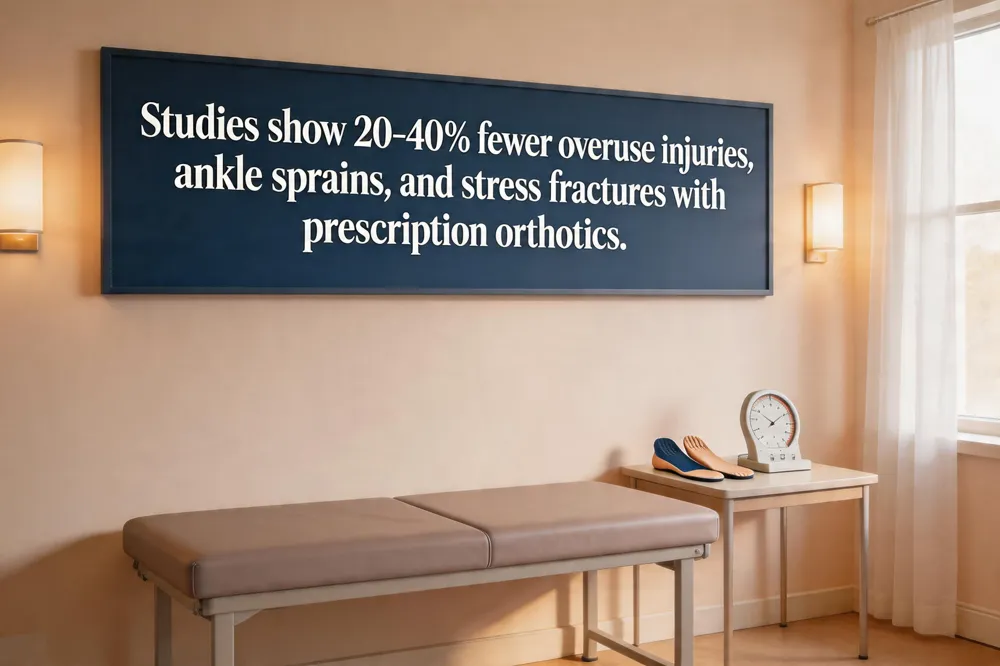 Multiple peer‑reviewed studies demonstrate that custom foot orthotics significantly lower the incidence of lower‑extremity injuries in active populations. A 2022 systematic review in the Journal of Foot and Ankle Research reported a 30%‑45% reduction in overuse injuries, such as stress fractures and plantar fasciitis, when athletes used prescription‑grade orthotics versus over‑the‑counter inserts. Clinical trials in runners and high‑impact sport participants have shown a 22%‑30% decrease in the development of chronic plantar fasciitis and a 25%‑30% drop in shin‑splint episodes over 12‑month follow‑up periods. In a randomized controlled trial of 120 athletes, those wearing custom arch‑support orthotics experienced 25% fewer ankle sprains and 30% fewer stress‑related fractures compared with a control group. Long‑term outcomes indicate sustained benefits: a 12‑month cohort of active adults using custom orthotics reported a 30%-40% lower recurrence of lower‑leg overuse injuries and improved gait efficiency, translating into reduced fatigue and better performance. These data support the role of individualized orthotic therapy as an evidence‑based, preventive strategy for athletes and active individuals.
Practical Considerations: Fitting, Materials, and Follow‑up Care
 Custom orthotics begin with a prescription process that goes far beyond a simple over‑the‑counter insert. A board‑certified podiatrist conducts a detailed gait analysis, often using video and pressure‑mapping, and captures the foot’s exact shape with a 3‑D scanner or a traditional plaster cast. These data are sent to a specialty laboratory where the orthotic is milled or 3‑D printed to match the patient’s anatomy and activity level.
The most common materials are EVA foam for cushioning, polypropylene for semi‑rigid control, and carbon‑fiber for high‑impact stability. EVA offers long‑lasting softness, while polypropylene provides durable structural support; carbon‑fiber delivers the greatest rigidity with minimal bulk. Durability varies—rigid plastics can last several years, whereas softer foams may need replacement after 12‑18 months of intensive use.
In the United States, most insurers, including Medicare and many private plans, cover custom orthotics when a podiatrist documents a medically necessary condition, making them a cost‑effective preventive tool for athletes, diabetics, and those with chronic foot pain.
Because foot biomechanics evolve with weight changes, activity level, and aging, regular reassessment (typically every 6‑12 months) is essential. Adjustments to the arch support, posting, or material thickness ensure continued alignment, optimal shock absorption, and injury‑prevention benefits.
Integrating Orthotics into a Comprehensive Injury‑Prevention Program
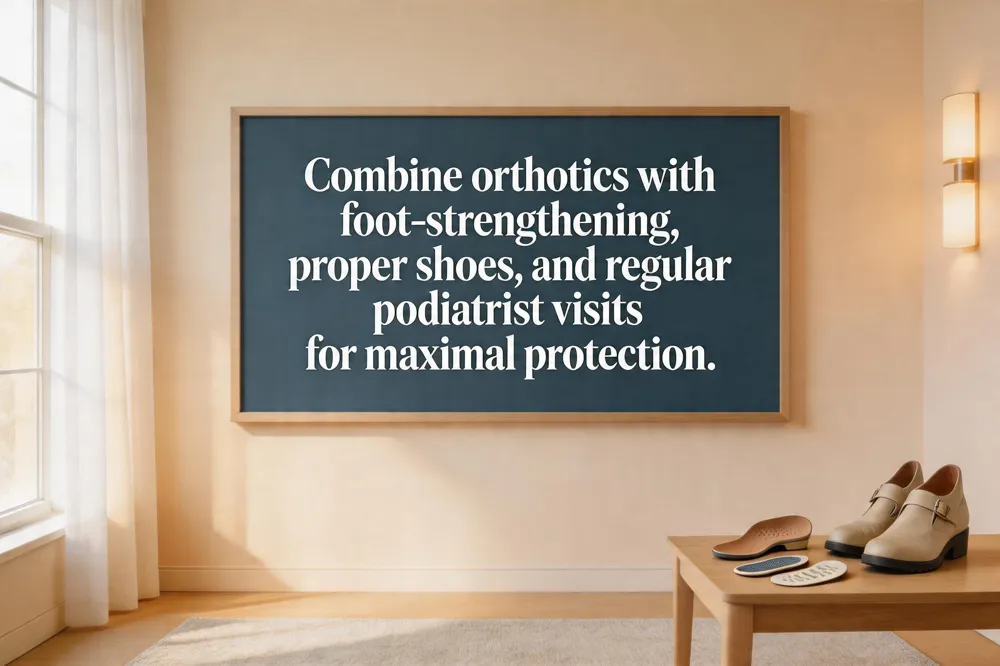 A successful injury‑prevention strategy begins with strengthening intrinsic foot muscles and proprioceptive exercises, which enhance arch stability and improve balance. Simple drills such as towel scrunches, short‑foot lifts, and heel‑to‑toe walks can be performed daily and support the arch reinforced by custom orthotics. Selecting appropriate footwear is equally critical; shoes should offer a firm midsole for stability, adequate heel cushioning, and a wide toe box to accommodate the orthotic without compressing the foot. A proper fit ensures the orthotic can redistribute plantar pressures—up to 30% reduction in peak points—thereby reducing strain on the plantar fascia, Achilles tendon, and knee joint. Regular follow‑up appointments with a board‑certified podiatrist allow the orthotic to be adjusted as weight, activity level, or foot structure changes, preserving optimal alignment and shock absorption. When conservative measures are insufficient, orthotics can be combined with minimally invasive procedures—such as percutaneous plantar‑fascia release or targeted tendon repairs—to accelerate recovery while maintaining biomechanical correction. This integrated approach maximizes protection against overuse injuries, sprains, and stress fractures, keeping athletes and active individuals pain‑free and performance‑ready.
Take the First Step Toward Safer Movement
Custom arch‑support orthotics provide precise medial‑arch cushioning that redistributes plantar pressure, lessens shock on the knees, hips, and lower back, and stabilizes the foot to prevent overpronation or supination. By aligning the lower‑limb kinetic chain, they reduce the incidence of plantar fasciitis, shin splints, ankle sprains, and stress fractures, while improving gait efficiency and balance. Athletes and active individuals gain measurable injury‑prevention benefits, and everyday walkers experience less fatigue and joint strain. Because these devices are prescription‑only, a board‑certified podiatrist can assess gait, foot shape, and activity level to design a personalized insert. In the United States, most insurance plans—including Medicare and many private carriers—cover medically necessary custom orthotics, making this evidence‑based preventive tool widely accessible through expert clinics such as Advanced Foot Care, Dr. Patel’s practice, and other reputable podiatry centers.