Why Non‑Surgical Care Matters
Flat foot (pes planus) affects roughly one in three U.S. adults, making it one of the most common foot conditions. The medial arch normally absorbs shock, stabilizes gait, and protects neurovascular structures; when it collapses, patients experience altered biomechanics, fatigue, ankle instability, shin splints, and even knee, hip or lower‑back pain. Because these symptoms can limit daily activities and increase the risk of secondary joint problems, early intervention is essential. U.S. podiatric and orthopedic guidelines therefore recommend a tiered, non‑surgical approach as first‑line care: custom‑molded orthotics or prescription shoes that recreate arch support; targeted physical‑therapy programs that strengthen the tibialis posterior and intrinsic foot muscles while stretching the gastrocnemius‑soleus complex; over‑the‑counter NSAIDs for inflammation; weight‑loss or activity modification to reduce load; and supportive bracing or ankle‑foot orthoses when needed. These measures address pain, improve mechanics, and often prevent progression to surgery.
Core Non‑Surgical Strategies
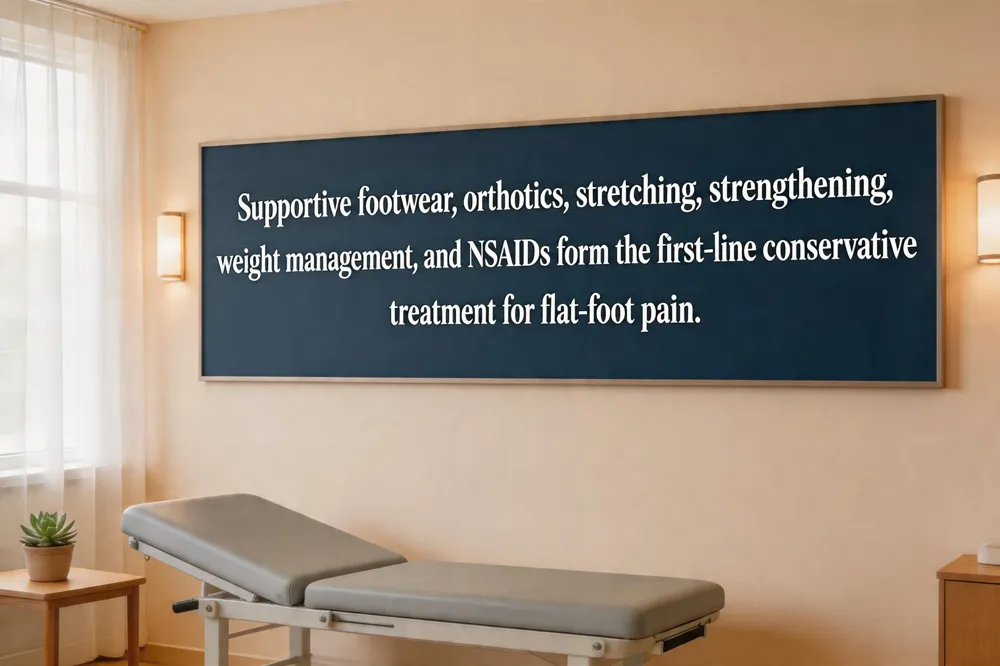 Podiatrists first assess whether flat feet cause pain or functional limitation; asymptomatic cases need no intervention. For painful flat feet they recommend supportive footwear and orthotics—over‑the‑counter inserts or custom‑made plates—to recreate arch and redistribute plantar pressure. Complementary measures include arch‑supporting shoes with firm heel counters, regular stretching of the calf‑Achilles complex, and strengthening of the tibialis posterior and intrinsic foot muscles via physical therapy. Weight management reduces mechanical load on the medial arch, while bracing, ankle‑foot orthoses or night splints provide temporary stabilization during healing. Over‑the‑counter NSAIDs (e.g., ibuprofen, naproxen) control inflammation. These conservative options are the first line of treatment and can often relieve symptoms without surgery.
Targeted Physical Therapy and Exercises
 Physical therapy for flat‑foot pain centers on restoring arch stability through a structured exercise program. Strengthening intrinsic foot muscles—using towel‑scrunches, toe curls, and short‑foot (arch‑lifting) drills—activates the tibialis posterior and other small stabilizers. Calf and Achilles stretching (standing gastrocnemius stretch, soleus stretch on a step, and plantar‑fascia roll) improves ankle dorsiflexion and reduces tension that forces the arch to collapse. Proprioceptive balance training, such as single‑leg stance on a foam pad or wobble board, enhances neuromuscular control and limits overpronation.
How to treat a mild flat foot? Begin with activity modification (low‑impact cardio, avoid prolonged standing), wear supportive orthotics or prescription shoes, stretch calves/achilles daily, and perform intrinsic‑strengthening drills under therapist guidance. NSAIDs aid pain control; weight management lessens arch load. Persistent symptoms may warrant imaging and a reassessment of the conservative plan.
Flat feet exercises – Daily routine: 1) Calf‑Achilles stretch (30 seconds each side), 2) Towel‑scrunches (3 sets × 15 reps), 3) Short‑foot holds (3 sets × 10 seconds), 4) Heel‑raise with resistance (3 sets × 12 reps), 5) Single‑leg balance on foam (30 seconds each foot). Consistency improves arch support and reduces discomfort.
Pain Management, Inflammation, and Knee Implications
 Non‑surgical relief for painful flat feet starts with over‑the‑counter NSAIDs (e.g., ibuprofen, naproxen) to curb inflammation and ache, especially after activity. Ice packs applied for 15‑20 minutes and a brief period of rest can further reduce swelling. Supporting the foot with a firm ankle brace, arch‑supportive shoe, or therapeutic taping limits excessive pronation, protecting the plantar fascia and posterior tibial tendon. Because the arch acts as a shock absorber, its collapse forces the leg into internal rotation, altering knee alignment and loading the medial compartment and patellofemoral joint—often manifesting as knee pain. Strengthening the tibialis posterior and intrinsic foot muscles, combined with proper custom orthotics, helps restore a more neutral gait, easing knee stress.
Q: Can flat feet cause knee pain? A: Yes. Loss of arch support leads to overpronation, internal leg rotation, and altered knee mechanics, increasing medial knee and patellofemoral stress.
Q: How long will it take to strengthen flat feet? A: Typically 3‑18 months, depending on severity and adherence to therapy, with noticeable improvement often seen within this range.
Q: Podiatrist near me? A: Board‑certified podiatrists such as Advanced Foot Care (Northwest Chicago and South Florida) offer custom orthotics, physical therapy, and comprehensive foot‑ankle care; call (312) 555‑1234 (Chicago) or (754) 555‑5678 (South Florida) to schedule.
Causes, Types, and Specialized Care for Different Ages
 Flat feet develop when the medial arch fails to form or collapses. The most common cause is a genetic predisposition that runs in families, but ligamentous laxity, a weakened posterior tibial tendon (often from injury, overuse, or age‑related degeneration), excess body weight, and systemic conditions such as rheumatoid arthritis, diabetes, or cerebral palsy can also contribute. In children, flexible flatfoot is usually harmless and may resolve, whereas rigid flatfoot in adults often signals an underlying structural or inflammatory problem.
Adults can achieve significant symptom relief and even functional correction through non‑surgical measures: custom orthotics, supportive shoes, targeted physical‑therapy programs that strengthen the tibialis posterior and intrinsic foot muscles, calf‑Achilles stretching, weight management, and NSAIDs for pain control. When conservative care fails, surgical options such as tendon repair or osteotomy may be considered.
In pediatric patients, early intervention with orthotics, proper footwear, and stretching of tight calf muscles can guide normal arch development and prevent progression. Most children either develop a normal arch or experience lasting relief.
Vitamin D deficiency, which weakens bone density, may also play a role in flat‑foot formation.
Advanced Options, Clinics, and Innovative Procedures
 The Extra‑Osseous Talotarsal Stabilization (EOTTS) is a minimally invasive, local‑anesthesia procedure that inserts a tiny titanium stent into the sinus‑tarsi, instantly realigning the talus and reducing flat‑foot pronation without cutting bone.
Mobile podiatry in New Jersey brings board‑certified podiatrists to homes, offices, and assisted‑living facilities across the state, offering custom orthotic fittings, diabetic foot exams, wound care, and minor procedures without the need for clinic travel.
Advanced Foot Care of NJ, LLC—served in Woodlands Park, Thorofare, and Salem—provides digital‑scan orthotics, X‑ray imaging, and minimally invasive treatments under Dr. Joshi’s expert care.
The Staten Island Advanced Foot Care Center, led by Dr. Eskandar, offers custom orthotics, EOTTS, and a full suite of foot‑ankle services.
Mineola, Woodbury, and Manhasset locations deliver personalized orthotic technology, on‑site imaging, laser and shockwave therapy, and comprehensive podiatric care, ensuring patients across New York and New Jersey receive state‑of‑the‑art, non‑surgical and surgical options close to home.
Take the First Step Toward Pain‑Free Feet
Non‑surgical management of pes planus includes custom‑made orthotics or prescription shoes that recreate an arch, over‑the‑counter NSAIDs (e.g., ibuprofen or naproxen) for pain and inflammation, targeted physical‑therapy programs that stretch the calf and Achilles and strengthen the tibialis posterior and intrinsic foot muscles, weight‑loss or activity‑modification to lower mechanical load, and supportive footwear or ankle braces to limit excessive pronation. Early evaluation by a board‑certified podiatrist is critical—diagnosing flexible versus rigid flatfoot guides the choice of orthotics, therapy, and imaging, and can prevent progression to arthritis or tendon degeneration. To begin, call Advanced Foot Care at +1 844‑273‑3428, schedule a comprehensive foot‑and‑ankle exam, and receive a personalized, evidence‑based treatment plan.