Why Orthotics Matter in Everyday Life
Orthotic devices are inserts placed inside shoes to relieve pain, improve alignment, and support the foot‑ankle complex. Off‑the‑shelf (OTC) inserts are mass‑produced, offering generic cushioning and modest arch support, while custom‑made orthotics are prescribed after a podiatrist’s biomechanical assessment and are fabricated from a 3‑D scan or mold to match the exact shape of the patient’s foot. By correcting foot misalignments—such as overpronation, supination, or leg‑length discrepancy—custom orthotics redistribute pressure, stabilize the kinetic chain, and can reduce strain on the knees, hips, and lower back. Even modest OTC inserts can help mild fatigue, but for chronic conditions, severe deformities, or high‑impact activities, a personalized orthotic is essential for long‑term comfort and posture.
Understanding Orthotic Types and Clinical Indications
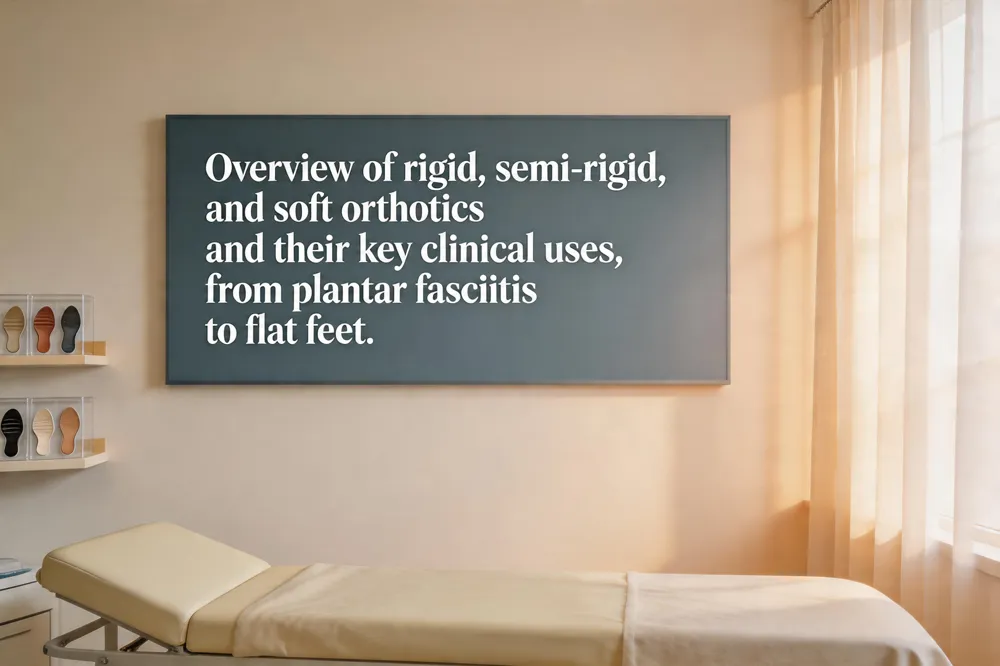 Foot orthotics are shoe inserts designed to support, align, and cushion the foot and ankle, relieving pain and improving function. They range from over‑the‑counter pads to prescription‑grade devices custom‑ a pod pod for. address that biomechanical issues. The three main orthotic types are rigid (functional) orthotics, which use hard materials such as carbon fiber or plastic to control foot motion; soft (accommodative) orthotics, which employ cushioned, flexible foams for shock absorption and comfort in conditions like arthritis or diabetic foot ulcers; and semi‑rigid orthotics, which blend firm and soft layers for a balanced mix of support and cushioning. Orthotics are indicated for a variety of foot and ankle disorders, including plantar fasciitis, flat feet, high arches, bunions, Morton's neuroma, and even secondary knee, hip, or lower‑back pain caused by abnormal gait. OTC options provide modest arch support and cushioning for mild discomfort, while custom‑made orthotics correct specific biomechanical abnormalities, redistribute pressure, and can be adjusted over time to match changing foot shape or activity demands. Selecting the appropriate orthotic requires a professional foot and gait assessment, often using 3‑D scanning or pressure mapping, to ensure the device aligns with the patient’s anatomy, lifestyle, and therapeutic goals.
Evidence‑Based Effectiveness and When Custom Is Worth It
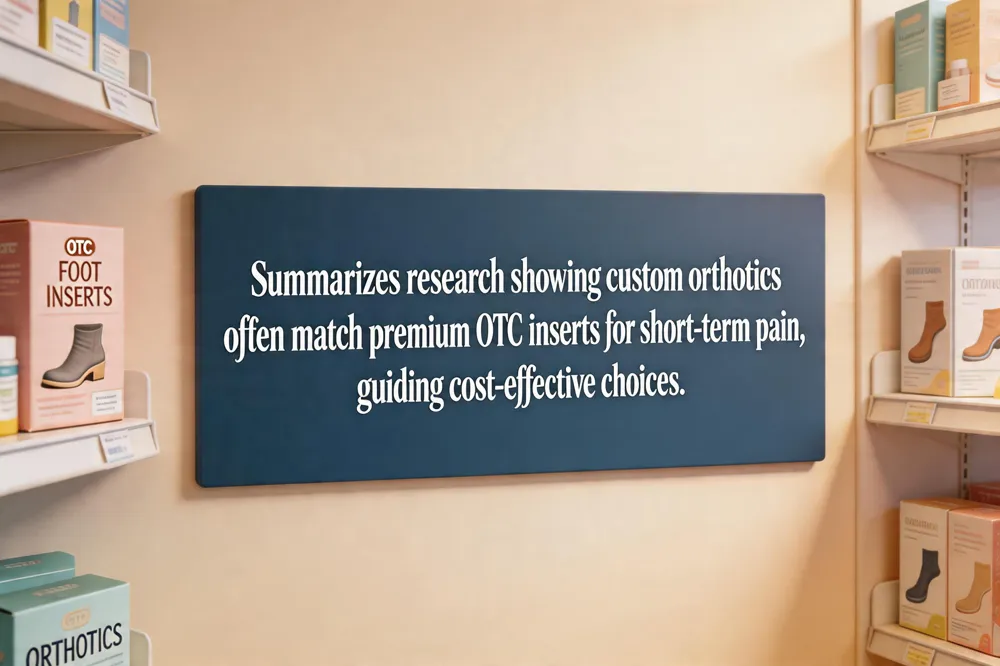 Research on plantar‑fasciitis and heel pain shows that custom orthotics can relieve discomfort, but a meta‑analysis of 20 trials found no statistically significant advantage over high‑quality over‑the‑counter (OTC) inserts for short‑term pain relief. For most patients, a well‑chosen prefabricated insole offers comparable symptom reduction at a fraction of the cost.
Are custom orthotics worth it for plantar fasciitis? Custom devices provide precise arch support and heel cushioning, yet they cost $200‑$500 per pair. Evidence indicates they perform no better than premium OTC inserts for pain and function, so clinicians often recommend starting with inexpensive insoles, stretching, and supportive shoes before investing in a custom prescription.
Best over‑the‑counter orthotics for plantar fasciitis Top picks include Tread Labs Pace Insole (extra‑firm arch, deep heel cup), Dr. Scholl’s Plantar Fasciitis Pain Relief Insoles (budget‑friendly heel cushioning), PowerStep Pinnacle Low Insoles (firm arch stabilization), Superfeet All‑Purpose Memory Foam Insoles (all‑day comfort), and Dr. Scholl’s Work All‑Day Insoles for long‑standing workers.
Custom orthotics vs over‑the‑counter reddit Reddit users note OTC inserts are cheap and instantly available but lack biomechanical specificity. Custom orthotics, molded after a podiatrist evaluation, are praised for long‑term relief and durability, especially in chronic cases, despite higher cost and required professional fitting.
Orthotics treatment At Advanced Foot Care, a board‑certified podiatrist conducts gait analysis, creates a 3‑D foot scan, and fabricates a prescription device that redistributes pressure, corrects alignment, and reduces knee, hip, and back strain. The plan includes stretching, strengthening, and follow‑up adjustments for optimal outcomes.
Do orthotics work for flat feet? Yes. OTC inserts may help mild, flexible arches, but severe or rigid flat feet benefit from custom‑molded orthotics that provide targeted arch support, heel cupping, and pressure redistribution, leading to pain reduction and improved gait in the majority of users.
Lifestyle‑Specific Orthotic Recommendations
 Choosing the right insole depends on daily activity and foot anatomy. For everyday comfort and mild pain, Dr Scholl’s Work All‑Day Insoles provide budget‑friendly cushioning, while PowerStep Pinnacle offers podiatrist‑approved arch support for longer wear. Flat‑foot relief is best served by PowerStep Pinnacle Low Insoles, which combine a firm EVA base with a moisture‑wicking top layer; budget alternatives include Dr Scholl’s Stability Support Insoles, and wider options are found in PowerStep Wide Fit Orthotics. Women’s lifestyle shoes benefit from low‑profile options such as Superfeet Women’s Berry Insoles or Redi‑Thotics Flex Orthotic Insoles, both delivering discreet arch support and breathable tops. For professionals who stand or walk all day, Vionic Slimfit Orthotic Insoles and PowerStep Pinnacle Low Insoles deliver deep heel cups and responsive cushioning; Dr Scholl’s Custom FiT® offers a personalized fit when needed. Walking on concrete demands shock‑absorbing durability—PowerStep Pinnacle Low and Superfeet work‑boot insoles provide rigid arch control and thick foam layers that reduce tibial stress while maintaining stability.
Practical Considerations: Cost, Insurance, and Where to Get Them
 Custom orthotics are typically priced between $300 – $800 per pair, reflecting a professional biomechanical assessment, 3‑D scanning or molding, and durable materials such as carbon‑fiber or polypropylene. Over‑the‑counter (OTC) inserts range from $10 – $60, offering generic cushioning but no personalized alignment correction. Many insurance plans, including Medicare Part B, cover prescription‑grade orthotics when a qualified podiatrist documents a medically‑necessary condition (e.g., severe pronation, diabetic foot disease). The appropriate CPT/HCPCS codes are L390‑L399 for inserts and L598‑L599 for custom shoes; providers submit the prescription, clinical notes, and codes for prior authorization, then the patient pays any deductible or co‑pay (often 20 % for Medicare).
How to get orthotics covered by insurance – Obtain a written prescription, verify coverage and billing codes, submit documentation through the podiatrist’s office, meet deductible/co‑pay, and appeal if denied.
Average price at Good Feet – About $475 per pair, often encouraging purchase of multiple pairs for a total exceeding $1,000.
Cost for plantar fasciitis – Custom devices $300‑$800; semi‑custom $60‑$300; OTC $10‑$20.
Best custom orthotics – Foot Levelers (InMotion+™ and 5th Avenue) and Dr. Scholl’s Custom Fit are frequently recommended by podiatrists.
Online options – Upstep, Premium Custom Orthotics Online, SprinSole, and Tread Labs provide mail‑order kits with doctor‑approved designs and money‑back guarantees.
PowerStep Pinnacle – Semi‑rigid, deep heel cup, praised by 90 % of users for pain relief within two weeks; suitable for plantar fasciitis and related joint pain.
Side effects & adjustment – Initial soreness, blisters, or calf stiffness are common; a gradual wear schedule, proper shoe fit, and follow‑up adjustments minimize discomfort.
OTC efficacy – Helpful for mild, short‑term discomfort but often insufficient for chronic or biomechanical problems.
Podotrist view of Good Feet – Considered overly expensive for prefabricated inserts, with some patients spending $1,200‑$5,000 on non‑custom products.
Charcot foot – Custom orthoses can help heal ulcers and control Charcot arthropathy symptoms when prescribed by a specialist.
Integrating Orthotics with Advanced Foot‑Care Services
 Modern podiatry blends precise orthotic fabrication with cutting‑edge technology. At Advanced Foot Care we start with 3‑D foot scans and pressure‑mapping to create a digital model, then 3‑D print durable, semi‑rigid orthotics that match each arch, heel cup, and metatarsal contour. Smart insoles collect gait data, letting clinicians fine‑tune support remotely. For patients with chronic plantar fasciitis, flat feet, or post‑surgical rehab, minimally invasive procedures—such as ultrasound‑guided tenotomy or percutaneous bunion correction—are paired with custom inserts to accelerate healing. Regular follow‑up ensures wear‑adjusted pressure redistribution, maintaining alignment of the knees, hips, and spine for long‑term health.
Custom orthotics near me: Advanced Foot Care’s Northwestern Chicago and South Florida clinics offer in‑house 3‑D scanning, CAD/CAM design, and same‑day fitting.
Custom orthotics vs over the counter reddit: Users note OTC inserts are cheap but generic; custom devices, molded by a podiatrist, provide precise biomechanical correction and lasting relief for severe foot disorders.
Orthotics treatment: We prescribe either custom‑molded or high‑quality OTC inserts after a biomechanical assessment, integrating stretching, strengthening, and gait retraining for optimal outcomes.
Advanced foot‑care technology includes 3‑D printing of orthotics for rapid, precise production and smart insoles that collect gait data for ongoing adjustments.
Putting It All Together: Choose the Right Orthotic for Your Life
Finding the optimal orthotic is a balance of cost, comfort, and clinical necessity. Over‑the‑counter inserts are inexpensive, easy to obtain, and work well for mild fatigue or short‑term cushioning, making them a logical first step for patients with no diagnosed biomechanical abnormality. When pain persists, structural issues such as severe pronation, flat feet, high arches, or diabetic foot risk are present, a custom‑fabricated orthotic—designed from a 3‑D scan or plaster cast—offers targeted pressure redistribution, alignment correction, and longer durability, albeit at a higher upfront price that many insurers partially cover. A podiatrist’s role is essential: they perform gait analysis, identify underlying pathology, fit the device, and schedule follow‑up adjustments, ensuring the orthotic continues to meet the patient’s lifestyle demands and protects the entire kinetic chain over the long term.