Beyond the Insole: A Deep Dive into Medical-Grade Custom Orthotics
What are custom orthotics?
Custom orthotics are prescription medical devices, typically shoe inserts, crafted specifically for an individual's unique foot structure, gait pattern, and health needs. Unlike generic over-the-counter (OTC) insoles, they are designed from a detailed podiatric assessment, which may involve plaster molds, foam impressions, or 3D computerized foot scanning. This process creates a device that precisely matches the contours of your feet, working with their natural movement.
Their primary function is biomechanical correction. By redistributing pressure and providing targeted support, they align the feet and ankles, aiming to mitigate pain and improve overall function. The human foot is a complex structure with 26 bones and 33 joints; proper support at this foundation can influence the entire musculoskeletal system.
What conditions are orthotics used to treat?
Custom orthotics have a broad therapeutic scope, addressing both localized foot issues and pain stemming from poor alignment elsewhere in the body. They are commonly prescribed for:
- Structural Conditions: Flat feet (pes planus), high arches (pes cavus).
- Pain Syndromes: Plantar fasciitis, heel pain, metatarsalgia (forefoot pain), Achilles tendinopathy.
- Deformities: Bunions, hammertoes.
- Degenerative & Systemic Conditions: Osteoarthritis, rheumatoid arthritis, posterior tibial tendon dysfunction.
- Preventive Care: For diabetic neuropathy to offload high-pressure areas and prevent ulcers, and for sports injuries or recurrent ankle sprains.
By correcting alignment, orthotics can also alleviate referred pain in the knees, hips, and lower back.
Do custom orthotics really work?
The efficacy of custom orthotics is well-documented for many conditions, though outcomes can vary. For instance, research indicates an approximately 89% success rate in reducing pain associated with plantar fasciitis. For posterior tibial tendon dysfunction, custom devices have shown a 77% success rate in conservative management.
It is important to understand that orthotics are a management tool, not a cure. They control symptoms and improve function by addressing biomechanical faults. If effective, permanent use is typically recommended, as stopping can allow symptoms to return. A balanced view notes that for some conditions, like adult flat feet, high-quality research showing clear superiority over other conservative treatments can be limited, though they are generally not harmful.
Do orthotics work for flat feet?
Yes, orthotics are a cornerstone of conservative management for flat feet (planovalgus foot). The goal is to provide medial arch support that the foot lacks. This support helps redistribute pressure, reduce strain on supporting tendons like the tibialis posterior, and improve overall foot mechanics. This can alleviate foot fatigue, pain, and prevent related issues in the ankles and knees.
What are the best orthotics for plantar fasciitis?
For plantar fasciitis, the primary objectives are to provide firm medial arch support and cushioning to reduce strain on the plantar fascia. Functional orthotics made from semi-rigid materials like graphite or plastic are often recommended to control foot motion. Accommodative orthotics with soft, forgiving materials may be used for added cushioning, especially in early treatment or for sensitive feet. The "best" type is determined by a podiatrist after evaluating your specific foot structure and gait.
Why do my orthotics hurt my arch?
Initial discomfort, including arch pain, is common and often part of the adjustment period. Orthotics change your foot's biomechanics, and it can take up to one month for your muscles and tendons to adapt. This discomfort should be mild and subside as you break them in gradually.
Persistent or sharp pain, however, may indicate an improper fit or prescription. The device might be over-correcting or placing pressure in the wrong area. If pain continues beyond a few weeks of gradual wear, consult your podiatrist for a possible adjustment.
How long do custom orthotics last?
Prescription custom orthotics are durable, typically lasting between 2 to 5 years with proper care. Their longevity depends on several factors:
| Factor | Impact on Durability | Reason |
|---|---|---|
| Material | Rigid plastics last longer | More resistant to compression & wear |
| Activity Level | High-impact sports shorten lifespan | Repeated force breaks down materials |
| Weight Changes | Significant gain/loss may require replacement | Alters foot shape and pressure points |
| Care & Maintenance | Proper cleaning extends life | Prevents material degradation & odor |
What should I look for in over-the-counter orthotics?
OTC inserts can be a reasonable first step for mild, occasional discomfort from activities like prolonged standing. Look for products with a firm arch support that does not collapse easily under pressure. They should fit your shoe size correctly and be made from durable materials. However, they are not designed to correct significant biomechanical issues, pronation, or treat specific medical diagnoses like bunions or plantar fasciitis.
Does insurance cover custom orthotics?
Coverage varies significantly by insurance provider and plan. Many medical insurance policies do provide partial or full coverage for custom orthotics when they are deemed medically necessary and prescribed by a licensed podiatrist or physician for a diagnosed condition. It is always advisable to check with your insurance carrier regarding your specific benefits, deductibles, and any required pre-authorization before proceeding.
Digesting Your Orthotic Options
| Topic | Key Consideration | Clinical Insight | Patient Action |
|---|---|---|---|
| Definition | Prescription medical devices | Made from podiatric mold/scan | Requires professional evaluation |
| Conditions Treated | Broad, from arthritis to diabetes | Targets biomechanical cause | Discuss specific symptoms with doctor |
| Efficacy Evidence | Strong for many conditions | Manages, does not cure | Set realistic long-term use expectations |
| Flat Feet Application | Provides absent arch support | Reduces strain on tendons/knees | Core part of conservative care plan |
| Plantar Fasciitis Fit | Firm arch support is critical | Semi-rigid materials often used | Type chosen based on individual assessment |
| Initial Discomfort | Common adjustment period | Can take up to one month | Wear gradually; report persistent pain |
| Lifespan Factors | Material, activity, weight, care | Lasts 2-5 years typically | Follow care instructions; plan for replacement |
| OTC Insoles | For mild, general discomfort | Lack corrective customization | Upgrade to custom if pain persists/worsens |
| Insurance Coverage | Often covered if medically necessary | Varies by plan and diagnosis | Verify benefits with insurer beforehand |
Beyond the Insole: A Deep Dive into Medical-Grade Custom Orthotics
Do custom orthotics really work?
Yes, custom orthotics are a clinically-proven treatment for many foot and ankle conditions. The key to their effectiveness is their targeted, personalized design, which generic over-the-counter (OTC) inserts cannot replicate. While OTC insoles may offer temporary cushioning, custom orthotics are engineered to correct abnormal biomechanics, such as overpronation (inward rolling) or supination (outward rolling). This correction reduces strain on muscles, tendons, and ligaments. For a common condition like plantar fasciitis, evidence indicates orthotics can have a high success rate in reducing pain by augmenting the midfoot contact area and providing medial arch support to redistribute force. Their effectiveness extends beyond the foot; by improving alignment, they can alleviate pain in the foot, ankle, knee, hip, or lower back.
Do orthotics work for flat feet?
Orthotics are a primary conservative treatment for flat feet (pes planus). The condition, characterized by a low or collapsed medial longitudinal arch, can lead to overpronation, strain on the posterior tibial tendon, and pain. Custom orthotics work by creating the necessary arch support that the foot lacks. This support helps to restore a more neutral foot position, redistribute pressure evenly across the foot, and reduce abnormal loading on the lower extremities. This realignment can improve overall foot mechanics, enhance stability and prevent falls, and reduce discomfort not only in the feet but also in joints higher up the kinetic chain, like the knees and hips.
What conditions are orthotics used to treat?
Custom orthotics have a broad therapeutic scope, addressing both acute and chronic musculoskeletal issues. They are a core component of treatment plans for a wide array of conditions:
| Condition Category | Specific Examples | Primary Orthotic Goal |
|---|---|---|
| Foot Deformities & Pain | Plantar Fasciitis, Heel Spurs, Flat Feet, High Arches | Provide arch support, redistribute pressure, cushion sensitive areas |
| Toe & Forefoot Issues | Bunions, Hammertoes, Metatarsalgia, Morton's Neuroma | Offload pressure, improve alignment, create space in the shoe |
| Tendon & Ligament Disorders | Achilles Tendinopathy, Posterior Tibial Tendon Dysfunction, Ankle Sprains | Control motion, reduce strain on the impaired tendon, stabilize the joint |
| Arthritic & Degenerative Conditions | Osteoarthritis, Rheumatoid Arthritis (in foot/ankle) | Mitigate pain, improve function, delay need for surgical intervention |
| Systemic & High-Risk Conditions | Diabetic Neuropathy, Charcot Foot | Offload high-pressure areas to prevent ulcers, provide protective cushioning |
What are the best orthotics for plantar fasciitis?
The most effective orthotics for plantar fasciitis are those that provide firm, contoured support to the medial longitudinal arch. This support reduces tension and strain on the plantar fascia ligament. While some patients may find relief with a well-designed OTC arch support, those with concurrent structural misalignments (like very high or very low arches) typically require custom orthotics for optimal outcomes. A podiatrist may prescribe a functional orthotic made from semi-rigid materials to control foot motion and properly distribute force away from the inflamed heel. The primary objectives are to increase the midfoot contact area and alleviate direct pressure on the heel, facilitating healing.
How long do custom orthotics last?
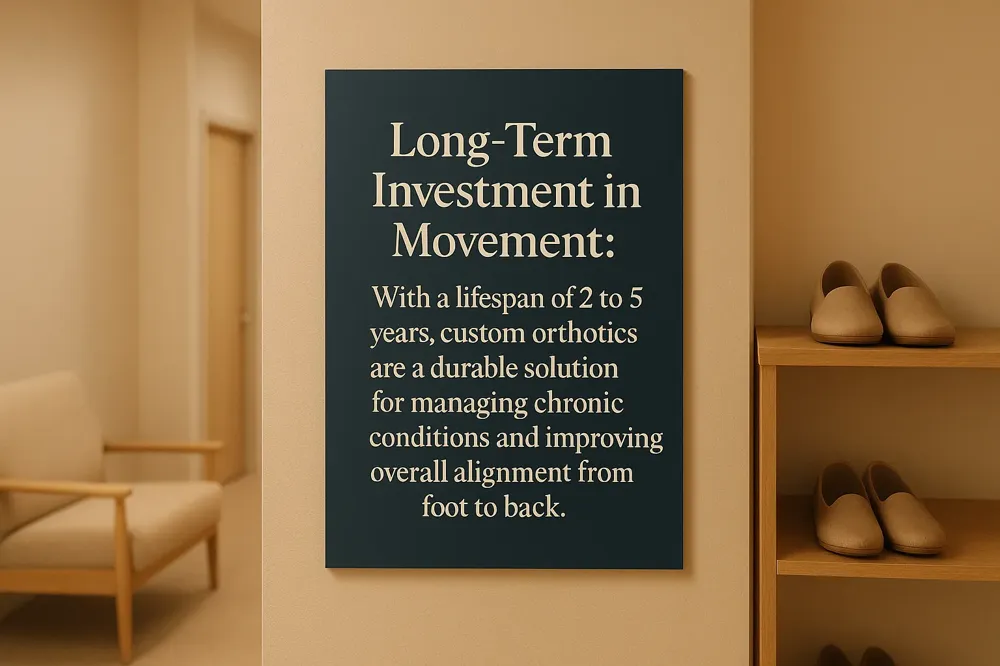
Prescription custom orthotics are a durable investment, typically lasting between 2 to 5 years with proper care. Their longevity depends on several factors:
- Material: Rigid or semi-rigid materials (e.g., graphite, certain plastics) generally last longer than softer, accommodative materials.
- Activity Level: High-impact activities like running can accelerate wear and breakdown.
- Weight Changes: Significant weight loss or gain can alter foot structure and pressure patterns, potentially necessitating a replacement.
- Care: Regular cleaning with mild soap and water and avoiding exposure to extreme heat (like a hot car) can preserve the materials. Podiatrists generally recommend reevaluating orthotics approximately every two years, as walking patterns can change and materials may compress over time, reducing their supportive effectiveness.
Why do my orthotics hurt my arch?
Initial discomfort, especially in the arch, is common and usually temporary. It can take up to a month for your feet and body to adjust to orthotics. This period is necessary because the devices are actively changing your foot's biomechanics and alignment, which your muscles and joints are not accustomed to. The orthotic is providing support where your foot previously had none, which can cause a new sensation. However, persistent or sharp pain is not normal. It may indicate that the orthotic needs a minor adjustment, that the fit is incorrect, or that the prescription is not ideal for your specific structure. If discomfort continues beyond a reasonable break-in period, you should schedule a follow-up with your podiatrist for an evaluation and potential modification.
What should I look for in over-the-counter orthotics?
OTC inserts can be a reasonable first step for mild, occasional foot fatigue or soreness. When selecting them, look for:
- Firm Arch Support: Choose a model with a supportive arch that does not collapse easily when pressed.
- Targeted Design: Select inserts marketed for your specific concern (e.g., "for plantar fasciitis," "for high arches").
- Trimmable Design: Many come "sized to fit" and can be trimmed to match your shoe size for a better fit.
- Quality Materials: Look for durable foam or gel composites.
It is crucial to understand their limits: OTC orthotics are not designed to correct significant biomechanical issues or treat chronic conditions. If pain persists or worsens after 2-4 weeks of use, or if you have a known deformity (like bunions) or a systemic condition like diabetes, discontinue use and consult a podiatrist. The wrong OTC insert can sometimes worsen problems by providing improper support.
Does insurance cover custom orthotics?
Many medical insurance plans provide partial or full coverage for custom orthotics when they are prescribed as medically necessary by a licensed podiatrist or physician. Coverage details vary widely between insurance providers and individual plans. Typically, coverage requires a documented diagnosis of a qualifying foot condition and proof that conservative measures (like OTC inserts) have been unsuccessful. There may be requirements for pre-authorization or specific billing codes. The clinic's administrative staff can often help verify your benefits and navigate the insurance process. It's always advisable to check with your insurance provider directly to understand your plan's specific coverage, deductibles, and copay requirements for durable medical equipment like custom orthotics.
Beyond the Insole: A Deep Dive into Medical-Grade Custom Orthotics
What are custom orthotics?
Custom orthotics are not your average shoe inserts. They are prescription medical devices, designed and manufactured based on a detailed analysis of your individual's unique feet, gait, and needs. Unlike over-the-counter (OTC) insoles, which are mass-produced for general comfort, custom orthotics are crafted from a physical mold, foam impression, or 3D digital scan of your feet.
This precise process ensures they match the exact contours of your arches and heels. Podiatrists typically create two main types of orthotics: functional orthotics, made from semi-rigid materials like graphite to control abnormal foot motion, and accommodative orthotics, made from softer, flexible materials to cushion and protect sensitive or rigid areas.
Do custom orthotics really work?
Yes, medical evidence strongly supports the efficacy of custom orthotics for managing a wide array of musculoskeletal conditions. They work by altering the biomechanics of the foot and lower limb. A primary mechanism is supporting the medial longitudinal arch, which helps mitigate abnormal loading and redistributes pressure away from painful areas.
This correction can alleviate pain not only in the feet but also in the ankles, knees, hips, and lower back by improving overall alignment. Studies show success rates as high as 89% for reducing pain from conditions like plantar fasciitis. While a 2018 study suggested similar short-term pain relief for plantar fasciitis between custom and OTC orthotics, custom devices are uniquely designed for complex biomechanical issues and structural misalignments, offering targeted, long-term management where generic options may fall short.
Do orthotics work for flat feet?
Yes, orthotics are a highly effective, non-surgical treatment for flat feet (pes planus). They work by providing the essential arch support that is naturally lacking, which helps stabilize the foot, correct overpronation, and evenly distribute weight. This support can alleviate pain in the feet, ankles, knees, and lower back, while also preventing secondary issues like tendonitis, bunions, and stress fractures. Custom orthotics, specifically prescribed by a podiatrist after a thorough gait analysis, offer a precise fit that maximizes comfort and biomechanical correction for long-term relief.
How long do custom orthotics last?
Prescription custom orthotics are a durable investment, typically lasting between 2 to 5 years with proper care. Their lifespan depends on several key factors. The material plays a major role; rigid or semi-rigid materials like graphite often last longer than softer ones. Your activity level is also critical—high-impact sports like running can accelerate wear.
Significant weight changes (gain or loss of 15-20 pounds) may alter your foot structure, necessitating a replacement. Finally, proper maintenance, such as regular cleaning and avoiding exposure to extreme heat, can help extend their functional life. Most providers recommend a re-evaluation every couple of years to ensure they continue to meet your needs.
Why do my orthotics hurt my arch?
Initial discomfort when breaking in new orthotics is common and usually temporary. It can take up to a month for your feet and body to adapt to the changed biomechanics and new support points. This adjustment period is normal as muscles and tendons acclimatize.
However, persistent or sharp pain is not normal and indicates a potential issue. The orthotic may not be correctly fitted to your arch height, or the support may be too aggressive for your current condition. It could also be rubbing or creating a pressure point. If discomfort lasts beyond a few weeks of gradual wear, schedule a follow-up with your podiatrist. They can make precise adjustments to the device to improve comfort and effectiveness.
What conditions are orthotics used to treat?
Custom orthotics have a broad therapeutic scope, addressing both acute and chronic conditions. They are commonly prescribed for:
- Heel and Arch Pain: Plantar fasciitis, heel spurs, heel pain.
- Foot Deformities and Structural Issues: Flat feet (pes planus), high arches (pes cavus), bunions, hammertoes.
- Tendon and Ligament Disorders: Achilles tendinopathy, posterior tibial tendon dysfunction (PTTD), tendonitis, ankle instability, and sprains.
- Arthritic and Degenerative Conditions: Osteoarthritis, rheumatoid arthritis affecting the foot and ankle.
- Neurological and High-Risk Conditions: Diabetic foot care to offload pressure and prevent ulcers, neuropathic pain.
- Overuse and Sports Injuries: Shin splints, metatarsalgia (ball of foot pain), stress fractures, patellofemoral pain syndrome (runner's knee).
What are the best orthotics for plantar fasciitis?
For plantar fasciitis, the most effective orthotics are those that provide targeted medial arch support and heel cushioning. The goal is to reduce strain on the inflamed plantar fascia ligament. Custom functional orthotics are often considered the gold standard, especially for cases combined with structural misalignments like flat feet or high arches.
These devices are designed to control overpronation, augment the midfoot contact area, and redistribute force away from the painful heel. While some patients find relief with high-quality OTC arch supports, a podiatrist can determine if a custom device is necessary based on the severity of your condition and your individual biomechanics.
What should I look for in over-the-counter orthotics?
OTC insoles can be a reasonable first step for mild, occasional aches or fatigue. When selecting them, look for a firm arch support that does not collapse easily under pressure. Ensure they are the correct size for your shoe and foot length—many are designed to be trimmed to fit.
Consider your specific need: a deep heel cup for cushioning, a metatarsal pad for ball-of-foot pain, or a full-length insole for overall support. Materials like medical-grade EVA foam offer a good balance of cushioning and durability. Remember, OTC options are for general comfort and symptom management; they are not designed to correct underlying biomechanical problems.
Does insurance cover custom orthotics?
Coverage for custom orthotics varies significantly between insurance providers and individual plans. Many medical insurance policies do provide partial or full coverage when the devices are deemed medically necessary by a physician for treating a diagnosed condition, such as plantar fasciitis, diabetic neuropathy, or posterior tibial tendon dysfunction (PTTD).
Coverage often depends on your plan's durable medical equipment (DME) benefits. It is crucial to contact your insurance company before proceeding to understand your specific benefits, any required pre-authorization, and which providers and laboratories are in-network. Our clinic staff can assist you in verifying your benefits and navigating the insurance process.
| Topic Addressed | Core Function | Key Consideration |
|---|---|---|
| Custom vs. OTC Orthotics | Precision correction vs. general comfort. | Severity and cause of symptoms. |
| Treatment for Flat Feet | Provides absent arch support, corrects gait. | Custom fit required for optimal biomechanics. |
| Durability & Lifespan | Lasts 2-5 years with proper care. | Affected by material, activity, weight changes. |
| Adjustment Period | Up to 1 month for body to adapt. | Persistent pain requires professional adjustment. |
| Plantar Fasciitis Relief | Targets arch support & heel pressure. | Custom often best for misaligned foot structures. |
| Insurance Coverage | Often covered if medically necessary. | Requires pre-verification with your provider. |
Beyond the Insole: A Deep Dive into Medical-Grade Custom Orthotics
What are custom orthotics?
custom orthotics are prescription medical devices, not simple shoe inserts. They are individually designed by a podiatrist based on a detailed assessment by a podiatrist of your individual's unique feet, gait, and needs, gait pattern, and specific medical condition. Unlike mass-produced, over-the-counter (OTC) products, they are crafted using methods like 3D digital scanning for orthotic fabrication or plaster molds to create a precise contour match for your feet. Their primary functions are to correcting misalignments, redistributing pressure, and provide targeted support where your feet need it most.
Do custom orthotics really work?
Yes, research and clinical practice confirm their effectiveness for managing a wide range of foot and ankle conditions. They work by modifying how forces are distributed across your feet and lower limbs during standing and walking. This can reduce strain on muscles, tendons, and ligaments. For common issues like plantar fasciitis, studies show orthotic interventions have a high success rate in reducing pain. They are a proven component of conservative care, often helping to delay or prevent the need for more invasive treatments like surgery.
What conditions are orthotics used to treat?
custom orthotics have broad therapeutic applications. They are commonly prescribed for:
- Structural Issues: Flat feet (pes planus), high arches (pes cavus).
- Pain Syndromes: Plantar fasciitis, heel pain, metatarsalgia (ball of foot pain), Achilles tendinopathy.
- Deformities: Bunions, hammertoes.
- Arthritic Conditions: Osteoarthritis and rheumatoid arthritis in the foot and ankle.
- Tendon Disorders: Posterior tibial tendon dysfunction.
- Injury Prevention & Recovery: Ankle sprains, sports injuries, and post-surgical rehabilitation.
- Systemic Conditions: Diabetic foot care to offload pressure and prevent ulcers. Importantly, by correcting foot alignment, orthotics can also alleviate associated pain in the knees, hips, and lower back.
Do orthotics work for flat feet?
For flexible flat feet (where the arch collapses upon weight-bearing), orthotics are a cornerstone of treatment. They work by providing the medial longitudinal arch support that is lacking. This support helps reposition the foot, reduce excessive inward rolling (overpronation), and improve overall foot mechanics. For individuals with rigid, non-flexible flat feet, accommodative orthotics made from softer materials are used to provide cushioning and better pressure distribution, which can significantly reduce discomfort.
What are the best orthotics for plantar fasciitis?
The best orthotics for plantar fasciitis are those that provide firm, structured arch support and a deep heel cup to stabilize the foot and reduce tension on the plantar fascia ligament. While over-the-counter orthotics, like certain models designed for plantar fasciitis, can offer accessible temporary relief, they are generic. For superior, long-term correction, custom orthotics prescribed by a podiatrist are ideal, as they are precisely tailored to your foot's anatomy, gait, and specific condition. A professional evaluation is crucial to determine if you need prefabricated or custom devices, and to rule out other issues. Ultimately, the most effective orthotic is one that addresses your individual biomechanical needs to provide lasting pain relief and prevent recurrence.
What should I look for in over-the-counter orthotics?
over-the-counter orthotics can be a reasonable first step for mild, occasional discomfort. Look for products with a firm arch that does not collapse easily under pressure. They should also have adequate heel cushioning. It is important to understand their limitations: they offer general comfort and cushioning but are not designed to correct underlying biomechanical problems or provide a precise, individualized fit. If your pain is chronic, severe, or linked to a diagnosed condition, OTC inserts are unlikely to provide a complete solution and may even delay effective treatment.
Why do my orthotics hurt my arch?
Initial discomfort, especially in the arch area, is common and often part of the orthotics adjustment period. Orthotics change your foot's biomechanics, and it can take your muscles and joints several weeks to adapt. If the pain is sharp, persistent, or worsening, it may indicate an improper fit or design. The orthotic might be too rigid, have too high an arch, or not be aligned correctly for your foot. This underscores the importance of follow-up appointments with your podiatrist, who can make precise adjustments to ensure comfort and effectiveness.
How long do custom orthotics last?
With proper care, prescription custom orthotics are a durable, long-term investment, typically lasting between 2 to 5 years. Their lifespan depends on several factors:
| Factor | Impact on Longevity |
|---|---|
| Material | Rigid materials (graphite, certain plastics) often last longer than very soft foams. |
| Activity Level | High-impact sports like running can cause materials to break down faster. |
| Weight Changes | Significant weight gain or loss can alter foot shape, necessitating replacement. |
| Footwear & Care | Proper cleaning and avoiding extreme heat (like a hot car) preserves materials. |
It's recommended to have your orthotics and your foot health evaluated periodically by your podiatrist, as your needs may change over time.
Does insurance cover custom orthotics?
Many medical insurance plans provide partial or full coverage for custom orthotics when they are deemed medically necessary and prescribed by a licensed podiatrist or physician. Coverage details, including deductibles, co-pays, and pre-authorization requirements, vary significantly between insurance providers and individual plans. Our clinic team can assist you in verifying your specific benefits and navigating the insurance process to understand your potential out-of-pocket costs.
Beyond the Insole: A Deep Dive into Medical-Grade Custom Orthotics
What are custom orthotics?
Custom orthotics are not standard shoe inserts. They are prescription-grade medical devices, meticulously designed by a podiatrist to fit the unique three-dimensional contours of your foot. The process involves a detailed assessment of your foot structure, gait pattern, and specific symptoms. Podiatrists use advanced methods like 3D foot scans, foam impressions, or plaster molds to capture your foot's exact shape. This data is used to craft an orthotic from medical-grade materials, creating a device that functions as a foundation for proper body mechanics.
What conditions are orthotics used to treat?
Custom orthotics are a versatile, non-surgical treatment prescribed to manage a wide range of foot and ankle conditions. They are specifically used to treat structural issues like flat feet (pes planus) and high arches, as well as painful inflammatory conditions such as plantar fasciitis, tendonitis (including Achilles tendonitis), arthritis, and metatarsalgia. Orthotics are also effective for deformities like bunions and hammertoes, and they help address biomechanical problems that lead to calluses, corns, and stress fractures. Furthermore, they play a key role in injury recovery, chronic condition management (like diabetic foot care), and injury prevention for athletes. By correcting alignment, distributing pressure, and providing stabilization, custom orthotics improve overall foot function and alleviate pain.
Do custom orthotics really work?
Yes, clinical evidence and extensive practical application support their effectiveness. While a single study on plantar fasciitis suggests similar short-term pain relief from custom and over-the-counter versions, it's one piece of a larger clinical picture. Custom orthotics are designed for complex, structural problems where generic options fall short. They are shown to be highly effective for specific conditions, such as an 89% success rate for reducing plantar fasciitis pain and a 77% rate for managing early-stage Posterior Tibial Tendon Dysfunction. Their real-world value lies in providing targeted, long-term biomechanical correction that off-the-shelf products cannot match.
What are the best orthotics for plantar fasciitis?
The most effective orthotics for plantar fasciitis are those that provide precise medial arch support and increase the midfoot's contact area. This redistributes force away from the strained plantar fascia tissue at the heel. A podiatrist will typically prescribe a functional orthotic made from semi-rigid materials like graphite or medical-grade plastic. This type controls abnormal foot motion (overpronation) that exacerbates the condition. For individuals with concurrent structural issues, such as severe flat feet or high arches, a custom-molded orthotic is essential for optimal, long-lasting relief.
Do orthotics work for flat feet?
Orthotics are a primary conservative treatment for flat feet. They do not rebuild a lost arch but instead provide the crucial support the arch lacks. A custom orthotic for flat feet is designed to re-establish the medial longitudinal arch, which helps reposition the foot and ankle bones. This realignment reduces strain on muscles and tendons, alleviates pain, improves stability, and can prevent secondary problems like overpronation, shin splints, and knee pain. The goal is to make the foot function as if it had a natural arch.
How long do custom orthotics last?
Prescription custom orthotics are a durable investment, typically lasting between two to five years. Their lifespan depends on several factors. The materials used are a primary consideration; rigid graphite or plastic lasts longer than softer accommodative foams. Your activity level also matters; high-impact sports can accelerate wear. Significant changes in weight or foot structure may necessitate an earlier replacement. With proper care—regular cleaning and avoiding exposure to extreme heat—you can maximize their longevity.
| Common Foot Conditions | Primary Orthotic Goal | Typical Orthotic Type |
|---|---|---|
| Plantar Fasciitis | Provide arch support, redistribute heel pressure | Functional / Semi-rigid |
| Flat Feet (Pes Planus) | Re-establish arch, control overpronation | Functional / Semi-rigid |
| High Arches (Pes Cavus) | Cushion arch, distribute weight evenly | Accommodative / Soft |
| Bunions & Hammertoes | Realign foot, reduce pressure on toes | Combination of support & cushioning |
| Diabetic Foot Care | Offload high-pressure areas, prevent ulcers | Accommodative / Multi-density |
| Arthritis | Cushion joints, limit painful motion | Varies by joint (accommodative or functional) |
| Sports Injuries | Correct biomechanics, absorb shock, prevent re-injury | Functional / Semi-rigid for athletes |
Why do my orthotics hurt my arch?
Initial discomfort is common and usually temporary. Custom orthotics change your foot's biomechanics, and your muscles and ligaments need time to adapt—an adjustment period of up to a month is normal. However, persistent arch pain often indicates a fit issue. The orthotic may be too aggressively supporting an area, or it may not be seated properly in your shoe. This underscores the importance of follow-up visits with your podiatrist. They can make precise adjustments, such as grinding down a pressure point, to ensure comfort and effectiveness.
What should I look for in over-the-counter orthotics?
Over-the-counter (OTC) inserts are suitable for mild, general comfort or temporary relief from daily fatigue. When selecting them, prioritize a firm arch support that does not collapse easily under pressure. Look for durable cushioning materials like medical-grade EVA foam. Choose a style that fits your primary concern—be it heel cushioning, arch support, or forefoot padding. Remember, OTC options are generic; they offer cushioning but do not correct underlying biomechanical faults. If your pain is chronic or stems from a diagnosed condition, OTC inserts will likely be insufficient.
Does insurance cover custom orthotics?
Coverage varies widely by insurance plan. Many medical insurance plans provide partial or full coverage for custom orthotics when they are deemed medically necessary by a podiatrist for a diagnosed condition. The prescription and documentation of medical need are critical. It is always advisable to contact your insurance provider directly before beginning treatment to understand your specific benefits, any required co-pays, and whether pre-authorization is needed. Your podiatry clinic can often assist with this verification process.
Beyond the Insole: A Deep Dive into Medical-Grade Custom Orthotics
What are custom orthotics?
Custom orthotics are prescription medical devices, distinct from generic shoe inserts. They are custom orthotics tailored to a patient's foot shape for an individual's unique feet, gait, and needs. A podiatrist conducts a detailed assessment, which may involve plaster molds, foam impressions, or advanced 3D digital scanning for orthotic fabrication. The orthotics are then fabricated in a laboratory using high-quality materials to achieve a precise, perfect fit and support.
This personalized process aims to correct biomechanical issues, such as overpronation or high arches, by realigning the foot and ankle. Unlike over-the-counter products designed for general comfort, custom orthotics are therapeutic tools intended to redistribute pressure and correct misalignments, provide targeted support, and improve overall foot function.
Do custom orthotics really work?
Research and clinical practice support the effectiveness of custom orthotics for many conditions. They are a well-established component of conservative, non-surgical care. Studies indicate high success rates for specific issues, such as an 89% rate for reducing pain from plantar fasciitis and a 77% rate for managing early-stage posterior tibial tendon dysfunction.
They work by modifying how force travels through the lower limbs. By supporting the medial longitudinal arch and correcting alignment, orthotics can alleviate abnormal loading that causes pain not only in the feet but also in the ankles, knees, hips, and lower back. It is important to note that they manage symptoms and correct function rather than cure the underlying condition. Permanent use is often recommended to maintain benefits.
Do orthotics work for flat feet?
Yes, custom orthotics are a primary conservative treatment for flat feet (pes planus). Flat feet often involve overpronation, where the arch collapses inward excessively. This can strain the posterior tibial tendon and lead to pain up the kinetic chain.
Custom functional orthotics are designed to provide the precise arch support a flat foot lacks. They help reposition the foot, control excessive motion, and redistribute pressure. This support can reduce pain, improve stability, and prevent the progression of associated problems. While some research notes a lack of definitive evidence for all adult cases, they are widely prescribed and are not considered harmful, often providing significant subjective relief and functional improvement.
How long do custom orthotics last?
Prescription custom orthotics are a durable investment, typically lasting between 2 to 5 years, significantly longer than over-the-counter inserts. Their lifespan depends on several factors:
- Material: Rigid materials like graphite or certain plastics often last longer than softer, accommodative materials.
- Activity Level: High-impact activities like running can accelerate wear and tear.
- Weight Changes: Significant weight gain or loss can alter foot mechanics and fit, necessitating replacement.
- Care: Proper cleaning and avoiding extreme temperatures (like leaving them in a hot car) can extend their life.
Regular check-ups with your podiatrist are advisable, as they can assess wear and determine if a replacement or adjustment is needed, usually every couple of years.
Why do my orthotics hurt my arch?
Initial discomfort, including arch pain, is common and usually temporary. Custom orthotics change your foot's biomechanics, and your muscles, tendons, and ligaments need time—often up to a month—to adapt to the new, correct alignment. This adjustment period is normal.
However, persistent or sharp pain is not. It could indicate an improper fit, an incorrect prescription for your condition, or that the orthotics need a minor adjustment. It is crucial to communicate any ongoing discomfort with your podiatrist. They can make precise modifications to ensure the device provides support without causing new areas of pressure or pain.
What conditions are orthotics used to treat?
Custom orthotics have a broad therapeutic scope, addressing both common and complex foot and ankle issues. They are frequently prescribed for:
- Structural Issues: Flat feet, high arches, bunions, hammertoes.
- Soft Tissue & Inflammatory Conditions: Plantar fasciitis, Achilles tendinopathy, posterior tibial tendon dysfunction, various forms of tendonitis.
- Arthritic Pain: Osteoarthritis and rheumatoid arthritis in the foot and ankle joints.
- Neurological & Systemic Conditions: Diabetic foot care, neuropathic ulcers, Charcot foot.
- Injury Prevention & Recovery: Ankle instability, recurrent sprains, and as part of rehabilitation after lower limb injuries or surgeries.
Their role extends beyond the foot, often helping to alleviate knee, hip, and lower back pain caused by poor lower limb alignment.
What are the best orthotics for plantar fasciitis?
For plantar fasciitis, the most effective orthotics provide firm medial arch support and a deep heel cup. This combination helps offload tension on the inflamed plantar fascia ligament by redistributing pressure away from the heel and supporting the arch to prevent over-stretching.
Custom functional orthotics, made from semi-rigid materials, are considered the gold standard, especially for cases involving concurrent structural misalignments like flat or high arches. They are crafted to control foot motion precisely. While some patients may find relief with high-quality over-the-counter arch supports, custom devices offer targeted correction based on a podiatrist's assessment of your specific gait and foot structure, leading to more reliable and long-term management of the condition.
What should I look for in over-the-counter orthotics?
When selecting over-the-counter orthotics, prioritize firm, contoured arch support and a deep heel cup for stability, rather than purely cushy inserts. Match the orthotic to your specific activity or discomfort; for example, choose metatarsal support for forefoot pain or shock-absorbing heel pads for heel pain. Ensure the insert is made of durable materials that maintain structure under pressure. It's crucial to remember these are best for mild, temporary relief and cannot correct serious biomechanical issues. For persistent pain, uneven shoe wear, or conditions like plantar fasciitis, consult a podiatrist to explore custom orthotics, which provide targeted correction and long-term solutions.
Does insurance cover custom orthotics?
Coverage for custom orthotics varies significantly between insurance providers and individual plans. Many medical insurance plans, including Medicare, may provide partial or full coverage if the orthotics are deemed medically necessary and prescribed by a licensed podiatrist or physician for a diagnosed condition.
The key is "medical necessity." Coverage is more likely for conditions like diabetic foot complications, significant arthritis, or post-surgical rehabilitation than for general comfort. It is essential to contact your insurance company beforehand to verify your benefits, understand any prerequisites (like prior authorization), and learn about your financial responsibility for co-pays or deductibles. Your podiatry clinic can often assist with this verification and billing process.
A Comparison of Foot Support Options
| Feature | Over-the-Counter (OTC) Inserts | Custom Orthotics |
|---|---|---|
| Design & Fit | Mass-produced, generic sizes. | Tailored from a 3D scan or mold of your foot. |
| Support Level | General cushioning or mild arch support. | Targeted correction for biomechanical issues. |
| Primary Purpose | Temporary comfort, mild symptom relief. | Long-term management of chronic conditions. |
| Durability | Several months, materials break down. | 2-5 years with proper care. |
| Medical Oversight | Self-selected, no prescription needed. | Prescribed after podiatric assessment. |
| Best For | Occasional aches, trying basic support. | Persistent pain, diagnosed deformities, injury prevention. |
| Cost Consideration | Lower upfront cost. | Higher initial investment; often insurance-eligible. |
Beyond the Insole: A Deep Dive into Medical-Grade Custom Orthotics
What are custom orthotics?
Custom orthotics are prescription medical devices, specifically designed for an individual's unique feet, gait, and needs. Unlike generic, over-the-counter insoles, they are crafted based on a detailed assessment by a podiatrist. This process often involves advanced techniques like 3D digital scanning for orthotic fabrication or plaster molds to create a precise map of your feet. The result is an insert that redistributes pressure, correcting misalignments, and supports the foot's complex structure with 26 bones, 33 joints, and over 100 muscles, tendons, and ligaments to help feet function properly and promote comfort.
Do custom orthotics really work?
For a wide range of conditions, custom orthotics are a clinically supported and effective component of conservative care. They work by modifying how forces travel through the lower limbs, providing targeted support to alleviate pain and improve function. Research and clinical experience show high success rates for specific issues; for example, one review noted an 89% success rate in reducing pain from plantar fasciitis. They are particularly effective for correcting poor foot mechanics like overpronation or for offloading pressure in sensitive areas, which generic inserts cannot achieve. While one study suggested comparable short-term relief for plantar fasciitis with both custom and over-the-counter options, custom orthotics are uniquely suited for complex, chronic, or structural foot conditions where precise correction is needed.
What conditions are orthotics used to treat?
Custom orthotics have broad therapeutic applicability, addressing both localized foot pain and issues stemming from poor alignment. They are commonly prescribed for:
- Common Foot Disorders: Plantar fasciitis, flat feet, high arches, heel spurs, and Achilles tendinopathy.
- Structural Deformities: Bunions, hammertoes, and metatarsalgia (forefoot pain).
- Arthritic and Inflammatory Conditions: Osteoarthritis, rheumatoid arthritis, and posterior tibial tendon dysfunction (PTTD).
- Injury Prevention & Management: Recurrent ankle sprains, shin splints, and stress fractures.
- Systemic Health Concerns: Diabetic foot care to offload pressure and prevent ulcers, and pain in the foot, ankle, knee, hip, or lower back linked to foot mechanics.
What are the best orthotics for plantar fasciitis?
For plantar fasciitis, the most effective orthotics are those that provide firm medial arch support and cushioning to redistribute force away from the inflamed heel. Custom orthotics for plantar fasciitis, made from semi-rigid materials like graphite or plastic, are often recommended. They work by controlling excessive foot motion, augmenting the midfoot contact area, and reducing strain on the plantar fascia. In some cases, especially when plantar fasciitis coexists with significant flat feet or high arches, custom orthotics are needed for optimal outcomes. The primary goal is to provide consistent support to the arch, thereby alleviating the tension on the fascia with every step.
Do orthotics work for flat feet?
Yes, orthotics are a cornerstone of conservative management for flat feet (pes planus). The objective is to provide the arch support that the foot's natural structure lacks. Custom orthotics for flat feet are designed to support the medial longitudinal arch, which helps reposition the foot, reduce strain on overstretched tendons, and improve foot mechanics and gait. By controlling overpronation—the excessive inward rolling of the foot—they can alleviate foot fatigue, prevent secondary issues like bunions, and reduce stress on the knees and hips. While research on their absolute effectiveness for adult flat feet shows variable evidence, they are widely used and do not cause harm, often providing significant symptomatic relief.
Why do my orthotics hurt my arch?
Initial discomfort, especially in the arch, is common and usually temporary. Orthotics work by changing your foot's biomechanics, introducing support where your muscles and ligaments may have been underworking. This unfamiliar sensation can feel like pressure or ache. An adjustment period of up to one month is typical as your body adapts. However, persistent or sharp pain may indicate a fit issue. The orthotic might be too rigid, have an incorrectly placed arch apex, or not accommodate a rigid deformity. It is crucial not to ignore ongoing pain and to schedule a follow-up with your podiatrist. They can make precise adjustments to the device to ensure it provides support without causing irritation.
What should I look for in over-the-counter orthotics?
Over-the-counter (OTC) insoles can be a reasonable first step for mild, occasional discomfort. When selecting them, look for a firm arch support that does not collapse easily under pressure. Choose a product designed for your specific concern, such as arch type (flat feet or high arches or condition (like heel cushioning for plantar fasciitis. Ensure they are the correct size and can be trimmed to fit your shoes without crowding your toes. Remember, OTC options offer general cushioning and mild support but are not designed to correct significant biomechanical issues. If your pain is chronic, severe, or linked to a diagnosed condition, they will likely be insufficient, and a professional evaluation is recommended.
How long do custom orthotics last?
High-quality custom orthotics are a durable, long-term investment, typically lasting between 3 to 5 years with regular daily use. This lifespan significantly exceeds that of over-the-counter options, which often wear out in a few months. The exact duration depends on several key factors: the construction material, with rigid graphite or plastic orthotics outlasting softer ones; your body weight and activity level, as higher impact increases wear; and whether you rotate multiple pairs to distribute strain. Importantly, your feet and biomechanics can change over time, so an orthotic that fits perfectly today may need adjustment or replacement later, even if it's not physically worn out. We recommend annual check-ups to assess your orthotics and gait, ensuring they remain effective and to address any discomfort proactively.
Does insurance cover custom orthotics?
Yes, many insurance plans do cover custom orthotics when they are prescribed as medically necessary for a diagnosed podiatric condition, such as plantar fasciitis, flat feet, or diabetes foot complications. However, coverage varies significantly between plans, with some requiring pre-authorization or applying specific limitations. The process typically involves a clinical evaluation by a podiatrist, a formal prescription, and detailed documentation to justify medical necessity. As a professional clinic, we assist patients by verifying their specific insurance benefits and handling the required billing and pre-authorization paperwork. It's important to consult with your provider, as plans that do cover orthotics often apply them to your deductible or require a co-insurance payment.
| Topic Covered | Primary Function | Common Conditions Addressed | Typical Material Types |
|---|---|---|---|
| Custom Orthotics | Correct biomechanics, redistribute pressure | Plantar fasciitis, flat feet, arthritis, bunions | Graphite, plastic, multi-density foam |
| Over-the-Counter Insoles | Provide general cushioning, mild support | Occasional aches, mild foot fatigue | Gel, memory foam, basic arch support |
| Functional Orthotics | Control foot motion, improve alignment | Overpronation, gait abnormalities, shin splints | Semi-rigid (plastic, graphite) |
| Accommodative Orthotics | Cushion sensitive areas, offload pressure | Diabetic ulcers, rigid deformities, arthritis | Soft, flexible foams |
| Key Consideration | For Custom Orthotics | For Over-the-Counter Insoles |
|---|---|---|
| Medical Necessity | Prescribed for diagnosed conditions | Used for general comfort & mild symptoms |
| Fit & Design | Tailored from foot scan/mold | Generic sizes, often trimmable |
| Durability | 3-5 years with proper care | Several months to a year |
| Primary Benefit | Corrects underlying biomechanical issues | Provides temporary cushioning & relief |
| Professional Input | Requires podiatrist evaluation & fitting | Self-selected based on packaging |
| Cost & Insurance | Higher upfront cost, often covered by insurance | Lower cost, rarely covered by insurance |
Beyond the Insole: A Deep Dive into Medical-Grade Custom Orthotics
What are custom orthotics?
Custom orthotics are prescription medical devices created by a podiatrist after a comprehensive assessment by a podiatrist of your individual's unique feet, gait, and needs. Unlike over-the-counter orthotics (OTC) shoe inserts found in stores, custom orthotics are not mass-produced. They are designed using methods like 3D digital scanning for orthotic fabrication or plaster molds to precisely match the unique contours of your feet. This ensures they work with your foot's natural movement, providing targeted support and cushioning where it is needed most.
Do custom orthotics really work?
Clinical evidence supports the effectiveness of custom orthotics for many conditions. A review in the British Journal of Sports Medicine noted they are no more effective than OTC versions for some cases of plantar fasciitis, but numerous other studies highlight high success rates. For instance, research indicates an 89 percent success rate in reducing plantar fasciitis pain. They work by correcting poor foot mechanics and redistributing pressure and correcting misalignments. This leads to pain relief for foot conditions in the feet, knees, hips, and back, while also enhancing stability and preventing falls. Their real-world effectiveness stems from being tailored to a patient's foot shape to address the root biomechanical causes of your discomfort.
Do orthotics work for flat feet?
Yes, custom orthotics are a primary conservative treatment for flat feet (pes planus). For this condition, orthotics work by creating a supportive medial arch. This support for flat feet helps improve weight distribution, reduces strain on muscles and tendons, and improves overall foot stability. By controlling excessive inward rolling (overpronation), orthotics can alleviate pain in the feet, ankles, and knees associated with flat arches and help prevent further complications. It's important to note that while research on adult flat feet shows a lack of clear evidence, orthotics are widely recognized as not causing harm and are a cornerstone of functional management.
What conditions are orthotics used to treat?
Custom orthotics are prescribed for a wide spectrum of foot and lower limb disorders. They are a key part of a comprehensive treatment plan for:
- Inflammatory Conditions: Plantar fasciitis, Achilles tendinitis, bursitis
- Structural Deformities: Flat feet, high arches (pes cavus), bunions, hammertoes
- Arthritic Pain: Osteoarthritis, rheumatoid arthritis affecting the foot and ankle
- Overuse & Sports Injuries: Shin splints, metatarsalgia, patellofemoral pain (runner's knee), recurrent ankle sprains
- Neurological & Systemic Concerns: Diabetic foot ulcers, Charcot foot, posterior tibial tendon dysfunction Their primary goals are to mitigate pain, enhance mobility and pain relief, improve foot alignment, and prevent the progression of deformities or the need for surgery.
What are the best orthotics for plantar fasciitis?
For plantar fasciitis, the most effective orthotics provide robust medial arch support to reduce strain on the plantar fascia and redistribute pressure away from the painful heel. Custom orthotics are often recommended, especially if you have concurrent structural issues like very high or flat arches. They are typically categorized as:
- Functional Orthotics: Made from semi-rigid materials like graphite or plastic, these are designed to control abnormal foot motion and provide sustained arch support.
- Accommodative Orthotics: Made from softer, flexible materials, these focus on cushioning and pressure relief. Your podiatrist will determine the best type and material based on the severity of your condition, your activity level, and your specific foot structure. It is important to understand the functional vs accommodative orthotics differences.
How long do custom orthotics last?
With proper care, prescription custom orthotics are durable and long-lasting and can last between 2 to 5 years. Their longevity depends on several key factors:
- Material: Rigid custom orthotics generally last longer than softer foams.
- Activity Level: High-impact activities like running can accelerate wear.
- Weight Changes: Significant weight gain or loss can alter your foot shape, necessitating replacement.
- Maintenance: Regular cleaning and avoiding exposure to extreme heat or moisture can extend their lifespan. Podiatrists typically recommend an evaluation every couple of years to assess their condition and effectiveness.
Why do my orthotics hurt my arch?
Initial mild arch discomfort is normal as your feet and body adapt to the new, corrected alignment—an adjustment period that can last up to a month. However, persistent or sharp pain is a sign that the orthotics may not be fitting correctly. Common reasons include:
- Improper Fit: OTC inserts or poorly fitted customs can place pressure on the wrong part of your arch.
- Excessive Rigidity: An orthotic that is too hard for your foot type can cause pressure points.
- Incorrect Prescription: The arch contour or posting may not match your specific biomechanical needs. If you experience significant pain, schedule a follow-up with your podiatrist for an adjustment. Properly fitted orthotics should provide support without causing pain.
What should I look for in over-the-counter orthotics?
Over-the-counter orthotics can be a reasonable first step for mild, occasional discomfort or fatigue. When selecting them, look for:
- Firm Arch Support: Choose an insert with an arch that does not collapse easily under pressure.
- Adequate Cushioning: Good shock absorption, especially in the heel and ball of the foot.
- Appropriate Sizing: Inserts that can be trimmed to fit your shoe size accurately.
- Activity-Specific Design: Options made for running, walking, or work boots. Remember, OTC orthotics are designed for general comfort and temporary symptom relief. They are not intended to correct underlying biomechanical issues or treat chronic conditions.
Does insurance cover custom orthotics?
Many health insurance plans provide partial or full coverage for custom orthotics when they are medically necessary and prescribed by a doctor for a diagnosed condition. Coverage details, including deductibles, co-pays, and pre-authorization requirements, vary significantly between insurance providers and individual plans. It is essential to contact your insurance company directly and consult with your podiatrist's office to understand your specific benefits and any required documentation before proceeding with treatment.
| Aspect | Custom Orthotics | Over-the-Counter (OTC) Inserts |
|---|---|---|
| Design & Fit | Tailored from a 3D scan or mold of your foot; precise fit. | Mass-produced in generic sizes; may require trimming. |
| Purpose | Correct biomechanical issues, treat medical conditions, prevent injury. | Provide general comfort, mild cushioning for temporary relief. |
| Durability | High-quality materials; typically last 2-5 years with care. | Lower-cost materials; often wear out in several months. |
| Prescription | Required; based on a podiatrist's assessment, gait analysis, and diagnosis. | Not required; purchased directly by consumer. |
| Cost & Coverage | Higher upfront cost; often partially covered by medical insurance. | Low cost; rarely covered by insurance. |
| Effectiveness | Addresses root causes; effective for chronic pain and structural problems. | Masks symptoms; limited efficacy for complex conditions. |
Beyond the Insole: A Deep Dive into Medical-Grade Custom Orthotics
What Are Custom Orthotics?
Custom orthotics are prescription medical devices created specifically for an individual's unique foot shape, gait, and health needs. They are crafted from a 3D scan, plaster mold, or foam impression of your feet. Unlike generic over-the-counter insoles, they are prescribed by a podiatrist following a detailed assessment. Their design corrects biomechanical issues by redistributing pressure, aligning structures, and supporting the foot's natural arches.
What Conditions Are Orthotics Used to Treat?
Custom orthotics are a cornerstone of conservative care for many foot, ankle, and lower body conditions. They manage pain and improve function for a wide range of issues.
| Primary Foot Condition | Related Joint Pain | Specific Therapeutic Goal |
|---|---|---|
| Plantar Fasciitis | Heel, Arch | Redistribute force, support medial arch |
| Flat Feet (Pes Planus) | Ankles, Knees | Create arch support, control overpronation |
| High Arches (Pes Cavus) | Ball of Foot | Provide cushioning, distribute weight evenly |
| Bunions & Hammertoes | Toes | Offload pressure, improve alignment |
| Achilles Tendinopathy | Calf, Heel | Reduce tendon strain, correct pronation |
| Arthritis (Foot/Ankle) | Various Joints | Mitigate pain, improve gait, delay surgery |
| Posterior Tibial Tendon Dysfunction | Ankle, Arch | Restore arch, manage flatfoot progression |
| Diabetic Foot Concerns | N/A | Offload high-pressure areas, prevent ulcers |
They also address pain originating from the feet that radiates to the knees, hips, and lower back by correcting alignment throughout the kinetic chain.
Do Custom Orthotics Really Work?
Clinical evidence supports the effectiveness of custom orthotics for specific conditions, though results can vary. For common issues like plantar fasciitis, studies show custom devices can be highly effective, with one review noting an 89% success rate in reducing pain. They work by modifying how force travels through the foot, which alleviates strain on painful structures.
It's important to understand that orthotics are a management tool, not a cure. They control symptoms and correct biomechanics. If they work, long-term use is typically recommended, as stopping can cause symptoms to return. A proper break-in period of up to one month is normal as your body adjusts to the new alignment.
What Are the Best Orthotics for Plantar Fasciitis?
For plantar fasciitis, the most effective orthotics provide firm medial (arch) support to reduce tension on the plantar fascia ligament. They often feature a deep heel cup to stabilize and cushion the heel. Podiatrists typically recommend one of two types:
- Functional Orthotics: Made from semi-rigid materials like graphite or plastic. These control foot motion, prevent overpronation, and are ideal when poor biomechanics are a primary cause.
- Accommodative Orthotics: Made from softer, flexible materials. These offer cushioning to relieve direct pressure on the inflamed heel and are suitable for sensitive feet or fixed deformities.
The best choice depends on your specific foot structure and gait, which is determined during a clinical evaluation.
Do Orthotics Work for Flat Feet?
Yes, orthotics are a primary conservative treatment for flat feet (pes planus). They work by providing the arch support that is lacking, which helps reposition the foot, control excessive inward rolling (overpronation), and reduce strain on muscles, tendons, and ligaments. This support can alleviate foot fatigue, arch pain, and associated discomfort in the ankles and knees. The goal is to improve foot mechanics and prevent the condition from worsening.
How Long Do Custom Orthotics Last?
Prescription custom orthotics are an investment in durability. With proper care, they typically last between 2 to 5 years, significantly longer than over-the-counter inserts. Their lifespan depends on several factors:
- Material: Rigid materials like plastic often last longer than softer ones.
- Activity Level: High-impact sports like running can accelerate wear.
- Weight Changes: Significant weight loss or gain can alter foot shape, necessitating replacement.
- Care: Cleaning with mild soap and water and avoiding extreme heat (like a hot car) preserves the materials. Most podiatrists recommend reevaluating your orthotics every couple of years to ensure they are still providing optimal support.
Why Do My Orthotics Hurt My Arch?
Initial discomfort, especially in the arch, is common and usually temporary. It occurs because the orthotic is introducing support to an area that has been under-supported, changing your foot's biomechanics. This is part of the adaptation period, which can last up to a month. Start by wearing them for only a few hours a day and gradually increase use.
However, persistent or sharp pain is not normal and may indicate an improper fit or prescription. If pain continues beyond the break-in period, consult your podiatrist. They may need to adjust the orthotic's arch height or other contours.
What Should I Look for in Over-the-Counter Orthotics?
Over-the-counter (OTC) insoles can be a good first step for mild, occasional discomfort from activities like prolonged standing. Look for products with a firm arch support that doesn't collapse easily and adequate cushioning. They come in types designed for specific issues like flat feet or high arches.
It is critical to understand their limitations. OTC inserts offer general cushioning but are not tailored to correct individual biomechanical problems. They are not a substitute for professional care for chronic pain, deformities, or diagnosed conditions.
Does Insurance Cover Custom Orthotics?
Coverage for custom orthotics varies significantly between insurance plans. Many medical plans do provide partial or full coverage when they are deemed medically necessary and prescribed by a physician or podiatrist for a diagnosed condition. It is essential to check with your insurance provider about your specific benefits, deductibles, and any required pre-authorization before proceeding with treatment. Your podiatrist's office can often assist with verifying coverage and navigating the insurance process.