Introduction
Orthotics are shoe‑insert devices designed to support, align, and relieve pain in the foot and ankle. Over‑the‑counter inserts offer generic cushioning, but they cannot correct individual biomechanical faults. Custom orthotics, often called "glasses for the feet," are prescribed after a podiatrist’s detailed assessment that includes gait analysis, pressure mapping, and a 3‑D foot scan or cast. By matching the exact contours of a patient’s foot, they provide precise arch support, heel stabilization, and redistribution of plantar pressure. This personalized fit allows functional (semi‑rigid) devices to control abnormal motion, while accommodative (soft) options cushion sensitive areas. The result is reduced foot, ankle, knee, hip, and lower‑back pain, improved gait efficiency, and a lower risk of long‑term musculoskeletal problems—benefits that generic inserts simply cannot achieve.
What Custom Orthotics Are and How They Work
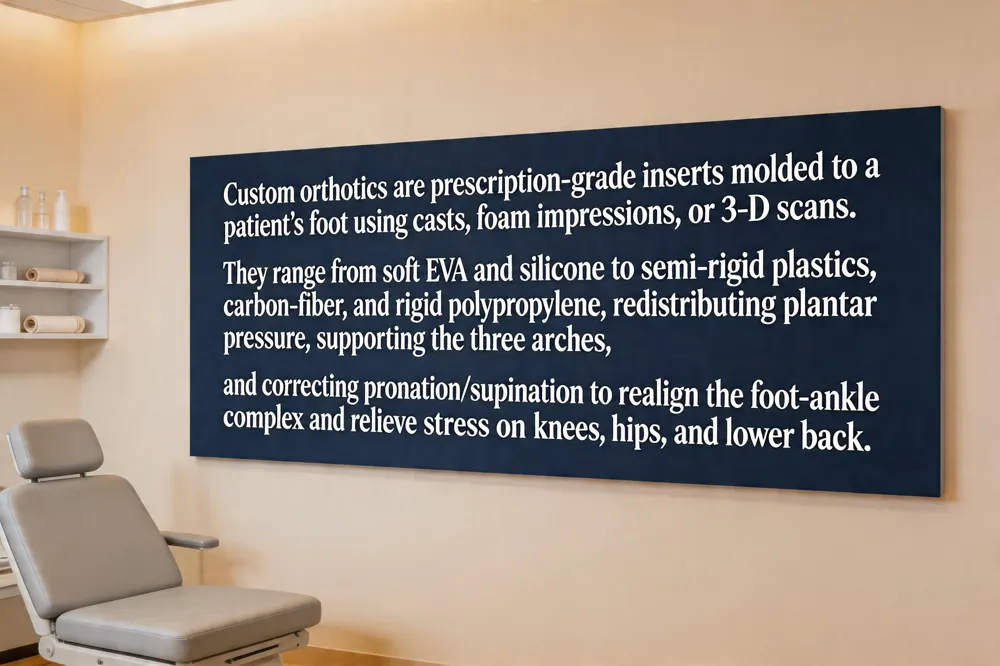 Custom orthotics are prescription‑grade shoe inserts that are individually molded to the exact shape of a patient’s foot using plaster casts, foam impressions, or 3‑D scans. Materials range from soft EVA foam and silicone for cushioning to semi‑rigid plastics, carbon‑fiber composites, and rigid polypropylene for motion control. By redistributing plantar pressure, supporting the three functional arches, and correcting abnormal pronation or supination, orthotics realign the foot‑ankle complex and lessen stress on the knees, hips, and lower back.
The three main categories are (1) Functional (rigid) orthotics, made of hard materials to limit excess motion and treat conditions like shin splints or severe overpronation; (2) Accommodative (soft) orthotics, fashioned from flexible, shock‑absorbing foams to relieve pressure for diabetic foot ulcers, arthritis, or metatarsalgia; and (3) Semi‑rigid orthotics, which blend a firm shell with a cushioned mid‑layer for a balance of support and comfort.
What are foot orthotics? They are devices—over‑the‑counter or custom‑made—designed to support, align, and improve foot biomechanics, reducing pain from plantar fasciitis, flat feet, bunions, and related conditions.
Orthotics meaning: Specially crafted inserts or braces that redistribute load, stabilize the foot, and help prevent progression of musculoskeletal problems.
What are the 3 types of orthotics? Rigid/functional, soft/accommodative, and semi‑rigid—each chosen based on the patient’s gait analysis and therapeutic goals.
Orthotics for feet: Custom‑fabricated inserts that fit inside shoes, provide precise arch support, correct alignment, and alleviate pain throughout the lower kinetic chain.
When to Consider Orthotics
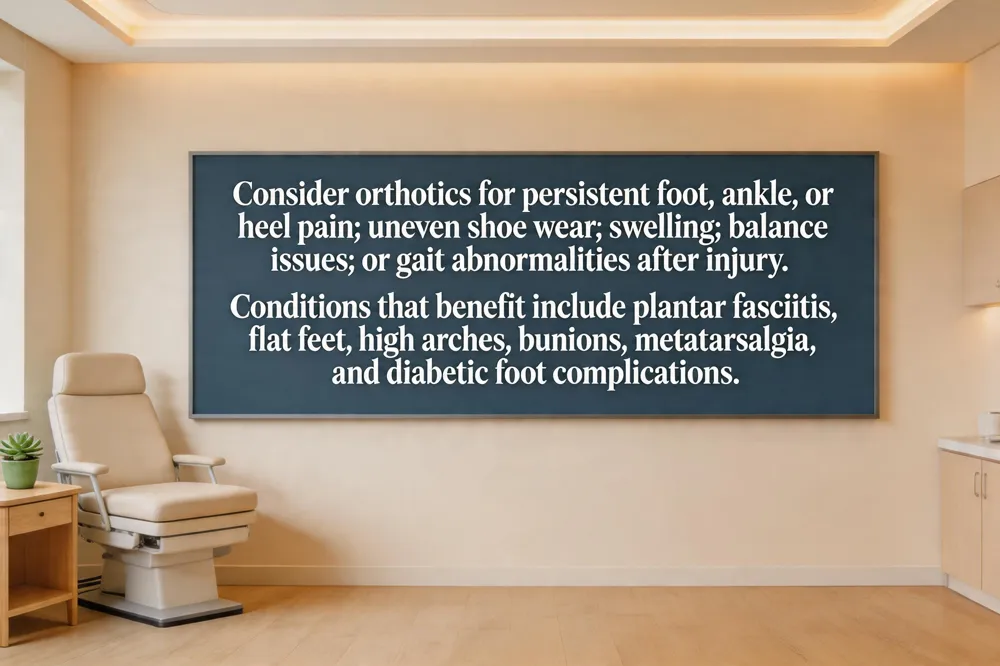 Patients who experience persistent foot, ankle, heel pain; uneven shoe wear, or difficulty standing for long periods should consider a foot‑assessment. Common signs that warrant evaluation include sharp morning heel pain, swelling during daily activities, balance problems, and gait abnormalities after an injury. A podiatrist can determine whether conditions such as plantar fasciitis, flat feet, high arches, bunions, metatarsalgia, or diabetic foot complications would benefit from custom‑prescribed orthotics.
Do orthotics work for flat feet? Yes—orthotics can be effective for flat feet when they are properly matched to the individual’s biomechanics. Custom‑made orthotics provide precise arch support, heel cupping and pressure redistribution that improve alignment and lessen strain on the plantar ligaments, often reducing pain within a few weeks. Over‑the‑counter inserts may help people with mild, flexible flat feet, but they lack the personalization needed for more severe or rigid cases.
Can orthotics help with fallen arches? Yes. Custom orthotics provide targeted arch support that can alleviate pain and improve function in patients with fallen arches, though some individuals may still experience symptoms despite use.
Orthotics for feet Foot orthotics are specially designed inserts that fit inside your shoes to support the arch, stabilize alignment, and redistribute pressure across the foot. They can be over‑the‑counter for mild discomfort or custom‑molded for precise correction of complex issues, reducing pain in the foot, knee, hip, and lower back while improving gait and preventing further deformities.
The Orthotic Treatment Process
 Do orthotics prevent overpronation? – Custom orthotics provide medial arch support and improve ankle stability, limiting excessive inward rolling and redistributing pressure more evenly. They manage overpronation while worn but do not permanently alter foot structure; severe cases may need additional therapy or surgery.
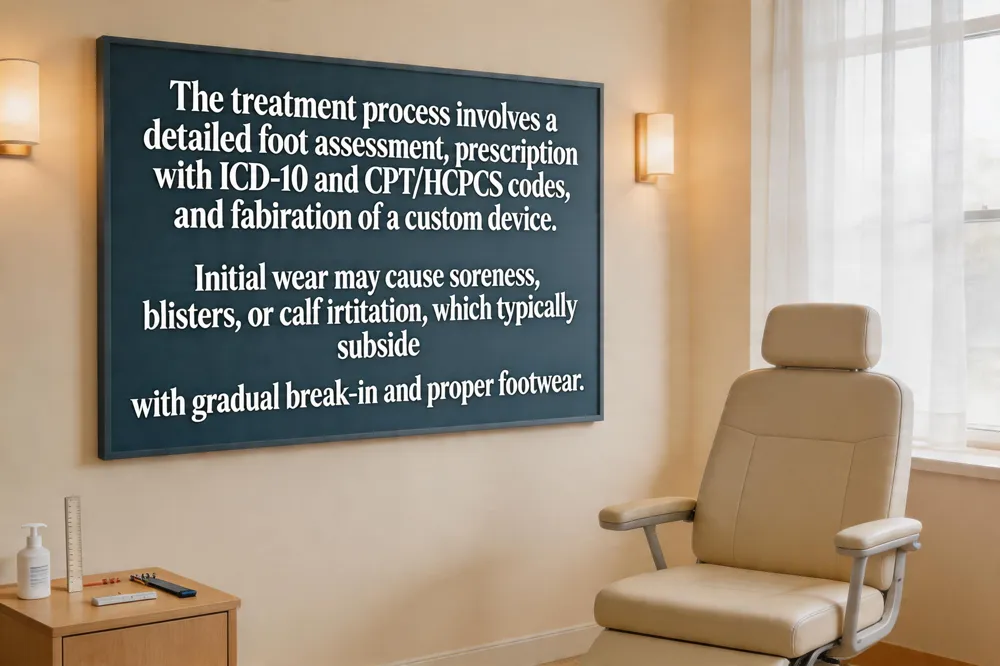
Wearing orthotics side effects – Initial soreness, blisters, pressure points, or mild calf irritation are common as the foot adapts. Rare nerve compression can cause numbness. These effects are usually short‑lived and can be minimized with a proper fit, gradual break‑in, and appropriate footwear.
Insurance, Costs, and Access
 Custom orthotics are medical‑grade devices that may be covered by health insurance when a podiatrist documents medical necessity. To get orthotics covered, start by scheduling a thorough foot examination with your podiatrist, who will document the medical necessity of custom orthotics for conditions such as diabetes‑related foot disease, severe bunions, or heel spurs. The clinician must write a detailed prescription that includes specific ICD‑10 diagnosis codes and the appropriate CPT/HCPCS codes for the orthotic device. Submit this prescription, together with a prior‑authorization form and any required supporting records, to your insurance provider or Medicare Part B for review. If the insurer approves, they will typically cover a set number of custom‑molded shoes or inserts each year, leaving you responsible for the copayment or deductible portion. Follow up with your insurance’s claims department to confirm that the order was processed and to address any additional documentation requests promptly.
Many clinics also accept Flexible Spending Account (FSA) and Health Savings Account (HSA) funds, allowing you to pay with pre‑tax dollars. Financing options such as interest‑free monthly plans (e.g., $59.75 per month) are offered by providers like Upstep and Foot Dynamics. Clinic locations serving U.S. patients include Seattle, WA; Northwestern Chicago and South Florida; Meridian, ID; and additional sites in Long Island, NY and Washington state, ensuring broad geographic access to expert podiatric care.
Pros, Cons, and Potential Drawbacks
 Custom orthotics provide precise biomechanical correction, reducing pain from plantar fasciitis, flat feet, high arches, and related knee, hip, or low‑back discomfort. By redistributing pressure, they improve alignment, enhance balance, and can prevent secondary musculoskeletal issues. However, when first worn, users often experience soreness, blisters, or a “tight” sensation as muscles and joints adapt—these are typical side effects that usually fade within a few weeks of gradual break‑in. The negatives of orthotics include the risk of over‑reliance on rigid devices, which may weaken intrinsic foot muscles, mask underlying problems, and limit natural pronation, potentially leading to new gait abnormalities. Long‑term use is safe when the device is properly fitted and periodically reassessed; regular follow‑up ensures the orthotic remains appropriate as foot shape, weight, or activity level changes. In summary, orthotics are not bad for your feet when custom‑made and well‑fitted, but ill‑fitting or overly rigid inserts can cause discomfort, muscle weakness, and altered gait if not monitored by a podiatrist.
Choosing the Right Footwear and Orthotic Compatibility
 Selecting shoes that work with custom orthotics is a key part of any foot‑care plan. Look for orthotic‑friendly designs that feature a removable footbed, a deep, roomy toe box, and a stable heel counter; these elements allow the orthotic to sit flat and stay in place while providing enough space for a proper fit. The shoe’s internal geometry should also accommodate the arch height and any added heel lift without creating pressure points.
Are Brooks Ghost Max good for orthotics? – Orthotic Compatibility and Comfort: The Brooks Ghost Max features an orthotic‑friendly design with a roomy toe box and a wider fit throughout the shoe, making it ideal for custom orthotic inserts and accommodating various foot shapes and conditions. Its cushioned midsole and supportive outsole work well with both functional and accommodative orthotics, offering a stable platform for daily wear or light‑to‑moderate activity.
Conclusion
Key takeaways: Custom orthotics are prescription shoe inserts individually molded to a patient’s exact foot shape and gait. They deliver targeted support, cushioning, and biomechanical correction that over‑the‑counter products cannot match. Functional, semi‑rigid, and accommodative designs treat plantar fasciitis, flat or high arches, diabetic foot issues, and lower‑back pain. A podiatrist’s evaluation—using gait analysis, 3‑D scanning or pressure mapping—ensures optimal fit and material choice. Benefits include pain relief, improved alignment, and reduced stress on knees, hips, and spine, noticeable within weeks of use.
Next steps: Book a foot assessment with a podiatrist. Share symptoms, activity level, and health history. If orthotics are recommended, expect a fabrication, a 2‑4‑week break‑in, and visits to monitor fit. Explore insurance or FSA/HSA reimbursement and wear shoes for results.