Why Combine Techniques?
Combining minimally invasive podiatric surgery with traditional conservative care creates a comprehensive, patient‑centered treatment pathway. The integration leverages small‑incision techniques that reduce tissue trauma, pain, swelling and scarring while preserving the ability to use orthotics, physical therapy, and footwear modifications for functional rehabilitation. Patients receive a personalized plan that begins with non‑surgical options, progresses to targeted surgery when needed, and continues with postoperative weight‑bearing protocols, anti‑inflammatory nutrition and guided therapy, which improves adherence and satisfaction. Clinical studies show that this hybrid approach lowers infection rates by up to 60 %, shortens recovery time by 30‑40 %, and delivers comparable or better long‑term outcomes than open surgery alone, confirming its efficacy.
Minimally Invasive Surgery vs. Traditional Open Procedures
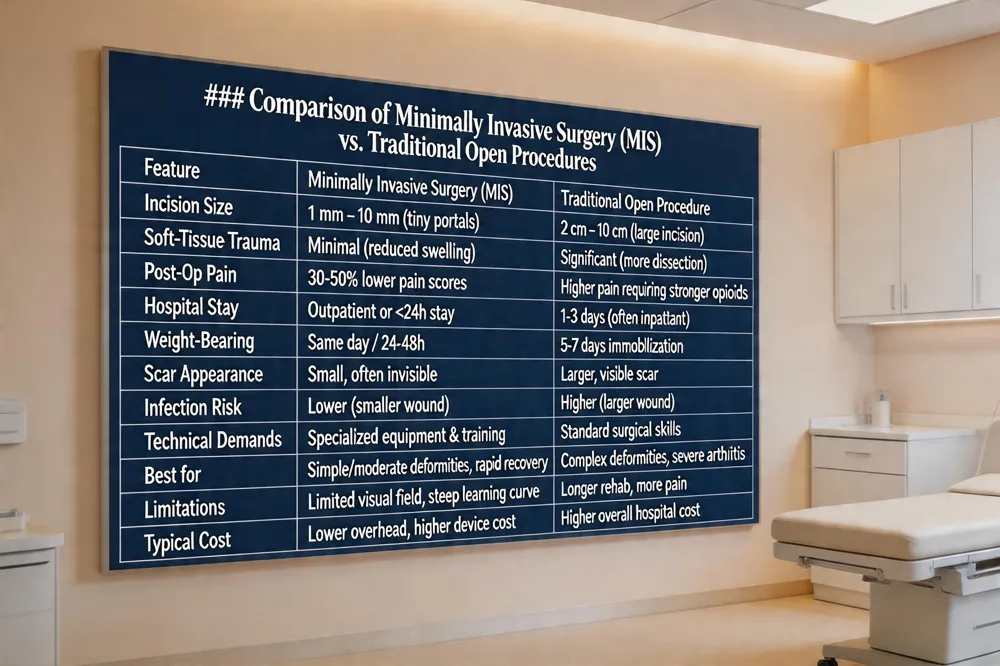
Comparison of Minimally Invasive Surgery (MIS) vs. Traditional Open Procedures
| Feature | Minimally Invasive Surgery (MIS) | Traditional Open Procedure |
|---|---|---|
| Incision Size | 1 mm – 10 mm (tiny portals) | 2 cm – 10 cm (large incision) |
| Soft‑Tissue Trauma | Minimal (reduced swelling) | Significant (more dissection) |
| Post‑Op Pain | 30‑50 % lower pain scores | Higher pain requiring stronger opioids |
| Hospital Stay | Outpatient or <24 h stay | 1‑3 days (often inpatient) |
| Weight‑Bearing | Same day or within 24‑48 h | 5‑7 days of immobilization |
| Scar Appearance | Small, often invisible | Larger, visible scar |
| Infection Risk | Lower (smaller wound) | Higher (larger wound) |
| Technical Demands | Requires specialized equipment & training | Standard surgical skills |
| Best for | Simple to moderate deformities, rapid recovery | Complex deformities, severe arthritis, multi‑segment reconstructions |
| Limitations | Limited visual field, steep learning curve | Longer rehab, more pain |
| Typical Cost | Lower hospital overhead, but higher device cost | Higher overall hospital cost |
 Minimally invasive foot and ankle surgery (MIS) employs millimeter‑scale incisions and real‑time imaging—fluoroscopy, endoscopic cameras, or ultrasound—to correct deformities such as bunions, hammertoes, plantar fasciitis, and limited joint fusions. Clinical studies consistently show lower postoperative pain scores (30‑50 % reduction), smaller scars, and a faster return to weight‑bearing (often within days) compared with conventional open surgery, which typically requires larger incisions, longer immobilization, and higher infection risk.
Pros and cons: The tiny portals of MIS dramatically reduce soft‑tissue trauma, postoperative swelling, and the need for opioid analgesics, allowing most patients to walk the same day and resume normal footwear within weeks. Outpatient execution further cuts hospital costs. However, limited visual access can make complex deformities harder to treat; severe hallux valgus, extensive osteoarthritis, or multi‑segment reconstructions may still need open approaches. MIS also demands specialized training, sophisticated equipment, and a steep learning curve—poor technique can lead to nerve or tendon injury. Long‑term data remain limited for some newer procedures.
Latest MIS technologies: Modern MIS combines high‑definition arthroscopy with low‑speed, high‑power burrs and computer‑assisted navigation. Robotic assistance and 3‑D printed patient‑specific guides improve osteotomy precision, while platforms such as the Arthrex percutaneous bunionectomy system provide dedicated power units and trajectory guides. Emerging single‑incision laparoscopic (SILS) and natural orifice techniques are being explored for select ankle surgeries.
Patient portal role: Our secure 24‑hour patient portal gives instant access to imaging, notes, and treatment plans, enables appointment scheduling, prescription refills, and encrypted messaging with surgeons. This digital hub promotes shared decision‑making, timely post‑operative follow‑up, and adherence to rehabilitation protocols, ultimately enhancing outcomes for both MIS and traditional foot care.
Minimally invasive foot and ankle surgery (MIS)
Traditional Podiatry Foundations and Complementary Care
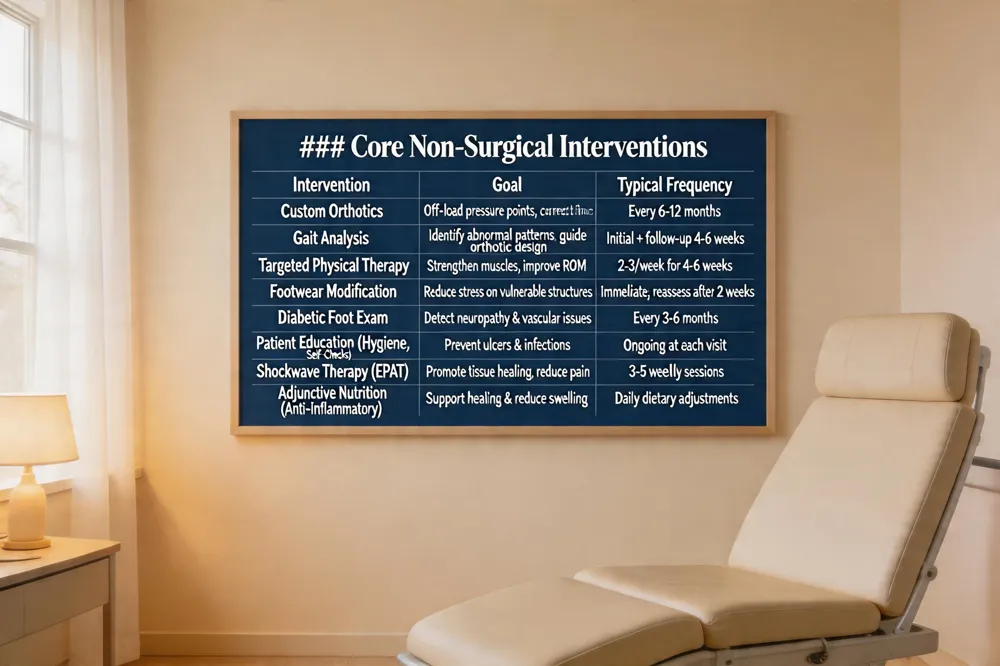
Core Non‑Surgical Interventions
| Intervention | Goal | Typical Frequency |
|---|---|---|
| Custom Orthotics | Off‑load pressure points, correct biomechanics | New set every 6‑12 months |
| Gait Analysis | Identify abnormal patterns, guide orthotic design | Initial assessment + follow‑up after 4‑6 weeks |
| Targeted Physical Therapy | Strengthen intrinsic muscles, improve ROM | 2‑3 sessions/week for 4‑6 weeks |
| Footwear Modification | Reduce stress on vulnerable structures | Immediate; reassess after 2 weeks |
| Diabetic Foot Exam | Early detection of neuropathy & vascular issues | Every 3‑6 months |
| Patient Education (Hygiene, Self‑Checks) | Prevent ulcers & infections | Ongoing, reinforced at each visit |
| Shockwave Therapy (EPAT) | Promote tissue healing, reduce pain | 3‑5 sessions, weekly |
| Adjunctive Nutrition (Anti‑Inflammatory) | Support healing & reduce swelling | Daily dietary adjustments |
 Traditional podiatry begins with non‑surgical interventions that address the root causes of foot pain. custom orthotics, gait analysis, and targeted physical therapy programs correct biomechanical imbalances while footwear modifications reduce stress on vulnerable structures. For patients with type 2 diabetes, a podiatrist performs comprehensive foot exams every 3–6 months, checks sensation and circulation, and educates on daily hygiene, proper shoes, and self‑checks; early debridement, dressing changes, or minimally invasive procedures prevent ulcers from progressing to infection or amputation. Physical therapy and orthotics work hand‑in‑hand: therapists strengthen intrinsic muscles and improve range of motion, while orthotic devices offload pressure points and maintain alignment throughout recovery. Warning signs that should never be ignored include persistent pain, unexplained numbness or tingling, skin or nail changes (discoloration, thickening, coolness), uneven shoe wear, and recurrent ankle instability. Recognizing these symptoms early prompts timely specialist evaluation, reducing the risk of chronic disability.
Foot and ankle specialist Coral Springs – Our board‑certified clinician at 817 Coral Ridge Dr., Coral Springs, FL (call (954) 256‑2465) offers cutting‑edge minimally invasive treatments—including EPAT shockwave, stem‑cell and collagen injections—and comprehensive wound‑care for diabetic and non‑diabetic patients alike.
Our Clinics and Expert Teams Across the Region
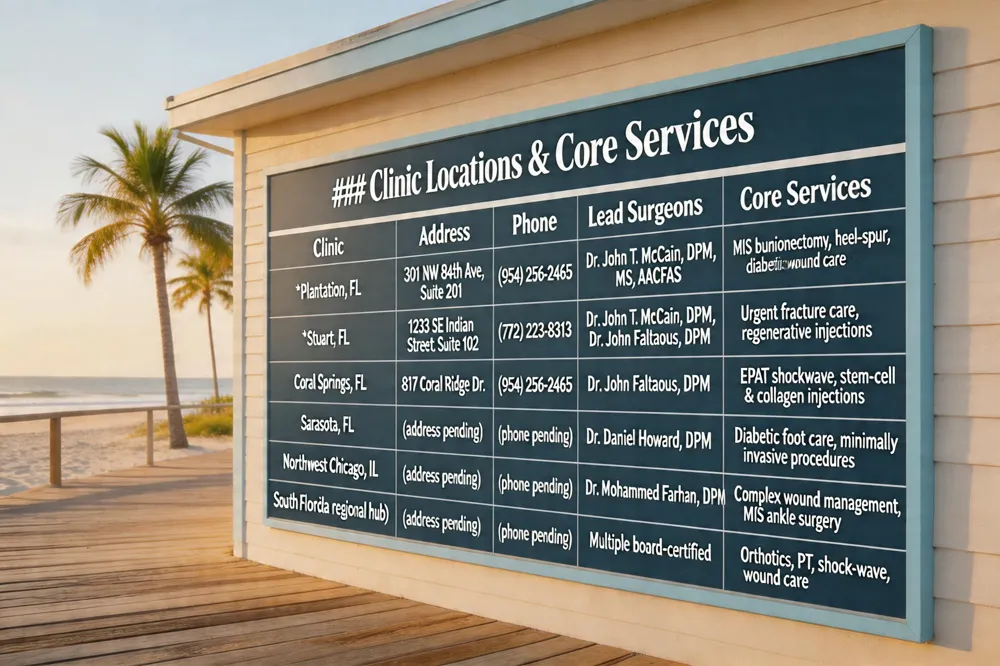
Clinic Locations & Core Services
| Clinic | Address | Phone | Lead Surgeons | Core Services |
|---|---|---|---|---|
| Plantation, FL | 301 NW 84th Ave, Suite 201 | (954) 256‑2465 | Dr. John T. McCain, DPM, MS, AACFAS | MIS bunionectomy, heel‑spur, diabetic wound care |
| Stuart, FL | 1233 SE Indian Street, Suite 102 | (772) 223‑8313 | Dr. John T. McCain, DPM, MS, AACFAS; Dr. John Faltaous, DPM, AACFAS | Urgent fracture care, regenerative injections |
| Coral Springs, FL | 817 Coral Ridge Dr. | (954) 256‑2465 | Dr. John Faltaous, DPM, AACFAS | EPAT shockwave, stem‑cell & collagen injections |
| Sarasota, FL | (address pending) | (phone pending) | Dr. Daniel Howard, DPM | Diabetic foot care, minimally invasive procedures |
| Northwest Chicago, IL | (address pending) | (phone pending) | Dr. Mohammed Farhan, DPM | Complex wound management, MIS ankle surgery |
| South Florida (regional hub) | (address pending) | (phone pending) | Multiple board‑certified surgeons | Orthotics, PT, shock‑wave, wound care |
 Facility locations
Our network spans Northwest Chicago, South Florida, and key Sun‑belt cities, offering convenient access to state‑of‑the‑art foot and ankle care. Each office is equipped equipped digital imaging, fluoroscopy, and on‑site labs to streamline diagnosis and treatment.
Specialist credentials
All clinicians are board‑certified foot and ankle surgeons, many holding fellowships with the American College of Foot & Ankle Surgeons (AACFAS) and the American Board of Foot and Ankle Surgery. Surgeons such as Dr. John T. McCain, Dr. John Faltaous, and Dr. Daniel Howard bring extensive training in minimally invasive techniques, robotic assistance, and complex reconstructions.
Service spectrum
We provide a full continuum: custom orthotics, physical therapy, shock‑wave and regenerative biologic therapies, wound and diabetic foot management, and minimally invasive procedures (percutaneous bunionectomy, endoscopic plantar fasciotomy, perroscopic ligament reconstruction). Early weight‑bearing protocols and anti‑inflammatory nutrition accelerate recovery.
Insurance and access
Most major PPOs, HMOs, workers’ compensation, and Medicare are accepted. Patient portals enable online scheduling, record access, and tele‑medicine follow‑ups, reducing missed appointments.
Advanced Foot and Ankle in Plantation, FL
Our Plantation clinic at 301 NW 84th Ave, Suite 201 delivers minimally invasive bunion, heel‑spur, and diabetic‑wound care, led by board‑certified surgeons. Flexible hours and extensive insurance acceptance make high‑quality care easy to obtain.
Advanced Foot and Ankle in Stuart, FL
Located at 1233 SE Indian Street, Suite 102, Stuart, FL 34997, Dr. John T. McCain, DPM, MS, AACFAS and Dr. John Faltaous, DPM, AACFAS provide comprehensive podiatric services, including urgent fracture care. Call (772) 223‑8313 to schedule.
Foot and ankle Specialist Coral Springs
At 817 Coral Ridge Dr., Coral Springs, FL, our specialist combines imaging‑guided minimally invasive surgery with EPAT shockwave, stem‑cell, and collagen injections. Call (954) 256‑2465 or book online.
Advanced foot and ankle care Sarasota
Our Sarasota office offers the same cutting‑edge minimally invasive options, diabetic foot care, and regenerative therapies under Dr. Daniel Howard. Patients enjoy fast, effective relief and seamless coordination with primary doctors.
Advanced Foot, Ankle, & Wound Specialists
With locations in Northwest Chicago and South Florida this multidisciplinary team blends minimally invasive surgery, regenerative biologics, and off‑loading orthotics to treat complex wounds and diabetic ulcers.
Northwestern Medicine podiatrist Naperville
While Northwestern has no dedicated Naperville podiatry clinic, our Advanced Foot & Ankle Center of Illinois provides board‑certified surgeons trained in minimally invasive and diabetic‑foot care, including Dr. Mohammed Farhan, a local specialist. Call for an appointment.
Choosing the Right Provider and Understanding Credentials
Credential Checklist for Selecting a Foot & Ankle Specialist
| Credential | Description | Why It Matters |
|---|---|---|
| Board Certification | ABPS (American Board of Podiatric Surgery) or ABFAS (American Board of Foot & Ankle Surgery) | Confirms mastery of core competencies |
| Fellowship Training | AACFAS (American College of Foot & Ankle Surgeons) or orthopedic foot‑and‑ankle fellowship | Indicates advanced surgical expertise |
| Robotic/Navigation Experience | Use of computer‑assisted navigation or robotic assistance | Improves precision in MIS procedures |
| Procedure Volume | >50 MIS bunionectomies/year (example) | Higher volume correlates with lower complication rates |
| Hospital Privileges | Privileges at accredited hospitals (e.g., Northwestern Medicine) | Ensures access to full peri‑operative resources |
| Continuing Medical Education (CME) | Recent CME on MIS, regenerative biologics, or diabetic foot care | Keeps provider up‑to‑date with evolving techniques |
| Patient Reviews & Outcomes | ≥4‑star rating, documented low infection & revision rates | Reflects real‑world performance |
| Prescribing Authority | Ability to prescribe gabapentin, NSAIDs, etc. | Facilitates comprehensive pain management |
| Tele‑medicine & Portal Access | Secure 24‑hour patient portal for imaging & messaging | Enhances shared decision‑making and follow‑up |
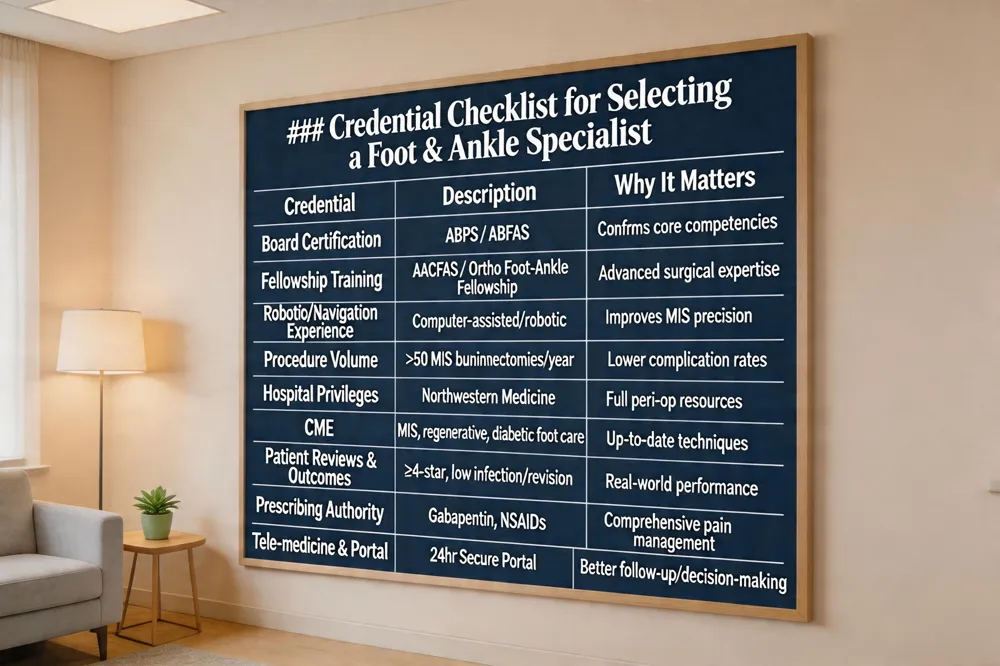 When selecting a podiatric or foot‑and‑ankle specialist, verify board certification. In the United States podiatrists earn a DPM degree, complete a 3‑year residency, and become board‑certified through the American Board of Podiatric Surgery (ABPS) or the American Board of Foot and Ankle Surgery (ABFAS). Surgeons who are also orthopaedic MDs/DOs hold additional certification from the American Board of Orthopaedic Surgery and a foot‑and‑ankle fellowship, placing them higher in the specialist hierarchy for complex reconstructions.
Surgeon experience matters. Leading clinics in Chicago, such as Northwestern Medicine and Chicago Foot & Ankle Orthopaedic Surgeons, employ surgeons with fellowship training, robotic‑assisted navigation, and a track record of low complication rates for minimally invasive bunionectomy, hammertoe correction, and ankle arthroscopy.
Medication prescribing is within a podiatrist’s scope; they may prescribe gabapentin for neuropathic foot pain, coordinating with primary‑care physicians for long‑term monitoring.
Answers to common questions:
- Is Dr. Ebonie Vincent a real Doctor? Yes—she holds a DPM, completed a three‑year residency, is ABPS‑board certified, and is an active member of the California Podiatric Medical Association.
- Best foot and ankle orthopedic surgeons in Chicago? Northwestern Medicine team (Dr. Kadakia, Dr. Mutawakkil, Dr. Patel) and Midwest Orthopaedics at Rush are consistently top‑ranked.
- Best podiatrist in Chicago? Dr. Ebonie Vincent is widely regarded for advanced minimally invasive care; other high‑rated providers include Dr. Alison Young and Dr. Nehal Sheth.
- What is higher than a podiatrist? An orthopedic foot‑and‑ankle surgeon (MD/DO) with a dedicated orthopaedic residency and fellowship.
- Can a podiatrist prescribe gabapentin? Yes, for neuropathic foot pain, under appropriate clinical supervision.
Specific Procedures and Patient Questions
Frequently Asked Questions & Procedure Overview
| Procedure | MIS Technique | Typical Recovery (Weight‑Bearing) | Common Patient Question |
|---|---|---|---|
| Achilles Tendon Repair | Arthroscopic suture with fiber‑optic camera | 24‑48 h ambulation in protective boot | Can a podiatrist repair an Achilles tendon? |
| Bunionectomy (Hallux Valgus) | Percutaneous osteotomy under fluoroscopy | Weight‑bearing day 1‑2, normal shoes 2‑4 weeks | How long until I can wear regular shoes? |
| Plantar Fasciotomy | Endoscopic release of plantar fascia | Immediate weight‑bearing, boot 2 weeks | Will pain disappear immediately? |
| Hammertoe Correction | Percutaneous tendon release & pinning | Full weight‑bearing day 1‑3, shoes 3‑5 weeks | Is anesthesia needed? |
| Diabetic Ulcer Debridement | Minimally invasive debridement + biologics | Off‑loading boot 1‑2 weeks, wound closure 4‑6 weeks | How to prevent recurrence? |
| Regenerative Injection (Stem‑cell/Collagen) | Ultrasound‑guided injection | Immediate weight‑bearing, activity as tolerated | How many injections are needed? |
 Minimally invasive podiatric surgery now includes a range of targeted procedures that blend modern technology with traditional foot care. For Achilles tendon repair, podiatrists can employ arthroscopic methods that use tiny portals and a fiber‑optic camera to suture the torn fibers, minimizing tissue disruption and promoting faster healing. A commonly asked question is, "Can a podiatrist repair an Achilles tendon?" The answer is yes—podatrists are fully qualified to perform both open and minimally invasive Achilles repairs, selecting the technique based on rupture severity, patient health, and surgeon expertise. They also provide comprehensive postoperative plans that include early weight‑bearing, protective footwear, anti‑inflammatory nutrition, and guided physical therapy. Minimally invasive bunionectomy follows a similar philosophy, using incisions under 1 cm and fluoroscopic guidance to correct hallux valgus while reducing pain, swelling, and scar size. Recovery protocols typically allow patients to bear weight within 24‑48 hours, wear a rigid boot for a few weeks, and progress to normal footwear within 2‑4 weeks. Throughout the process, patient education is essential: patients should discuss the surgeon’s experience, expected timelines, and adjunctive therapies such as orthotics or shockwave treatment to ensure optimal outcomes.
Moving Forward Together
Looking ahead, podiatric care will be shaped by cutting‑edge technologies and deeper patient involvement. Future advancements such as 3‑D printed,‑specific surgical guides, augmented‑reality overlays, and AI‑driven intra‑operative imaging promise even greater precision, reduced operative time, and personalized treatment plans. Empowering patients through transparent education—detailing surgeon experience, expected timelines, and adjunctive therapies—enhances shared decision‑making and adherence to postoperative protocols. Ongoing research, including randomized trials of robotic‑assisted osteotomies and long‑term outcomes of minimally invasive bunionectomy, will refine indications, safety thresholds, and cost‑effectiveness. By integrating these innovations with traditional podiatric principles, clinicians can deliver faster recovery, lower complication rates, and sustained functional improvement for a broader spectrum of foot and ankle disorders and higher patient satisfaction across diverse age groups worldwide settings.