Why Foot Health Matters
Ingrown toenails affect about 20% of U.S. foot visits, while fungal infections involve 3‑12% of the population. These conditions cause pain, swelling, and can lead to cellulitis or delayed healing, especially in diabetics. Specialized podiatry clinics provide early diagnosis, targeted care, and preventive education to reduce complications and improve outcomes.
Understanding Ingrown Toenails: Causes, Stages, and Symptoms
 Ingrown toenails (onychocryptosis) begin when the lateral nail edge penetrates the periungual skin, a process driven by mechanical pressure and inflammation that creates a painful nidus for bacterial entry. The primary cause is improper nail trimming — cutting too short or rounding the corners — along with tight or narrow footwear and repetitive toe trauma. Genetic nail curvature and hereditary nail shape also contribute. Systemic conditions that impair circulation or sensation, such as diabetes, peripheral vascular disease, or neuropathy, increase susceptibility and can hasten infection.
Pathophysiology involves the nail plate pushing into the soft tissue, provoking localized edema, erythema, and granulation tissue. Risk factors include poor trimming technique, ill‑fitting shoes, trauma, hereditary nail shape, fungal nail disease, and systemic diseases that reduce healing capacity.
Clinically, ingrown toenails are staged; Stage 3 is characterized by pronounced redness, swelling, throbbing pain, pus drainage, and exuberant granulation or “proud flesh” surrounding the nail. Systemic signs such as fever may accompany severe infection, indicating the need for prompt professional intervention.
Home Care and Immediate Relief for Ingrown Toenails
 Warm water soaks are the cornerstone of immediate relief. Soak the affected toe in comfortably warm, soapy water or a 10‑20% Epsom‑salt solution for soaking the toe in warm, soapy water for 10‑20 minutes three to four times daily. The heat softens the nail plate and surrounding skin, reducing inflammation and pain. After each soak, gently lift the ingrown edge using a sterile cotton, dental floss wick placed under the nail; this creates a small gutter that guides the nail away from the skin.
Over‑the‑counter pain control includes ibuprofen or acetaminophen taken as directed. Apply a thin layer of a topical antibiotic such as mupirocin 2 % or bacitracin ointment after cleaning the area to prevent secondary bacterial infection. Keep the toe dry and wear roomy, breathable shoes or open‑toed sandals to avoid pressure on the nail edge.
Q: What are the best home remedies to relieve pain from an ingrown toenail?
A: Warm water or Epsom‑salt soaks (10–20 min, 2‑3×/day), cotton or floss wedge after each soak, OTC pain relievers, and topical antibiotic ointment protect against infection and promote healing.
Q: What topical antibiotic creams are effective for ingrown toenail infections?
A: Mupirocin 2 % and bacitracin ointment are commonly used 2‑3× daily after cleaning the nail fold.
Q: How is pus drained from an infected ingrown toenail?
A: A podiatrist numbs the toe, makes a sterile incision, expresses the pus, irrigates the wound, packs it with a non‑adherent dressing, applies topical antibiotic, and may prescribe oral antibiotics for systemic coverage.
When to Seek Professional Care: Antibiotics, Surgical Options, and Drainage
 Systemic infection signs include spreading erythema, fever, chills, red streaks, and pus that does not resolve with warm soaks and topical ointments. When these appear, especially in patients with diabetes, peripheral vascular disease, or immunosuppression, oral antibiotics are indicated. First‑line agents such as cephalexin or dicloxacillin target typical Staphylococcus and Streptococcus organisms; clindamycin or TMP‑SMX is used for suspected MRSA. Therapy usually lasts 5‑7 days and should be guided by culture results when available.
Surgical intervention is reserved for cases where conservative care fails, the ingrown nail recurs, or infection is deep or chronic. Partial nail avulsion—removing only the offending nail segment—relieves pressure and is often combined with chemical matrixectomy (phenol or laser) to prevent regrowth. Total nail avulsion with matrix ablation is considered for severe, recurrent disease or when both nail sides are involved.
Treatment options for an infected ingrown toenail begin with warm water soaks (10‑20 minutes, 3‑4 times daily), gentle cotton or dental‑floss placement, topical antibiotic ointment, and OTC analgesics. If pus, spreading redness, or systemic signs develop, a podiatrist will prescribe oral antibiotics and may proceed to partial or total nail removal with appropriate matrix destruction, followed by elevation, wet compresses, and proper footwear to promote healing.
Fungal Foot Infections: Athlete’s Foot and Nail Fungus
 Athlete’s foot (tinea pedis) typically presents with itching, burning, and scaly, flaky skin between the toes or on the soles; blisters, redness, and cracking may appear in more advanced cases. Foot fungi fall into three main categories: dermatophyte‑driven tinea pedis, onychomycosis (tinea unguium) affecting nails, and yeast infections (Candida) that cause macerated, odorous patches. Onychomycosis begins when spores colonize a softened nail, often after trauma or prolonged moisture, and thickens or discolors the plate. Prevention includes keeping feet dry, using breathable shoes and moisture‑wicking socks, rotating footwear, and avoiding shared nail tools. First‑line treatment for tinea pedis is topical antifungal agents such as terbinafine 1 % or clotrimazole 1 % cream applied twice daily for 2–4 weeks, combined with diligent drying and antifungal powders in shoes. Extensive or recurrent infection may require oral terbinafine 250 mg daily for 2–6 weeks. Nail fungus is managed with oral antifungals (e.g., terbinafine) for several months or topical lacquers for milder cases; laser or surgical nail removal is reserved for refractory disease. Visual clues—scaly red rash between toes, thickened yellow nails, or powdery white spots—prompt a podiatrist visit for confirmation and targeted therapy.
Long‑Term Prevention Strategies for Healthy Feet
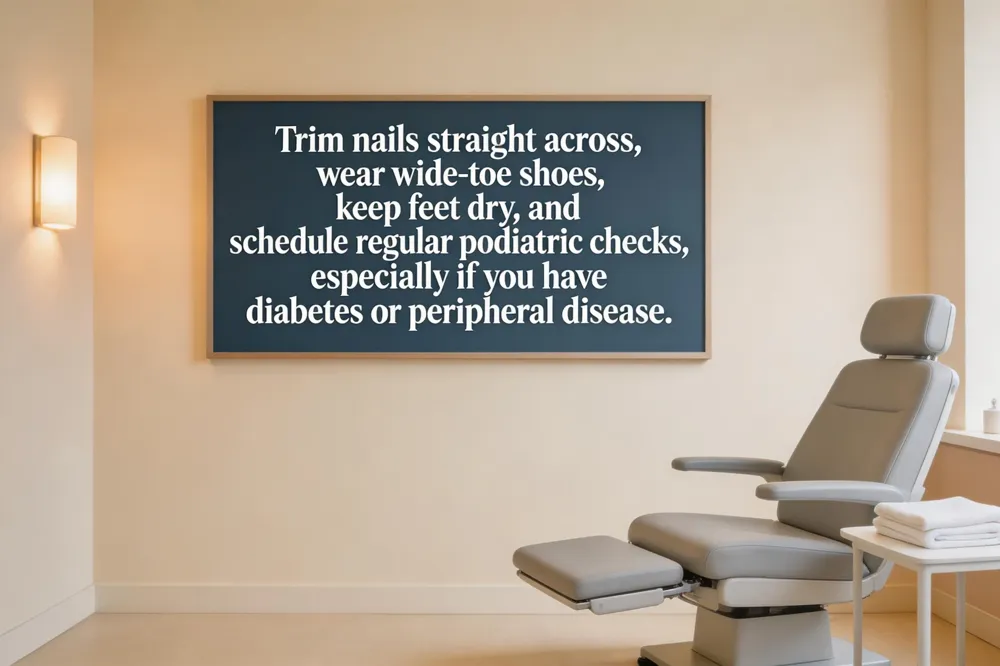 Maintaining healthy toenails and preventing ingrown nails requires a multifaceted, evidence‑based approach.
Proper nail‑trimming technique – Soak the foot in warm, soapy water for 10–20 minutes, then cut the nail straight across using a clean, sharp clipper. Leave a thin white margin (≈1 mm) beyond the nail fold and avoid rounding or cutting the corners too short, which creates a nail barb that can embed in the skin.
Footwear selection and pressure reduction – Choose shoes with a wide toe box and adequate length so the toe has at least a half‑inch of space in front of the nail. Avoid high‑heeled or narrow shoes that compress the nail margins, and consider breathable, moisture‑wicking socks to reduce friction and swelling.
Moisture management and daily hygiene – Keep feet clean, wash twice daily, and dry thoroughly, especially between the toes. Use antifungal powders or sprays if you sweat heavily or spend time in communal showers, as excess moisture predisposes to both fungal infection and ingrowth.
Regular podiatric assessments, especially for high‑risk patients – Individuals with diabetes, peripheral neuropathy, vascular disease, or a history of recurrent ingrown nails should schedule routine podiatrist visits. Early detection of nail shape abnormalities, fungal infection, or trauma allows timely intervention, which may include a minor permanent procedure such as partial nail avulsion with matrixectomy to reshape the nail.
Answer to the key question – Ingrown toenails can be permanently prevented by combining meticulous nail‑cutting, appropriate footwear, diligent foot hygiene, and proactive professional care. When conservative measures fail, a podiatrist can perform a partial nail avulsion with matrix ablation, permanently narrowing the nail and eliminating the offending edge. Regular follow‑up ensures any new risk factors are addressed before they lead to recurrence.
Take the Next Step Toward Pain‑Free Feet
Remember to trim nails straight across, keep feet clean and dry, wear roomy shoes, and use warm soaks with cotton lifts for early ingrown toenails. If pain or infection persists, schedule a comprehensive foot exam at Advanced Foot Care, where personalized, minimally invasive treatments restore comfort and prevent recurrence.