Welcome to Advanced Foot Care
Board certification in foot and ankle surgery is a rigorous, voluntary process that confirms a podiatrist’s mastery of surgical knowledge and skill. In the United States, the American Board of Foot & Ankle Surgery (ABFAS) and the American Board of Podiatric Surgery (ABPS) are the only bodies recognized by the Council on Podiatric Medical Education (CPME) to certify surgeons. Candidates must hold a Doctor of Podiatric Medicine (DPM), complete a CPME‑approved three‑year residency, and demonstrate extensive operative experience before passing written, oral, and computer‑based patient‑simulation exams. For patients, a surgeon’s board‑certified status signals that the provider has met nationally‑defined standards, maintains active hospital privileges, and participates in ongoing education through programs such as ABFAS’s LEAD. This directly translates into higher‑quality care: certified surgeons are better equipped to diagnose complex deformities, apply minimally invasive techniques, and manage postoperative outcomes, ultimately improving safety, recovery time, and long‑term foot health.
Why Board Certification Matters in Foot Surgery
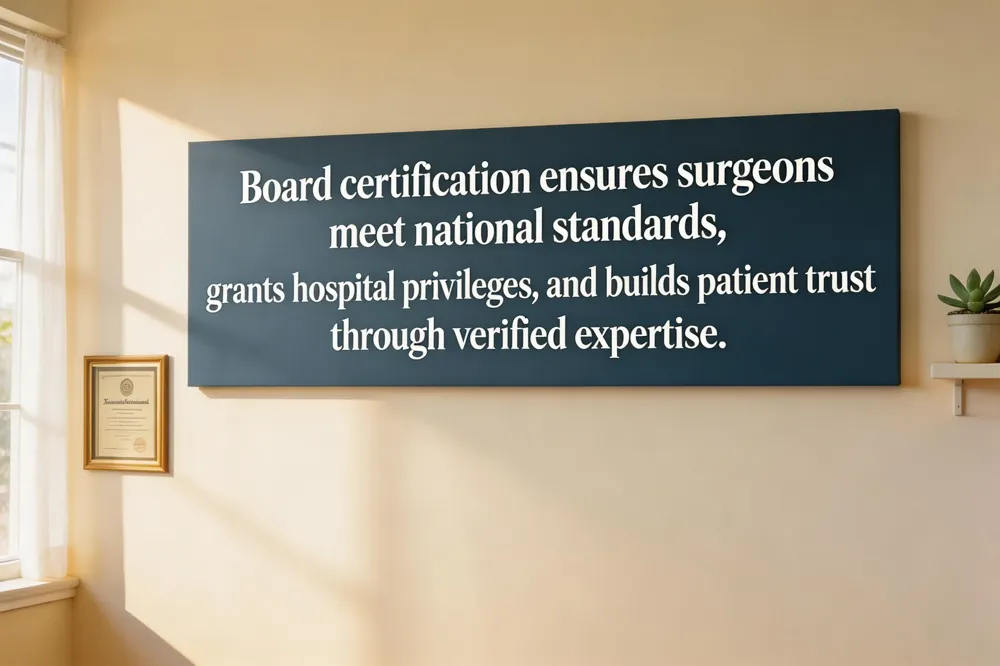 Hospital privileges and insurance participation
Board certification by the American Board of Foot and Ankle Surgery (ABFAS) is a widely‑accepted prerequisite for granting surgical privileges at hospitals and ambulatory surgery centers. Many insurers also require surgeons to be board‑certified before allowing credentialing, ensuring that patients receive care from clinicians who have met nationally‑recognized standards of knowledge and skill.
Hospital privileges and insurance participation
Board certification by the American Board of Foot and Ankle Surgery (ABFAS) is a widely‑accepted prerequisite for granting surgical privileges at hospitals and ambulatory surgery centers. Many insurers also require surgeons to be board‑certified before allowing credentialing, ensuring that patients receive care from clinicians who have met nationally‑recognized standards of knowledge and skill.
Portability of certification across states ABFAS certification is recognized in every U.S. state and Canada, making the credential portable for podiatrists who relocate or practice in multiple locations. The certification’s national scope eliminates the need for re‑evaluation when a surgeon moves, providing continuity of care for patients and simplifying hospital credentialing processes.
Trust and transparency for patients Patients often use board certification as a transparent benchmark of expertise. The rigorous process—completion of a CPME‑approved residency, documented surgical experience, and successful written, oral, and case‑review examinations—demonstrates a surgeon’s commitment to evidence‑based practice and ongoing professional development.
Should a podiatrist be board certified? Yes. Board certification shows that a podiatrist has met rigorous education, residency, and examination standards, guaranteeing a high level of expertise in foot and ankle care. It is often a prerequisite for surgical privileges at hospitals and for insurance participation, so patients can be confident their surgeon is qualified to perform advanced procedures. Certification by ABFAS is recognized across state lines, making the credential portable and reliable wherever the podiatrist practices. It also provides a transparent benchmark for patients and colleagues, building trust that the clinician adheres to the latest evidence‑based practices.
What does it mean if a surgeon is board certified? A board‑certified surgeon has completed an accredited residency (and, when required, fellowship training) and has passed a rigorous, specialty‑specific examination administered by an independent, non‑profit board such as ABFAS. This “seal of approval” confirms that the surgeon meets the highest national standards for education, clinical knowledge, and procedural skill in foot and ankle surgery. Certification is voluntary and demonstrates a commitment to ongoing learning, quality improvement, and adherence to professional ethics. It is distinct from a medical license, which only allows a doctor to practice; board certification signals expertise and competence in a particular surgical specialty. Patients can rely on this credential as a trusted indicator of superior, evidence‑based care.
Treating Common Foot Conditions: From Fungal Infections to Plantar Fasciitis
 Podiatrists are uniquely qualified to diagnose and treat both fungal nail and skin infections of the foot. By using laboratory cultures, polymerase‑chain‑reaction (PCR) testing, or nail clippings, they identify the specific organism and then prescribe targeted oral agents such as terbinafine or itraconazole, or topical therapies like ciclopirox. In addition to pharmacologic treatment, many podiatrists employ adjunctive measures—including laser debridement, mechanical nail‑thinning, and cosmetic nail‑replacement systems (e.g., KeryFlex™)—to restore nail appearance and prevent recurrence. They also address associated skin conditions such as tinea pedis, especially in patients with diabetes or peripheral vascular disease, where prompt treatment reduces the risk of secondary infection.
For plantar fasciitis, podiatrists start with evidence‑based, non‑surgical interventions: calf and plantar‑fascia stretching protocols, custom‑fit orthotics that correct biomechanical abnormalities, night splints to maintain dorsiflexion, anti‑inflammatory medications, and cryotherapy. Physical‑therapy programs focusing on intrinsic foot‑muscle strengthening are often incorporated. When conservative care fails after 6–12 weeks, minimally invasive options are considered. These include ultrasound‑guided corticosteroid injections, platelet‑rich plasma (PRP) therapy, and extracorporeal shock‑wave therapy (ESWT) to promote tissue remodeling. In rare, chronic cases, an endoscopic plantar‑fascia release may be performed, offering relief while preserving surrounding structures. Throughout treatment, podiatrists evaluate gait, footwear, and calf‑muscle tightness to address underlying contributors and reduce recurrence risk.
Foot Surgery Scope: Minor vs Major Procedures
 Minor foot surgery involves limited tissue disruption, local anesthesia, and outpatient care; examples include bunionectomy, hammertoe correction, ingrown‑toenail matricectomy, and plantar wart removal. Moderate surgery may require regional anesthesia, short‑term observation, and a slightly longer healing period; typical procedures are limited arthroscopies, simple tendon repairs, and minor deformity corrections. Major surgery entails extensive incisions, general or spinal anesthesia, possible hospital admission, and prolonged rehabilitation; examples are joint fusions, multi‑segment arthrodesis, and complex reconstructive rearfoot/ankle repairs. Recovery expectations vary: minor cases often resume normal activities within 1‑2 weeks, moderate cases in 3‑6 weeks, and major cases may need 8‑12 weeks or more, with weight‑bearing restrictions and physical therapy.
Is foot surgery considered major? Foot surgery is not a single, uniform procedure; its classification depends on the specific operation and its complexity. Most common foot and ankle surgeries—such as bunionectomy, hammertoe correction, ingrown‑toenail matricectomy, and plantar wart removal—are performed on an outpatient basis under local anesthesia and are considered minor or moderately invasive. More extensive procedures, like joint fusions, extensive reconstructive repairs, or multi‑segment arthrodesis, involve larger incisions, longer anesthesia, and a prolonged recovery, and are therefore regarded as major surgeries. In practice, the majority of foot surgeries fall on the minor‑to‑moderate side, but the surgeon will assess each case individually to determine the appropriate level of invasiveness. Following postoperative instructions closely is essential for any foot surgery, regardless of its classification, to minimize complications and promote healing.
Diabetes and Foot Health: The Role of the Podiatrist
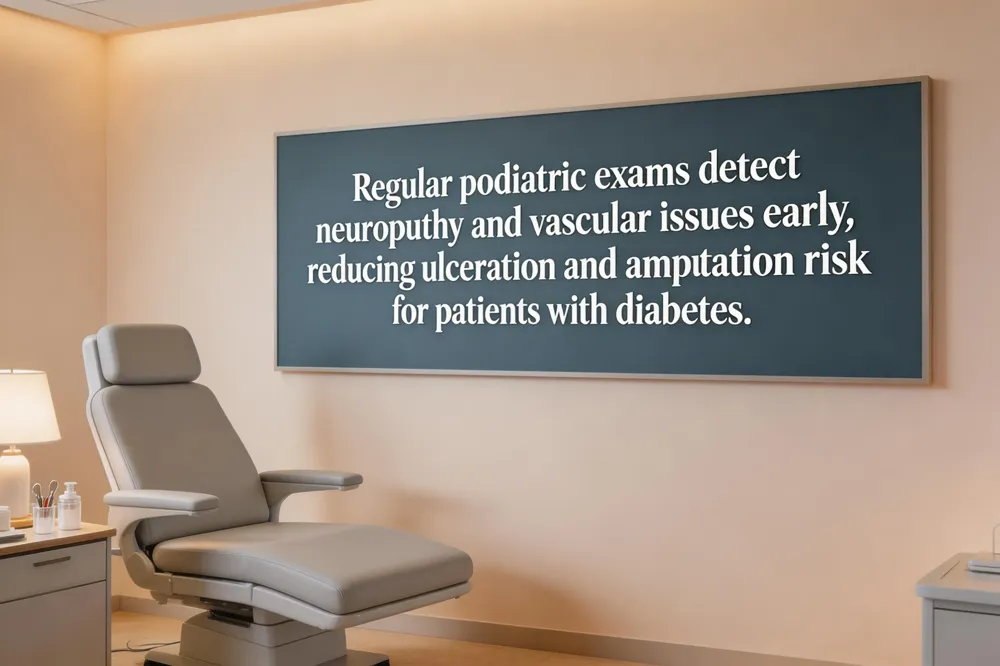 Peripheral neuropathy and diminished circulation are common complications of type 2 diabetes, turning minor cuts, calluses or or pressure points into deep ulcers, infections, or even gangrene. Regular preventive foot examinations performed by a podiatrist assess sensation, pulse quality, foot biomechanics, and skin integrity, allowing clinicians to detect early signs of neuropathy, Charcot arthropathy, or vascular disease before they progress. Early intervention—such as debridement, custom orthotics, off‑loading strategies, and education on daily self‑inspection—significantly reduces the incidence of ulceration and the downstream risk of lower‑extremity amputation. In fact, studies show that patients who receive routine podiatric care have markedly lower amputation rates than those who present only after complications arise.
Answer: Yes—people with type 2 diabetes should schedule regular visits with a podiatrist. Because diabetes often causes peripheral neuropathy and reduced circulation, even small cuts or pressure points can become serious infections or ulcers that go unnoticed. A podiatrist can perform comprehensive foot exams, assess sensation, pulses, and foot structure, and identify early signs of neuropathy, arthropathy, or vasculopathy. Routine professional care, combined with daily self‑inspection and proper footwear, dramatically lowers the risk of foot complications and possible amputation. Early detection and timely treatment keep feet healthy, allowing patients to stay active and avoid costly medical emergencies.
Path to Becoming a Foot and Ankle Surgeon
 Becoming a foot and ankle surgeon is a long‑term commitment that typically spans 11–14 years after high school. The journey begins with a four‑year bachelor’s degree, often in a science discipline, followed by a four‑year Doctor of Podiatric Medicine (DPM) program that blends basic sciences with clinical rotations. After earning the DPM, candidates complete a three‑ to four‑year CPME‑accredited residency in podiatric medicine and surgery, where they gain hands‑on experience with bunions, fractures, diabetic foot care, sports injuries, and complex reconstructions. Many surgeons then pursue an optional one‑ to two‑year fellowship to specialize further, for example in pediatric foot surgery or advanced reconstructive techniques.
Board qualification is the next milestone. Surgeons must be Board Qualified by passing the Part I written and oral examinations administered by the American Board of Foot and Ankle Surgery (ABFAS), the only foot‑and‑ankle surgical board recognized by the Council on Podiatric Medical Education. After maintaining active surgical privileges and logging diverse cases, they advance to Part II, which includes a Computer‑Based Patient Simulation (CBPS) exam and a rigorous case‑review process. Successful candidates become ABFAS Diplomates (Board Certified) . Recertification occurs every ten years through the LEAD program, which requires continuing education, proof of surgical activity, and an annual fee.
Patients can verify a surgeon’s credentials easily. The ABFAS website offers a “Credentialers Only” portal where a physician’s name or license number yields a verification report showing education, residency completion, licensure, and current board status. This primary‑source verification aligns with NCQA and Joint Commission standards, giving patients confidence in the surgeon’s expertise.
Understanding this pathway helps patients identify truly qualified foot and ankle surgeons who can deliver innovative, evidence‑based care for conditions ranging from simple bunions to complex diabetic foot reconstructions.
Your Trustworthy Path to Healthy Feet
Board certification is a clear, nationally‑recognized signal that a podiatric surgeon has met rigorous education, residency, surgical‑experience, and examination standards. Certified surgeons have demonstrated mastery of foot and ankle anatomy, pathology, and the latest operative techniques, which translates into safer procedures, lower complication rates, and better functional outcomes for patients. Because certification is voluntary, you should always verify a surgeon’s credentials—check that they hold a Doctor of Podiatric Medicine (DPM), are board‑qualified, and have earned ABFAS or ABPS board certification in foot and ankle surgery. Advanced Foot Care Clinic upholds this standard by employing only board‑certified surgeons and by committing to evidence‑based, minimally invasive treatments that preserve tissue, reduce recovery time, and improve long‑term foot health.