Why Foot Health Matters
The foot, with its 26 bones, 33 joints and over 100 muscles and tendons, functions as a barometer of overall health. Subtle changes—cold skin, numbness, swelling, or nail discoloration—often signal systemic problems such as diabetes, peripheral artery disease, thyroid disorders or early arthritis. Detecting these signals early enables timely intervention, preventing complications like ulcers, infections, or loss of mobility. Our clinic employs a minimally invasive, patient‑centered approach: high‑resolution ultrasound for vascular assessment, digital nerve testing for neuropathy, and endoscopic or percutaneous techniques to address plantar fasciitis, tendon degeneration, and stress fractures. These treatments reduce recovery time, lower infection risk, and preserve foot function, ensuring patients remain active while their underlying health issues are addressed promptly.
Systemic Clues on Your Feet
Systemic Clues on Your Feet
| Systemic Condition | Foot Signs | Underlying Mechanism |
|---|---|---|
| Liver disease | Spider‑like veins (spider nevi), pale/white nail beds, deep fissured heels, swelling/edema, yellowish skin, recurrent toenail fungus | Impaired protein synthesis, fluid retention, toxin buildup, poor vitamin absorption |
| Diabetes (uncontrolled) | Persistent numbness/tingling, burning “pins‑and‑needles”, thick yellow nails, slow‑healing ulcers, dry cracked skin | Peripheral neuropathy, microvascular disease, reduced blood flow |
| Cardiovascular disease / Heart failure | Cold, pale feet that stay cold, swelling of ankles/feet, shiny thin skin, hair loss on toes | Poor peripheral circulation, fluid overload, arterial insufficiency |
| Thyroid dysfunction (hypothyroidism) | Cold, pale feet, dry skin, swelling, slowed warming | Reduced metabolic rate, decreased peripheral blood flow |
| Kidney disease | Pitting edema, swelling of lower legs, skin discoloration, uremic odor | Fluid retention, toxin accumulation, altered electrolyte balance |
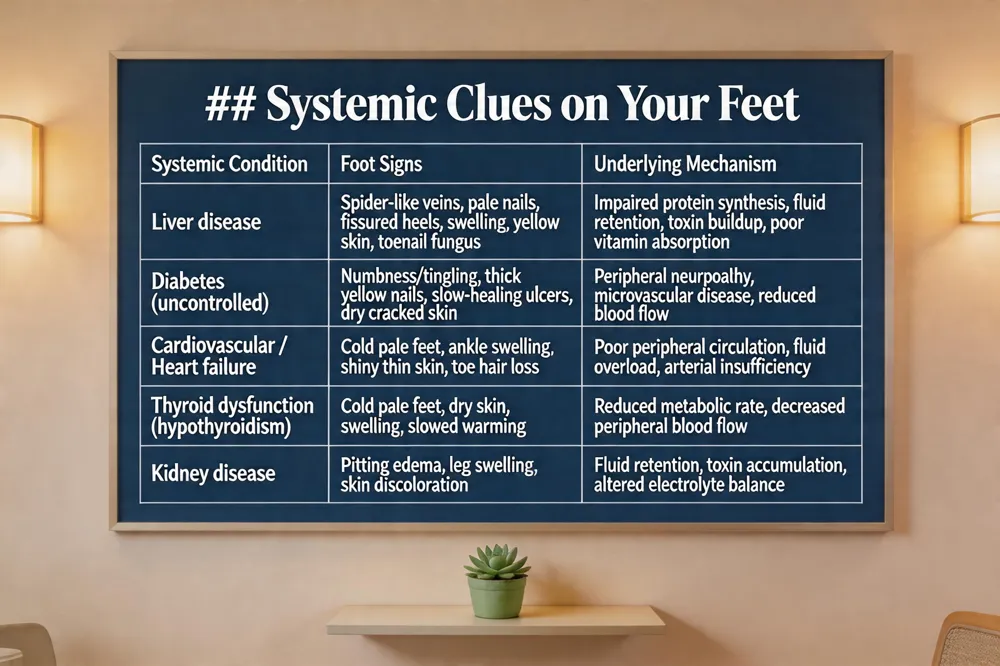 Your feet are a window to the body’s internal health, often flashing early warnings before other symptoms appear.
Liver health indicators – Spider‑like veins (spider nevi) on the ankles, deep fissured heels, and unusually pale or white nail beds can signal compromised liver protein production and fluid retention. Persistent dryness, nighttime itching, and an unpleasant foot odor may reflect toxin buildup when liver detoxification falters. Swelling or pitting edema in the lower legs and a yellowish hue of the skin are classic signs of liver‑related fluid overload, and recurrent toenail fungus can arise from impaired vitamin absorption linked to liver disease.
Diabetes and neuropathy – Persistent numbness, tingling, or burning (“pins‑and‑needles”) in the toes is a hallmark of peripheral neuropathy, most often caused by uncontrolled diabetes. Diabetics may also develop thick, yellow nails, slow‑healing ulcers, and dry, cracked skin because of reduced blood flow and impaired wound healing.
Cardiovascular and thyroid signs – Cold, pale feet that fail to warm up, especially in a heated environment, suggest poor peripheral circulation from peripheral artery disease or hypothyroidism. Swelling of the ankles or feet can point to heart failure, hypertension, or kidney disease, while hair loss on the toes and shiny, thin skin hint at arterial insufficiency.
Early foot changes—skin texture, nail color, temperature, and sensation—should prompt a professional podiatric exam. Prompt detection enables minimally invasive treatments and can uncover serious systemic conditions before they progress.
Common Foot Problems and Their Hidden Causes
Common Foot Problems & Hidden Causes
| Foot Problem | Typical Hidden Causes | Key Signs & Symptoms | First‑Line Management |
|---|---|---|---|
| Athlete’s foot | Fungal infection (Trichophyton) | Itching, scaling, redness between toes | Antifungal creams, keep feet dry |
| Bunions | Genetic predisposition, tight shoes, hallux valgus | Bony bump at base of big toe, pain | Proper footwear, orthotics, possible minimally invasive correction |
| Plantar fasciitis | Overuse, tight calf muscles, poor arch support | Heel pain worst in morning, stiffness | Stretching, arch‑support shoes, shockwave therapy if chronic |
| Morton’s neuroma | Nerve compression between metatarsals, tight shoes | Sharp pain in forefoot, tingling, feeling of a pebble | Metatarsal pads, footwear modification, percutaneous release |
| Metatarsalgia | Excess pressure on metatarsal heads, high arches, ill‑fitting shoes | Pain under ball of foot, worsens with activity | Cushioned soles, custom orthotics, ice and rest |
| Gout | Hyperuricemia, purine‑rich diet | Sudden swelling, redness, intense pain in big toe | NSAIDs, dietary changes, urate‑lowering meds |
| Diabetic neuropathy | Chronic hyperglycemia | Numbness, tingling, burning, slow wound healing | Blood glucose control, regular foot exams, protective footwear |
| Flat feet / Overpronation | Weak posterior tibial tendon, genetics | Foot fatigue, arch collapse, knee/hip pain | Arch‑support shoes, custom orthotics, strengthening exercises |
| High arches / Supination | Rigid foot structure | Lateral foot pain, stress fractures | Cushioning shoes, orthotics to distribute pressure |
| Ingrown toenails | Improper nail trimming, tight shoes | Redness, swelling, pain at nail edge | Proper nail care, warm soaks, minor surgical removal if needed |
 List of common foot problems
Athlete’s foot, blisters, bunions, hammertoes, corns, calluses, plantar fasciitis, heel spurs, Morton’s neuroma, ingrown toenails, flat feet, high arches, gout, osteoarthritis, rheumatoid arthritis, and diabetic neuropathy are the most frequently seen conditions. Proper footwear, daily inspection, and early podiatric evaluation help prevent progression.
Foot pain under foot
Pain beneath the ball of the foot usually stems from metatarsalgia—excess pressure on the metatarsal heads—often aggravated by tight shoes, running, or prolonged standing. Other culprits include plantar fasciitis, Morton’s neuroma, and toe deformities such as high arches or hammertoes. Symptoms are sharp, aching or burning pain that worsens with activity and may be accompanied by tingling or a feeling of a pebble in the shoe. Persistent or worsening pain warrants a podiatrist visit for imaging, orthotics, or minimally invasive interventions.
How to relieve pain on bottom of foot
Begin with ice (15‑20 min, several times daily) and foot elevation to reduce swelling. Perform calf‑wall stretches and roll a tennis ball under the arch to lengthen tight tissues. Wear shoes with good arch support and cushioned soles or use custom orthotics to off‑load pressure. If pain persists beyond a week of home care, seek a podiatrist for targeted therapies such as plantar fasciitis release or laser treatment.
Reasons for foot pain in ladies
High‑heeled or narrow shoes, hormonal changes, pregnancy‑related edema, and common use of tight footwear increase the risk of bunions, hammertoes, and metatarsalgia. Diabetes‑related neuropathy and gout also contribute. Overuse injuries from dancing, running, or prolonged standing can cause stress fractures and tendinitis, which are often managed with minimally invasive procedures and custom orthotics.
Foot problems A to Z
A – Ankle instability; B – Bunions; C – Corns, calluses; D – Drop foot; E – Entesopathies (Achilles tendonitis, plantar fasciitis); F – Flat feet; G – Gout; H – Hammer toe; I – Ingrown toenails; J – Joint arthritis; K – Keratoderma; L – Ligament sprains; M – Morton's neuroma; N – Nail dystrophy; O – Osteoarthritis; P – Plantar warts; Q – Quadriceps‑related knee pain affecting foot; R – Rheumatoid arthritis; S – Stress fractures; T – Tendinitis; U – Ulcers (diabetic); V – Varicose veins; W – Wart infections; X – Xanthomas (tendon); Y – Yellow nail syndrome; Z – Zygapophysial joint pain.
Pain, Swelling, and Itching: When to Act
Pain, Swelling & Itching – When to Seek Care
| Symptom | Possible Underlying Issue | Red‑Flag Features | Recommended Action |
|---|---|---|---|
| Swollen, itchy sole | Athlete’s foot, eczema, psoriasis, peripheral neuropathy | Rapid swelling, warmth, redness, fever | Clean, dry, antifungal/ moisturizers; see podiatrist if worsening |
| Burning, itchy feet at night | Neuropathy (diabetes, B12 deficiency), tarsal tunnel, erythromelalgia | Persistent burning with color change, ulcers | Evaluate sensation, labs, possible nerve‑protective meds |
| Dry, cracked feet | Dehydration, hypothyroidism, eczema, poor circulation | Cracks deep, bleeding, or associated numbness | Moisturize, check thyroid; podiatrist if cracks persist |
| Sudden painful swelling with redness | Cellulitis, deep‑vein thrombosis, gout flare | Fever, systemic illness, rapid onset | Immediate medical evaluation |
| Persistent numbness/tingling | Peripheral neuropathy, arterial insufficiency | Loss of protective sensation, ulcer formation | Prompt podiatric exam, vascular assessment |
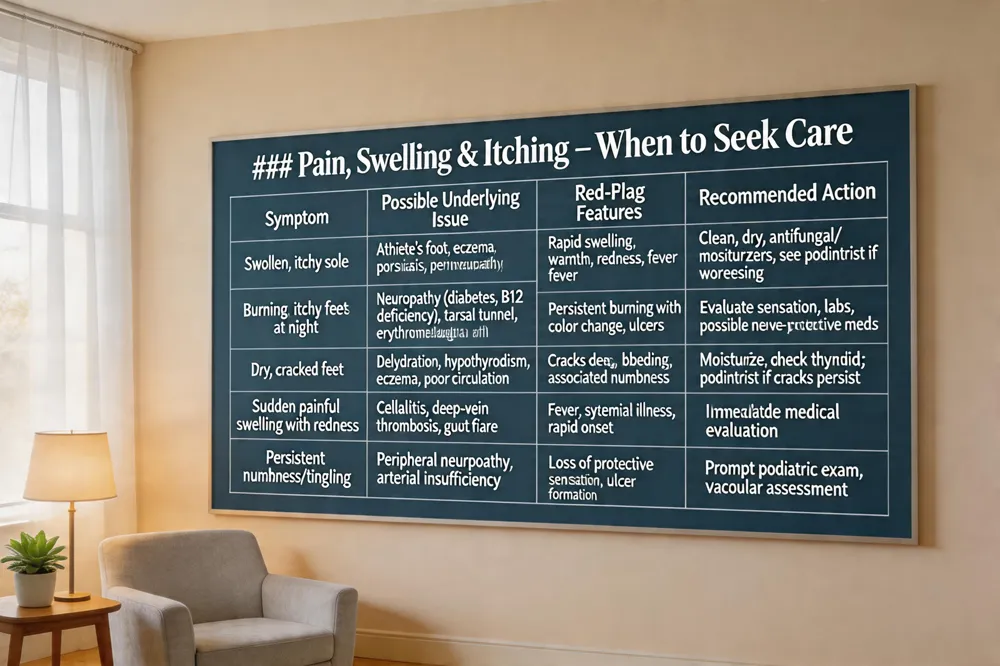 Bottom of foot swollen and itchy – Swelling and itching on the sole are often due to skin irritation, athlete’s foot, eczema, psoriasis, or peripheral neuropathy. Sudden, painful, warm, or red swelling with fever may signal cellulitis or a vascular problem and warrants prompt medical evaluation. Gentle care—keep the area clean and dry, use a mild moisturizer, and avoid tight shoes—helps mild irritation. Over‑the‑counter antifungal creams work for fungal causes, but persistent symptoms should be examined by a podiatrist to rule out infection, nerve damage, or systemic disease, especially in diabetics or those with circulatory issues.
Burning itchy feet – This sensation usually reflects nerve irritation or skin inflammation. Common culprits include peripheral neuropathy (diabetes, vitamin B12 deficiency), tarsal tunnel syndrome, fungal infection, or rare conditions such as erythromelalgia. Symptoms may worsen at night and be accompanied by redness, swelling, or “pins‑and‑needles.” A podiatrist can perform a focused exam, order labs or imaging, and prescribe targeted therapies—topical antifungals, custom orthotics, nerve‑protective medicines, or minimally invasive procedures—to relieve discomfort and prevent complications.
What does dry feet say about your health? – Dryness can signal dehydration, hypothyroidism, eczema, or poor circulation. In diabetes, dry skin often accompanies peripheral neuropathy and raises ulcer risk. Persistent dryness despite regular moisturizing may indicate vascular insufficiency or medication side‑effects. Evaluation by a foot specialist is advised when dryness is chronic or paired with cracks, color changes, or loss of sensation.
Foot health chart – Our clinic uses a visual foot‑health chart that maps foot regions to corresponding body systems. By correlating patient findings with reflex points, we tailor minimally invasive treatments—such as percutaneous tenotomy, plantar‑fascia release, or shockwave therapy—to address root causes rather than just symptoms.
Can the feet indicate signs of serious illness? – Absolutely. Numbness, tingling, slow‑healing sores, or persistent dryness can be early warnings of diabetes, peripheral neuropathy, or peripheral artery disease, which increase cardiovascular risk. Joint pain, swelling, and skin changes may point to autoimmune disorders like rheumatoid or psoriatic arthritis. Early detection through podiatric assessment and coordinated care with primary physicians is essential for preventing severe complications.
Foot Mechanics, Shoes, and Biomechanics
Foot Mechanics, Shoes & Biomechanics
| Biomechanical Issue | Contributing Shoe/Foot Factor | Typical Foot Findings | Simple Intervention |
|---|---|---|---|
| Overpronation | Low arch, worn mid‑sole, lack of medial support | Flat arch, heel turning inward, callus on inner foot | Motion‑control shoes, custom orthotics |
| Supination (underpronation) | High arch, rigid mid‑sole, excessive heel height | Lateral foot pain, stress fractures, thin wear on outer heel | Cushioned shoes, shock‑absorbing insoles |
| Heel spurs | Chronic plantar fasciitis, tight calf muscles | Bony protrusion at heel, sharp heel pain | Stretching, heel cups, possible percutaneous release |
| Metatarsal overload | Tight toe box, high heels, improper gait | Pain under ball of foot, callus formation | Metatarsal pads, rocker‑sole shoes, orthotics |
| Improper wear patterns | Uneven gait, biomechanical imbalance | Excessive wear on inner/outer heel, forefoot | Gait analysis, footwear adjustment, targeted orthotics |
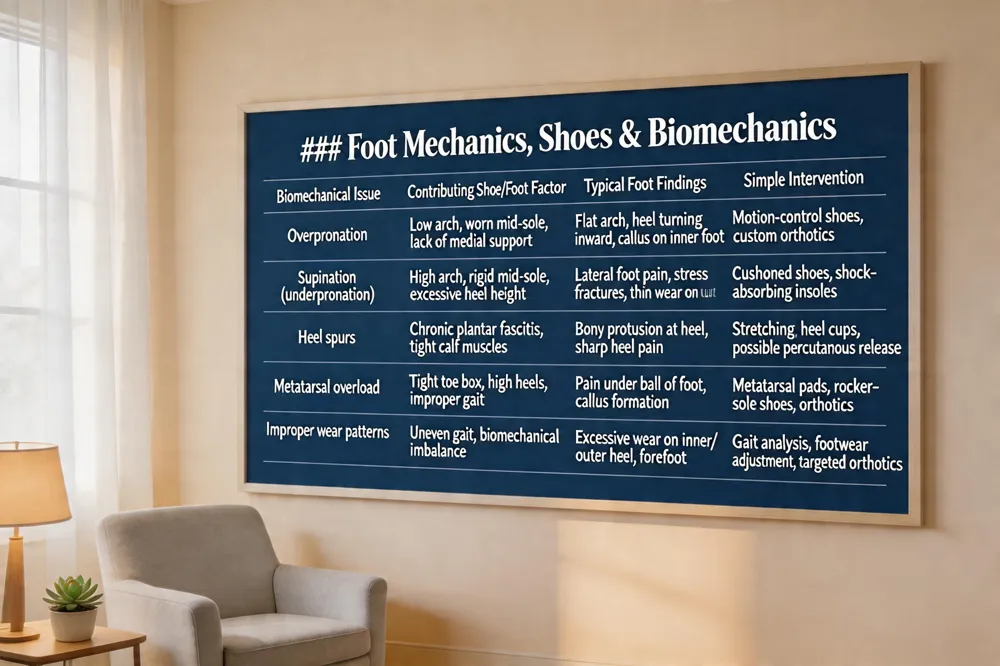 Shoes are the primary interface between the ground and your feet, so their design and fit directly influence foot biomechanics. Properly cushioned, well‑fitted shoes distribute pressure evenly, support the arches, and allow natural toe movement, helping to prevent plantar fasciitis, bunions, and metatarsalgia. Conversely, tight shoes, lack of arch support, or excessive heel height can compress nerves, alter gait, and create uneven stress that leads to heel pain, hammertoes, and even knee, hip, or lower‑back discomfort. Worn‑out shoes lose midsoles compression and sole thickness, forcing the foot to work harder and often causing heel, arch, or toe discomfort. Uneven wear patterns signal gait changes that stress joints up the kinetic chain.
Gait abnormalities and pressure distribution are revealed by uneven shoe wear, callus formation, or altered balance. Early biomechanical issues—such as overpronation, supination, or posterior tibial tendon insufficiency—can be corrected with custom orthotics that restore alignment and off‑load vulnerable areas. In our clinics we combine 3‑D gait analysis with minimally invasive interventions like percutaneous plantar fascia release, targeted shockwave therapy, or endoscopic tendon debridement to address the root cause rather than just symptoms.
Foot health chart tools map foot regions to systemic pathways, allowing podiatrists to pinpoint circulatory or nerve concerns and tailor treatments. When foot pain appears without injury—whether sudden or chronic—prompt evaluation, appropriate footwear, orthotics, and, when needed, minimally invasive procedures can restore function and prevent long‑term disability.
Advanced Podiatry Solutions and Preventive Care
Advanced Podiatry Solutions & Preventive Care
| Treatment Modality | Indications | How It Works | Recovery Outlook | |---|---|---| | ---cutaneous percutaneous (endonum) for fasciitis, Achilles tendinopathy | Plantar fasciitis, chronic tendon pain | Small incision releases tension, stimulates healing | Minimal downtime, return to activity in 2‑4 weeks | | Endoscopic plantar fascia release | Refractory plantar fasciitis | Endoscope allows fascia cutting with <1 cm incision | Faster recovery than open surgery | | Shockwave therapy | Chronic fasciitis, neuroma, calcaneal spur | Acoustic waves promote tissue regeneration and pain relief | 3‑5 sessions, gradual improvement | 3‑D gait analysis + smart insoles | Complex biomechanical problems, diabetic foot risk | Captures pressure maps, gait cycles; alerts to abnormal patterns | Ongoing monitoring, early intervention | | Doppler ultrasound | Peripheral arterial disease, venous insufficiency | Visualizes blood flow, detects blockages | Guides vascular referral, preventive measures | | Patient education & foot‑health charts | All patients | Visual mapping of foot zones to systemic organs | Empowers self‑monitoring, early detection |
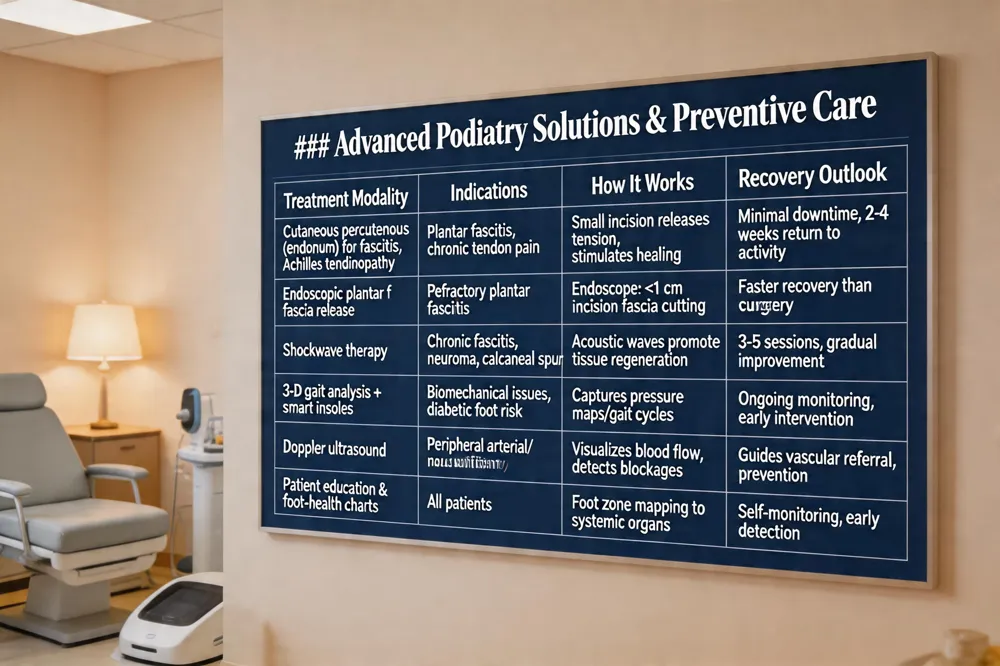 Minimally invasive treatments – Modern podiatry uses percutaneous tenotomy, endoscopic plantar fasci release, and shockwave therapy to address plantar fasciitis, Achilles tendinopathy, and early arthritis with tiny incisions and rapid recovery. These procedures preserve tissue, lower infection risk, and can be performed in our Chicago and South Florida clinics.
Screening, monitoring, and technology – 3‑D gait analysis, smart insoles, and Doppler ultrasound detect abnormal pressure patterns, peripheral arterial disease, and neuropathy before symptoms worsen. Regular podiatrist exams, combined with at‑home foot‑health charts, enable early intervention for diabetes‑related ulcers, PAD, and vascular insufficiency.
Patient empowerment and whole‑body impact – Educating patients on footwear, nutrition, and daily foot checks transforms foot health into a systemic health indicator.
Do foot massages lower cortisol? – Therapeutic reflexology activates the parasympathetic nervous system, reducing circulating cortisol and increasing endorphins. Small studies show measurable cortisol drops after a single session, making massage a valuable adjunct, not a replacement, for medical care.
How your feet affect your whole body – Misaligned arches or painful toe joints shift load to knees, hips, and lower back, causing joint pain, poor posture, and even neck tension. Early correction restores kinetic chain balance and protects overall musculoskeletal health.
21 things your feet are trying to tell you about your health – Nails, skin, temperature, swelling, and gait reveal anemia, circulation problems, diabetes, cardiovascular disease, thyroid disorders, nutritional deficiencies, arthritis, and structural deformities. Recognizing these cues prompts timely evaluation.
Can the feet indicate signs of serious illness? – Yes. Numbness, slow‑healing sores, cold extremities, swelling, and joint changes can signal diabetes, peripheral artery disease, autoimmune arthritis, or impending vascular events. Prompt podiatric assessment is essential.
Foot health chart – Our visual foot‑health chart maps reflex zones to organs and nerve pathways, guiding targeted minimally invasive treatments and patient education for comprehensive, personalized care.
Take the First Step Toward Healthier Feet
Your feet constantly send clues about circulation, nerve health, and joint integrity. Persistent numbness, cold or pale skin, swelling, non‑healing sores, color changes in nails or skin, and early morning stiffness are all subtle signals that may point to peripheral neuropathy, arterial disease, diabetes, arthritis, or systemic conditions such as heart or kidney failure. Because these signs often develop silently, a timely professional foot examination can prevent serious complications and uncover underlying medical issues. If you notice any of these warning signs, schedule an appointment with a board‑certified podiatrist today. Our minimally invasive clinics in Northwestern Chicago and South Florida offer advanced imaging, custom orthotics, and cutting‑edge procedures to restore comfort and protect your overall health and wellbeing for a better life.