Introduction
Long standing shifts place continuous pressure on the plantar fascia, heel, and metatarsal heads, often leading to swelling, pain, and fatigue. Maintaining foot health is therefore essential for productivity, injury prevention, and overall well‑being. Core principles include proper footwear fit with a slight heel drop, a wide toe box, and adequate cushioning; regular hygiene such as washing, thorough drying, and antifungal powder; moisture‑wicking socks to keep skin dry; and scheduled micro‑breaks for circulation. Evidence‑based strategies combine these basics with targeted interventions: custom or over‑the‑counter orthotics for arch support, ice therapy after prolonged duty, calf‑raise and toe‑curl strengthening drills, and intermittent foot elevation. Together they reduce inflammation, improve biomechanics, and protect against common occupational foot disorders and enhance comfort.
Foot Preparation Before the Shift
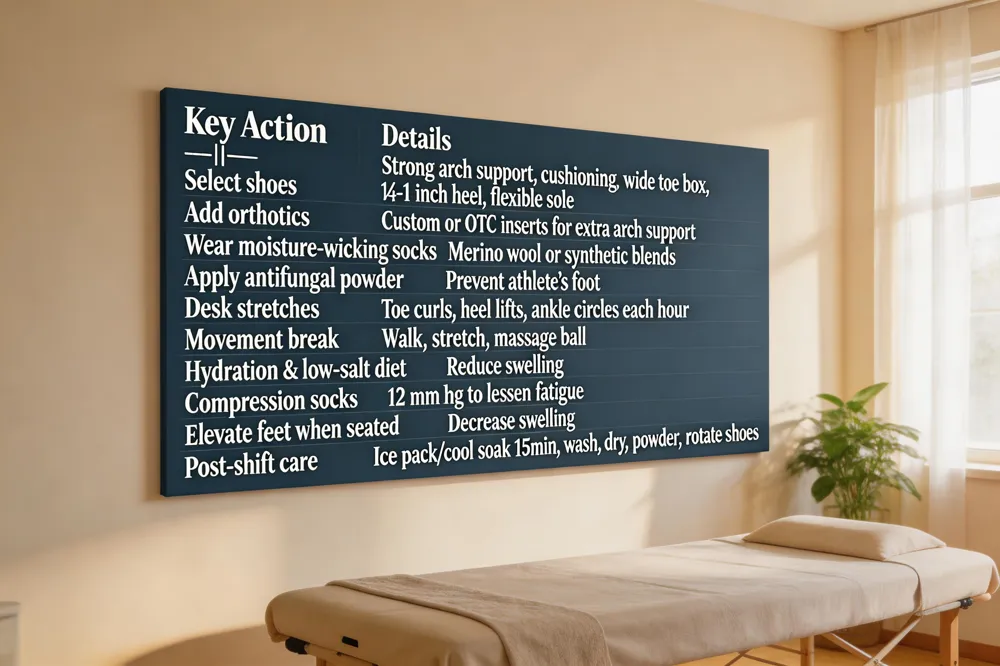
| Key Action | Details |
|---|---|
| Select shoes | Strong arch support, cushioning, wide toe box, slight heel elevation (¼‑1 inch), flexible sole |
| Add orthotics | Custom or OTC inserts for extra arch support |
| Wear moisture‑wicking socks | Merino wool or synthetic blends |
| Apply antifungal powder | Prevent athlete’s foot |
| Desk stretches | Toe curls, heel lifts, ankle circles each hour |
| Movement break | Walk, stretch, massage ball |
| Hydration & low‑salt diet | Reduce swelling |
| Compression socks | 12 mmHg to lessen fatigue |
| Elevate feet when seated | Decrease swelling |
| Post‑shift care | Ice pack or cool soak 15 min, wash, dry, powder, rotate shoes |
 Foot Preparation Before the Shift
How to prepare your feet for a long shift? Start by choosing shoes that provide strong arch support, ample cushioning, and a wide toe box, or add custom orthotic inserts for extra comfort. A professional foot assessment—measuring length, width, and arch height—helps pinpoint the right shoe size and any needed arch support. Choose footwear with a slight heel elevation (¼‑inch to 1 inch) and a flexible sole, and avoid flat‑sole shoes that lack cushioning. Moisture‑wicking, breathable socks (merino wool or synthetic blends) keep feet dry, while an antifungal powder prevents athlete’s foot. Throughout the shift, perform simple desk‑friendly stretches such as toe curls, heel lifts, and ankle circles to keep muscles active and promote circulation. Take a brief movement break every hour: walk, stretch, or roll a massage ball under the feet. Hydrate well, limit salty snacks, and consider 12 mmHg compression socks to reduce leg fatigue. When seated, elevate the feet on a footrest to decrease swelling. End the day with a 15‑minute ice pack or cool foot soak to ease inflammation and soreness. After each shift, wash feet with soap, dry—especially between the toes—and apply an antifungal powder; rotating shoes 3‑4 days lets insoles recover and reduces buildup.
Choosing the Right Socks for All‑Day Comfort
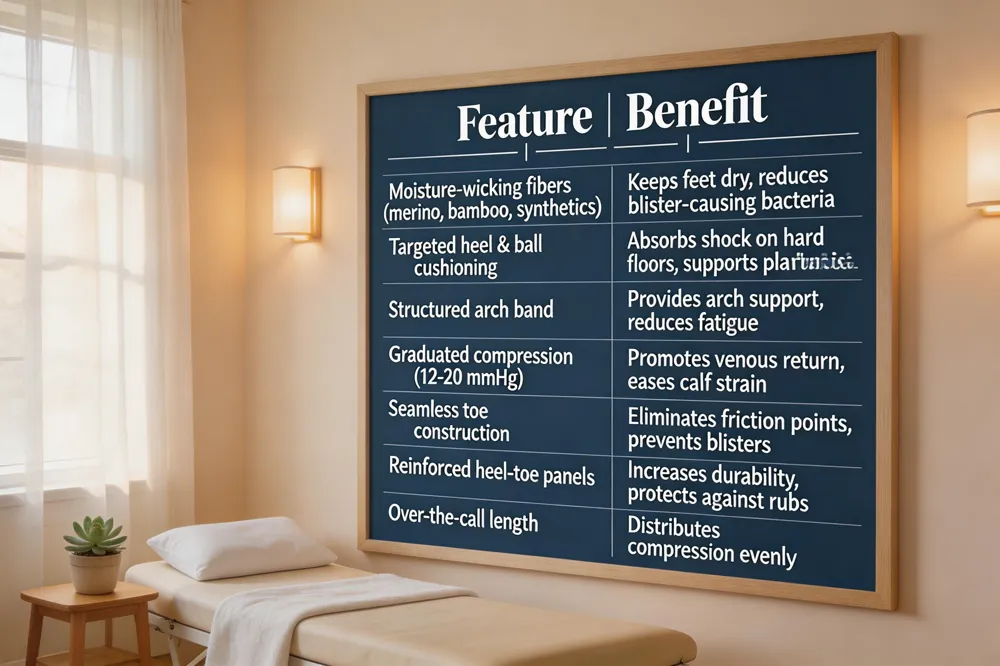
| Feature | Benefit |
|---|---|
| Moisture‑wicking fibers (merino, bamboo, synthetics) | Keeps feet dry, reduces blister‑causing bacteria |
| Targeted heel & ball cushioning | Absorbs shock on hard floors, supports plantar fascia |
| Structured arch band | Provides arch support, reduces fatigue |
| Graduated compression (12‑20 mmHg) | Promotes venous return, eases calf strain |
| Seamless toe construction | Eliminates friction points, prevents blisters |
| Reinforced heel‑toe panels | Increases durability, protects against rubs |
| Over‑the‑calf length | Distributes compression evenly |
 Moisture‑wicking fibers such as merino wool, bamboo‑cotton blends, and high‑performance synthetics (polyester, nylon, CoolMax) pull sweat away from the skin, keeping feet dry and reducing blister‑causing bacterial growth. Targeted cushioning in the heel and ball of the foot, together with a structured arch band, absorbs shock on hard floors and supports the plantar fascia, preventing fatigue during long shifts. Graduated compression of 12‑20 mmHg (or 20‑30 mmHg for those with swelling) promotes venous return and eases calf strain. Seamless toe construction eliminates friction points, while reinforced heel‑toe panels add durability and prevent blisters when boots or shoes rub the skin.
What are the best socks for standing all day? The ideal pair combines moisture‑wicking fibers (e.g., merino, bamboo, synthetic blends) with targeted heel and ball cushioning, 15‑20 mmHg graduated compression, and a snug arch band. Over‑the‑calf lengths keep compression distributed, and seamless toe plus reinforced heel‑toe panels prevent friction.
What are the best socks for working all day on your feet? Choose socks that blend moisture‑wicking material (Merino‑wool blends like Darn Tough) with durable cushioning, a seamless toe, supportive arch band, and antimicrobial properties for odor control. Mid‑weight crew or over‑the‑calf heights add protection, while reinforced heel‑toe zones extend durability.
Best socks for foot comfort at work men's Men benefit from seamless‑toes, targeted heel/arch cushioning, and moisture‑wicking fibers such as bamboo‑cotton or merino blends. Thorlo’s 12‑Hour Shift socks offer 12 mmHg compression and built‑in arch support; Darn Tough boot socks provide high‑density cushioning and a snug fit; Smartwool crews deliver breathability and temperature regulation. Pair with supportive insoles for optimal comfort.
Marathon Runner Foot Care Practices
| Practice | Purpose |
|---|---|
| Fit shoes to swollen feet (afternoon) | Ensure proper space (thumb‑wide) at toe box |
| Slight heel drop (¼‑2 in) & wide toe box | Allow natural splay, reduce strain |
| EVA/PU midsoles | Cushioning & shock absorption for repetitive impact |
| Moisture‑wicking socks (synthetic/merino) | Keep skin dry, prevent blisters & fungus |
| Petroleum‑based lubricant on high‑friction zones | Reduce blister formation |
| Post‑run ice (15‑20 min) | Decrease inflammation |
| Moisturize skin | Maintain integrity, prevent cracks |
| Foot‑intrinsic strengthening (toe curls, calf raises, short‑foot drills) | Boost endurance, lower plantar‑fasciitis risk |
| Regular podiatrist visits | Gait analysis, custom orthotics, early problem detection |
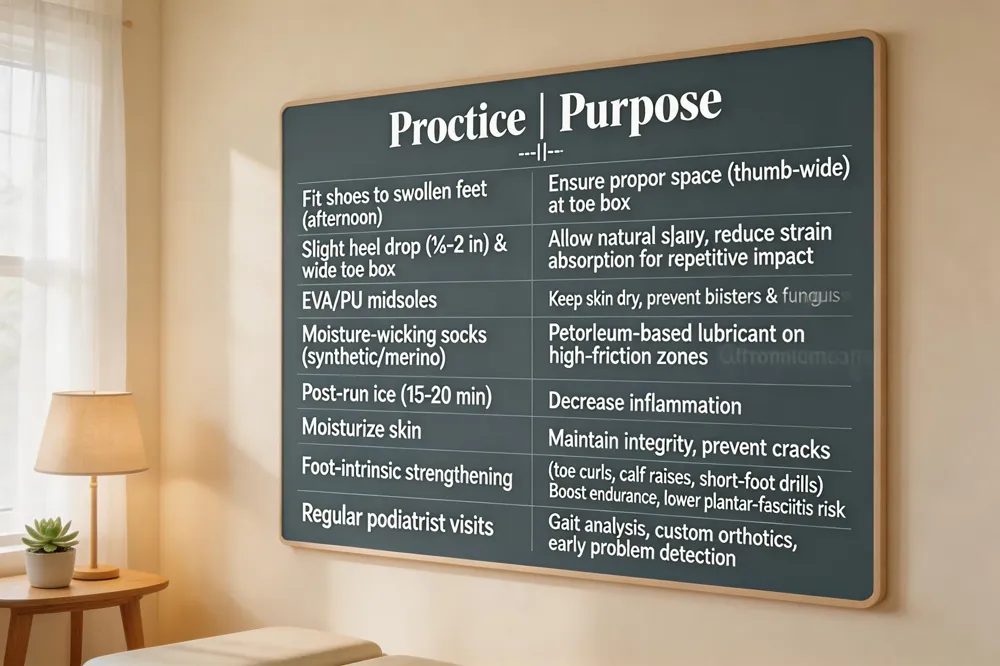 Marathon runners keep their feet healthy by first selecting shoes that fit correctly when feet are most swollen—typically in the afternoon—and leaving a thumb’s‑wide space between the longest toe and the shoe tip. A slight heel drop (¼‑inch to 2 inches) and a wide toe box allow natural splay, while EVA or PU midsoles provide cushioning and shock absorption for the repetitive impact of long runs. Moisture‑wicking socks of synthetic fibers or merino wool keep the skin dry, reducing blisters and fungal risk. High‑friction zones receive a thin layer of petroleum‑based lubricant or anti‑friction blister prevent; if a blister forms, a sterile needle can safely drain it while keeping the skin intact. After the run, runners ice their feet for 15‑20 minutes, moisturize to maintain skin integrity, and inspect for bruises, blisters, or blackened toenails, treating any issue promptly. Strength‑ building foot‑intrinsic muscles—through toe curls, calf raises, and short‑foot drills—combined with regular calf stretches and gradual mileage increases, improves endurance and reduces plantar‑fasciitis risk. Routine podiatrist visits for gait analysis and custom orthotics ensure personalized support and early detection of problems. By integrating proper footwear, blister prevention, recovery protocols, and targeted conditioning, marathoners can avoid foot pain and sustain performance.
Daily Foot Hygiene and Odor Control
| Step | Tip |
|---|---|
| Wash after shift | Warm, soapy water; focus on between toes |
| Dry thoroughly | Pay special attention to interdigital areas |
| Apply antifungal powder or antiperspirant | Keep skin dry, limit bacterial growth |
| Rotate shoes every 24‑48 h | Air out fully, prevent moisture buildup |
| Choose breathable uppers (mesh, leather, canvas) | Enhance ventilation |
| Select moisture‑wicking socks (merino, nylon, polyester) | Pull sweat away, reduce odor |
| Avoid cotton socks | Retains moisture, promotes odor |
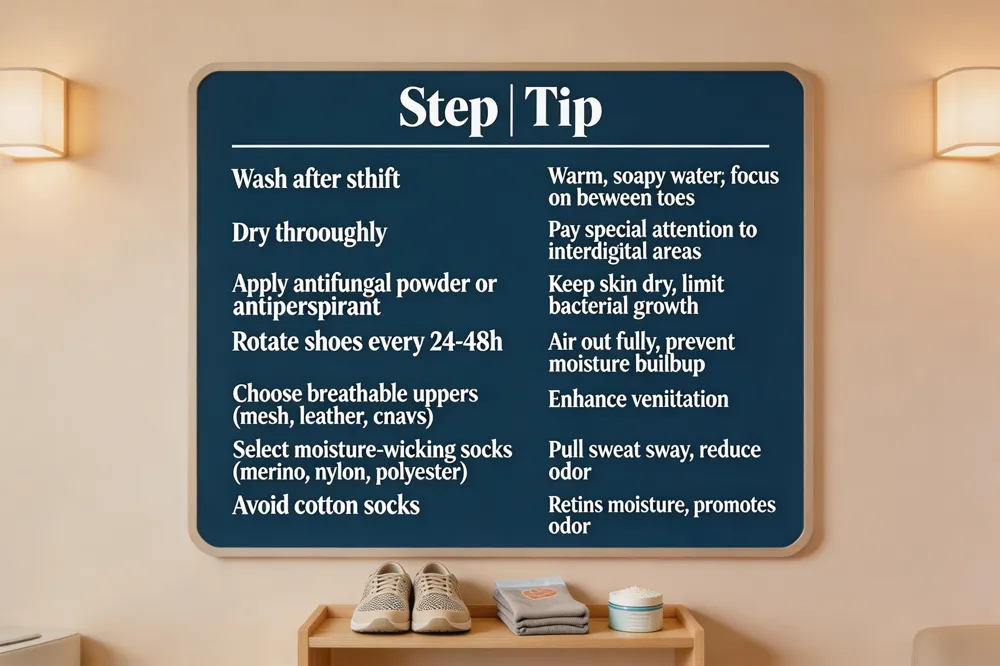 Good foot hygiene starts with a thorough wash after a full day in shoes. Warm, soapy water removes sweat, bacteria, and debris; pay special attention to the spaces between the toes. After washing, dry the feet completely—especially the interdigital areas—to prevent the moist environment that fuels fungal infections and odor. Apply an antifungal powder or an antiperspirant spray to keep the skin dry and reduce bacterial growth.
During long work shifts, rotate shoes every 24‑48 hours and allow them to air out fully; this prevents moisture buildup and limits odor‑producing microbes. Choose footwear with breathable uppers (mesh, leather, or canvas) and a modest heel drop for arch support.
Sock choice matters: moisture‑wicking fibers such as merino wool, nylon, polyester, or performance blends pull sweat away from the skin, keep feet dry, and possess natural anti‑odor properties. Avoid cotton, which retains moisture.
Is it bad to wash your feet after wearing shoes the whole day? No—washing after a full day is beneficial. It removes sweat, bacteria, and debris, reduces fungal infection risk, and eliminates odor when followed by complete drying.
How to keep feet fresh during long work days? Wear breathable shoes, change to moisture‑wicking socks at least once daily, apply foot powder or antiperspirant, and give your feet brief air‑out breaks.
How to stop feet from hurting at work? Select shoes with adequate arch support and cushioned midsoles, use anti‑fatigue mats, and schedule short seated breaks to relieve pressure and improve circulation.
Managing Swelling, Fatigue, and Post‑Marathon Recovery
| Recovery Tool | Effect |
|---|---|
| 12‑15 mm Hg compression socks | Improves venous return, lowers swelling, reduces fatigue |
| Ice therapy (15‑20 min) | Blunts inflammation, soothes sore arches |
| Foot elevation (10‑15 min) | Encourages fluid drainage, reduces puffiness |
| Warm Epsom‑salt foot bath | Relaxes calf & plantar fascia, eases soreness |
| Gradual return to activity | Prevents over‑use injuries |
| Balanced nutrition & rest | Supports tissue repair and energy replenishment |
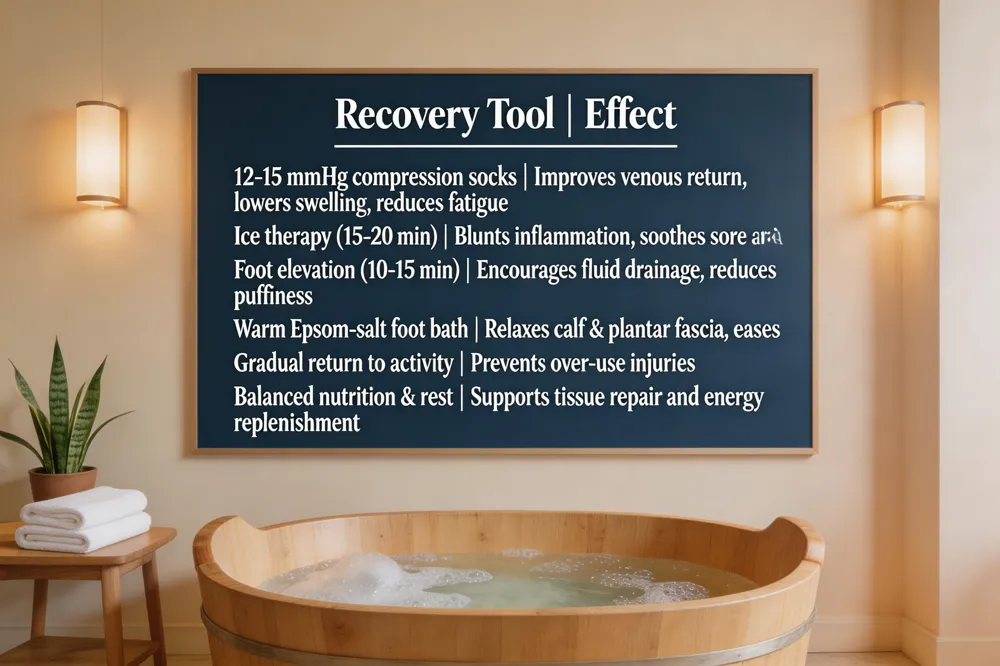 Compression socks that deliver 12‑15 mm Hg of graduated pressure help venous return, lower leg swelling, and reduce foot fatigue during long shifts or after a marathon. Pair them with regular ice therapy—15‑20 minutes of a cold pack or a foot soak in iced water—to blunt inflammation and soothe sore arches. Elevating the feet above heart level for 10‑15 minutes after standing or running encourages fluid drainage and eases lower‑extremity puffiness; adding a light anti‑inflammatory home remedy such as a warm Epsom‑salt foot bath can further relax tight calf and plantar fascia muscles.
Post‑Marathon syndrome is a short‑term physical and emotional slump that follows a marathon, marked by lingering fatigue, muscle soreness, and a drop in motivation. Recovery is best supported by adequate rest, balanced nutrition, gradual return to activity, and setting new, realistic goals.
Home remedies for foot pain from standing all day include warm Epsom‑salt soaks, elevation, supportive shoes with arch and heel cushioning, light‑compression socks, gentle toe‑alphabet stretches, towel‑pull‑toward‑knee calf stretches, and self‑massage with a tennis ball.
Pain on the bottom of the foot from walking can be eased by icing, plantar‑fascia stretches (big‑toe pull), rolling a ball under the foot, wearing cushioned shoes with orthotic inserts, and using OTC NSAIDs if needed. Persistent symptoms warrant a podiatrist evaluation.
Strengthening and Stretching Routines for Endurance
| Exercise | Target |
|---|---|
| Towel scrunches, marble pickups, arch lifts | Intrinsic foot muscles, arch stability |
| Calf raises on a step | Gastrocnemius & soleus strengthening |
| Heel‑drop stretches | Lengthen calf muscles, reduce Achilles strain |
| Short‑foot drills | Windlass mechanism, rigid lever for push‑off |
| Alphabet toe movements | Mobility of toe joints, circulation |
| Wall calf stretch | Flexibility of calf chain |
| Tennis‑ball roll under arch | Boost circulation, relieve soreness |
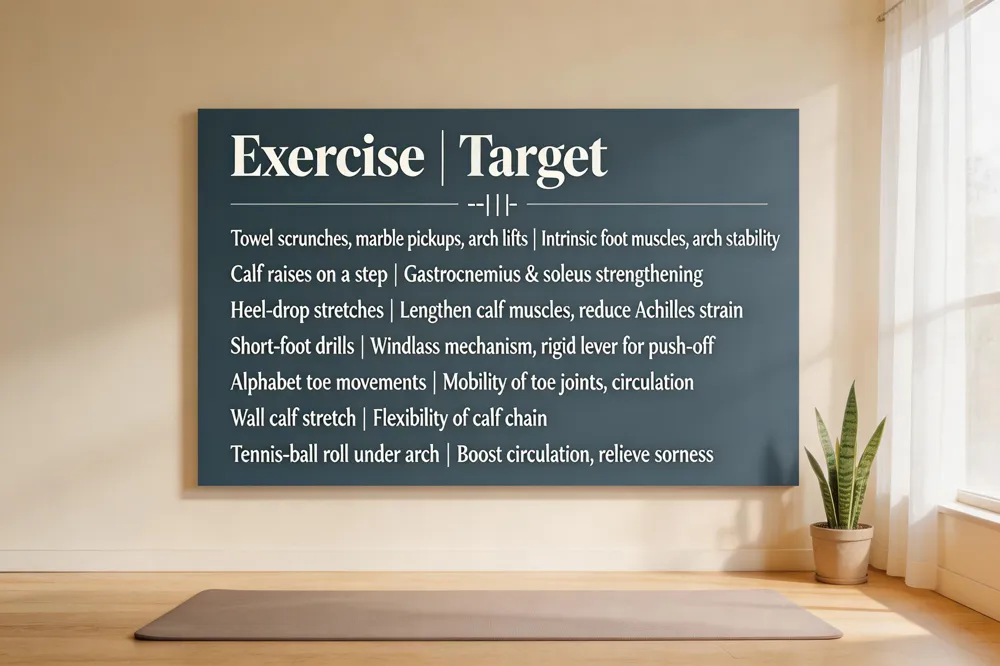 Building endurance for marathon‑length work days starts with a solid program of intrinsic foot muscle work, calf raises, toe curls, and short‑foot drills.
Intrinsic exercises such as towel scrunches , marble pickups, and arch lifts activate the over 100 small muscles that support the plantar arch and improve toe splay.
Calf raises on a step and heel‑drop stretches lengthen the gastrocnemius and soleus, reducing strain on the Achilles and plantar fascia.
Short‑foot drills—pressing the metatarsal heads toward the heel while keeping the toes on the ground—train the foot’s “windlass” mechanism for a rigid lever during push‑off.
During long‑day walking, progressively increase time on your feet by adding 10–15 minutes each day; most people adapt within 2–4 weeks as tendons, ligaments, and skin become conditioned. If pain or swelling persists beyond a couple of weeks, seek podiatric evaluation for conditions like plantar fasciitis or stress fractures.
Home remedies for foot pain from standing all day include warm Epsom‑salt soaks (10–15 min), leg elevation, supportive shoes with arch and heel cushioning, light‑compression socks, and gentle mobility drills (alphabet toe movements, wall calf stretch). Finish with a tennis‑ball roll under the arch to boost circulation and relieve soreness.
When to Seek Professional Care
| Sign | Recommended Action |
|---|---|
| Persistent pain > few days of rest | Schedule podiatrist appointment |
| Swelling, bruising, numbness | Seek medical evaluation promptly |
| Sudden increase in intensity after standing | Get professional assessment |
| Signs of plantar fasciitis, tendonitis, stress fracture, neuropathy | Early intervention with custom orthotics or therapy |
| Unresolved foot odor despite hygiene | Rule out fungal infection |
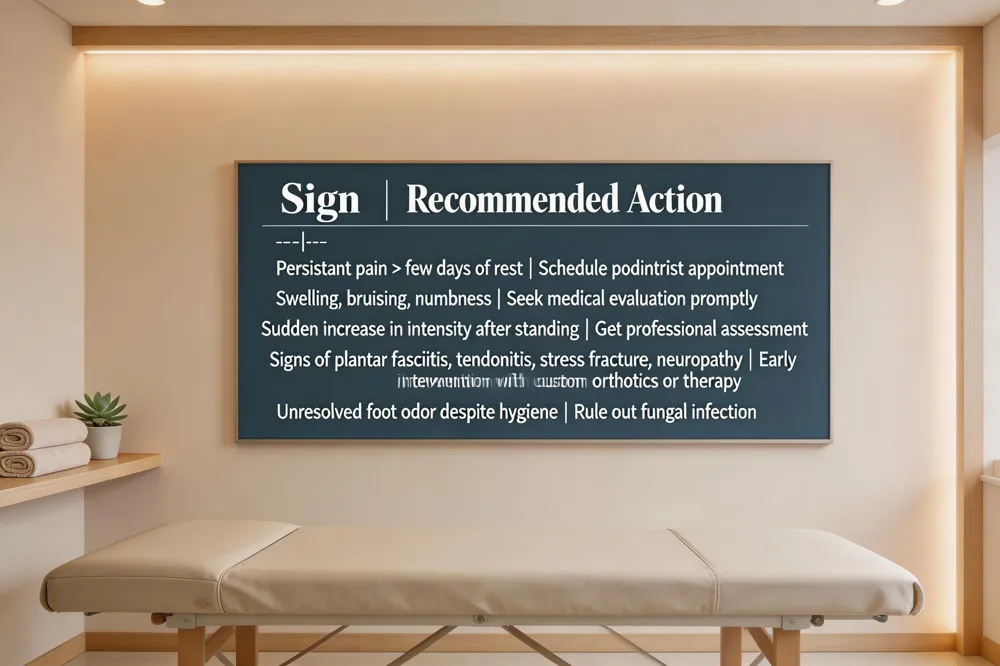 Recognizing when foot discomfort signals a serious problem is the first step toward lasting relief. Persistent pain that does not improve after a few days of rest, swelling, bruising, numbness, or a sudden increase in intensity—especially after standing or a brief shift—should prompt a podiatrist visit. These signs can indicate underlying issues such as plantar fasciitis, tendonitis, early stress fractures, or neuropathy that require targeted treatment.
A comprehensive gait analysis, often performed with 3‑D motion capture, helps identify abnormal foot mechanics, overpronation, or uneven load distribution. The data guide the prescription of custom orthotic inserts that redistribute pressure, support the arch, and reduce impact forces, proven to alleviate conditions like metatarsalgia and Achilles tendonitis.
During a podiatrist evaluation, clinicians can employ minimally invasive options—such as platelet‑rich plasma injections for chronic tendonitis, shockwave therapy for plantar fasciitis, or percutaneous release of tight plantar fascia—while preserving surrounding tissue. Early intervention shortens recovery, prevents chronic pain, and restores function.
Why do my feet hurt after standing for a short time? Even a brief period of standing can stress the feet if the arches lack proper support, the calf muscles are tight, or early plantar‑fasciitis is developing. When you stand, the ligaments and tendons in the heel and arch must bear the body’s weight without the shock‑absorbing benefit of movement, leading to muscle fatigue and localized inflammation. Hard or uneven surfaces, poorly cushioned shoes, and excess body weight further increase the load on the foot’s structures, amplifying discomfort. Simple interventions such as wearing supportive footwear, using custom orthotics, and performing daily calf‑ and plantar‑fascia stretches can often relieve the pain. If the soreness persists, worsens, or is accompanied by swelling or numbness, it’s important to have a podiatrist evaluate you for underlying conditions such as arthritis, tendonitis, or neuropathy.
Putting It All Together: A Daily Foot‑Care Checklist
| Time | Action |
|---|---|
| Morning | Choose shoes with thumb‑wide toe space, slight heel drop, removable insole; wear moisture‑wicking socks |
| Mid‑shift (every 60 min) | Micro‑break: calf raises, ankle circles; apply 12 mmHg compression socks or sleeves; stay hydrated |
| After shift | Wash feet, dry thoroughly, apply antifungal powder; ice or warm Epsom‑salt soak 15‑20 min |
| Evening | Rotate shoes, allow to air out; schedule annual podiatrist visit (or sooner if pain persists) |
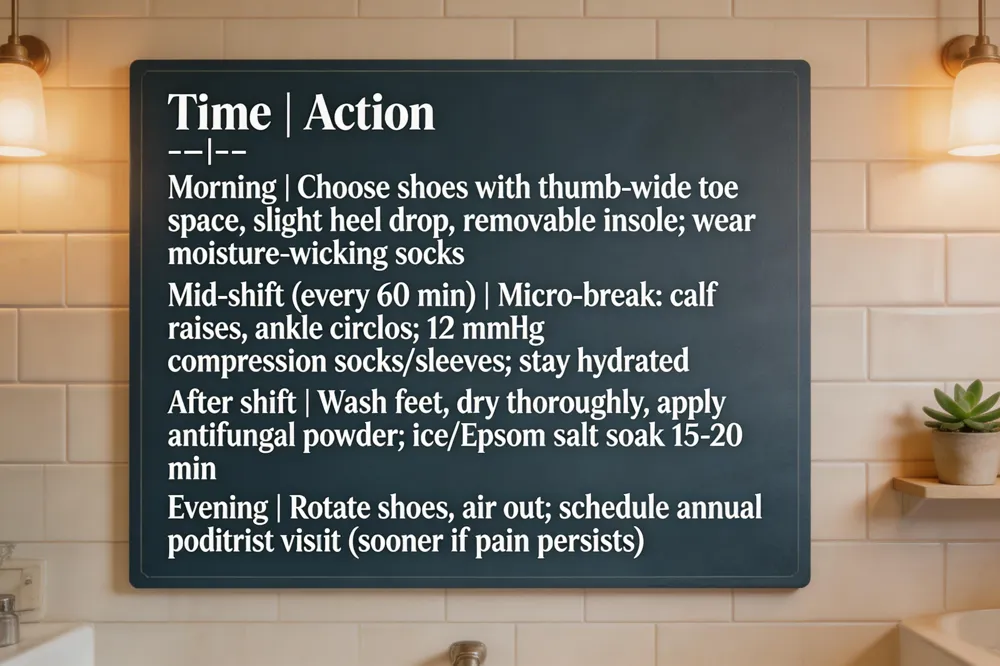 Start the day by choosing shoes that fit a thumb’s width of space at the toe box, have a slight heel drop (¼‑inch to 1‑inch), and a removable insole for a custom orthotic or over‑the‑counter arch support. Pair them with moisture‑wicking socks (merino wool or synthetic blends) and change socks at least once during a long shift. Throughout the shift, take a micro‑break every 60 minutes: stand, do calf raises or ankle circles, and apply 12 mmHg compression socks or calf‑support sleeves to improve circulation; stay well‑hydrated to curb edema. After work, wash feet with mild soap, dry thoroughly (especially between toes), apply antifungal powder, and finish with 15‑20 minutes of ice therapy or a warm Epsom‑salt soak to reduce inflammation. Schedule a podiatrist visit at least annually (or sooner if pain persists) for gait analysis and early detection of issues such as plantar fasciitis or fungal infections.
Conclusion
Key takeaways for fresh, pain‑free feet: proper fit (thumb‑width toe box, slight heel drop), moisture‑wicking socks, and regular foot hygiene are the foundation of foot health. Actionable steps for marathon‑length work days include a daily foot assessment, wearing supportive shoes with arch and cushioning, applying anti‑friction balms to high‑contact zones, taking hourly micro‑breaks to stretch and elevate, using compression or Thorlo‑style socks for circulation, and finishing shifts with ice therapy or a brief warm foot bath. For persistent discomfort, calluses, or odor, a podiatrist can provide custom orthotics, gait analysis, and targeted treatments. Advanced Footcare offers personalized evaluations, evidence‑based interventions, and ongoing support to keep your feet strong, comfortable, and ready for any long‑hour challenge.